





19th Century Thermometer
These 19th century thermometer examples combine precision science with period cabinet-making, offering both decorative presence and historic utility.
19th Century Thermometer
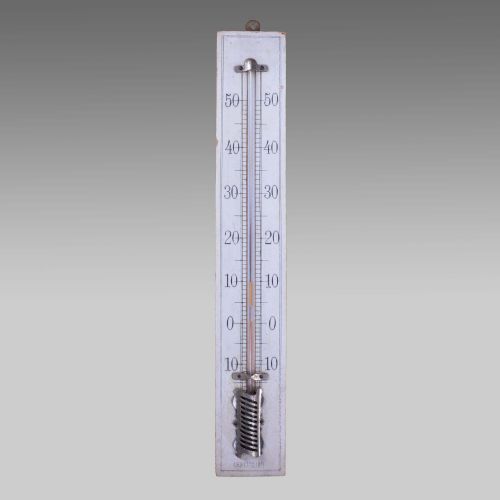
A 19th century thermometer represents the intersection of domestic science and decorative arts, appearing in various forms from pocket travel pieces to large wall instruments. When searching this phrase, buyers encounter scientific instruments mounted on timber boards, housed in cases, or integrated into complex mantel clocks and barometers.
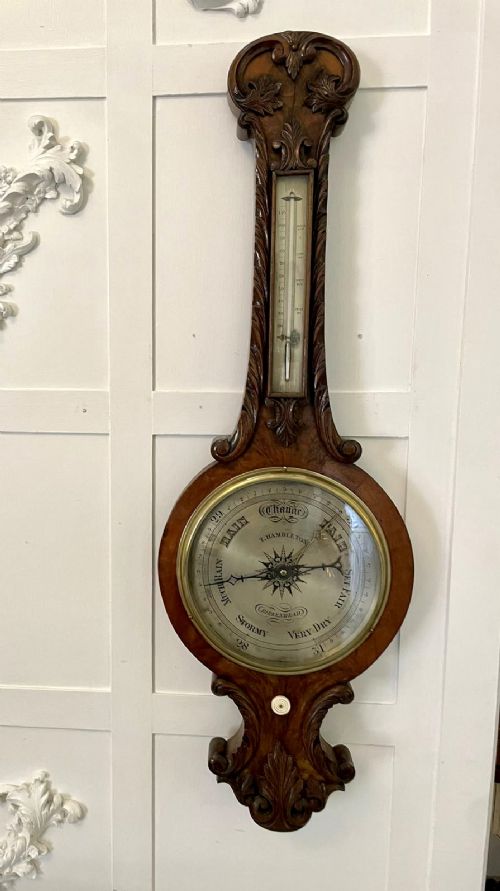
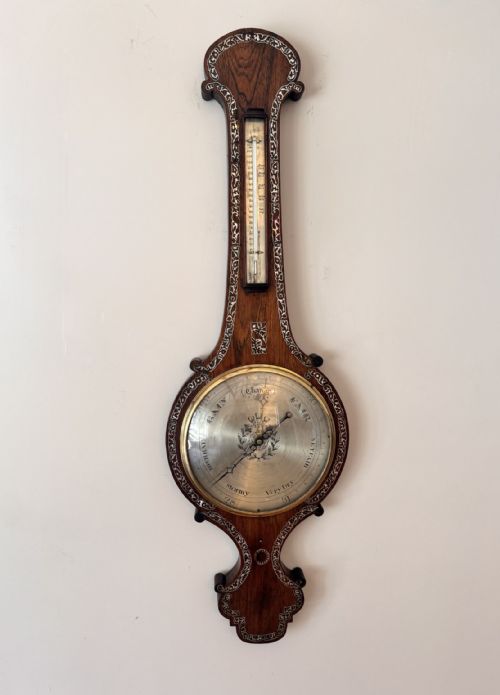
The most common version met on this page is the banjo or wheel barometer incorporating a thermometer scale alongside the weather dial. These combination instruments reflect the period's domestic interest in meteorology and room climate.
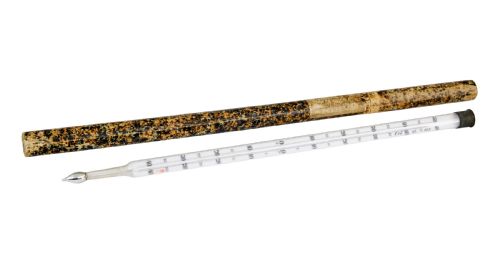
Beyond wall-hanging pieces, the selection includes desk thermometers shaped as stone obelisks, marine instruments, and portable mercury or alcohol tubes housed in original leather travel cases.
Materials and construction
Makers constructed the mounting boards and cases from dense hardwoods such as mahogany, rosewood, burr walnut, and oak, often enriching surfaces with mother-of-pearl inlay or carved detailing. Stone variants utilise Ashford marble, Derbyshire black slate, and specimen marbles shaped into architectural obelisks.
The delicate glass tubes contain either mercury or alcohol to register temperature fluctuations, mounted alongside engraved bone, ivory, or metal scales. Portable instruments utilise protective leather outer cases lined for transit.
Materials range from traditional mahogany and rosewood to exotic burr walnut, black Ashford marble, and delicate bone scales.
Distinctions in quality
The standard of cabinet-making dictates the upper tier of these pieces, separating simple utilitarian boards from luxury furnishings. Superior examples display finely figured burr veneers, intricate mother-of-pearl inlay, and deeply carved wooden flourishes.
The sophistication of the mechanism and the precision of the engraved scale elevate an instrument. Maker signatures from established opticians and scientific instrument makers denote superior workshop standards compared to unsigned anonymous pieces.
Prada of High Wycombe·Molton of Norwich·Watkins & Hill·Thomas Harris & Son·James H Kelly of Glasgow·Savory & Fils A Paris·J Groce, York·W Watson & Sons London·J C Moretti of King's Lynn·Corti of Exeter·Charles Baker, London
The 19th Century Thermometer Glossary
- Thermoscope
- An early type of temperature-measuring instrument that shows changes in temperature without a calibrated numerical scale. These devices illustrate the experimental phase of domestic meteorology.
- Banjo barometer
- A household weather instrument shaped roughly like a banjo, typically housing a dial barometer at the base and a thermometer tube along the vertical neck. This form dominated domestic interiors throughout the Victorian era.
- Stick barometer
- A tall, narrow instrument featuring a vertical glass tube exposed along a wooden trunk, designed for precise barometric readings. They frequently incorporate auxiliary thermometer scales to adjust atmospheric calculations.
- Ashford marble
- A decorative dark limestone inlaid with coloured fluorite and other minerals to create floral or geometric patterns. It originates from Derbyshire and appears on architectural desk pieces.
- Wheel barometer
- An instrument utilising a pulley and weight system to translate mercury movement into the rotation of a pointer around a circular dial. These often feature accompanying humidity and temperature dials.
19th Century Thermometer: Frequently Asked Questions
Do these antique thermometers still work accurately?
Most of these historic instruments retain their original glass tubes and scales, meaning they still register temperature changes in a room. However, they are collected primarily for their historic and decorative value rather than laboratory precision.
Changes in mercury columns or minor calibration shifts over the decades mean they serve best as ambient indicators and decorative artefacts of nineteenth-century science.
How do I care for a wood and glass thermometer?
Keep wooden cases and marble obelisks away from direct sunlight and sudden radiator heat to prevent timber splitting or veneer lifting. Dust the glass and timber surfaces gently with a dry, soft cloth.
Avoid using liquid cleaners on the engraved scales or paper dials, as moisture can permanently damage the historic markings.
What is the difference between a stick and wheel barometer?
A stick barometer displays the open mercury column directly on a long wooden trunk, offering a direct and traditional reading of atmospheric pressure. These often include a companion thermometer tube mounted alongside the main scale.
A wheel barometer encloses the mechanism within a case and uses a dial face with a pointer to show pressure changes, typically pairing the weather dial with a circular or vertical thermometer.
Were all nineteenth-century thermometers used on walls?
While many instruments hung in hallways or libraries, a significant number were made for portability or desk use. Travel thermometers came fitted in original leather cases for journeys, while marble obelisks stood firmly on study desks.
Carriage clocks and mantel clocks also integrated thermometer dials into their metal frames for desktop utility.