
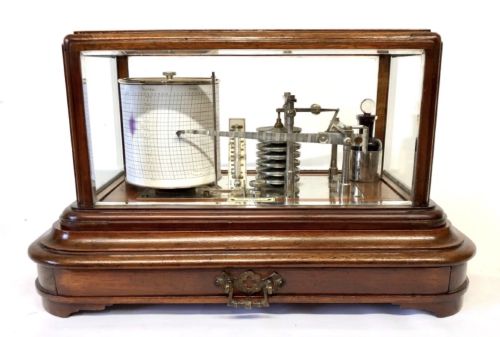


Antique Desk Thermometer
An antique desk thermometer measures temperature while anchoring a writing surface in brass, marble, mahogany, or bone.
Antique Desk Thermometer
An antique desk thermometer is a functional scientific instrument housed in materials suited to a nineteenth or early twentieth-century study or office. These pieces range from simple standalone obelisks to elaborate desk compendiums that combine temperature tracking with clocks, barometers, and compasses.
The versions most commonly met on this page include Victorian and Edwardian examples fashioned from slate, marble, mahogany, and brass. Makers such as Negretti & Zambra and W Watson & Sons produced substantial instruments designed to sit permanently upon a leather-topped partner desk or mantelpiece.
How they were made
These instruments combine glass thermometer tubes with mounted backplates of brass, silver, carved bone, or polished stone such as Ashford Black Marble and serpentine. Cabinets and desk compendiums utilise turned hardwoods like mahogany and oak, frequently embellished with enamel dials and gilt bronze mounts.
Specialised techniques include Tunbridge Ware mosaic woodwork and detailed silver hallmarks stamped by London goldsmiths. Scientific scales are typically engraved onto metal or painted directly onto glass and enamel backings behind the mercury or spirit column.
Listings feature materials spanning glass, brass, enamel, mahogany, leather, oak, steel, and onyx across multiple decades.
What varies in quality
Quality depends upon the caliber of the housing and the reputation of the scientific maker signed on the dial or scale. Pieces produced by established opticians and instrument makers display crisper engraving on their metal scales and superior weight in their bronze or marble mounts.
Materials dictate the upper tier of the range, where precious metals, exotic crocodile leather cases, and specialised stonework elevate a simple utilitarian object into a desk accessory of significant presence.
Gaupp & Co·Goldsmiths Of London·Negretti & Zambra·W Watson & Sons
The Antique Desk Thermometer Glossary
- Obelisk
- A tall, four-sided, narrow tapering monument that ends in a pyramid-like top at the apex. Many Victorian desk thermometers utilised this classical Egyptian shape in black marble or specimen stone.
- Desk compendium
- A multi-functional desktop desk accessory combining several instruments into a single housing. These frequently incorporate a clock, barometer, and thermometer alongside a compass.
- Barograph
- A recording barometer that graphs atmospheric pressure changes over time onto a rotating drum. Examples listed occasionally integrate a thermometer alongside the recording mechanism.
- Tunbridge Ware
- A form of decorative woodwork originating from Kent utilising small mosaic wood blocks to form geometric or pictorial patterns. Such technique frequently decorated the wooden bodies of desk thermometers.
- Serpentine
- A group of rock-forming minerals typically dark green, mottled, and capable of a high polish. This material formed heavy, stable bases for nineteenth-century desk thermometers.
Antique Desk Thermometer: Frequently Asked Questions
How do I date an antique desk thermometer?
Dating relies upon the style of the script on the thermometer scale, the surrounding housing materials, and any stamped hallmarks or maker signatures. Victorian pieces often favour heavy slate, marble, or brass, while later Edwardian and Art Deco examples introduce cleaner geometric lines and different cabinet woods.
Makers active during the nineteenth century frequently signed their brass backplates, allowing reference to trade directories. Comparing the complexity of the instrument against known compendium styles helps narrow the decade of production.
Are antique desk thermometers accurate?
Most antique thermometers retain their original glass tubes and scales, but glass can shift or register differently over long periods. They are collected primarily for their craftsmanship, materials, and historical presence rather than precise modern climate control.
If the mercury or spirit column remains unbroken, the instrument will still react to ambient temperature changes. However, calibration against a modern standard should be done gently without forcing the vintage glass.
What materials were used for thermometer bases?
Bases and housings span a broad range of natural and manufactured materials chosen for weight and appearance. Heavy stones like serpentine and Ashford Black Marble provided stability on busy office desks.
Finer pieces utilised solid mahogany, oak, carved bone, walrus ivory, and sterling silver. Luxury travelling versions were sometimes fitted into crocodile leather outer cases lined with velvet or silk.