
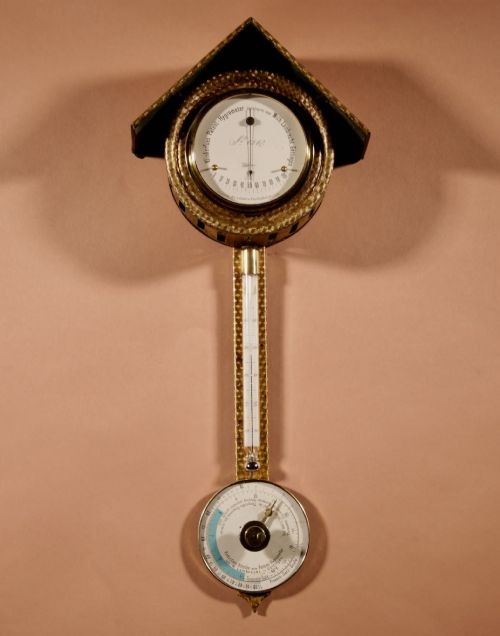


Victorian Brass Thermometer
These pieces of a victorian brass thermometer combine precision meteorological measurement with the enduring weight and polish of nineteenth-century metalwork.
Victorian Brass Thermometer
A buyer seeking a victorian brass thermometer encounters a range of functional scientific instruments that often double as domestic ornaments. The selection spans freestanding desk items, wall-hanging weather stations, and integrated components within larger aneroid barometers, marine instruments, or travelling compendiums.
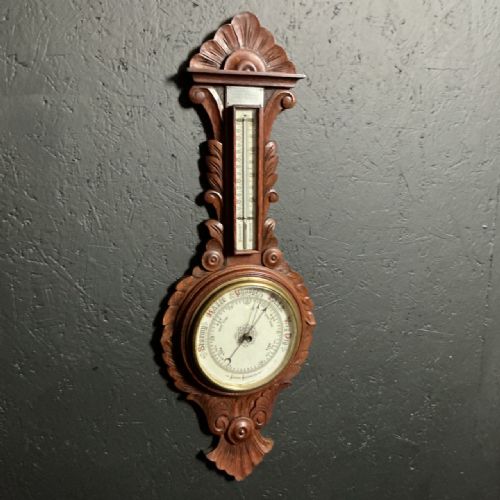
Most examples date from the nineteenth century, stretching from the eighteen-sixties into the Edwardian period, reflecting an era obsessed with domestic meteorology and precise measurement. These pieces appear housed in brass casings, mounted on carved oak or mahogany backboards, or styled as ornate desk ornaments alongside compasses and clocks.
The objects originate from British makers as well as continental workshops, taking forms such as tower desk thermometers, crescent scales on marine barometers, and portable pocket instruments. While some stand independently on serpentine bases, others form part of complex desk sets designed to grace a library or study.
Materials and Construction
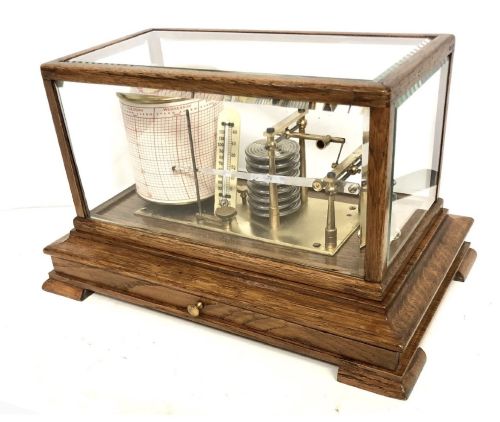
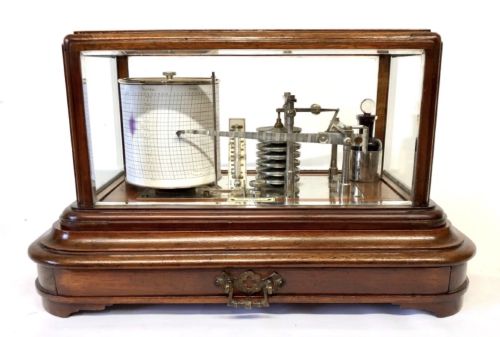
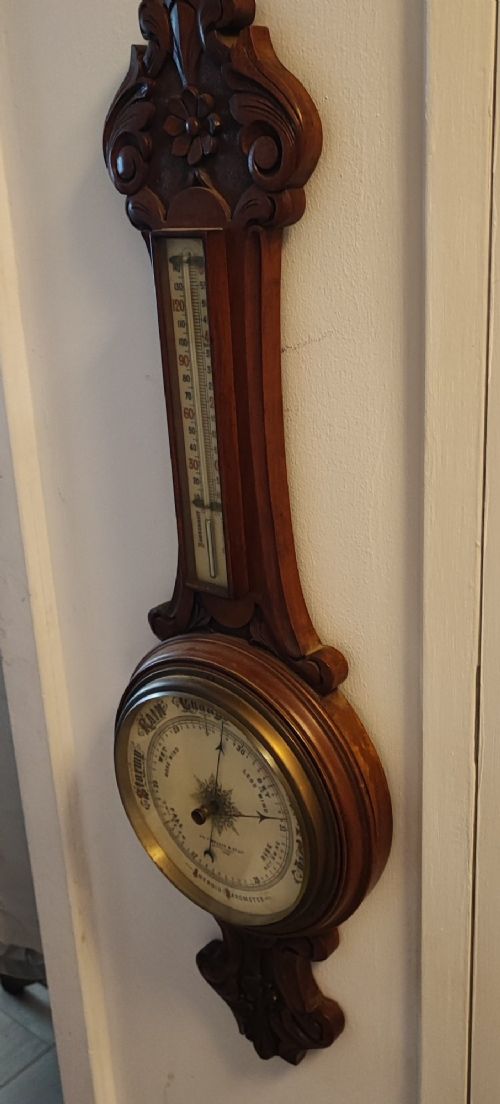
The primary material pairing relies on cast or sheet brass combined with glass thermometer tubes backed by enamel, porcelain, or silvered metal scales. Makers frequently mounted these brass and glass assemblies onto heavy timber backboards of oak, mahogany, walnut, or rosewood, sometimes embellished with intricate hand-carvings of birds or architectural motifs.
Dial faces and scales utilised precision engraving and black wax filled lettering to ensure legibility against silvered bronze or polished brass. Enamel and porcelain dials provided a clean, white background for mercury or spirit columns, protected behind bevelled glass panes within robust metal housings.
One enthusiastic Victorian carver decided a simple weather dial needed a flock of birds keeping watch over the temperature.
Distinctions in Quality
Quality rests in the crispness of the engraved calibrations, the legibility of the maker's signature on the scale, and the retention of the original mercury or spirit column within intact glass. Finer pieces demonstrate superior casting in the brass mounts and more substantial timber frames, such as heavy carved oak or architectural mahogany.
The distinction between standard utility instruments and superior examples lies in the complexity of the housing, whether a simple wall plate or an architectural desk compendium featuring bevelled glass and multi-metal finishes. Original travelling cases and fully intact scale plates elevate an instrument's standing significantly.
GAUPP & CO HONGKONG & SINGAPORE·Wilh. Lambrecht Göttingen Germany·Short & Mason London·Patrick Adie of London·NEGRETTI & ZAMBRA LONDON·Jenkins Of Old Swindon·James H Kelly of Glasgow·M Pillischer of Bond Street·Dollond London·W Watson & Sons London·James Murray
The Victorian Brass Thermometer Glossary
- Aneroid Barometer
- An instrument measuring atmospheric pressure without liquid, using a flexible metal box that expands or contracts with pressure changes. Many victorian brass thermometer items integrate directly into these barometer faces.
- Crescent Thermometer
- A curved thermometer scale, often shaped in an arc to fit the circular dial of a marine barometer or desk instrument. This layout allowed temperature reading alongside atmospheric pressure.
- Compendium
- A multi-instrument desk object combining a clock, barometer, compass, and thermometer in a single housing. These pieces represent the more elaborate end of scientific desktop accessories.
- Silvered Metal
- A brass or copper dial plate treated with a silver solution to create a matte white, engraved surface for black-filled lettering. It provides high contrast and a traditional scientific finish.
- Weather Station
- An assemblage housing multiple meteorological instruments, such as a barometer, thermometer, and hygrometer, mounted together on a shared timber board.
Victorian Brass Thermometer: Frequently Asked Questions
How do I read a vintage thermometer?
Read the temperature by aligning your eye level with the top of the mercury or spirit column against the engraved scale marks.
Many antique scales feature Fahrenheit graduations, so ensure you check the marked freezing and boiling points on the individual plate.
Are these old instruments still accurate?
While many retain their original sensitivity, they serve primarily as decorative antiques and historical objects rather than precision modern meteorological tools.
Temperature readings should be treated as indicative rather than calibrated to modern digital standards.
How do I clean brass casings safely?
Dust the brass gently with a soft, dry cloth to remove surface particles without disturbing the aged patina.
Avoid chemical polishes or abrasive cloths, as these can strip away the historical finish and wear down delicate engraved details.
Can I hang these wall instruments anywhere?
Hang your instrument on an interior wall away from direct sunlight, radiators, or damp areas to protect the wooden backboards and glass.
Ensure the mounting point is secure, especially with massive carved oak or architectural pieces that carry considerable weight.