



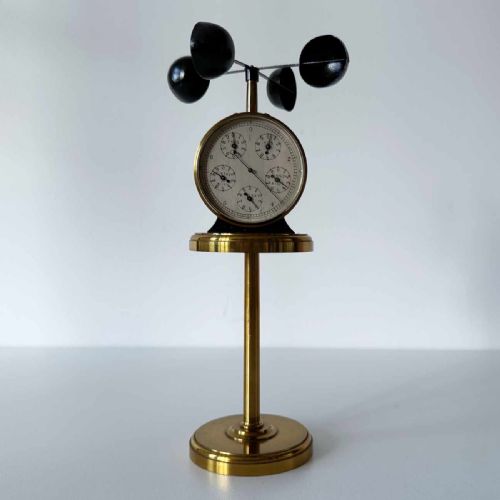


Desktop Scientific Instrument
A desktop scientific instrument is a precision device for observation or measurement designed for the desk, library table, or cabinet.
Desktop Scientific Instrument
A desktop scientific instrument serves the practical needs of navigation, meteorology, optics, and calculation in a domestic or professional study. These pieces embody the scientific curiosity and industrial capability of the eighteenth, nineteenth, and early twentieth centuries.
The versions most commonly met in this selection are brass and glass telescopes, oak or mahogany cased barographs, and various tabletop magnifiers and barometers. They reflect the furniture timbers and metalworking methods of their respective periods, from Georgian workshops to Edwardian factories.
Each object balances functional utility with decorative presence, often housed in fitted wooden presentation boxes with brass fittings. They demonstrate how scientific tools were constructed to sit comfortably among the fine furnishings of a gentleman's library.
How They Were Made
Makers constructed these instruments using turned and polished brass paired with dense hardwoods such as mahogany and oak for cases and mountings. Glass lenses and bevelled panes provide the optical and viewing elements, while paper charts and leather coverings add functional detail.
Metal components required precise lathe work, hand engraving for scales and signatures, and durable lacquering to prevent tarnishing. Woodwork relied on dovetailed or jointed enclosures fitted with internal brackets to secure delicate mechanisms during use and transport.
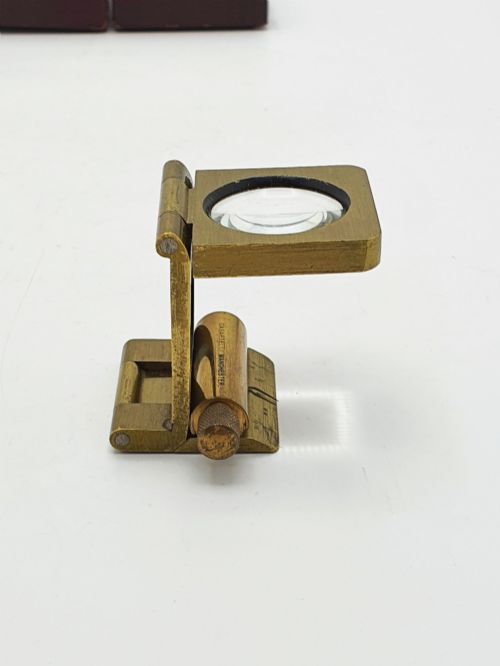
Ancillary items include tiny brass measuring scales that fold quietly into pocket-sized cases to count the threads of bygone textiles.
What Varies in Quality
Quality rests upon the precision of the mechanical movement, the clarity and ground quality of the glass lenses, and the crispness of the engraved markings. Superior pieces display harmonious proportions between wood, metal, and glass, alongside robust construction that maintains alignment.
The reputation of the maker heavily influences distinction, with signed instruments from notable London or regional workshops generally exhibiting finer finishing details. Original fitted cases, intact paper components, and preserved mechanical integrity further elevate an example above standard production.
Nairne & Blunt·Casartelli Manchester·Parkes & Hadley·Thomas Rubergall·J Hicks·Negretti & Zambra·Johnson·Newton & Co·Short & Mason·Goldsmiths of London·Swift & Son·S & B Solomons·Matthew Berge·Air Ministry·Depree and Young Ltd·G.adams·Broadhurst & Co·W Watson & Sons
The Desktop Scientific Instrument Glossary
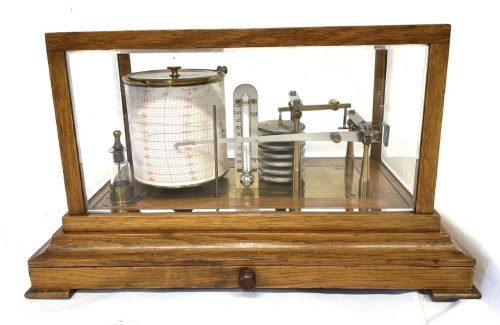
- Barograph
- A self-recording barometer that plots atmospheric pressure over time onto a rotating paper drum. These instruments typically reside in glazed wooden cases with clockwork mechanisms.
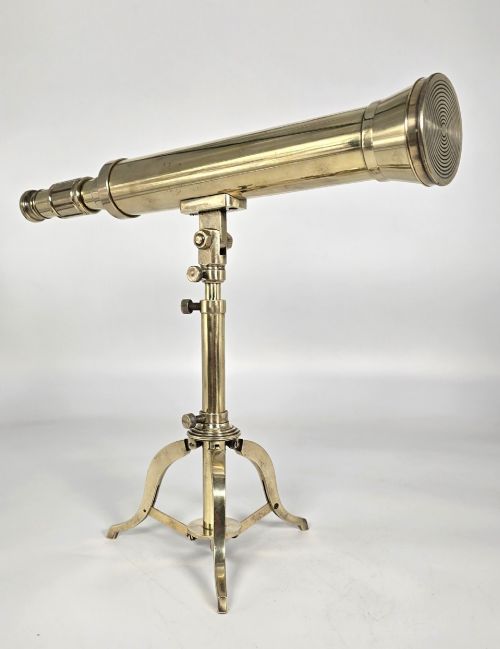
- Library Telescope
- A large optical instrument mounted on a tabletop stand, designed for terrestrial or celestial viewing from a study. They often feature brass barrels supported by mahogany or brass tripods.
- Linen Tester
- A small folding magnifying glass used in the textile trade to count threads within a specific square measure. They frequently incorporate a calibrated folding base and compact brass frame.
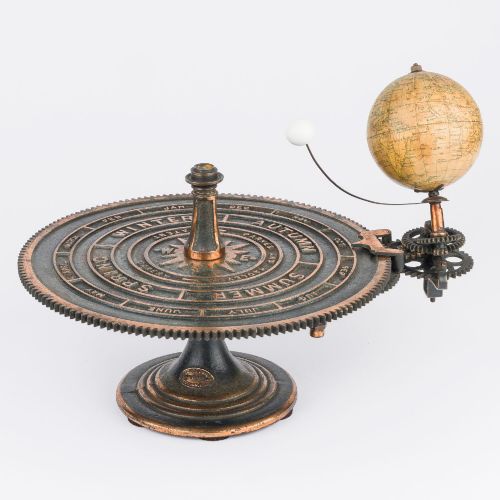
- Orrery
- A mechanical model of the solar system that illustrates the relative positions and motions of the planets and moons. These complex educational pieces combine brass gearwork with mounted spheres.
- Thermometer
- An instrument for measuring temperature, constructed with mercury or spirit columns against calibrated scales. Enclosures range from silver pocket cases to large architectural desk mounts.
Desktop Scientific Instrument: Frequently Asked Questions
What is a barograph?
A barograph is a mechanical weather recording device that uses an aneroid barometer cell connected to an inked arm, tracing air pressure fluctuations onto a rotating paper chart secured to a drum.
Most examples are housed in oak or mahogany cases featuring bevelled glass panels to protect the brass and clockwork mechanism while allowing the drum's rotation to remain visible.
How do I use a library telescope?
Library telescopes are designed for tabletop observation, resting on dedicated brass folding tripods or pillar stands that support the weight of the heavy metal barrel and internal optical lenses.
To view distant objects, adjust the draw tubes or focus knob until the image sharpens, keeping the instrument in a stable indoor environment to protect the brass finish and glass.
Are these instruments still working?
Many barographs, thermometers, and optical instruments retain their mechanical functionality, though scientific calibration may drift over decades of non-use.
Working condition depends on the survival of internal components like barometric bellows, clockwork springs, and clean optical glass, which should be handled with care.
How do I date an instrument?
Dating relies heavily on engraved signatures, patent stamps, and maker marks that correspond to recorded workshop active dates, alongside prevailing architectural and furniture styles in the case design.
Details such as typeface styles, brass casting methods, and the presence of original paper charts or trade labels provide further chronological clues.