18,406  PAGES BROWSED TODAY PAGES TODAY 36  ANTIQUES UPLOADED TODAY NEW ARRIVALS
ID #SA1206365
FOR SALE
£695
Email Buy
Save
Victorian Hot Bed Thermometer by Patrick Adie of London
Jason Clarke Antiques
for sale €813     $883
£695
Jason Clarke Antiques

Jason Clarke Antiques

Sellingantiques Verified Since Jul 2015
View Dealers Stock Page
Id #SA1206365
PDF SHARE
SAVE

Victorian Hot Bed Thermometer by Patrick Adie of London

19th century
Description

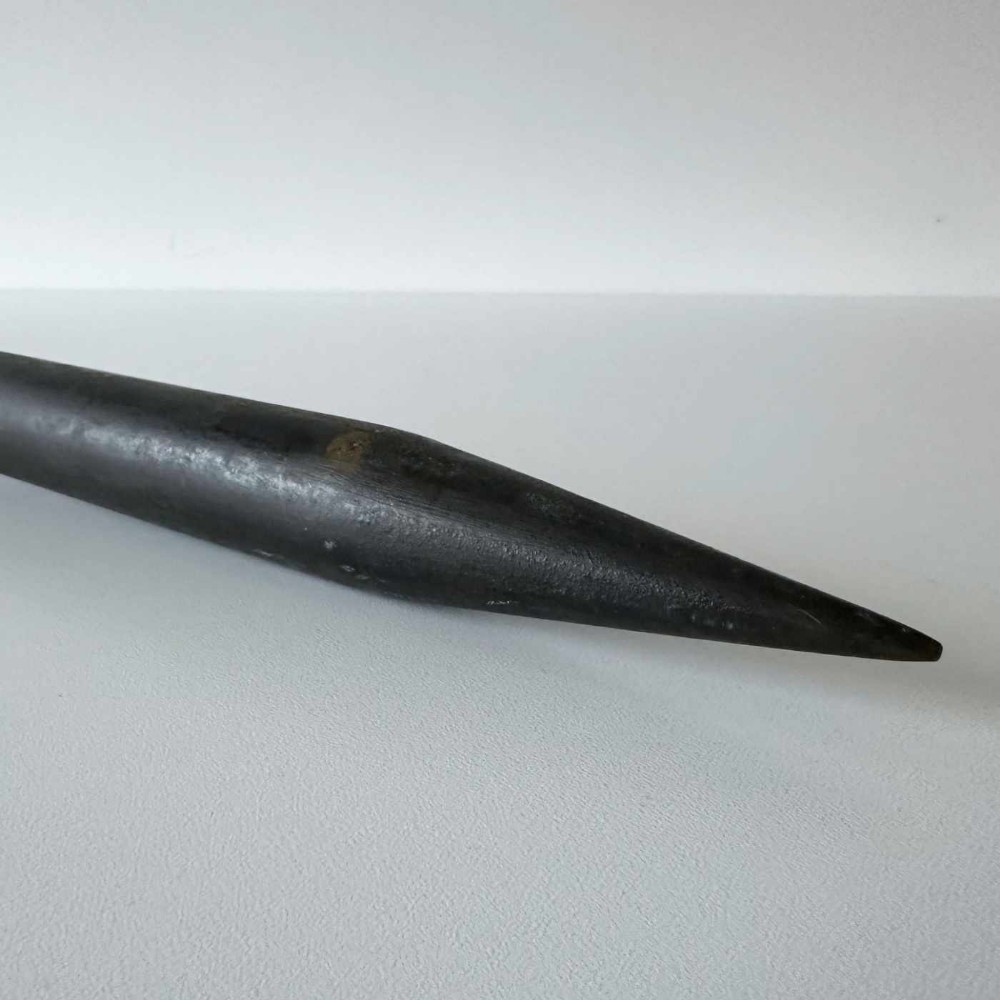
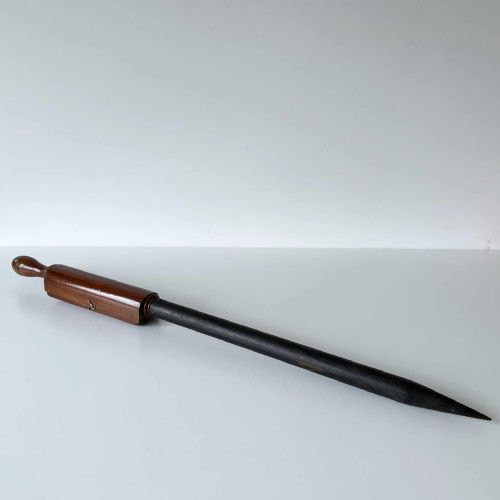
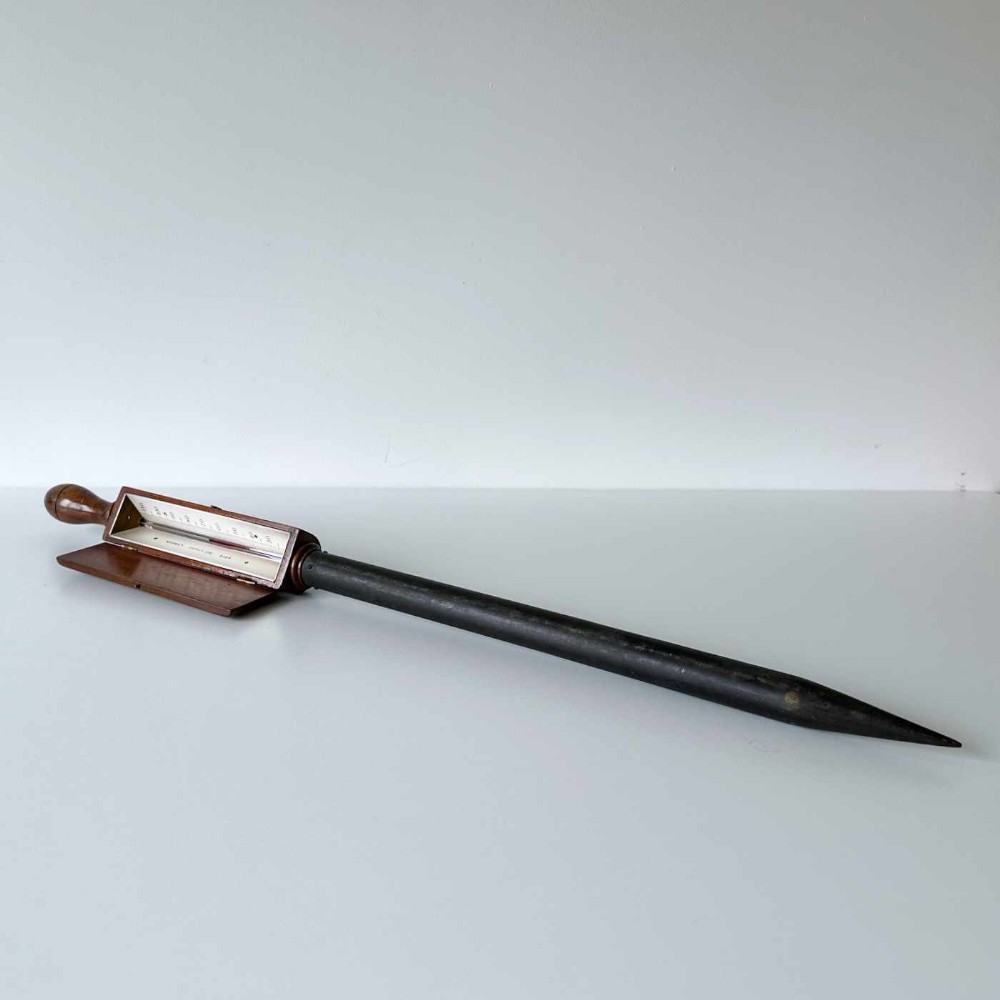
For sale, a rare hot bed thermometer by Patrick Adie of 395 Strand, London

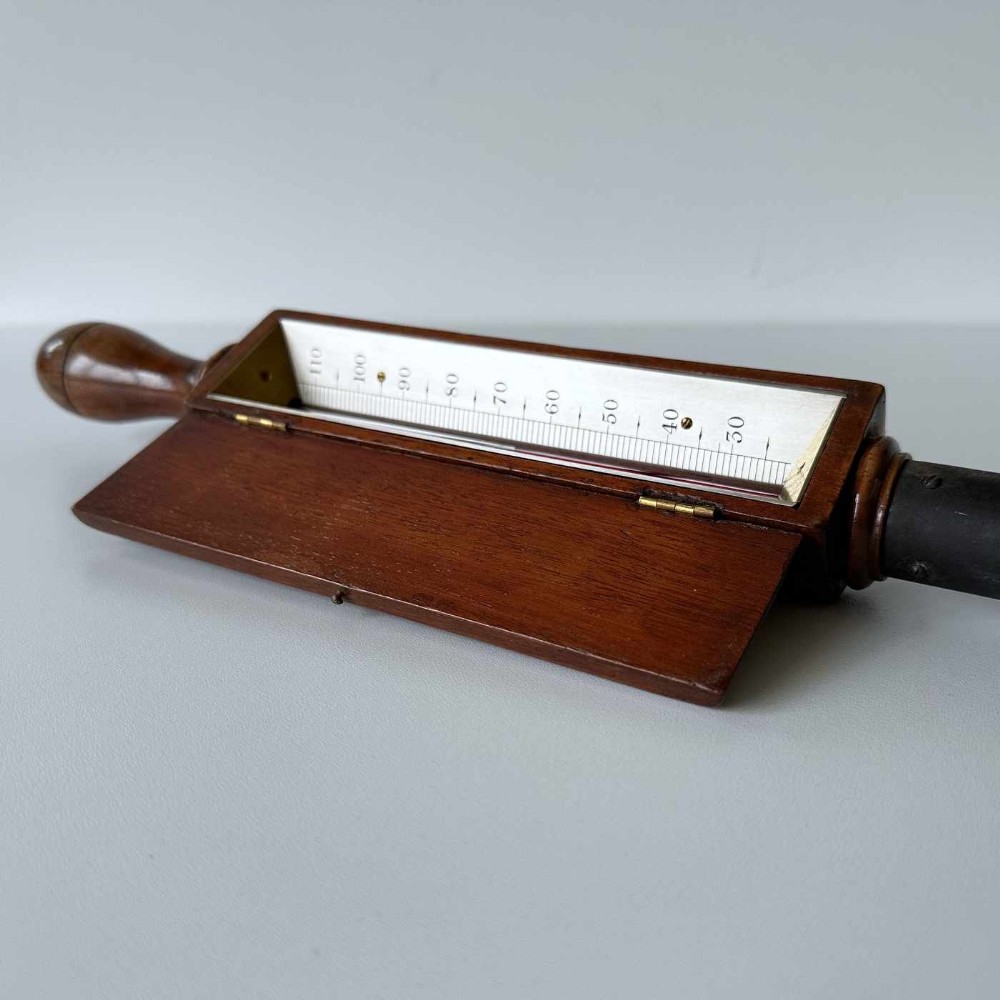
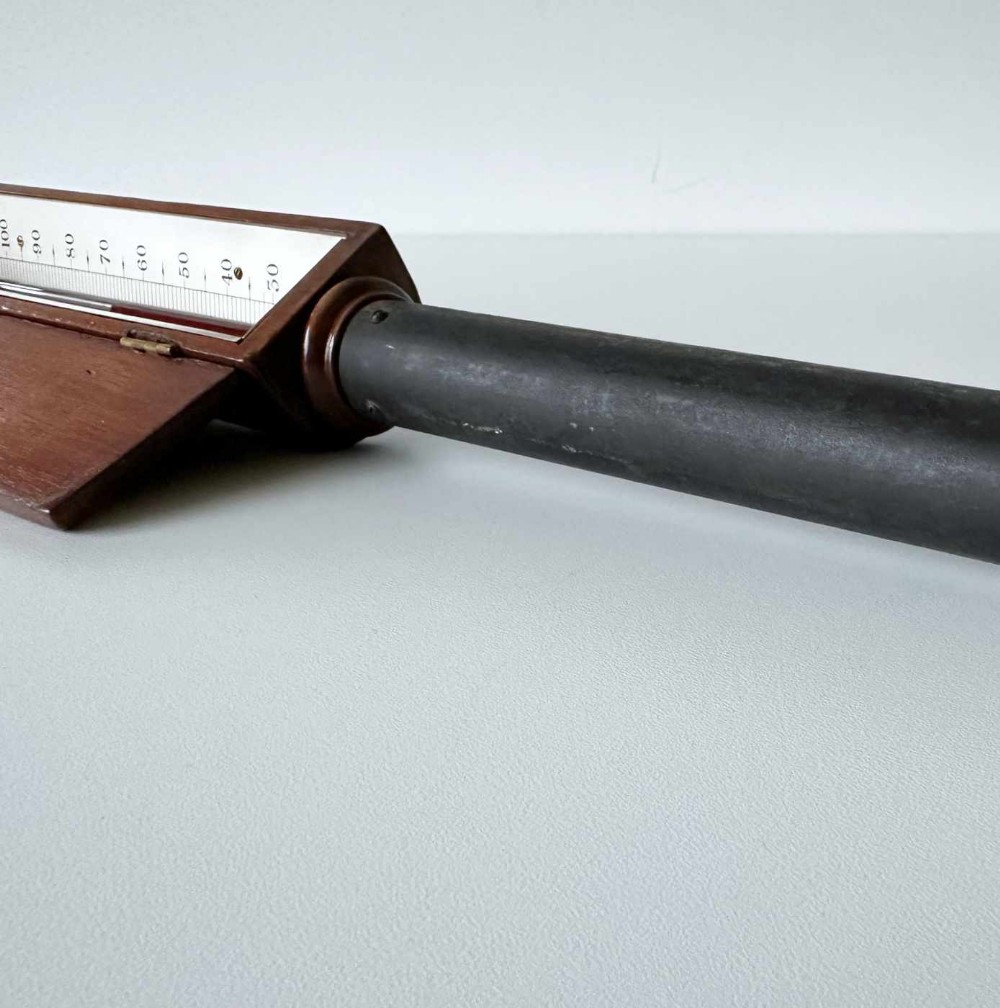
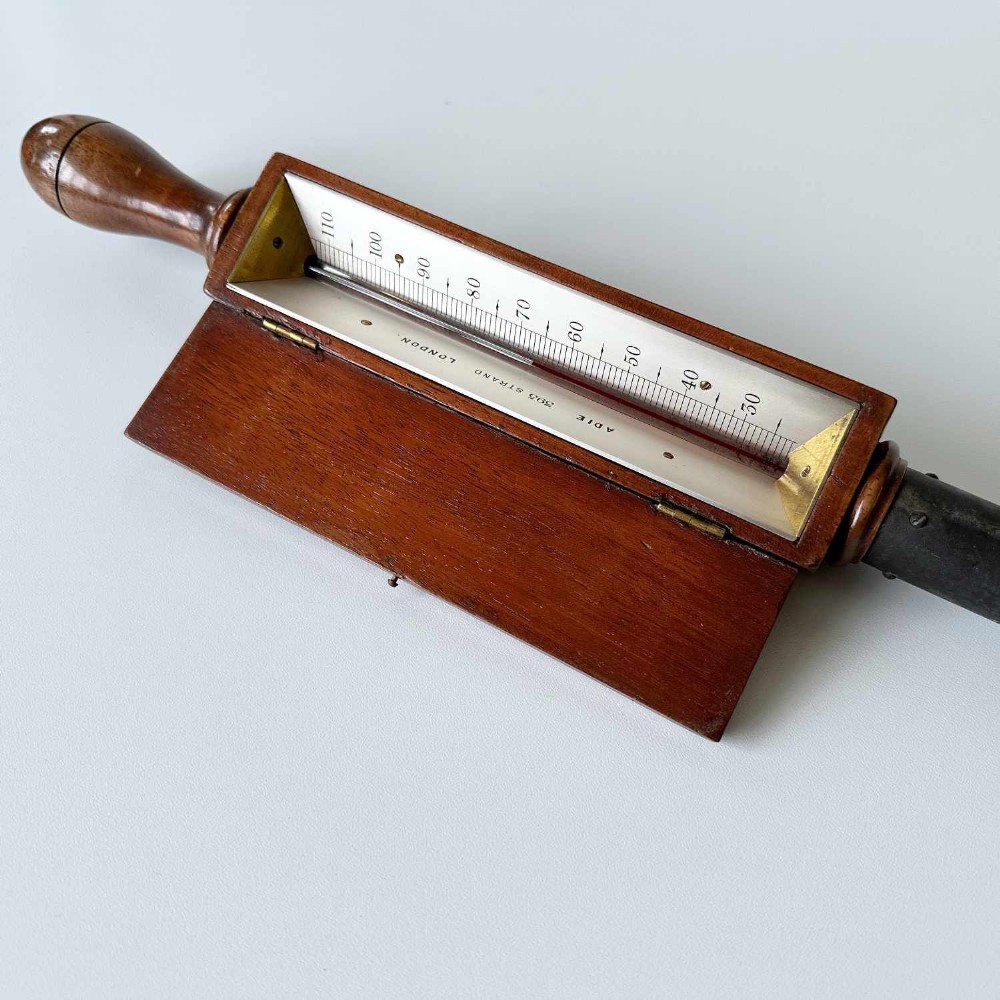
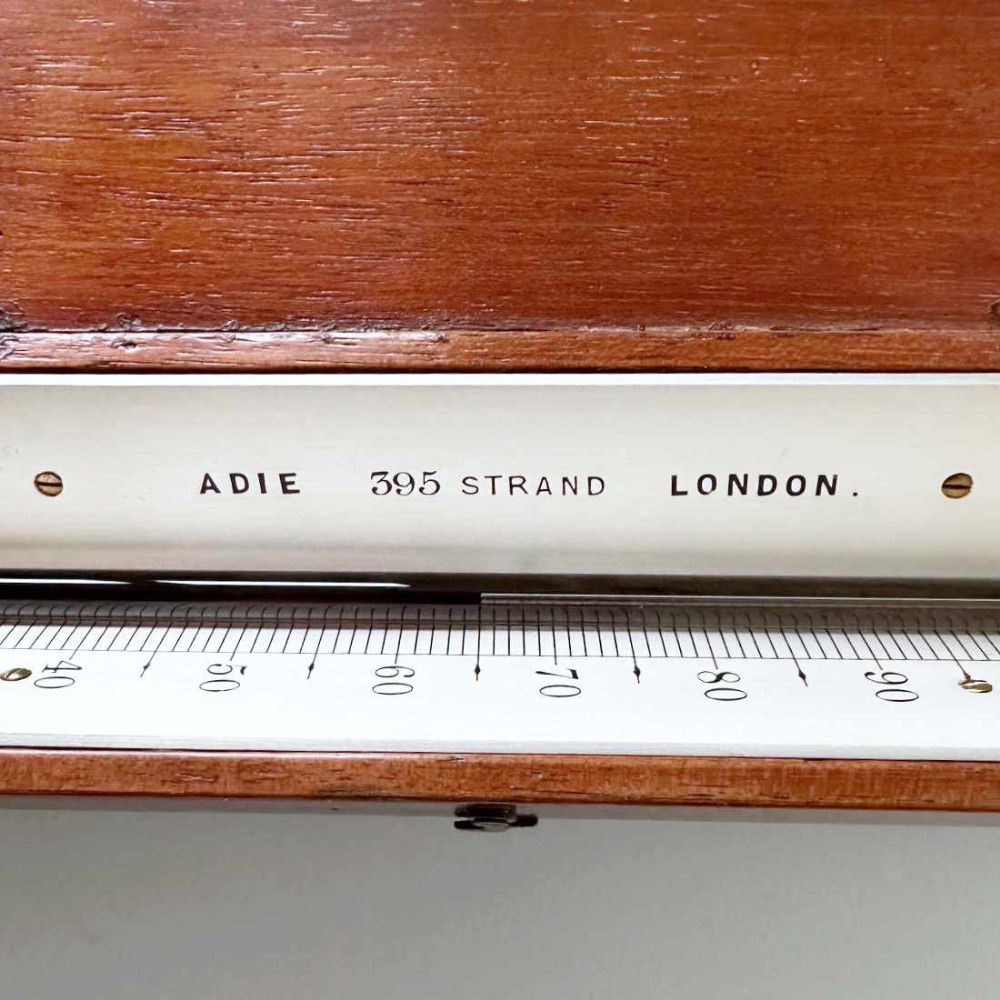
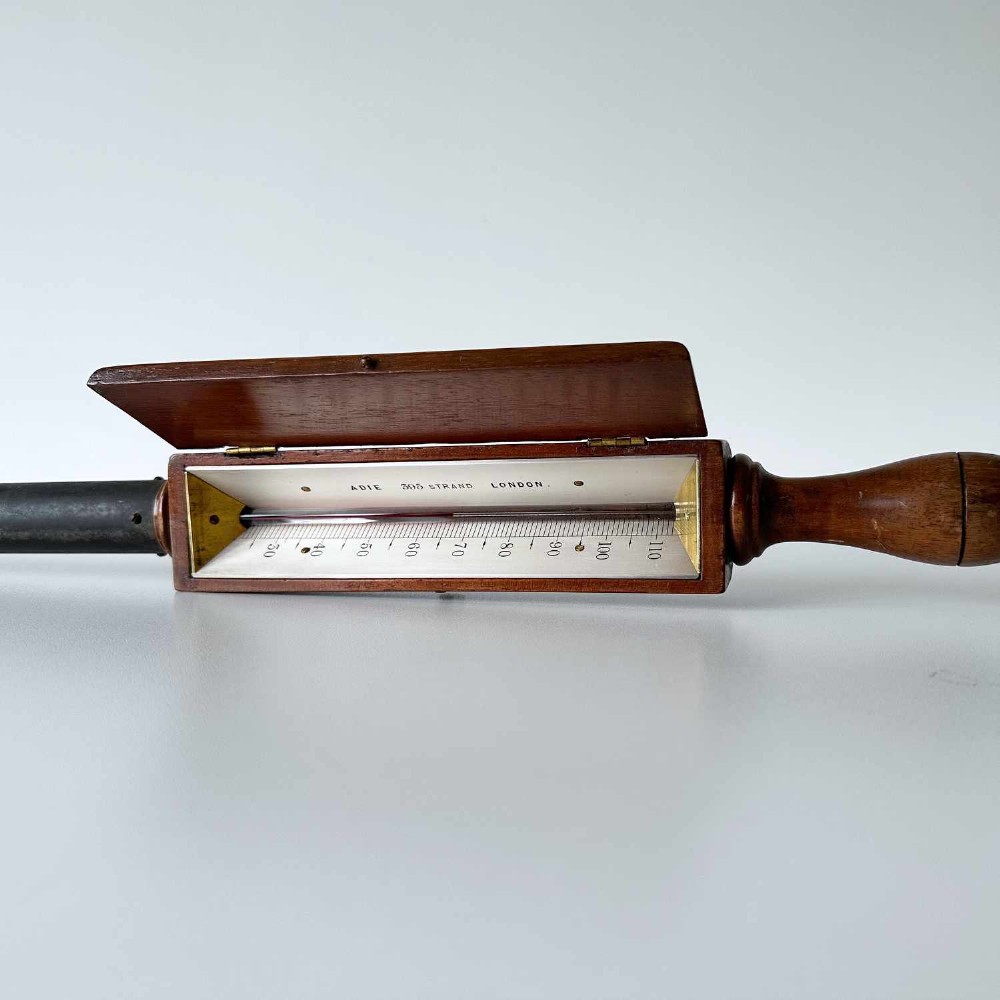
Comprised of a black painted brass tube with spiked end surmounted with a mahogany frame containing a two-piece inverted thermometer scale each side of the thermometer tube which runs through the length of the instrument. The scale is divided for 30 – 100 degrees Fahrenheit and is engraved to the maker, “Adie 395 Strand, London”

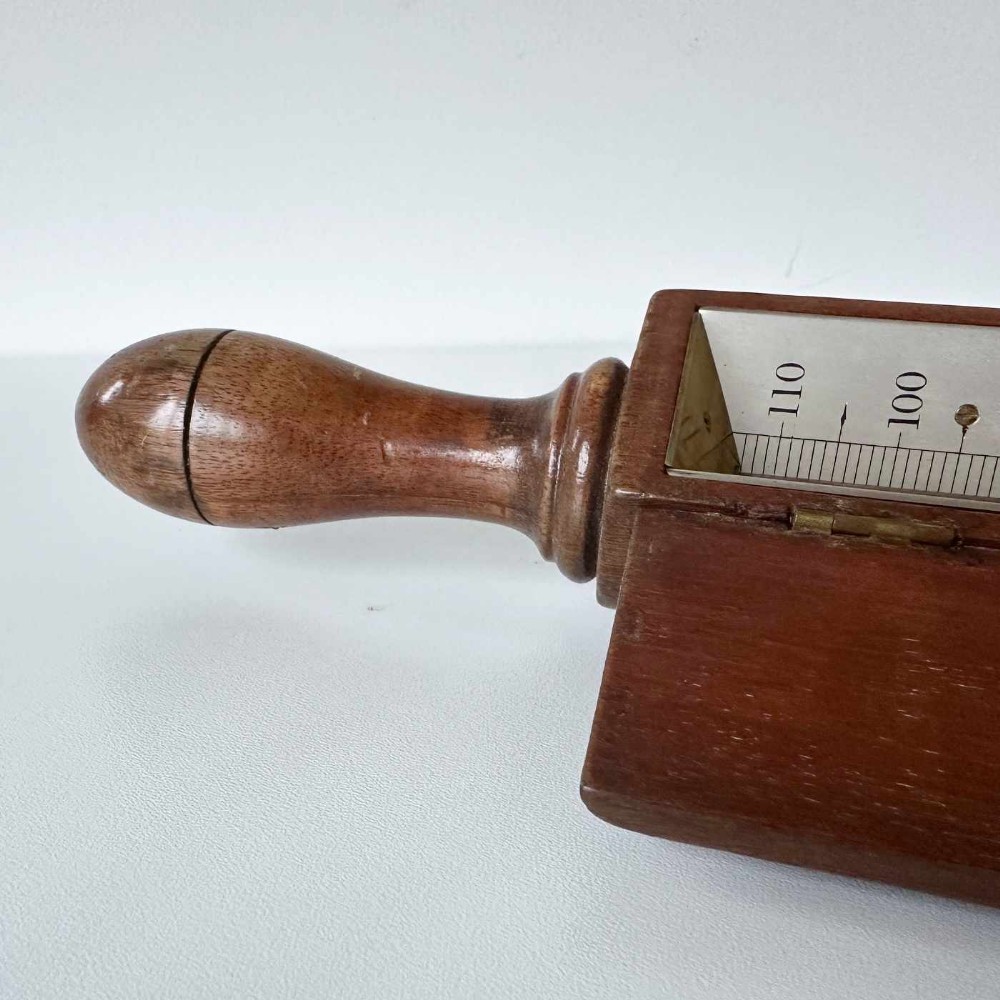
The thermometer is protected by a hinged mahogany door with hook and eye catch to the front of the scale and is topped with a turned mahogany handle for easy insertion and extraction from the soil. The instrument measures 77cm in length.

Exotic plant gardening in Britain increased dramatically from around 1780 and grew exponentially throughout the early to mid-Victorian period. The onset of enclosed kitchen gardens and glass houses required gardeners and horticulturists to more accurately monitor soil temperatures to ensure safety of vulnerable plants and to monitor composting temperatures. In differentiation to soil thermometers, these hot-bed thermometer were therefore provided with scales which would allow for higher temperature readings.

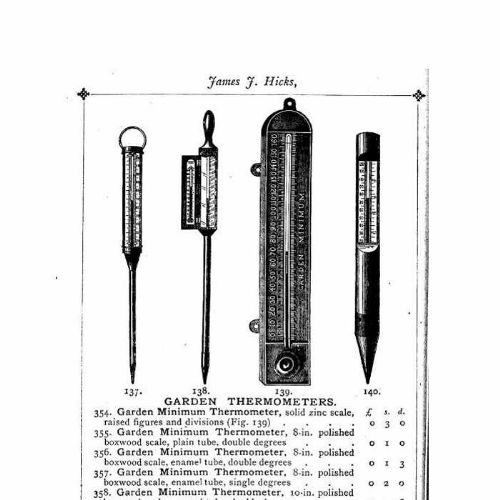
An example image is also provided of a similar example retailed by J Hicks in his catalogues of the 1860’s. Slightly different in construction but designed along the same principles. A rare surviving example which looks to have been used very sympathetically during its working life.

The maker, Patrick Adie set up his business in 1844 at 395 The Strand, after serving apprenticeships with both his Father’s famous Edinburgh firm (Adie & Son) and the gas engineers, Milne & Son and specialised in the production of meteorological instruments. Through contacts made during his apprenticeship and training at Sir Thomas MacDougall Brisbane’s observatory near Kelso, Patrick made the close links with John Welsh Superintendent of The Kew Observatory that would eventually lead to the creation of the famous Kew Pattern marine & station barometers which were used extensively by The Met Office for years to come, a fitting development to his father’s earlier invention of the sypiesometer.

Adie himself developed a number of instruments during his lifetime including the first coincidence rangefinder used in astronomy. He exhibited numerous patent instruments at the Great Exhibition, The Paris Exhibition of 1855 and at the London Exhibition of 1862 and gained medals for his meteorological instruments. Close links were also garnered with the civil engineering industry, and his instruments were used as part of the great trigonometrical survey of India and in the construction of railways at home and abroad. 

Adie eventually died in 1886 from bronchitis and heart disease and upon his death, the Institution of Civil Engineers (of which he had been a member since 1865) wrote:

“That Mr. Adie possessed great inventive power is shown by the fact that he took out no less than twelve patents, many of which are well known, and have proved very successful. One of these patents he was engaged in perfecting at the time of his death. It consists in the employment of corrugated steel belting, in lieu of leather, which he believed would effect a large saving both in power and cost. In this opinion he was supported by some eminent Members of the Institution, to whom he was well known, and who frequently sought the advice which his great experience enabled him to give.”

His business continued until 1942 presumably under family ownership although the latter history of this London firm remains largely unclear. Adverts from this later period for cement making machines suggest a closer association with industry rather than retail.

Circa 1860

Physical Dimensions
Height
77cm (30.31")
Width
5cm (1.97")
Depth
5cm (1.97")
Declaration

Jason Clarke Antiques has dated this Victorian Hotbed Soil Thermometer to the 1860s.

Reference Numbers
Sellingantiques Reference
SA1206365
Description
For sale, a rare hot bed thermometer by Patrick Adie of 395 Strand, London

Comprised of a black painted brass tube with spiked end surmounted with a mahogany frame containing a two-piece inverted thermometer scale each side of the thermometer tube which runs through the length of the instrument.
The scale is divided for 30 – 100 degrees Fahrenheit and is engraved to the maker, “Adie 395 Strand, London”.
Jason Clarke Antiques
fig 1. A Victorian hotbed soil thermometer featuring a long black pointed iron spike attached to a dark wooden housing with a open hinged protective lid revealing a glass scale.
fig 1. Victorian Hot Bed Thermometer by Patrick Adie of London

The thermometer is protected by a hinged mahogany door with hook and eye catch to the front of the scale and is topped with a turned mahogany handle for easy insertion and extraction from the soil. The instrument measures 77cm in length.
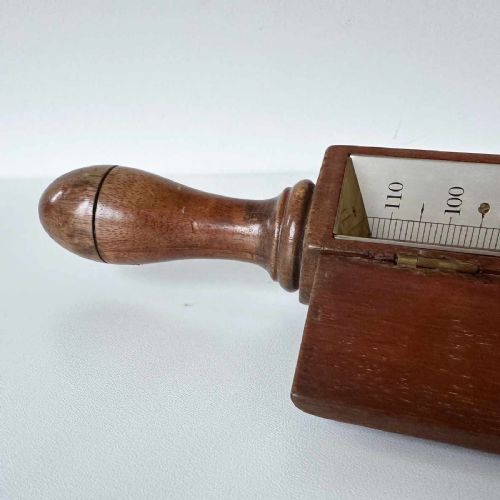
fig 2. A Victorian hotbed soil thermometer featuring a long black pointed iron spike attached to a dark wooden housing with a open hinged protective lid revealing a glass scale.
fig 2. Victorian Hot Bed Thermometer by Patrick Adie of London

Exotic plant gardening in Britain increased dramatically from around 1780 and grew exponentially throughout the early to mid-Victorian period. The onset of enclosed kitchen gardens and glass houses required gardeners and horticulturists to more accurately monitor soil temperatures to ensure safety of vulnerable plants and to monitor composting temperatures. In differentiation to soil thermometers, these hot-bed thermometer were therefore provided with scales which would allow for higher temperature readings.
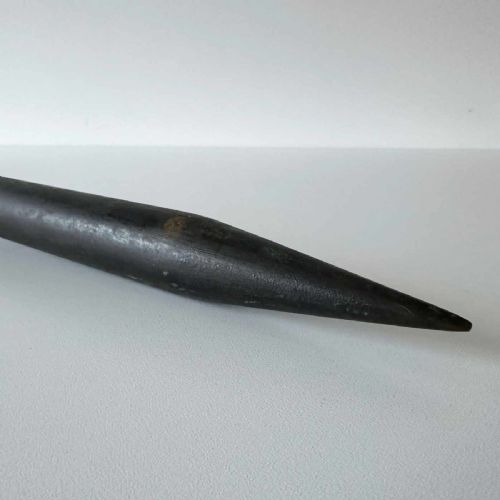
fig 3. A Victorian hotbed soil thermometer featuring a long black pointed iron spike attached to a dark wooden housing with a open hinged protective lid revealing a glass scale.
fig 3. Victorian Hot Bed Thermometer by Patrick Adie of London

An example image is also provided of a similar example retailed by J Hicks in his catalogues of the 1860’s. Slightly different in construction but designed along the same principles. A rare surviving example which looks to have been used very sympathetically during its working life.
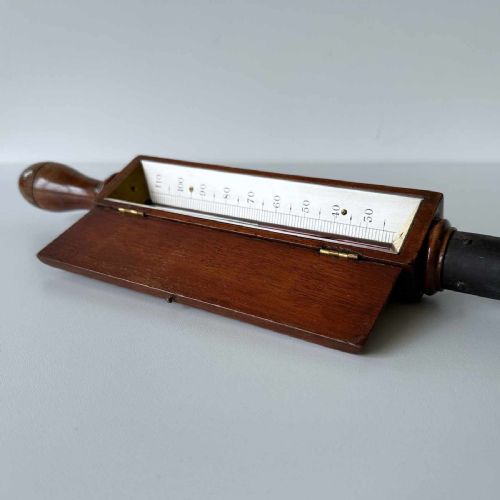
fig 4. A Victorian hotbed soil thermometer featuring a long black pointed iron spike attached to a dark wooden housing with a open hinged protective lid revealing a glass scale.
fig 4. Victorian Hot Bed Thermometer by Patrick Adie of London

The maker, Patrick Adie set up his business in 1844 at 395 The Strand, after serving apprenticeships with both his Father’s famous Edinburgh firm (Adie & Son) and the gas engineers, Milne & Son and specialised in the production of meteorological instruments. Through contacts made during his apprenticeship and training at Sir Thomas MacDougall Brisbane’s observatory near Kelso, Patrick made the close links with John Welsh Superintendent of The Kew Observatory that would eventually lead to the creation of the famous Kew Pattern marine & station barometers which were used extensively by The Met Office for years to come, a fitting development to his father’s earlier invention of the sypiesometer.
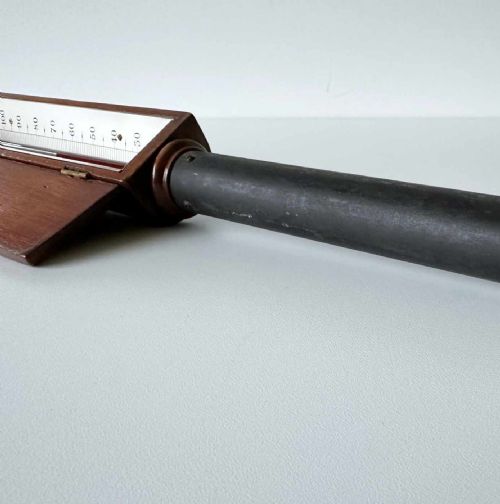
fig 5. A Victorian hotbed soil thermometer featuring a long black pointed iron spike attached to a dark wooden housing with a open hinged protective lid revealing a glass scale.
fig 5. Victorian Hot Bed Thermometer by Patrick Adie of London

Adie himself developed a number of instruments during his lifetime including the first coincidence rangefinder used in astronomy. He exhibited numerous patent instruments at the Great Exhibition, The Paris Exhibition of 1855 and at the London Exhibition of 1862 and gained medals for his meteorological instruments. Close links were also garnered with the civil engineering industry, and his instruments were used as part of the great trigonometrical survey of India and in the construction of railways at home and abroad. 
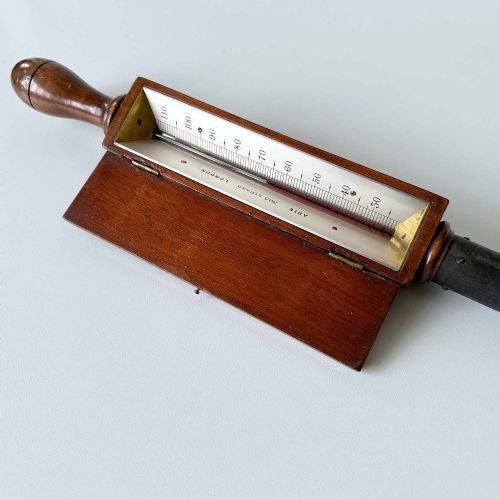
fig 6. A Victorian hotbed soil thermometer featuring a long black pointed iron spike attached to a dark wooden housing with a open hinged protective lid revealing a glass scale.
fig 6. Victorian Hot Bed Thermometer by Patrick Adie of London

Adie eventually died in 1886 from bronchitis and heart disease and upon his death, the Institution of Civil Engineers (of which he had been a member since 1865) wrote:

“That Mr. Adie possessed great inventive power is shown by the fact that he took out no less than twelve patents, many of which are well known, and have proved very successful. One of these patents he was engaged in perfecting at the time of his death. It consists in the employment of corrugated steel belting, in lieu of leather, which he believed would effect a large saving both in power and cost. In this opinion he was supported by some eminent Members of the Institution, to whom he was well known, and who frequently sought the advice which his great experience enabled him to give.”
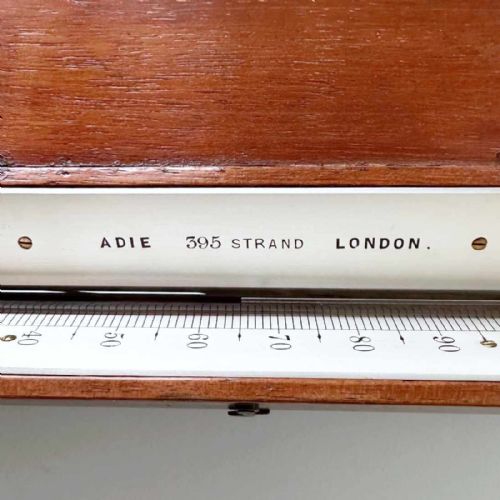
fig 7. A Victorian hotbed soil thermometer featuring a long black pointed iron spike attached to a dark wooden housing with a open hinged protective lid revealing a glass scale.
fig 7. Victorian Hot Bed Thermometer by Patrick Adie of London

His business continued until 1942 presumably under family ownership although the latter history of this London firm remains largely unclear. Adverts from this later period for cement making machines suggest a closer association with industry rather than retail.

Circa 1860

Height
77cm (30.31")
Width
5cm (1.97")
Depth
5cm (1.97")
Date of Manufacture

Jason Clarke Antiques has dated this Victorian Hotbed Soil Thermometer to the 1860s.

Reference Numbers
Sellingantiques Ref
SA1206365
Jason Clarke Antiques
Sellingantiques verified Since Jul 2015
Dealer Profile

You can view the stock and full dealer information on the Jason Clarke Antiques Profile Page
PDF SHARE
SAVE
A Victorian hotbed soil thermometer featuring a long black pointed iron spike attached to a dark wooden housing with a open hinged protective lid revealing a glass scale.
1 / 10
Archive I A Victorian hotbed soil thermometer featuring a long black pointed iron spike attached to a dark wooden housing with a open hinged protective lid revealing a glass scale.

Victorian Hot Bed Thermometer by Patrick Adie of London
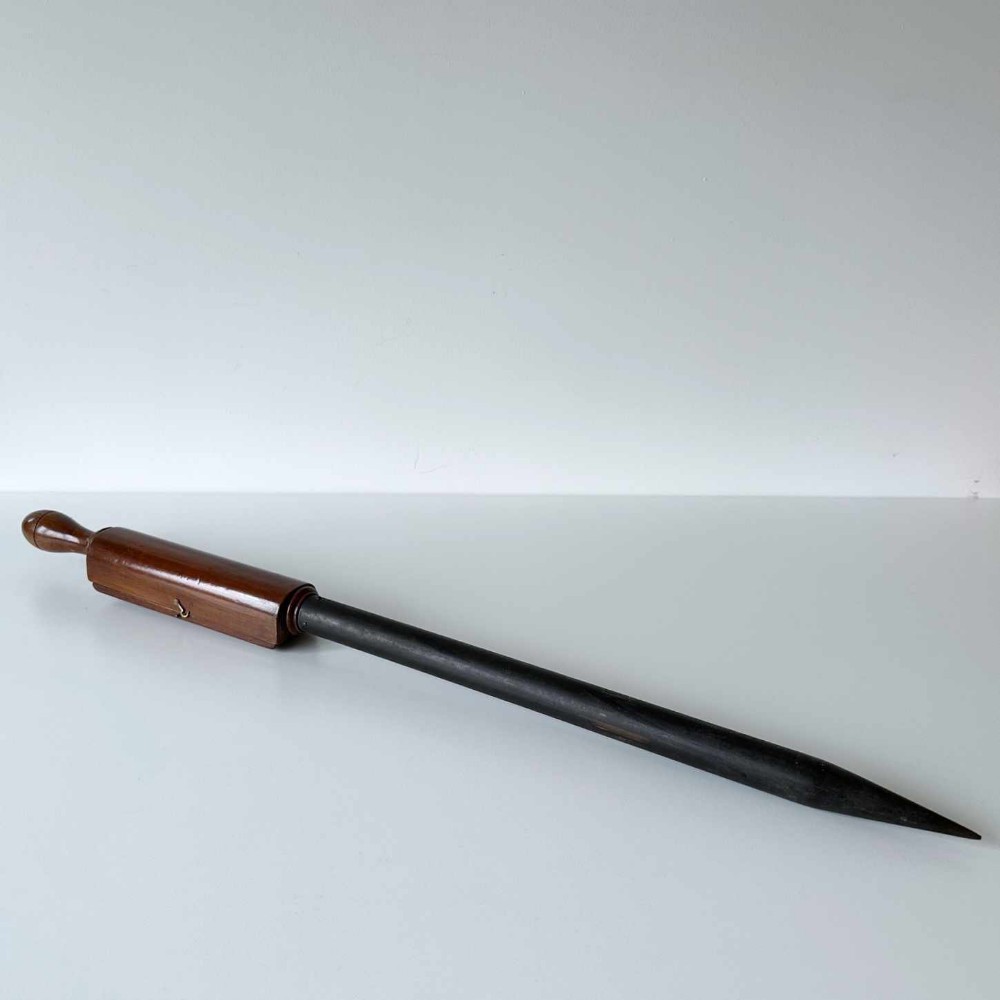
Archive II A Victorian hotbed soil thermometer featuring a long black pointed iron spike attached to a dark wooden housing with a open hinged protective lid revealing a glass scale. View II
Archive III A Victorian hotbed soil thermometer featuring a long black pointed iron spike attached to a dark wooden housing with a open hinged protective lid revealing a glass scale. View III
Archive IV A Victorian hotbed soil thermometer featuring a long black pointed iron spike attached to a dark wooden housing with a open hinged protective lid revealing a glass scale. View IV
Archive V A Victorian hotbed soil thermometer featuring a long black pointed iron spike attached to a dark wooden housing with a open hinged protective lid revealing a glass scale. View V
Archive VI A Victorian hotbed soil thermometer featuring a long black pointed iron spike attached to a dark wooden housing with a open hinged protective lid revealing a glass scale. View VI
Archive VII A Victorian hotbed soil thermometer featuring a long black pointed iron spike attached to a dark wooden housing with a open hinged protective lid revealing a glass scale. View VII
Archive VIII A Victorian hotbed soil thermometer featuring a long black pointed iron spike attached to a dark wooden housing with a open hinged protective lid revealing a glass scale. View VIII
Archive IX A Victorian hotbed soil thermometer featuring a long black pointed iron spike attached to a dark wooden housing with a open hinged protective lid revealing a glass scale. View IX
Archive X A Victorian hotbed soil thermometer featuring a long black pointed iron spike attached to a dark wooden housing with a open hinged protective lid revealing a glass scale. View X
Enlarged Archival View
Telephone 07815 046645
Location
Newbury
Berkshire
United Kingdom
Verified Since Jul 2015
Items For Sale 82
Items Sold 605
Jason Clarke Antiques
Verified Since Jul 2015
View Dealer Info
Location: Newbury, Berkshire, United Kingdom
Verified
Jul 2015
For Sale
82
Sold
605
A Victorian hotbed soil thermometer featuring a long black pointed iron spike attached to a dark wooden housing with a open hinged protective lid revealing a glass scale.
Victorian Hot Bed Thermometer by Patrick Adie of London
Ref: SA1206365
A Victorian hotbed soil thermometer featuring a long black pointed iron spike attached to a dark wooden housing with a open hinged protective lid revealing a glass scale.
Detail View 1
Detail View 2
Detail View 3
Detail View 4
Detail View 5
Detail View 6
Detail View 7
Detail View 8
Detail View 9
Archival Detail
Every single antique dealer on our platform is individually approved by our internal team. We verify their professional trade history, ethical standards, and photographic quality to ensure a secure, high-standard buying environment. Upon joining, every dealer agrees to a strict 9-point code of conduct. While issues can occasionally arise, our dealers typically resolve them swiftly and directly with the buyer. In fact, since our founding in 2002, Sellingantiques has only had to step in to help resolve an issue on roughly five occasions—a true testament to the quality of our dealers and their dedication to your happiness.
Our dealers are highly experienced in packing and shipping fragile, high-value antiques. Because you are in direct contact with the dealer, you will be able to easily go through all available shipping and insurance options together to ensure your item arrives safely.
Antiques are the ultimate green purchase. By choosing historical pieces over newly manufactured goods, you completely eliminate the carbon footprint of modern mass production while preserving exceptional, timeless craftsmanship.

Hotbed thermometers were designed during the nineteenth century to monitor internal soil temperatures in covered propagation beds, ensuring optimal warmth for seed germination and delicate plants.

These specialised instruments usually feature a heavy iron or steel spike for driving into compost, topped with a protective wooden housing containing a thermometer scale with brass fittings.

Authentic nineteenth-century pieces typically exhibit makers marks from recognised scientific instrument makers, hand-engraved scales, patinated metal spikes, and functional wooden protective covers.

Display the instrument horizontally across a conservatory shelf, inside a glazed cabinet, or mounted within a library alongside other antique scientific instruments and botanical specimens.

Keep the instrument dry to prevent oxidisation on the metal shaft, clean the wooden casing with a soft microfibre cloth, and avoid exposing the glass liquid element to extreme temperature changes.
items
Add keywords to the filter
Price
£100
£250000
Era
Movements
Material
Origin
Stock Location
Freshness
Online Payments
Categories