




Vintage Mercury Gauge
These vintage mercury gauge pieces are precision instruments built to measure pressure and temperature, bringing functional Victorian and Georgian engineering straight into a modern interior.
Vintage Mercury Gauge
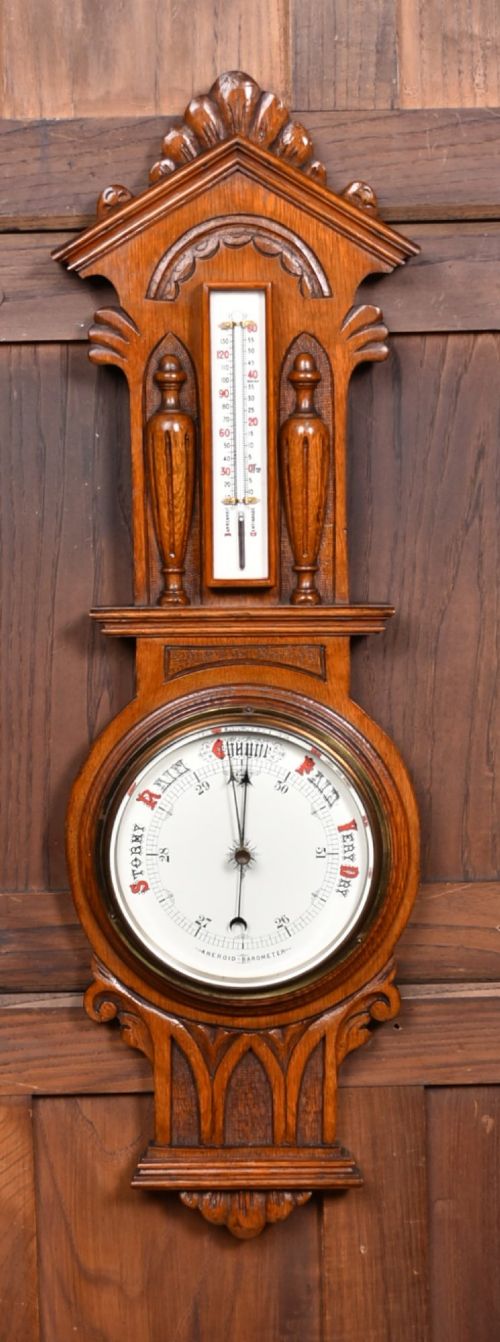
When you search for vintage mercury gauge items, you are looking at scientific instruments and domestic barometers or thermometers spanning the eighteenth century through to the Art Deco period. These pieces encompass banjo barometers, wheel barometers, stick barometers, and wall or desk thermometers housed in timber cases.
You are most likely to meet Victorian and Georgian examples on this page, often constructed from mahogany, oak, or rosewood with silvered metal dials. The selection ranges from compact wall-mounted instruments to large travel thermometers in original leather cases.
Materials and construction
Cases were predominantly turned and polished from dense hardwoods such as mahogany, rosewood, and oak, frequently enhanced with boxwood inlay or carved details. Instrument faces utilised silvered metal plates engraved with graduations and maker details, protected behind heavy glass covers.
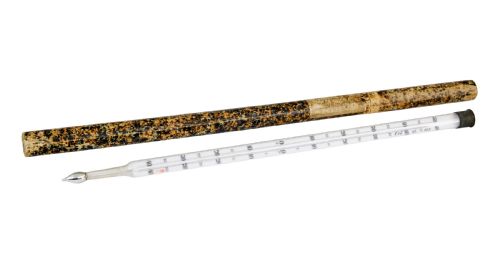
Internal mechanisms relied on glass tubes containing liquid mercury sealed alongside brass fittings and delicate linkages. Travel versions incorporated fitted leather cases to protect the glass components during movement.
Travel thermometers ensure that even nineteenth-century gentlemen could complain about the weather while away from home.
Judgments of quality
The distinction between standard utility instruments and high-end pieces lies in the precision of the mechanics and the cabinetmaker's skill. Finer examples feature crisp engraving on silvered dials, high-grade timber veneers, and finely carved or inlaid cases by noted makers.
Originality of components and casework dictates the standing of a piece within its period. Intact mercury columns, legible scales, and well-preserved timber finishes elevate the instrument beyond basic domestic utility.
George Adams of Fleet Street·Alexander Wright Westminster·Goldsmiths of London·Cox of Plymouth Dock·Thomas Harris And Son·James H Kelly·Dollond London·W Watson And Sons
The Vintage Mercury Gauge Glossary
- Banjo barometer
- A wall barometer shaped like a banjo, featuring a circular dial at the base and a long trunk containing a thermometer or hygrometer. This form became popular during the nineteenth century.
- Silvered metal
- A brass or copper dial treated to achieve a silver-coloured finish, usually engraved with black-filled lettering and scale graduations. This surface catches light well while remaining legible.
- Fortin stick barometer
- A precision mercury barometer utilising an adjustable cistern with an ivory point to set the mercury level. It represents a higher standard of scientific instrument making.
- Aneroid barometer
- A barometer that measures pressure without liquid, using a flexible metal box. However, traditional mercury gauges on this page rely on fluid columns.
- Minimum thermometer
- An instrument designed to record the lowest temperature reached, often utilising spirit or mercury alongside an index marker. These were frequently housed in porcelain or metal frames.
Vintage Mercury Gauge: Frequently Asked Questions
How do I read a mercury barometer?
Read the ambient pressure by noting the position of the mercury column against the engraved scale on the silvered metal dial. Many banjo styles include a secondary pointer to track changes relative to your primary reading.
Changes in the height of the mercury indicate shifts in atmospheric pressure, which traditionally signal approaching weather patterns. Tapping the glass gently before reading ensures the indicator needle settles accurately.
Where should I place a wall thermometer?
Hang your thermometer on an interior wall away from direct sunlight, radiators, and draughts to secure an accurate room temperature reading. Kitchens and hallways often experience micro-climates that do not reflect the wider home.
Ensure the wall fixings match the weight of the timber case, particularly with larger Victorian oak or mahogany instruments. Secure mounting protects both the wooden surround and the internal glass tube.
Are travel thermometers different?
Travel thermometers were built into protective leather or wood cases, allowing nineteenth-century gentlemen to monitor conditions on journeys. They often feature folding stands or compact dimensions compared to wall-hung equivalents.
These portable items demonstrate robust construction designed to withstand transit while retaining delicate glass mercury reservoirs inside fitted compartments.
How do I date a barometer?
Examine the timber species, case style, and dial typography to establish the period of manufacture. Georgian pieces often display simpler mahogany proportions, while Victorian examples introduce heavier carving, rosewood veneers, or Gothic Revival influences.
Signed dials bearing maker names provide the clearest path to dating, especially when linked to recorded working periods of London or provincial opticians.