
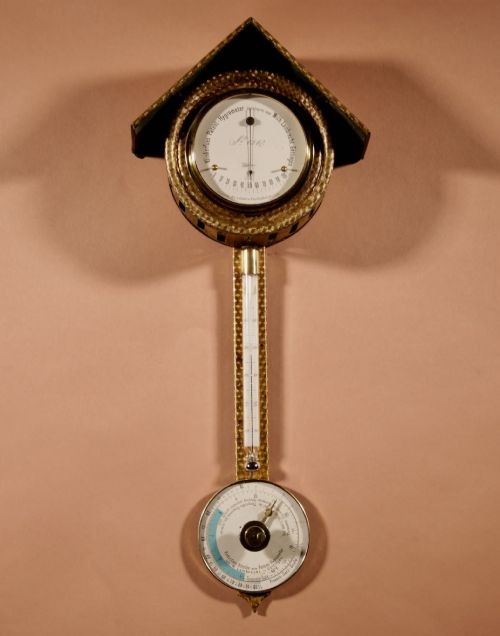
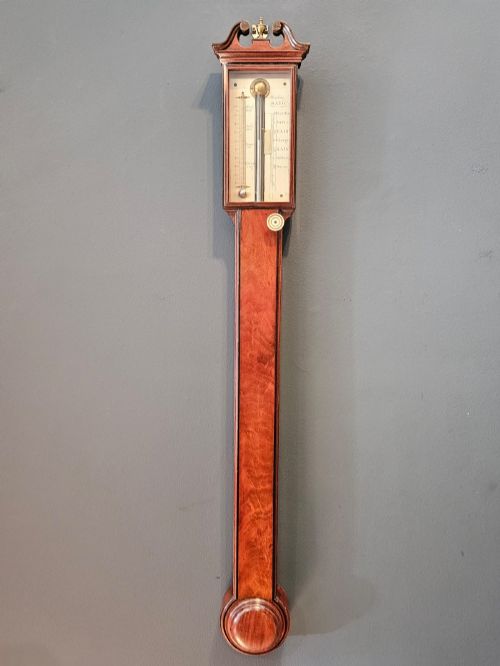
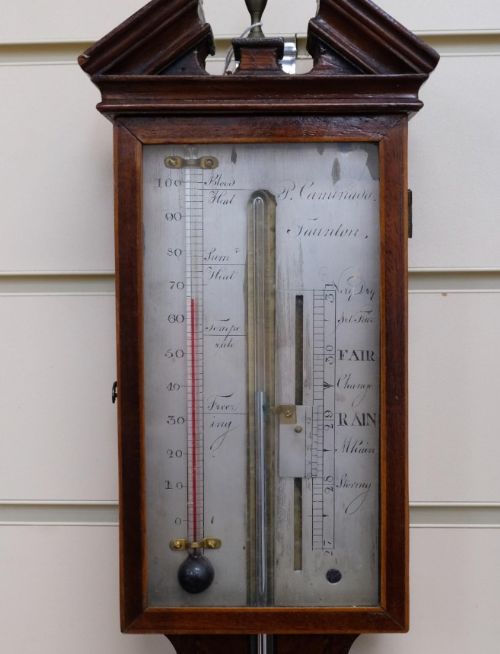


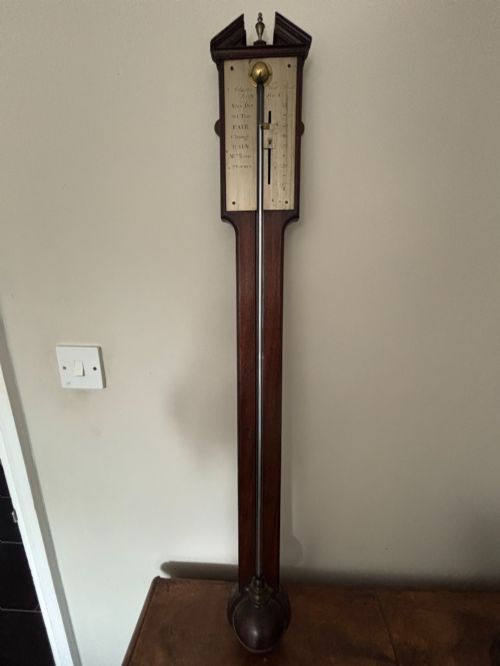



Scientific Wall Barometer
A scientific wall barometer is an instrument for measuring atmospheric pressure, combining precision engineering with cabinet timbers.
Scientific Wall Barometer
A scientific wall barometer measures atmospheric pressure to predict weather changes while serving as a functional interior furnishing. When you search for a scientific wall barometer, you encounter instruments housed in timber wall cases designed to hang in hallways and reception rooms.
The pieces appearing on this page span the Georgian, Regency, and Victorian periods, extending into the early twentieth century. Examples range from simple stick barometers to complex weather stations incorporating hygrometers and thermometers.
Mahogany and rosewood cases predominate, alongside oak and inlaid marquetry variants. Dial faces appear in silvered metal, brass, and glass, often signed by the maker on the scaleplate.
Materials and Construction
Cabinetmakers built the wall cases using dense hardwoods such as mahogany, rosewood, and oak, frequently adding boxwood stringing or mother-of-pearl inlay. These timbers provided the stable enclosure necessary to protect the sensitive internal mechanisms from environmental humidity.
Instrument makers filled the vertical columns and cisterns with mercury, or assembled aneroid metal capsules connected to mechanical levers and gears. Graduated scales were engraved upon silvered brass or silvered metal plates, protected beneath flat or convex glass bezels.
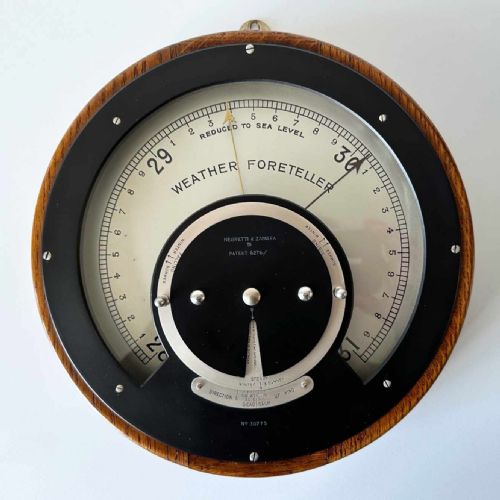
Some nineteenth-century weather foretellers included little mechanical figures that emerged from doorways to indicate rain or shine.
Quality Variations
Quality rests upon the precision of the maker's engraved scale and the fidelity of the mechanical linkage inside the case. Signed instruments by known London or provincial makers demonstrate superior calibration compared to anonymous workshop pieces.
The refinement of the cabinetwork distinguishes standard production from exceptional examples, seen in figured veneer selection, marquetry detail, and cast brass cistern covers. Original mercury tubes and intact glass bezels retain greater integrity than later replacements.
Wilh. Lambrecht·Short & Mason·G & L Guanziroli·Negretti & Zambra·Alexander Wright·Dollond of London·Antoine Redier·Charles Baker
The Scientific Wall Barometer Glossary
- Stick barometer
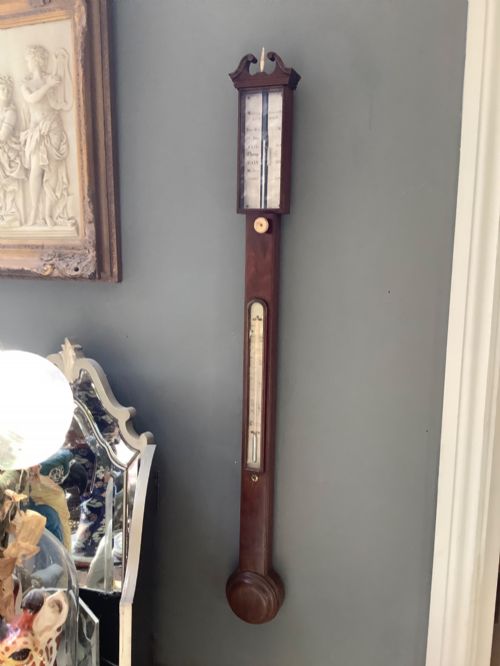
- An instrument utilising a vertical glass tube filled with mercury set against a calibrated scale. The column rises and falls with atmospheric pressure.
- Aneroid barometer
- A barometer measuring pressure through the contraction and expansion of a sealed corrugated metal box containing a partial vacuum. This design eliminates liquid mercury entirely.
- Sympiesometer
- A portable barometer using oil or coloured liquid compressed by air trapped above it, often paired with a thermometer for temperature correction.
- Hygrometer
- An instrument measuring atmospheric humidity, frequently incorporated into multi-instrument weather stations.
- Barograph
- A mechanical barometer that records barometric pressure continuously onto a rotating paper drum over a week.
Scientific Wall Barometer: Frequently Asked Questions
How do I read a stick barometer?
Observe the level of the mercury column against the engraved scaleplate. Vernier scales allow readings to be taken down to fractions of an inch or millimetres.
Rising mercury indicates improving weather, while falling mercury signals approaching rain or wind.
Where should I hang a wall barometer?
Mount the instrument securely to a sturdy interior wall away from direct sunlight and heating vents. Temperature fluctuations can distort mechanical responses and timber cases.
Position the dial at eye level in a hallway or study for ease of daily observation.
How do I tell an aneroid from a mercurial barometer?
Mercurial barometers feature a tall vertical wooden trunk containing a visible glass tube filled with liquid metal. They rely on gravity acting upon the column.
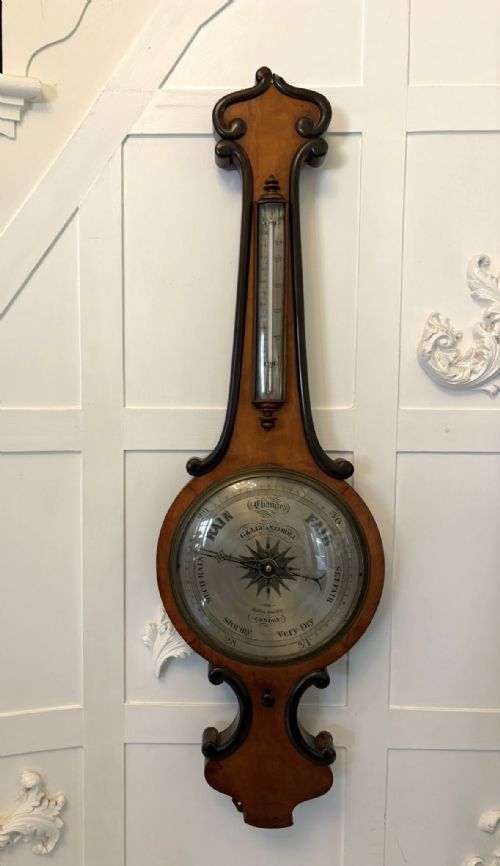
Aneroid barometers typically appear in circular or banjo cases with a dial face and pointer needle operated by internal springs.
What is a weather station?
A weather station combines a barometer with supplementary meteorological instruments within a single wall-mounted case. Common companions include thermometers and hygrometers.
These composite instruments provided Victorian households with comprehensive data for forecasting local conditions.