



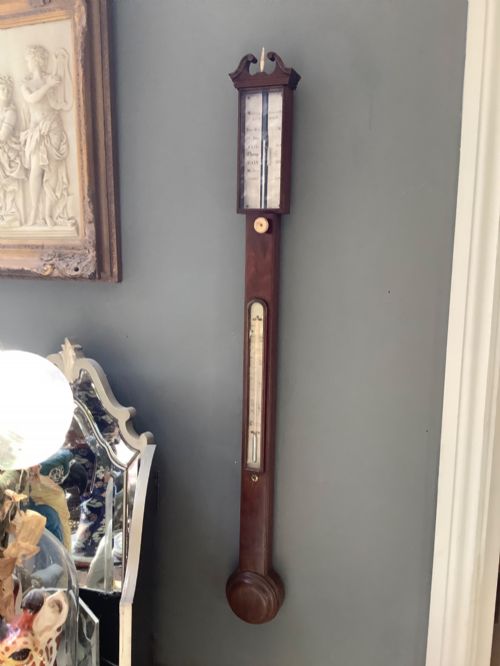
Antique Glass Thermometer
These antique glass thermometer pieces combine precision science with cabinet-making, offering functional weather observation housed in period timbers.
Antique Glass Thermometer
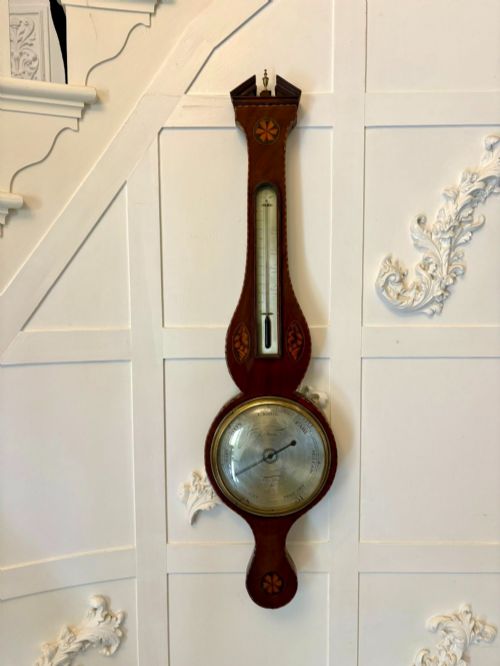
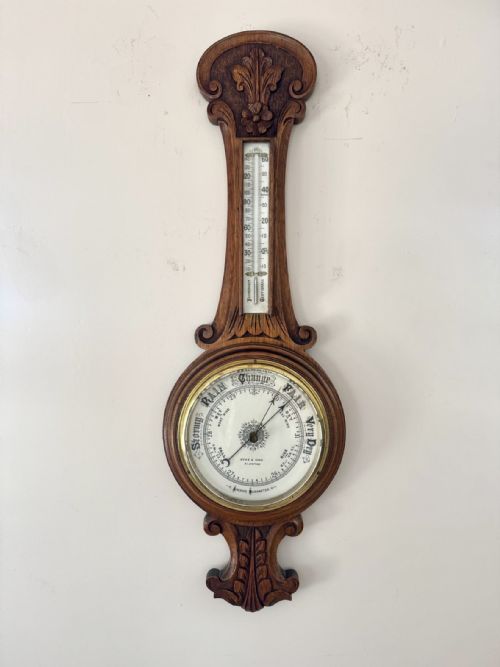
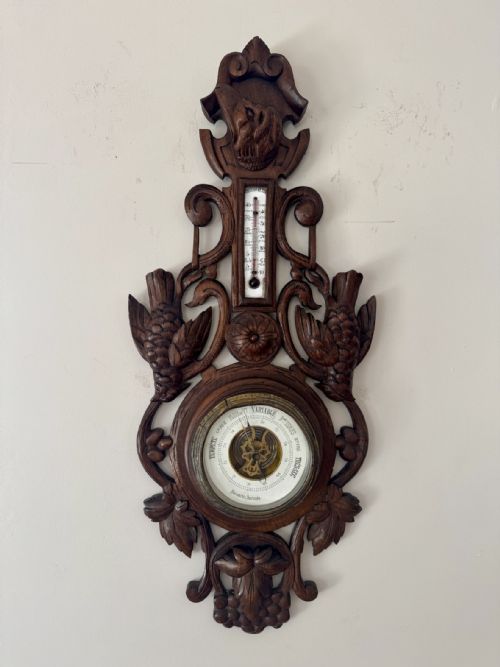
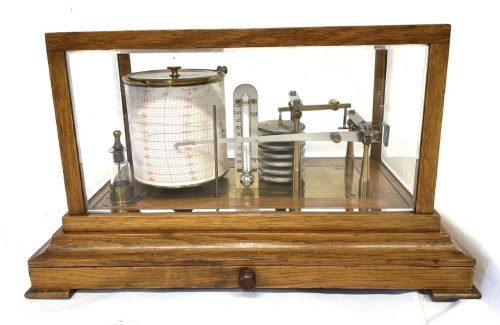
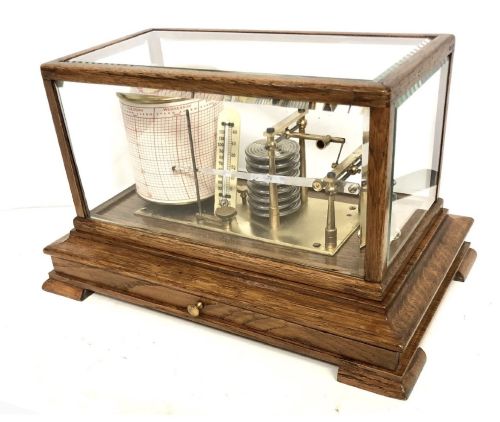
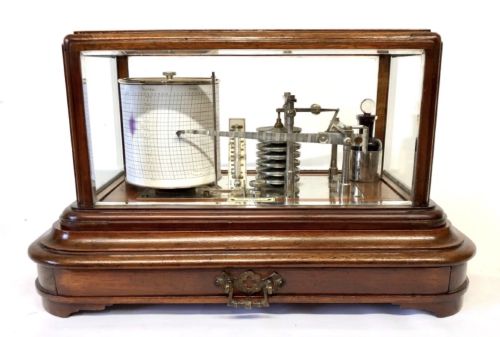
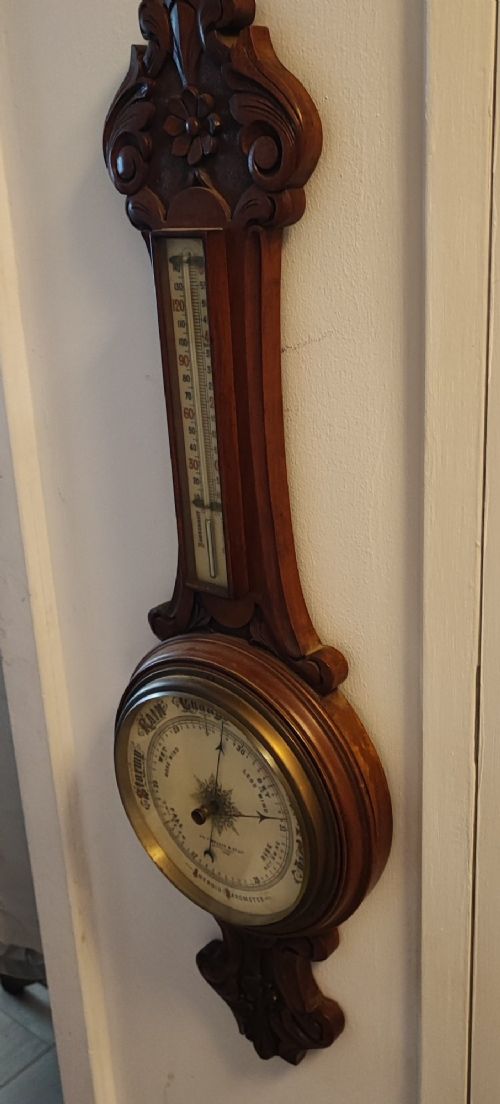
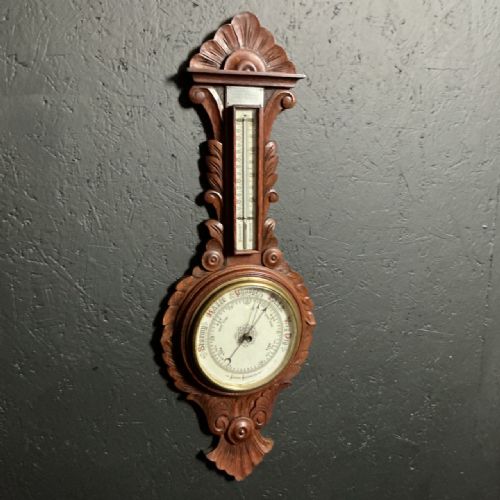
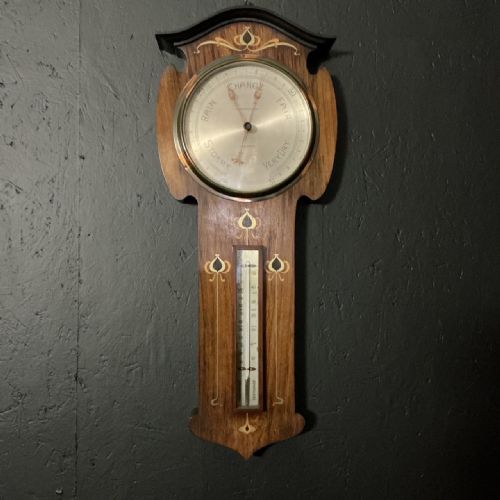
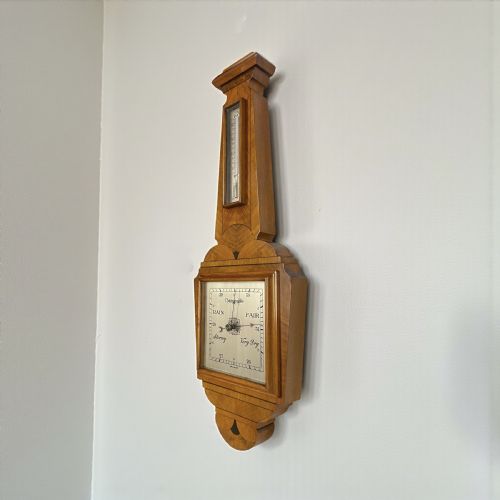
An antique glass thermometer typically appears housed within larger scientific instruments or weather-recording devices, ranging from wall-hanging barometers to desk barographs and mantel clocks. You will most frequently encounter them integrated into Victorian and Edwardian oak, mahogany, or carved Black Forest barometer housings.
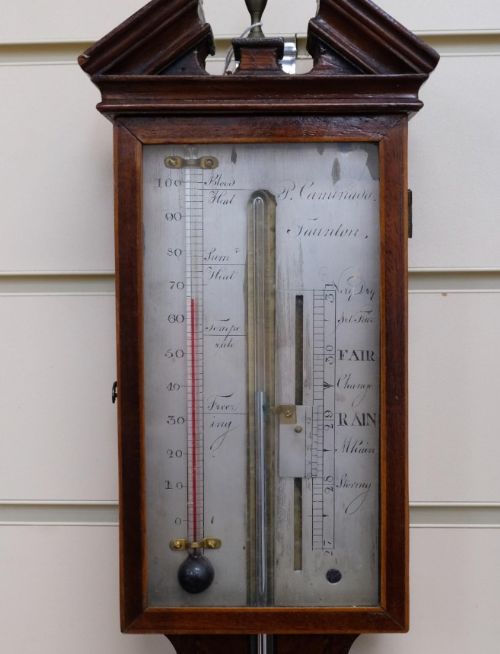
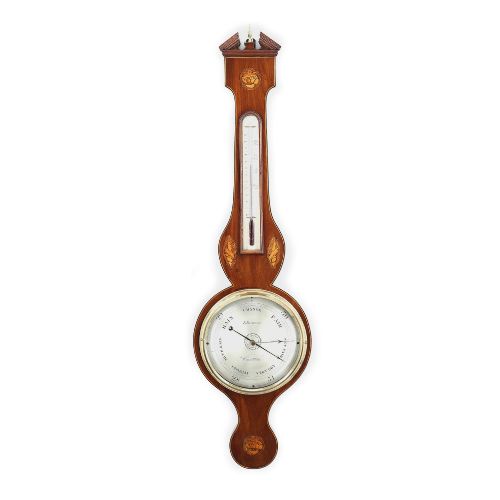
The objects span multiple periods, with Georgian stick barometers and Regency wheel designs representing the earlier forms, while late nineteenth-century carved oak and walnut models dominate the selections seen here.
Many examples combine the thermometer tube directly onto the face of wheel barometers or beside the revolving drum of a barograph, encased behind bevelled glass with detailed scales.
How they were made
Maker workshops utilised dense cabinet timbers such as mahogany, oak, walnut, and rosewood, often shaping them through deep relief carving or adding intricate shell inlay and mother-of-pearl decoration.
The delicate glass thermometer tubes required careful calibration alongside brass or silvered metal scale plates, secured into wooden backings alongside barometric movements and mercury or alcohol reservoirs.
Listings feature scientific instruments primarily across Victorian, Georgian, and Edwardian periods, constructed from glass, brass, mahogany, and carved oak.
What varies in quality
Quality rests in the harmony between the precision of the scientific scale and the depth of the cabinet-maker's artistry, separating simple utility items from high-end parlour pieces.
Superior examples display crisp calibration engravings on the metal scale plates, heavy bevelled glass covers, and richly figured timbers with sophisticated carving or marquetry.
Hyde & Sons Sleaford·P. Caminada Taunton·B. Besozzi of Weymouth·G & L Guanziroli London·Negretti & Zambra London·Molton of Norwich·Luisetti of London·W Watson & Sons
The Antique Glass Thermometer Glossary
- Aneroid barometer
- An instrument that measures atmospheric pressure without liquids, often incorporating a thermometer alongside the dial.
- Barograph
- A recording barometer that graphs pressure changes onto a rotating paper chart, frequently fitted with an accompanying thermometer.
- Wheel barometer
- A banjo-shaped wall instrument featuring a large round dial at the base and a thermometer or hygrometer set into the trunk above.
- Stick barometer
- A tall, narrow wall instrument where the mercury column is exposed against a long vertical scale, representing earlier Georgian designs.
- Bevelled glass
- Glass panes with angled, polished edges fitted into the door or aperture protecting the delicate dials and thermometer tubes.
Antique Glass Thermometer: Frequently Asked Questions
How do I read an antique thermometer?
Read the temperature against the engraved scale plate beside the glass tube, noting whether the instrument uses a mercury or alcohol column.
Matching the fluid level to the calibration marks reveals the ambient room or weather temperature recorded by the Victorian or Edwardian mechanism.
Where should I hang my barometer?
Hang your instrument on an interior wall away from direct sunlight, radiators, and draughts to protect the wooden case and ensure accurate atmospheric readings.
Secure it firmly using appropriate fixings suited to the heavy oak, mahogany, or carved Black Forest timber backplates.
Are these thermometers still accurate?
Many antique thermometer and barometer combinations retain their functional capability, though they serve primarily as historic decorative objects.
Their primary charm lies in the craftsmanship of the glass tubes and the surrounding cabinetry rather than daily meteorological precision.