


Antique Weather Predictor
An antique weather predictor brings mechanical forecasting and domestic precision into your room, offering hands-on observation of atmospheric pressure.
Antique Weather Predictor
When you search for an antique weather predictor, you are looking at domestic barometers, scientific instruments and combination clocks that track atmospheric changes. These pieces range from Georgian wheel barometers and Regency instruments to Victorian aneroid and marine designs, alongside Edwardian examples.
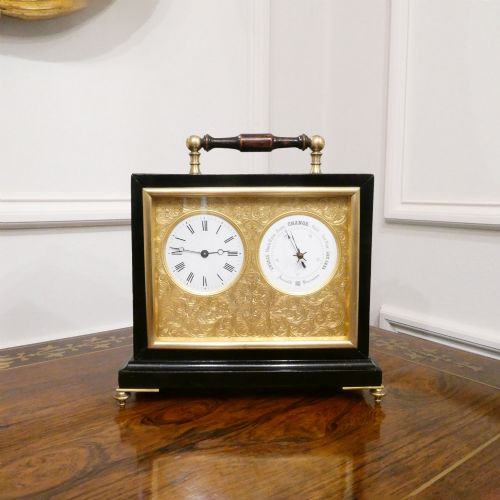
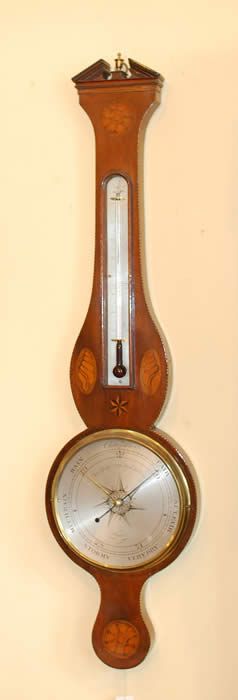
You are most likely to meet Victorian and Georgian designs on this page, housed in mahogany, walnut, or ebonised wood cases with silvered metal dials. Many incorporate wall clocks, mantel clocks, and thermometers within the same wooden housing.
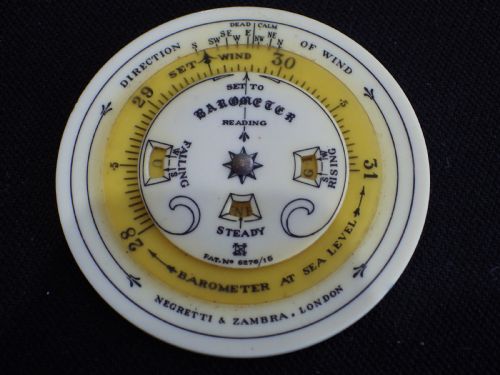
The selection includes specialised pocket forecasters in boxes with instructions, as well as distinct Black Forest carvings and Onion top cases. Each piece reflects the domestic and scientific priorities of its period.
Materials and construction
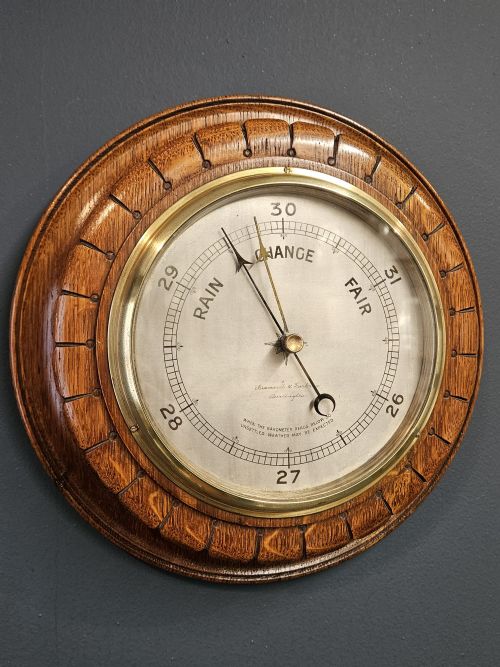
Cases are constructed from solid timbers including mahogany, walnut, and ebonised wood, often shaped into traditional forms like the onion top or carved Black Forest motifs. Brass and silvered metal provide durable, readable surfaces for engraved scales and dials.
Glass protects the delicate needles and tubes, while enamel and celluloid details appear on specific pocket and dial faces. Makers integrated woodworking with precision metalworking to house sensitive internal mechanisms.
Antique Weather Predictor Retail Price Guide 2026
Typical asking prices for weather predictor among the pieces listed under this phrase on Sellingantiques today, from the lower quarter to the upper quarter. They describe what is for sale here now, not the wider market.
Some pocket forecasters came with tiny instruction booklets so you could argue with the weather while on the move.
Judging quality and execution
The reputation of the maker and the clarity of the mechanical setup distinguish standard production items from workshop pieces. Original components and legible, detailed scales separate the best examples from simpler instruments.
Negretti & Zambra·Bramwell & Harbron of Darlington·Blake & Son of London & Gosport·W.E. Pain of Cambridge·Bassi·Dominic Gatty
The Antique Weather Predictor Glossary
- Aneroid barometer
- A barometer that measures atmospheric pressure without liquids, using a small flexible metal box called an aneroid cell. This design became common during the Victorian period for domestic use.
- Wheel barometer
- A barometer featuring a circular dial where a float in the tube connects to a pulley and needle. This form allows for prominent placement in a wooden hall or wall case.
- Silvered metal
- A metal surface treated with a silver coating, then engraved and blackened for legibility. It provides the contrasting background standard on quality barometer dials.
- Marine barometer
- A specialised instrument designed to compensate for the motion of a ship at sea. These feature gimbals or heavy mounting to maintain vertical alignment.
- Black Forest
- A stylistic origin denoting carved wooden cases from the German region. These pieces utilise naturalistic foliage and animal carvings.
Antique Weather Predictor: Frequently Asked Questions
How do these barometers work?
Barometers measure changes in atmospheric pressure using enclosed mercury columns or flexible metal capsules. As pressure rises or falls, internal linkages move a pointer across the engraved dial.
Historically, this movement indicated upcoming weather shifts, allowing households to anticipate rain or fair conditions before heading outdoors.
Where should I place a wall barometer?
Wall barometers need stable indoor locations away from direct heat sources, strong sunlight, and heavy drafts. Fluctuating temperatures can affect internal components and disrupt readings.
Most traditional examples feature hanging brackets designed for secure placement on interior living room or hallway walls.
What is a pocket forecaster?
A pocket forecaster is a portable scientific instrument housed in a protective case, often supplied with printed instructions. These compact devices allowed travellers to check barometric pressure away from home.
They combine brass and glass construction in miniature, functioning on the same pressure-sensing principles as larger wall-mounted instruments.
How do I date an antique barometer?
Dating relies on stylistic clues in the wooden case, such as Georgian proportions versus Victorian carving styles. Inscribed maker signatures and the evolution of dial layouts also provide chronological markers.
Materials like celluloid or specific brass framing techniques help narrow down the period of manufacture.