





Vintage Temperature Gauge
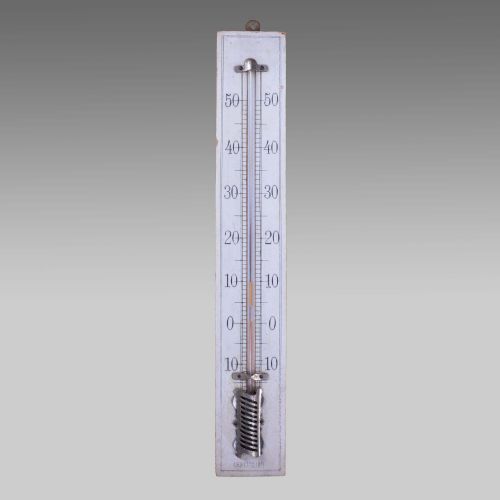
These vintage temperature gauge pieces are functional scientific instruments and wall thermometers that bring period precision and mechanical charm into a room.
Vintage Temperature Gauge
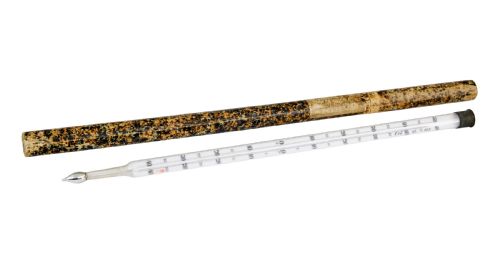
When you search for a vintage temperature gauge, you encounter precision scientific instruments and wall thermometers designed to measure heat with mechanical integrity. These pieces range from Georgian wall cases to Victorian desk accessories and travel instruments housed in leather.
You are most likely to meet Victorian and nineteenth-century wall thermometers or cased scientific examples on this page. They combine practical utility with traditional craftsmanship, often spanning domestic, botanical, and travel applications.
The selection includes specialised items such as hot bed thermometers, hypsometer aneroid barometers, and max and minimum temperature pairs. Each form reflects the specific domestic or scientific demands of its period of origin.
How they were made
Maker workshops utilised dense timbers such as mahogany and painted wood to construct durable wall cases and protective housings. Glass tubes were meticulously calibrated and mounted alongside engraved brass scales to record temperature shifts accurately.
Travel and desk instruments required specialised fitted cases lined with velvet or bound in leather for safe carriage. Bronze, silver, and iron components were incorporated into select pieces to provide structural strength and decorative finish.
The listings on this site span materials including brass, mahogany, glass, and velvet across styles from Georgian to Art Deco.
What varies in quality
Quality depends upon the precision of the maker's graduation work and the legibility of the engraved brass or porcelain scales. Finer examples retain their original glass tubes and undamaged wooden or leather cases without structural replacement.
The distinction between standard domestic pieces and superior items lies in the sophistication of the mechanism and the quality of the cabinetry. Signed works by established instrument makers demonstrate a higher grade of overall assembly and material selection.
George Adams of Fleet Street·Patrick Adie of London·Goldsmiths of London·Cox of Plymouth Dock·Negretti & Zambra·Thomas Harris & Son·Dollond London·W Watson & Sons London
The Vintage Temperature Gauge Glossary
- Hypsometer
- An instrument used for measuring height or elevation by determining the boiling point of a liquid. This scientific device often combines barometer and thermometer functions in a single cased apparatus.
- Hot Bed Thermometer
- A specialised agricultural thermometer designed to monitor soil and manure bed temperatures for gardening. These long-stemmed instruments allowed Victorian gardeners to manage greenhouse conditions effectively.
- Aneroid Barometer
- A device that measures atmospheric pressure without liquid, using an expanding metal capsule. It frequently appears paired with thermometer scales in nineteenth-century weather instruments.
- Wall Thermometer
- A domestic or scientific instrument mounted on a wooden backplate for hanging in a room. Eighteenth and nineteenth-century versions often feature architectural mahogany cases with detailed scale plates.
Vintage Temperature Gauge: Frequently Asked Questions
What is a vintage temperature gauge used for?
These instruments were originally utilised to monitor ambient room temperature, weather changes, or specific conditions such as botanical hot beds and travel environments. Today, they serve primarily as decorative antiques with significant historical and mechanical interest.
Collectors display them on walls or desks to appreciate the combination of scientific utility and period cabinetry craftsmanship.
How do I identify a Georgian temperature gauge?
Georgian examples, dating from the eighteenth century, typically feature architectural mahogany wall cases with exposed glass tubes and finely engraved brass or ivory scale plates. They often bear the signature of the maker inscribed directly onto the brass plate.
The woodwork shows traditional cabinet-making techniques characteristic of the period, distinct from later Victorian mass production.
Are travel thermometers different from wall thermometers?
Travel thermometers were built into protective leather or velvet-lined cases designed to survive journeys without breaking the delicate glass tubes. Wall thermometers lack these portable outer cases and instead feature hanging brackets or shaped wooden backplates for static display.
Both types utilise similar mercury or alcohol measurement principles but serve entirely different domestic contexts.
How should I clean a wooden temperature case?
Maintenance of the wooden housing requires gentle dusting and occasional application of appropriate furniture wax to preserve the mahogany or painted finish. Care must be taken around the fragile glass tubes and historical scale plates to avoid accidental disruption.
Harsh chemical cleaners should be avoided entirely to protect the antique patina and original maker inscriptions.