5,809  PAGES BROWSED TODAY PAGES TODAY 0  ANTIQUES UPLOADED TODAY NEW ARRIVALS
ID #SA762193
SOLD
Email
Save
Antique Hand Carved Black Forest Bears Inkstand 19th Century
Regent Antiques
sold SA762193
Sorry, but this item has been sold.
Regent Antiques

Regent Antiques

Sellingantiques Verified Since Sep 2016
View Dealers Stock Page
  • About Us
    We specialise in english and continental furniture, silver, porcelain and decorative items.
  • Trade Associations
    Regent Antiques is a registered member of LAPADA  CINOA
Id #SA762193
PDF SHARE
SAVE

Antique Hand Carved Black Forest Bears Inkstand 19th Century

19th century
Description

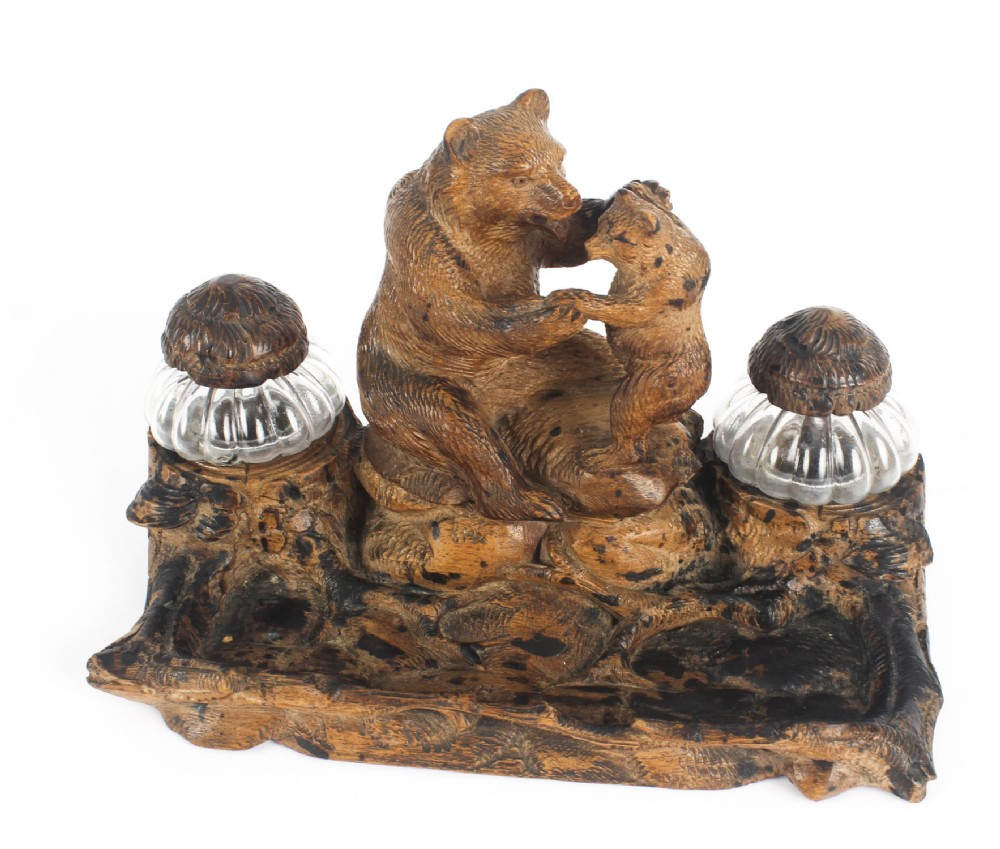
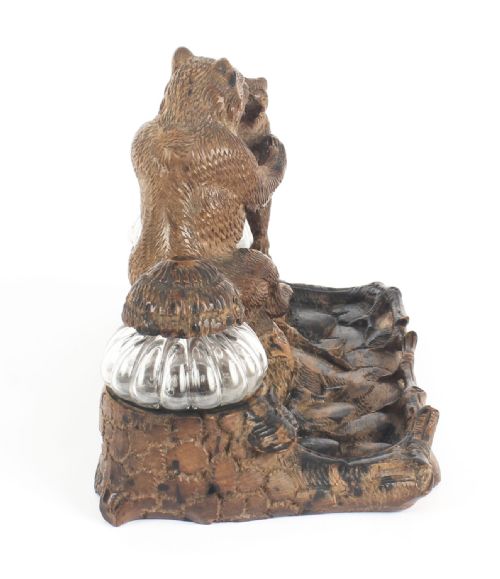
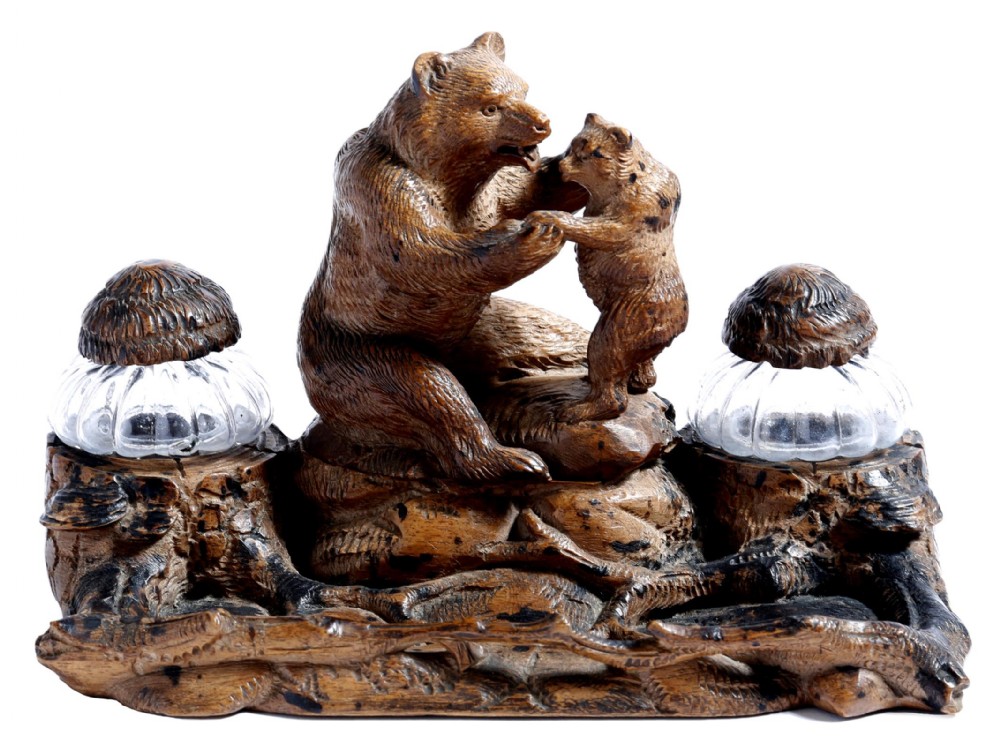
This charming antique Black Forest inkstand dates from circa 1880.

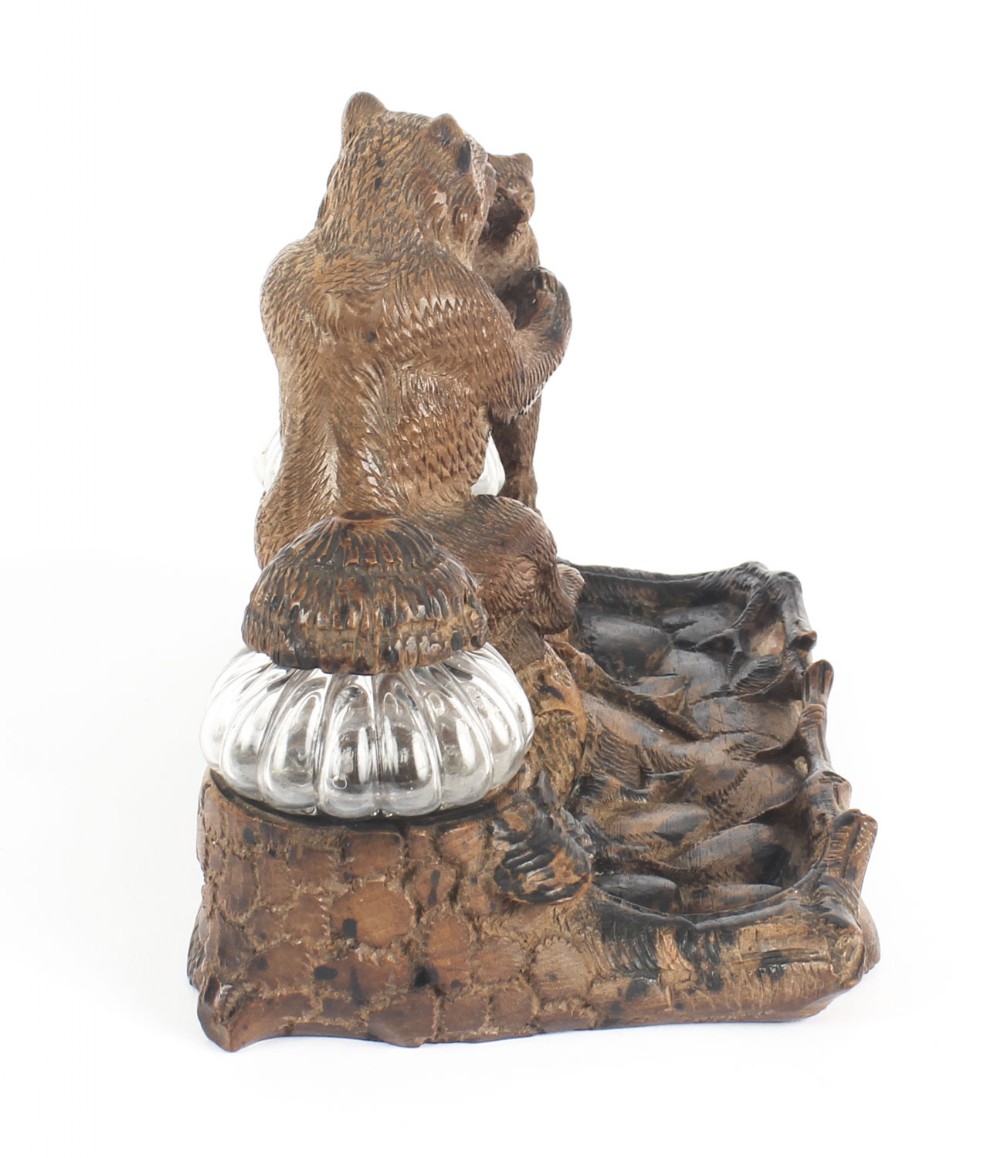
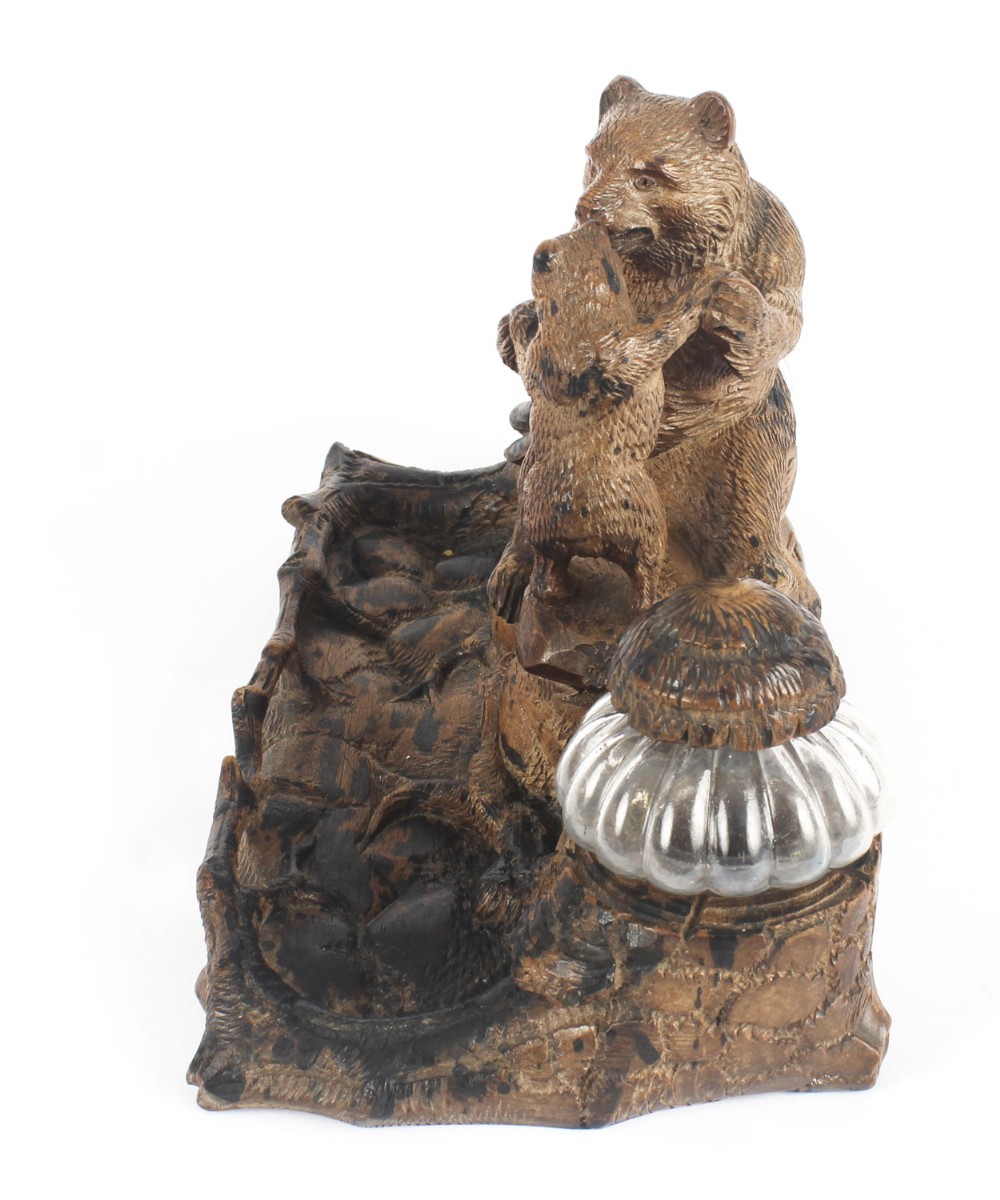
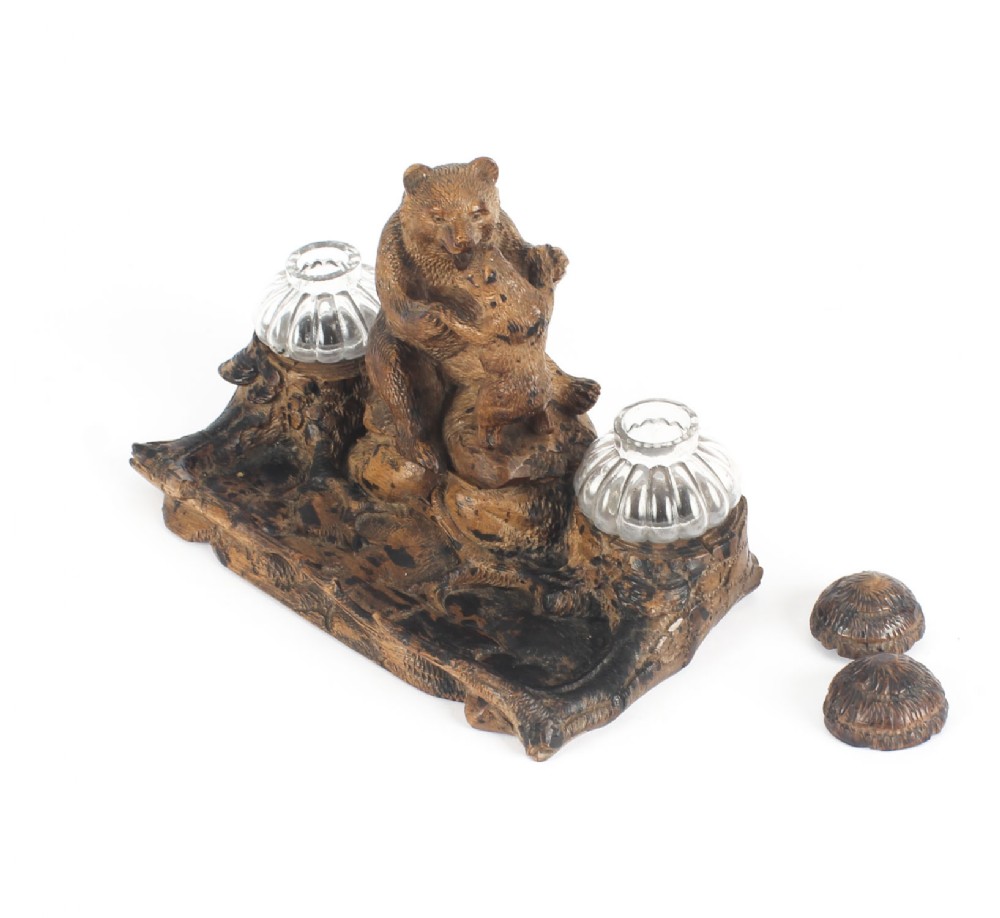
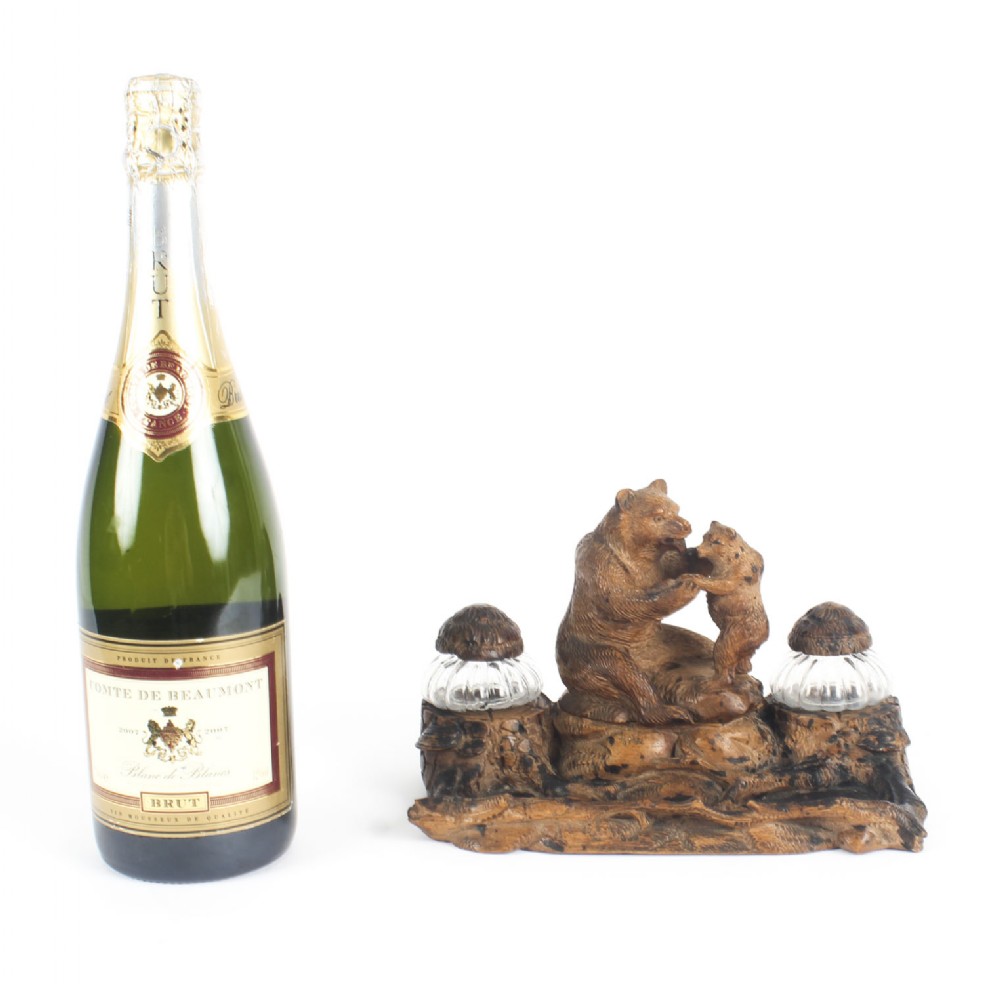
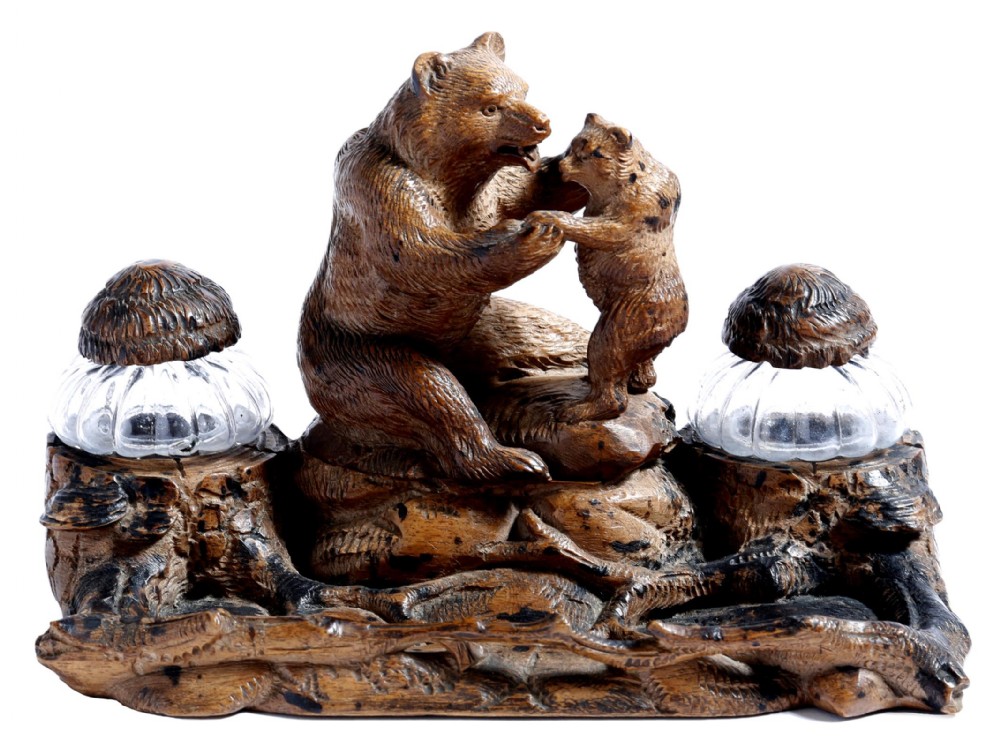
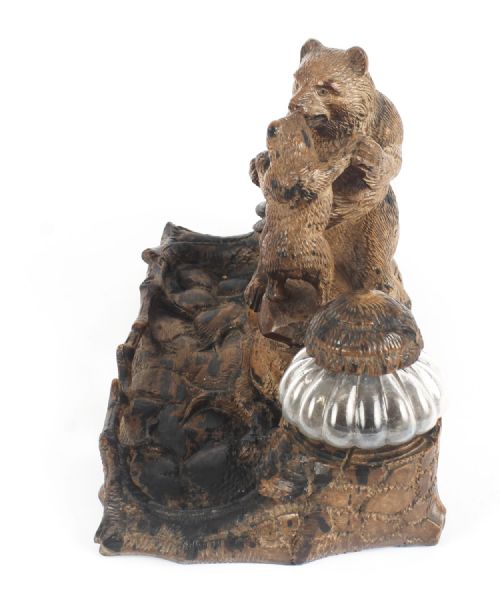
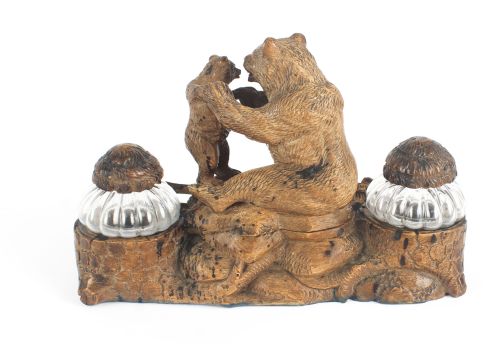
Beautifully modelled, hand carved from linden wood, with mother and baby bear on a naturalistically carved rocky outcrop.

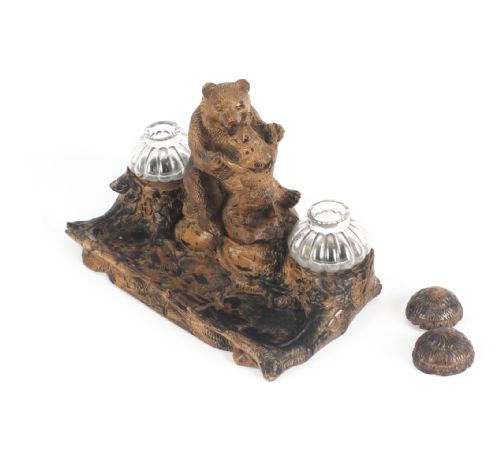
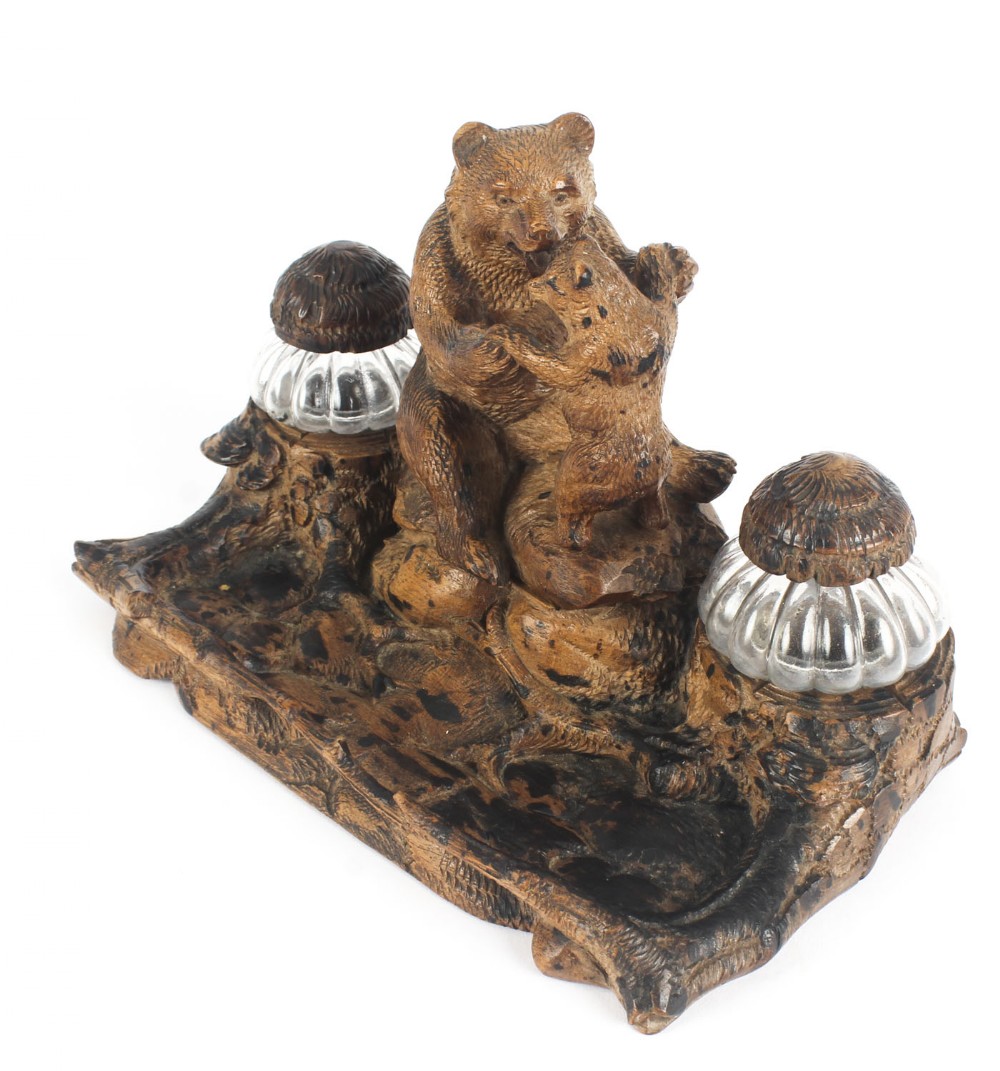
The inkwells are in the form of a pair of tree trunks with fluted glass wells with carved lids and a useful pen tray in front.
Condition:

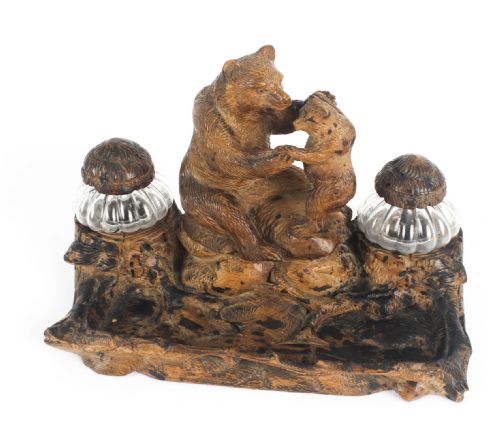
In excellent condition. As an antique item, it shows signs of use commensurate with age, these minor condition issues are mentioned for accuracy and, as seen in the accompanying photographs, the inkstand displays beautifully.
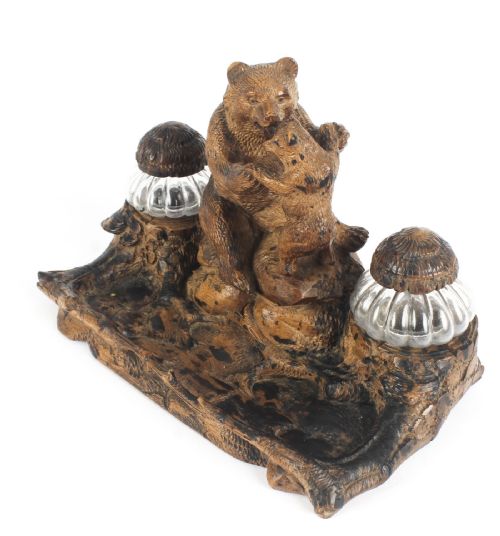
Dimensions in cm:

Height 15 x Width 23 x Depth 14

Dimensions in inches:

Height 5.9 x Width 9.1 x Depth 5.5

History of Black Forest Carving

The idea behind the success of Brienz wood carving was quite simple. After a disastrous famine in 1816 in the Brienz area people were forced to find new areas of revenues. Driven by the need to create jobs in the Bernese Oberland, an economically underdeveloped region, the Swiss government encouraged the existing resource of timber industry to liaise with the traditional wooden craftsmanship. It took some time to improve from home requirements to sophisticated designed arts but the process was supported by the rising amount of tourists visiting the region.
Christian Fischer and other founders

Christian Fischer (1790-1848) started self-taught from simple turneries (carved bowls and other articles of daily use) to unsophisticated regional animals and people. Due to his success and the interest of the tourists, other carvers started also following his idea of carving the pristine naturalism. The Swiss government supported these start-ups with additional training of apprentices at special trade school.
Brienz School of Wood Carving

In 1884 the "School of Wood Carving, Brienz" was founded. It became an important educational institution to strengthen and develop the artistic backgrounds and exhibit an area of creativity. During the years of war in the 20th century, the demand for wooden sculptures came to rest and led to the re-orientation in areas such as toys and carvings for constructions. Beyond that the Brienz wood carving articles had to face an enormous competition from abroad. The School of Wood Carving had to get through difficult economic times but in the late 1970s wood carving enjoyed a renaissance. A lot of young people searched for elemental jobs and added a new value to school education. Today Brienz School of Wood Carving is combined with the education of turner, basket makers and coopers. The school still claims high-quality standards and follows old principles with regard to future perspectives.
Wild animals

At all times wild animals fascinate people. The highland around Brienz has large variety of different wild animals. Bears are among the most popular models for carvers. On the one hand bears are easy to cut and on the other hand they have a strong symbolized image. The enthusiasm for bears in art increased in the meantime the population endangered. One can say that hardly any other wild animal evolved from dangerous to fetish or even cute. Like the company Steiff with its Teddy bear collection, the Brienz´carvers reached inimitability.
Beyond that Brienz carvers used eagles, ibexes, chamois, deer, boars and owls frequently as models with an individual character. The Brienz School of Woodcarving even kept an own zoo with these animals to offer their students the opportunity to observe these animals on a regular basis.
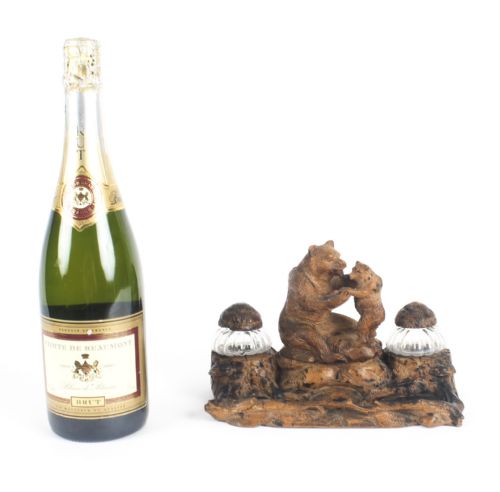
Another remarkable capability of Brienz woodcarvers was their adaptability towards their customers. During the First World War several US soldiers were on R & R in the political and military neutral country of Switzerland. The American soldiers were enthusiastic about the beautiful animal sculptures and Brienz artificers started to carve local North American animals with

Physical Dimensions
Height
15cm (5.91")
Width
23cm (9.06")
Depth
14cm (5.51")
Declaration

Regent Antiques has dated this Black Forest Bear Inkstand to the 19th Century.

Reference Numbers
Sellingantiques Reference
SA762193
Dealers Internal Reference
09050
Description
This charming antique Black Forest inkstand dates from circa 1880.
Beautifully modelled, hand carved from linden wood, with mother and baby bear on a naturalistically carved rocky outcrop.
Regent Antiques

The inkwells are in the form of a pair of tree trunks with fluted glass wells with carved lids and a useful pen tray in front.

fig 1. A 19th-century carved wood Black Forest inkstand featuring a mother bear and cub sitting on a naturalistic log base between two clear glass inkwells.
fig 1. Antique Hand Carved Black Forest Bears Inkstand 19th Century

Condition:

In excellent condition. As an antique item, it shows signs of use commensurate with age, these minor condition issues are mentioned for accuracy and, as seen in the accompanying photographs, the inkstand displays beautifully.

fig 2. A 19th-century carved wood Black Forest inkstand featuring a mother bear and cub sitting on a naturalistic log base between two clear glass inkwells.
fig 2. Antique Hand Carved Black Forest Bears Inkstand 19th Century

Dimensions in cm:

Height 15 x Width 23 x Depth 14

Dimensions in inches:

Height 5.9 x Width 9.1 x Depth 5.5

History of Black Forest Carving

The idea behind the success of Brienz wood carving was quite simple. After a disastrous famine in 1816 in the Brienz area people were forced to find new areas of revenues. Driven by the need to create jobs in the Bernese Oberland, an economically underdeveloped region, the Swiss government encouraged the existing resource of timber industry to liaise with the traditional wooden craftsmanship. It took some time to improve from home requirements to sophisticated designed arts but the process was supported by the rising amount of tourists visiting the region.

fig 3. A 19th-century carved wood Black Forest inkstand featuring a mother bear and cub sitting on a naturalistic log base between two clear glass inkwells.
fig 3. Antique Hand Carved Black Forest Bears Inkstand 19th Century

Christian Fischer and other founders

Christian Fischer (1790-1848) started self-taught from simple turneries (carved bowls and other articles of daily use) to unsophisticated regional animals and people. Due to his success and the interest of the tourists, other carvers started also following his idea of carving the pristine naturalism. The Swiss government supported these start-ups with additional training of apprentices at special trade school.

fig 4. A 19th-century carved wood Black Forest inkstand featuring a mother bear and cub sitting on a naturalistic log base between two clear glass inkwells.
fig 4. Antique Hand Carved Black Forest Bears Inkstand 19th Century

Brienz School of Wood Carving

In 1884 the "School of Wood Carving, Brienz" was founded. It became an important educational institution to strengthen and develop the artistic backgrounds and exhibit an area of creativity. During the years of war in the 20th century, the demand for wooden sculptures came to rest and led to the re-orientation in areas such as toys and carvings for constructions. Beyond that the Brienz wood carving articles had to face an enormous competition from abroad. The School of Wood Carving had to get through difficult economic times but in the late 1970s wood carving enjoyed a renaissance. A lot of young people searched for elemental jobs and added a new value to school education. Today Brienz School of Wood Carving is combined with the education of turner, basket makers and coopers. The school still claims high-quality standards and follows old principles with regard to future perspectives.

fig 5. A 19th-century carved wood Black Forest inkstand featuring a mother bear and cub sitting on a naturalistic log base between two clear glass inkwells.
fig 5. Antique Hand Carved Black Forest Bears Inkstand 19th Century

Wild animals

At all times wild animals fascinate people. The highland around Brienz has large variety of different wild animals. Bears are among the most popular models for carvers. On the one hand bears are easy to cut and on the other hand they have a strong symbolized image. The enthusiasm for bears in art increased in the meantime the population endangered. One can say that hardly any other wild animal evolved from dangerous to fetish or even cute. Like the company Steiff with its Teddy bear collection, the Brienz´carvers reached inimitability.

fig 6. A 19th-century carved wood Black Forest inkstand featuring a mother bear and cub sitting on a naturalistic log base between two clear glass inkwells.
fig 6. Antique Hand Carved Black Forest Bears Inkstand 19th Century

Beyond that Brienz carvers used eagles, ibexes, chamois, deer, boars and owls frequently as models with an individual character. The Brienz School of Woodcarving even kept an own zoo with these animals to offer their students the opportunity to observe these animals on a regular basis.

fig 7. A 19th-century carved wood Black Forest inkstand featuring a mother bear and cub sitting on a naturalistic log base between two clear glass inkwells.
fig 7. Antique Hand Carved Black Forest Bears Inkstand 19th Century

Another remarkable capability of Brienz woodcarvers was their adaptability towards their customers. During the First World War several US soldiers were on R & R in the political and military neutral country of Switzerland. The American soldiers were enthusiastic about the beautiful animal sculptures and Brienz artificers started to carve local North American animals with

Height
15cm (5.91")
Width
23cm (9.06")
Depth
14cm (5.51")
Date of Manufacture

Regent Antiques has dated this Black Forest Bear Inkstand to the 19th Century.

Reference Numbers
Sellingantiques Ref
SA762193
Dealers Internal Ref
09050
Regent Antiques
Regent Antiques
Sellingantiques verified Since Sep 2016

We specialise in english and continental furniture, silver, porcelain and decorative items.

Dealer Profile

You can view the stock and full dealer information on the Regent Antiques Profile Page

Trade Associations

Regent Antiques is a registered member of LAPADA  CINOA
PDF SHARE
SAVE
A 19th-century carved wood Black Forest inkstand featuring a mother bear and cub sitting on a naturalistic log base between two clear glass inkwells.
1 / 10
Archive I A 19th-century carved wood Black Forest inkstand featuring a mother bear and cub sitting on a naturalistic log base between two clear glass inkwells.

Antique Hand Carved Black Forest Bears Inkstand 19th Century
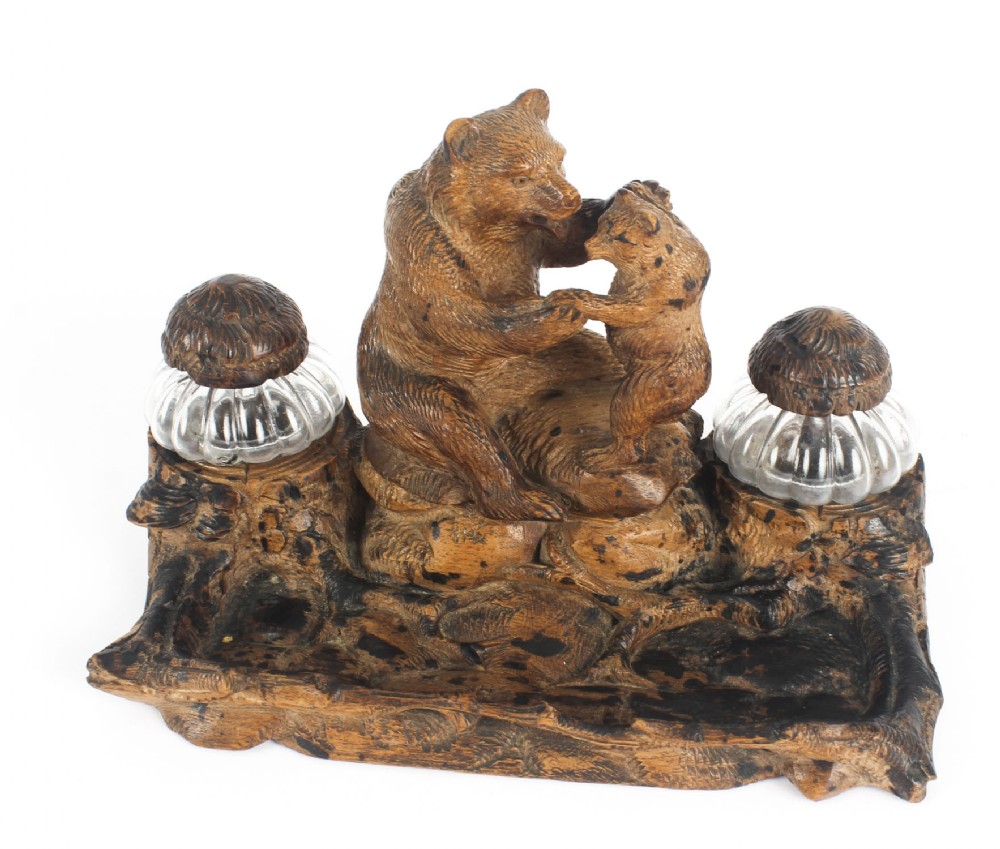
Archive II A 19th-century carved wood Black Forest inkstand featuring a mother bear and cub sitting on a naturalistic log base between two clear glass inkwells. View II
Archive III A 19th-century carved wood Black Forest inkstand featuring a mother bear and cub sitting on a naturalistic log base between two clear glass inkwells. View III
Archive IV A 19th-century carved wood Black Forest inkstand featuring a mother bear and cub sitting on a naturalistic log base between two clear glass inkwells. View IV
Archive V A 19th-century carved wood Black Forest inkstand featuring a mother bear and cub sitting on a naturalistic log base between two clear glass inkwells. View V
Archive VI A 19th-century carved wood Black Forest inkstand featuring a mother bear and cub sitting on a naturalistic log base between two clear glass inkwells. View VI
Archive VII A 19th-century carved wood Black Forest inkstand featuring a mother bear and cub sitting on a naturalistic log base between two clear glass inkwells. View VII
Archive VIII A 19th-century carved wood Black Forest inkstand featuring a mother bear and cub sitting on a naturalistic log base between two clear glass inkwells. View VIII
Archive IX A 19th-century carved wood Black Forest inkstand featuring a mother bear and cub sitting on a naturalistic log base between two clear glass inkwells. View IX
Archive X A 19th-century carved wood Black Forest inkstand featuring a mother bear and cub sitting on a naturalistic log base between two clear glass inkwells. View X
Enlarged Archival View
Location
Manor Warehouse
318 Green Lanes
London
N4 1BX
United Kingdom
Verified Since Sep 2016
Items For Sale 659
Items Sold 2,608
Regent Antiques
Regent Antiques
Verified Since Sep 2016
View Dealer Info
Location: Manor Warehouse, 318 Green Lanes, London, N4 1BX, United Kingdom
Verified
Sep 2016
For Sale
659
Sold
2,608
A 19th-century carved wood Black Forest inkstand featuring a mother bear and cub sitting on a naturalistic log base between two clear glass inkwells.
Antique Hand Carved Black Forest Bears Inkstand 19th Century
Ref: SA762193
A 19th-century carved wood Black Forest inkstand featuring a mother bear and cub sitting on a naturalistic log base between two clear glass inkwells.
Detail View 1
Detail View 2
Detail View 3
Detail View 4
Detail View 5
Detail View 6
Detail View 7
Detail View 8
Detail View 9
Archival Detail
Every single antique dealer on our platform is individually approved by our internal team. We verify their professional trade history, ethical standards, and photographic quality to ensure a secure, high-standard buying environment. Upon joining, every dealer agrees to a strict 9-point code of conduct. While issues can occasionally arise, our dealers typically resolve them swiftly and directly with the buyer. In fact, since our founding in 2002, Sellingantiques has only had to step in to help resolve an issue on roughly five occasions—a true testament to the quality of our dealers and their dedication to your happiness.
Our dealers are highly experienced in packing and shipping fragile, high-value antiques. Because you are in direct contact with the dealer, you will be able to easily go through all available shipping and insurance options together to ensure your item arrives safely.
Antiques are the ultimate green purchase. By choosing historical pieces over newly manufactured goods, you completely eliminate the carbon footprint of modern mass production while preserving exceptional, timeless craftsmanship.

Originating primarily in Brienz, Switzerland, during the 19th century, Black Forest carvings are celebrated for detailed depictions of wildlife, foliage, and rustic motifs hand-carved in native hardwoods.

Traditional inkstands from this era typically combined hand-carved timbers such as linden wood or walnut with glass well liners and brass or wooden lids.

Authentic period pieces exhibit crisp hand-tool marks, deep dimensional carving, accurate animal anatomy, and natural patination across handled surfaces.

Position the piece on a dark wood office desk, a library bookshelf, or a console table where the sculptural wood carving serves as an accent.

Maintain the wood finish using a high-quality natural beeswax polish, keep the piece away from direct heat sources to prevent cracking, and gently wash glass inserts with lukewarm water.
items
Add keywords to the filter
Price
£100
£250000
Era
Movements
Material
Origin
Stock Location
Freshness
Online Payments
Categories