32,061  PAGES BROWSED TODAY PAGES TODAY 227 ANTIQUES UPLOADED TODAYNEW ARRIVALS
227 ITEMS ADDED TODAY
Sort Order
Items Per Page
Browse Categories
Sort order
Relevant Links
Items per page
ID #SA761451
FOR SALE
£38,500
Email
Save
Antique 12ft Elizabethan Revival Pollard Oak Extending Dining Table 19th C
Regent Antiques
for sale €45,045     $48,895
£38,500
Regent Antiques

Regent Antiques

Sellingantiques Verified Since Sep 2016
View Dealers Stock Page
  • About Us
    We specialise in english and continental furniture, silver, porcelain and decorative items.
  • Trade Associations
    Regent Antiques is a registered member of LAPADA  CINOA
Id #SA761451
PDF SHARE
SAVE

Antique 12ft Elizabethan Revival Pollard Oak Extending Dining Table 19th C

19th century
For Sale by Regent Antiques
Description

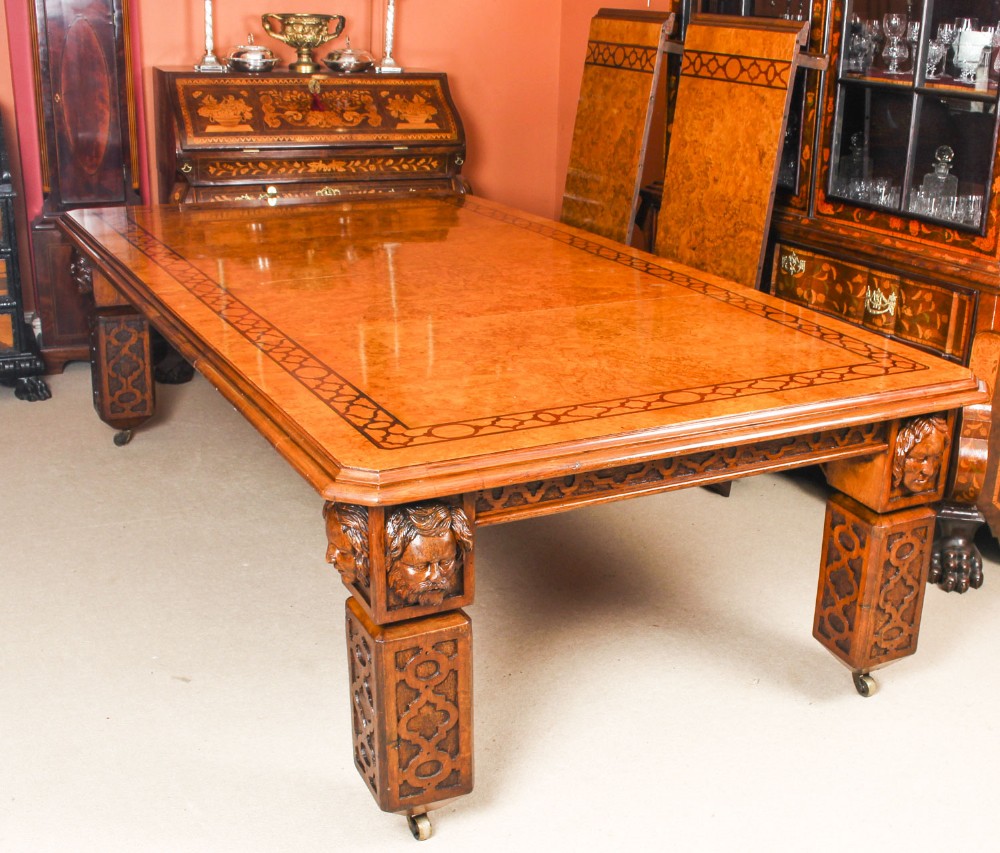
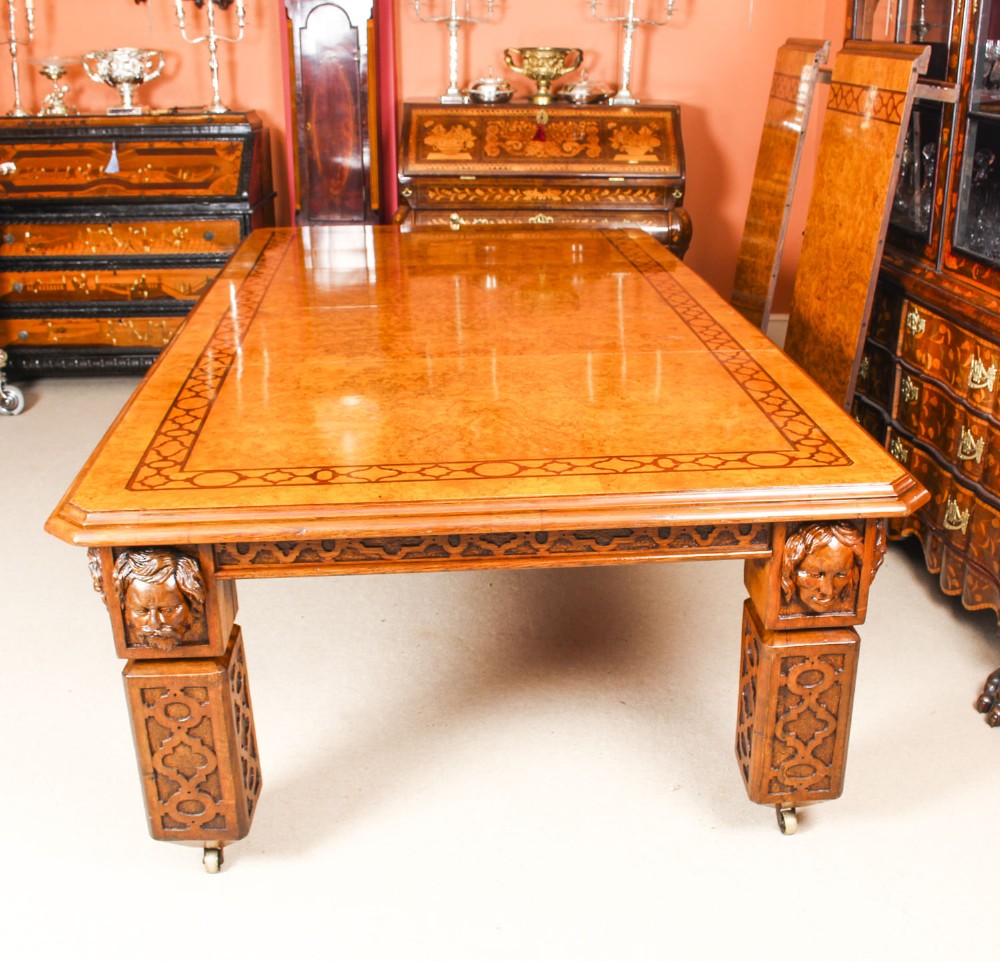
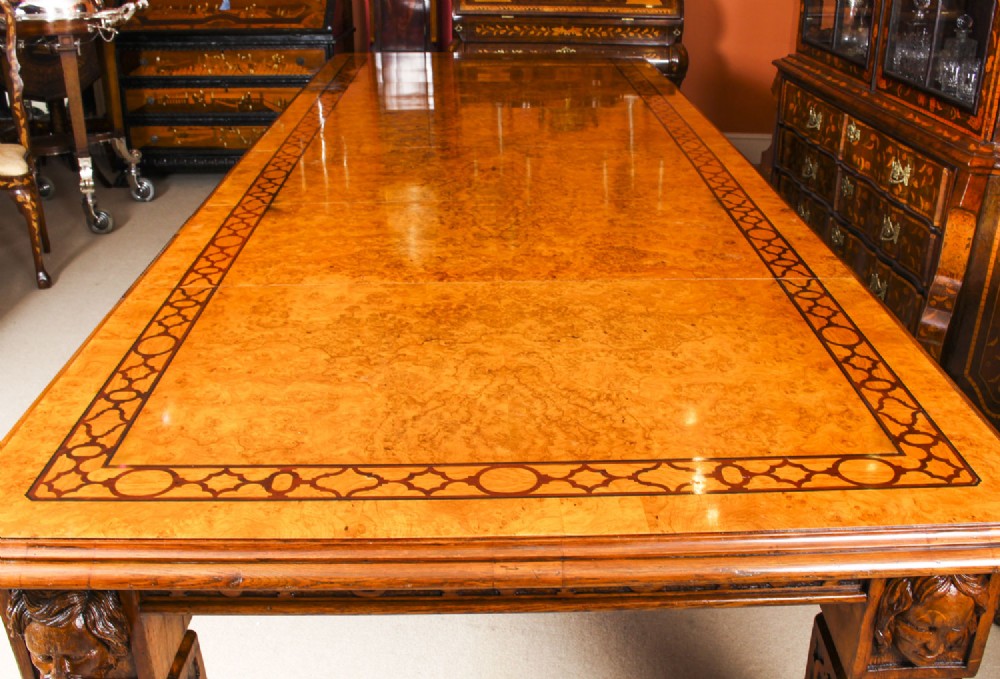
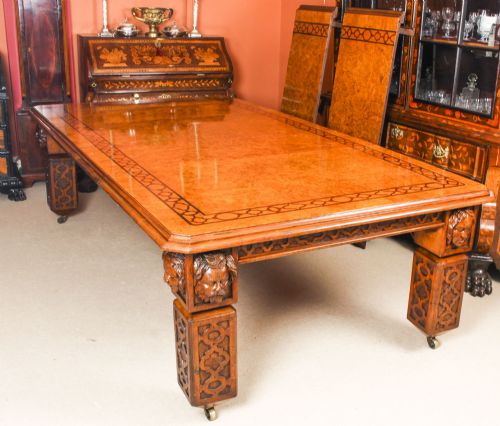
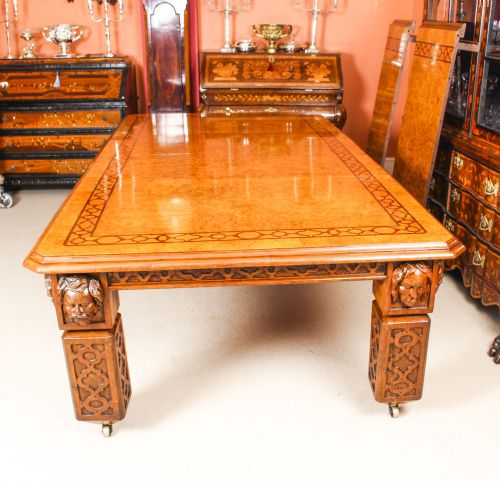
There is no mistaking the style and sophisticated design of this exquisite rare antique English Elizabethan Revival pollard oak extending dining table, circa 1850 in date.

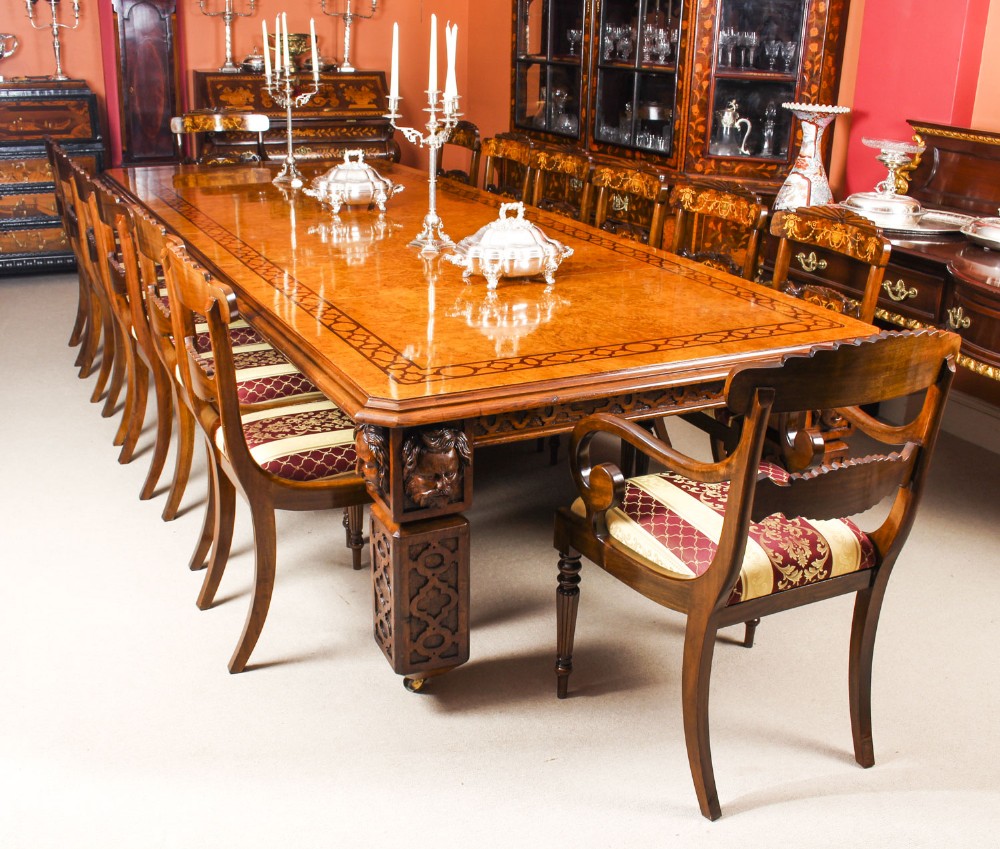
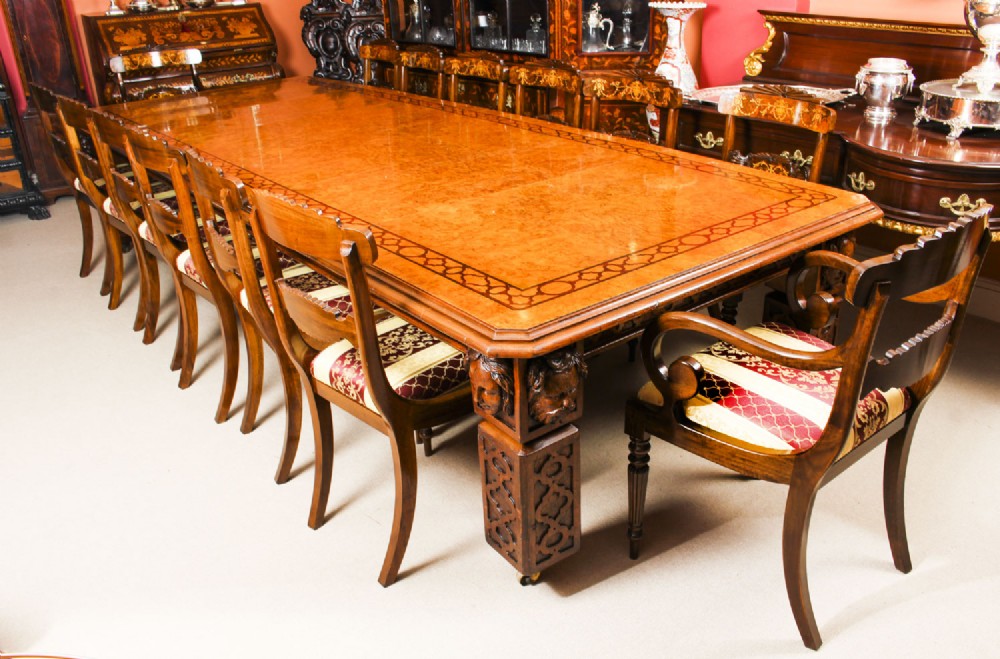
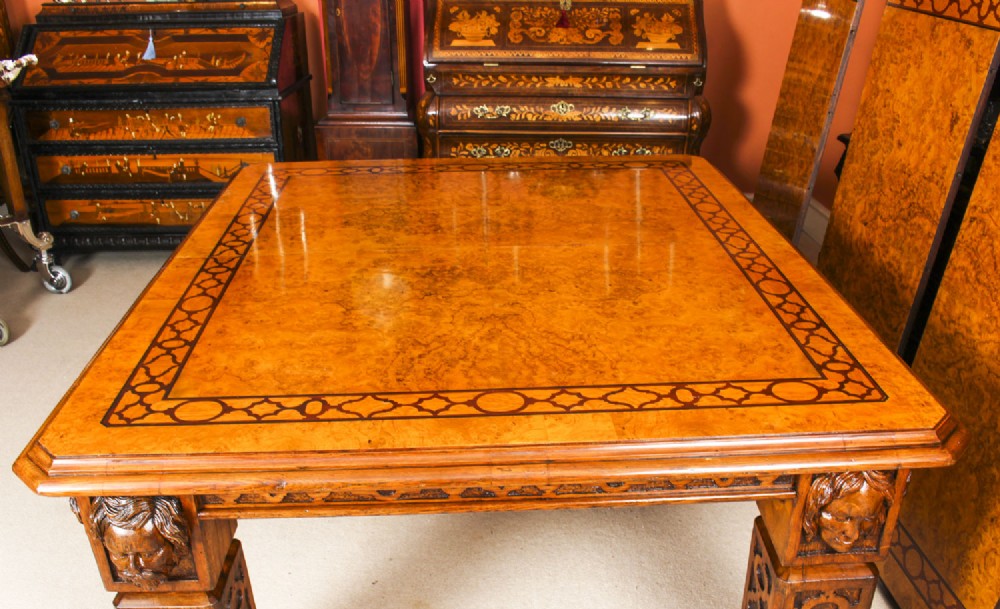
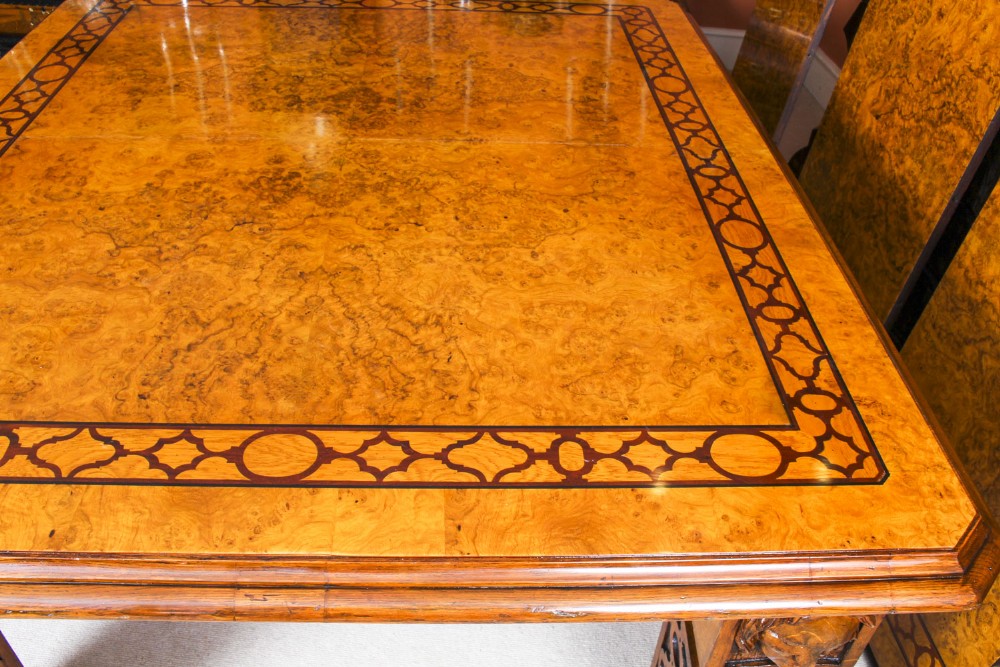
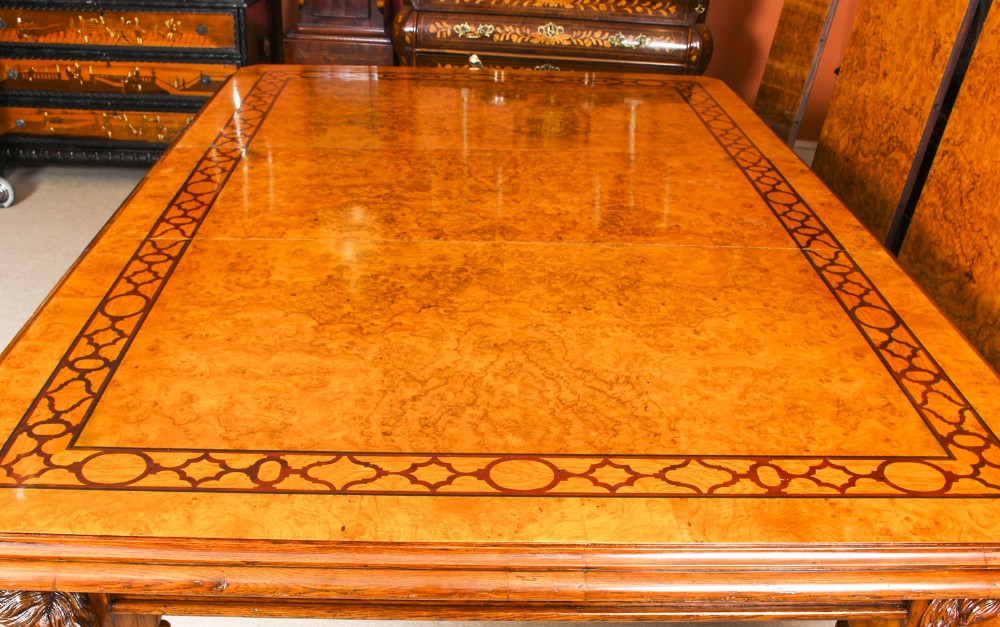
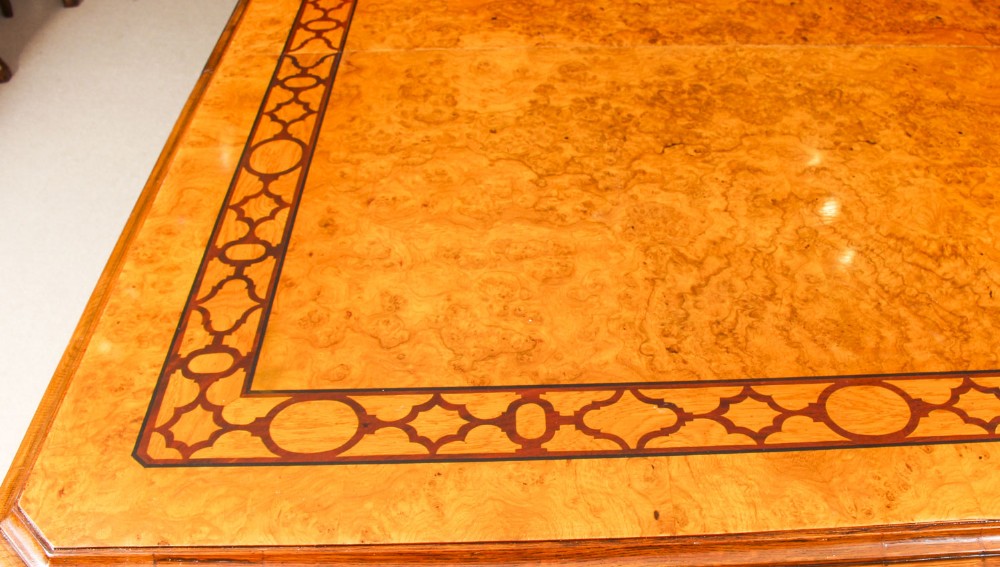
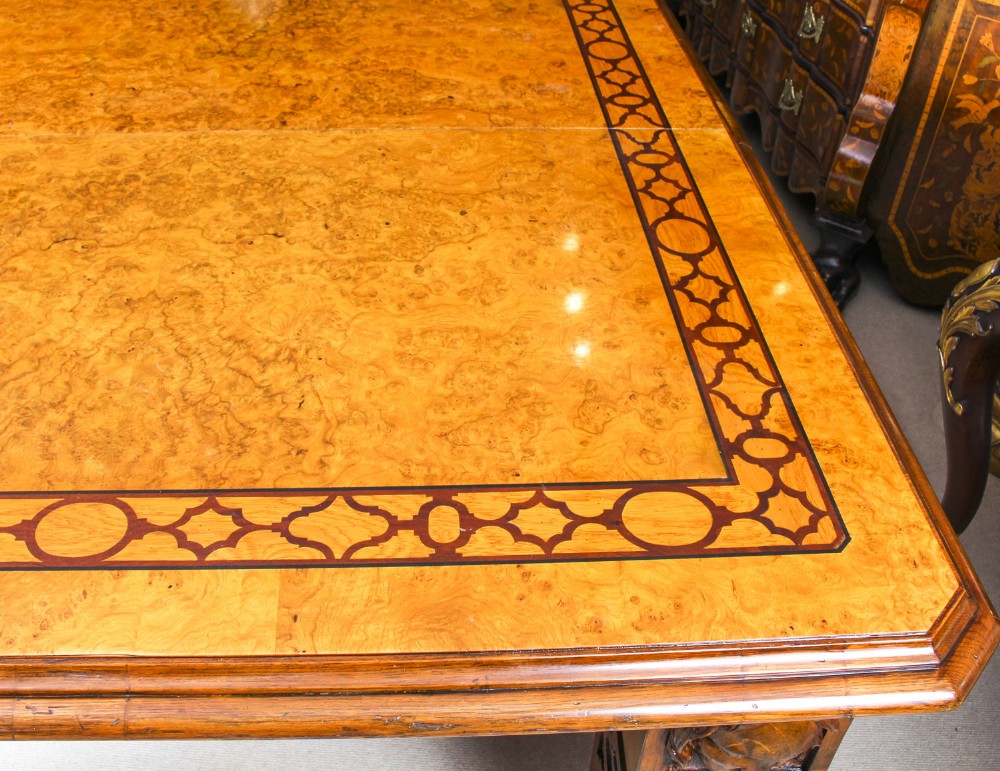
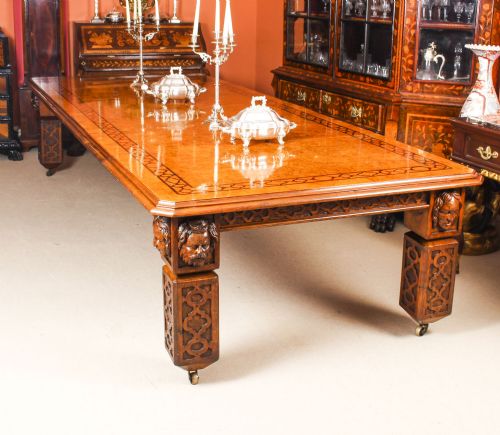
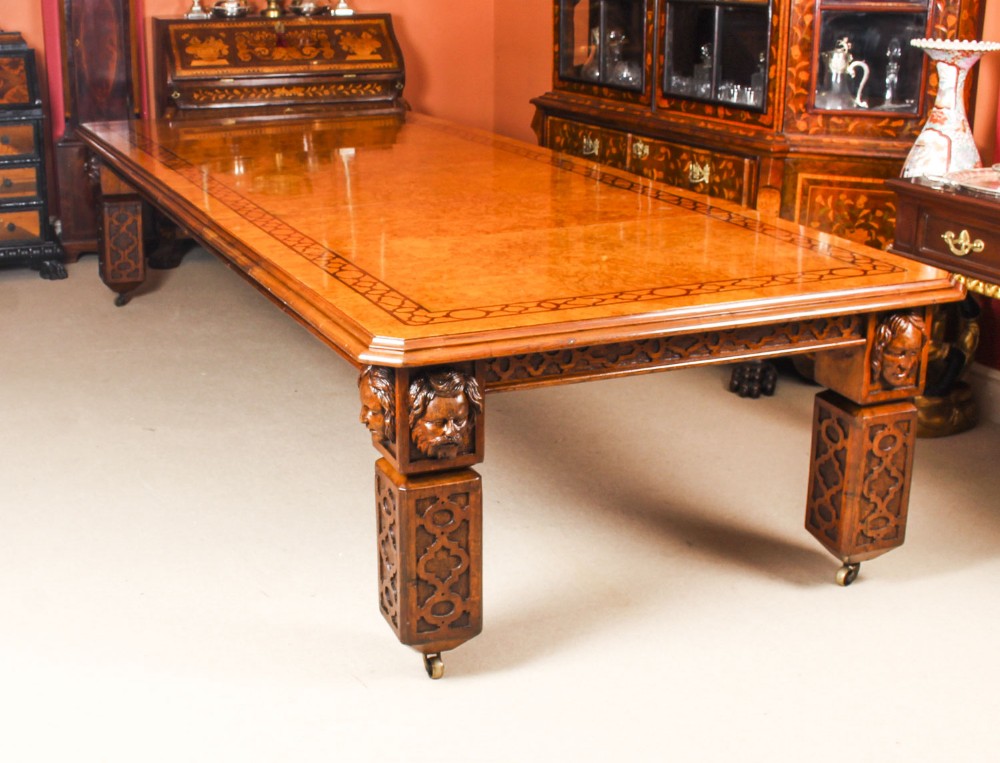
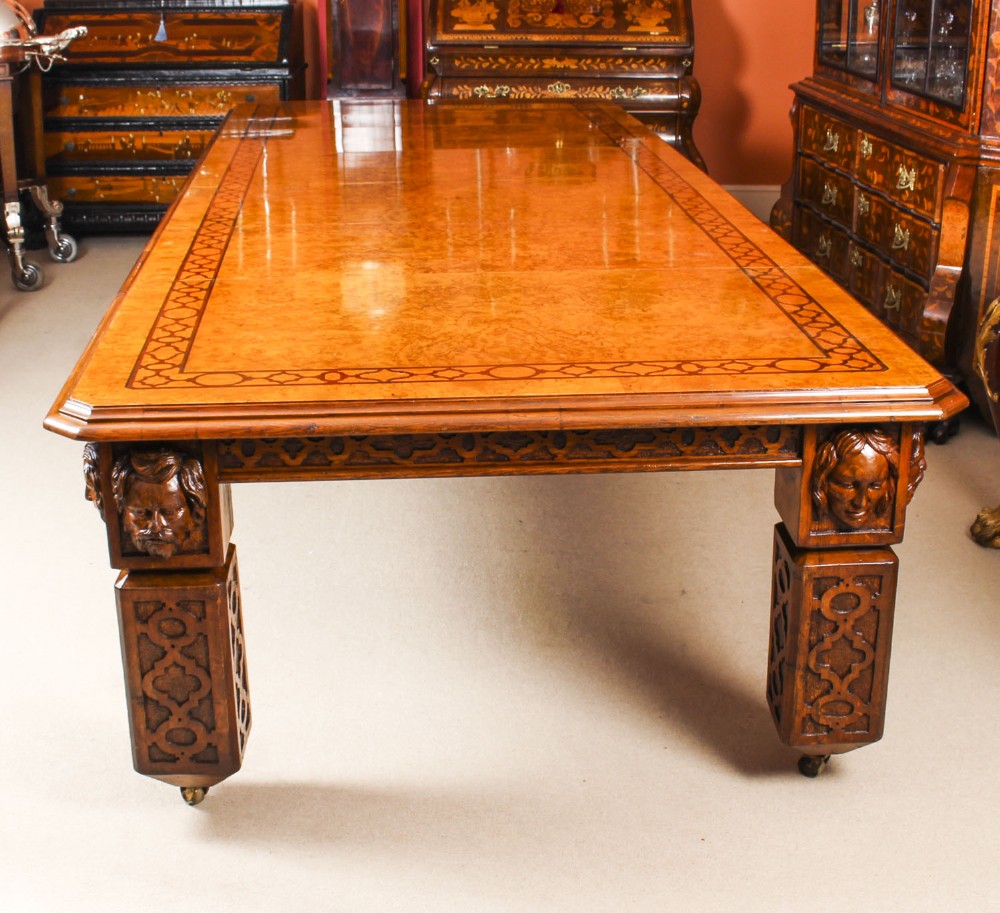
The striking rectangular pollard oak top with canted corners, inlaid marquetry decoration to match the fret carved frieze, and a moulded edge over the already mentioned beautiful hand carved frieze.

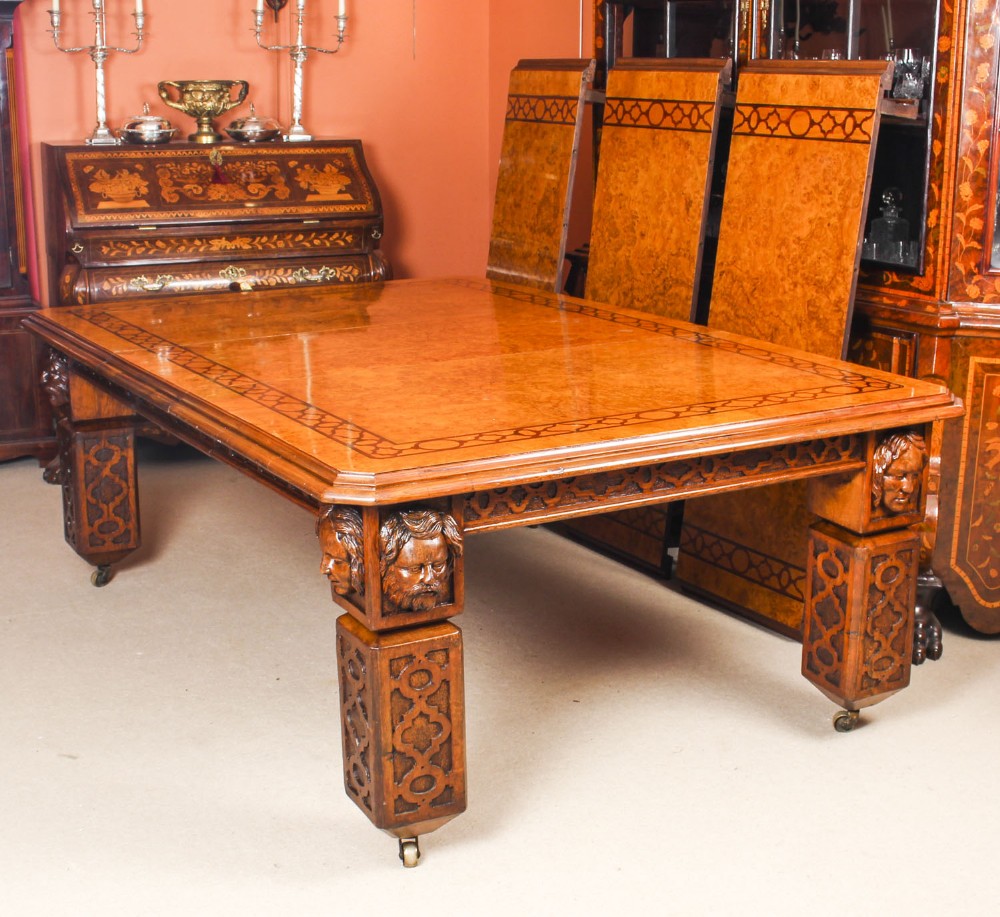
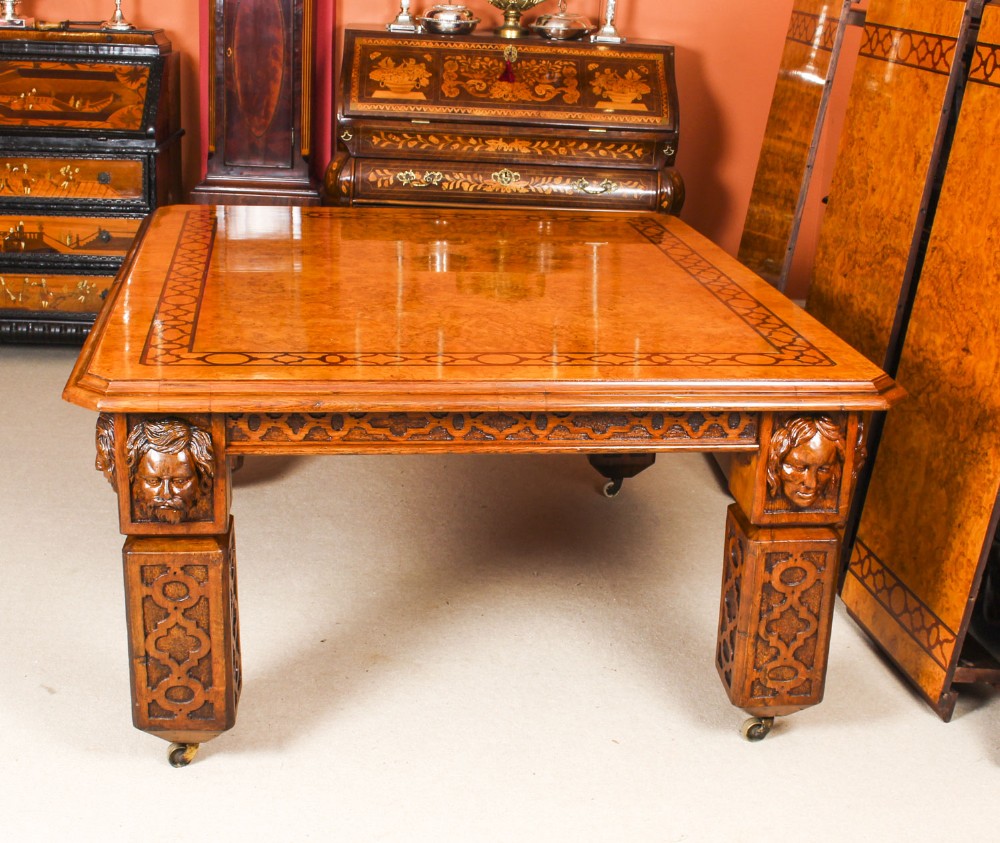
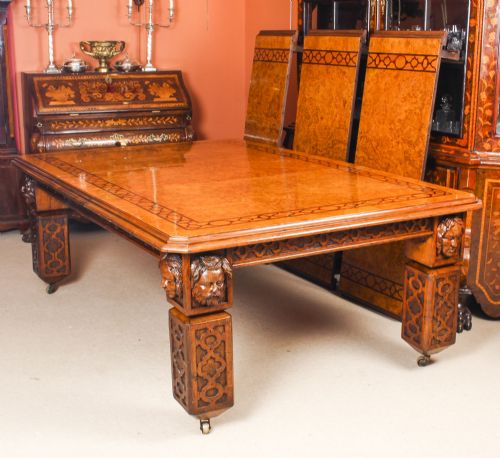
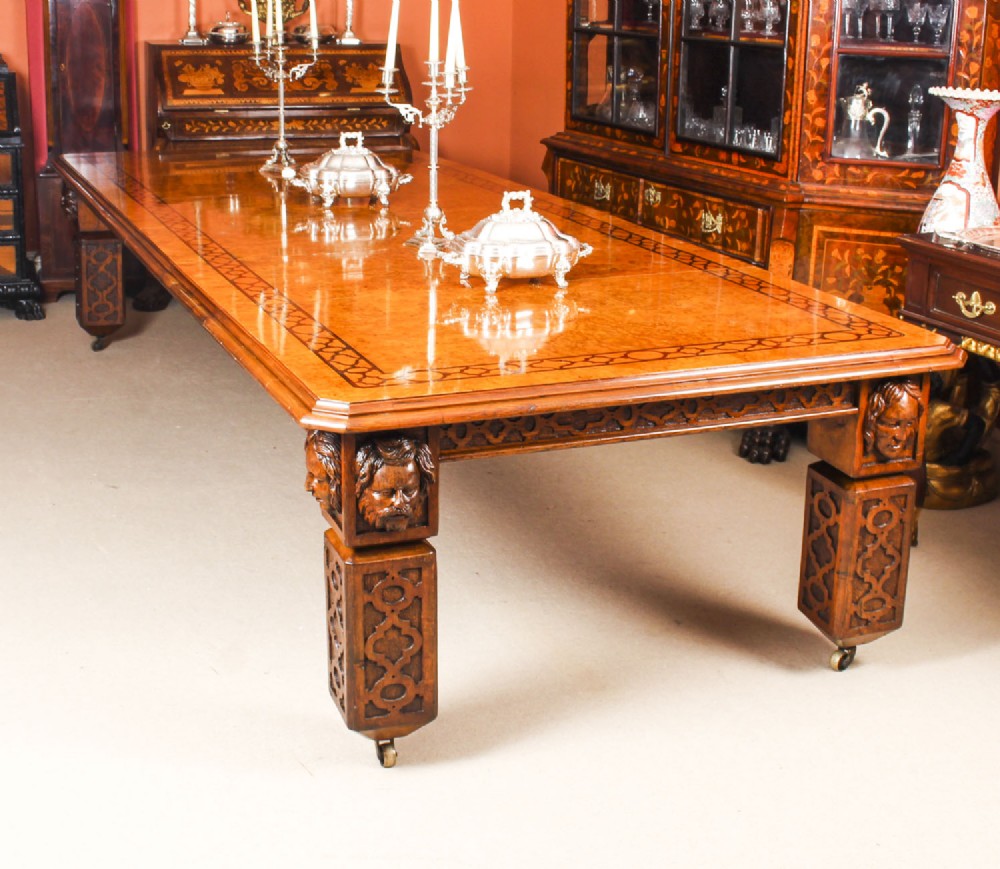
This majestic table has four leaf extensions, can comfortably seat fourteen and has been hand-crafted from solid oak which is not only strong, but has a beautiful grain. The top is in Pollard, oak with twin line inlaid marquetry decoration, which is seen in the intricate burr on the table top.
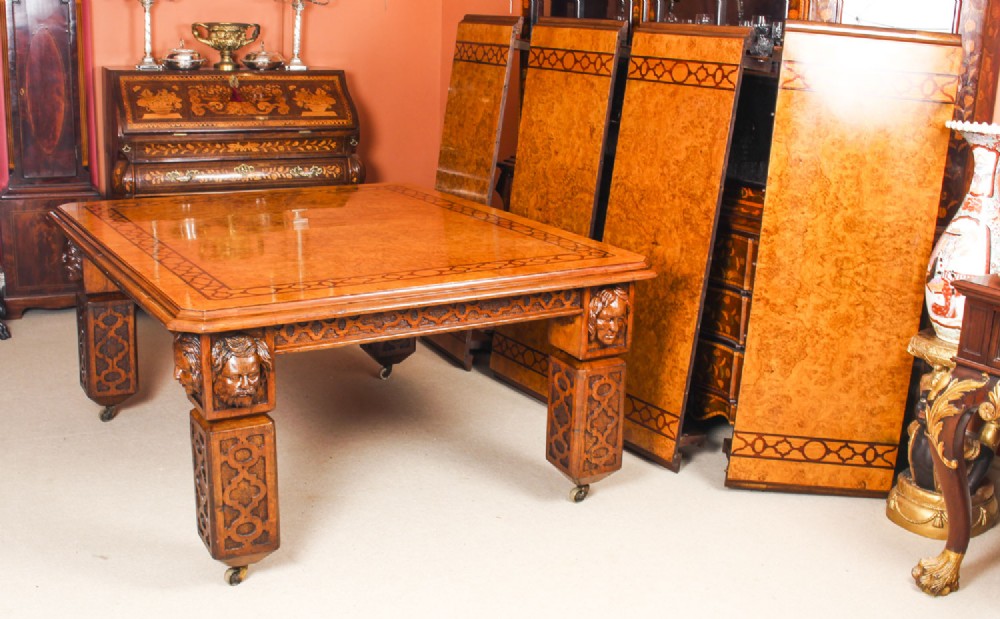
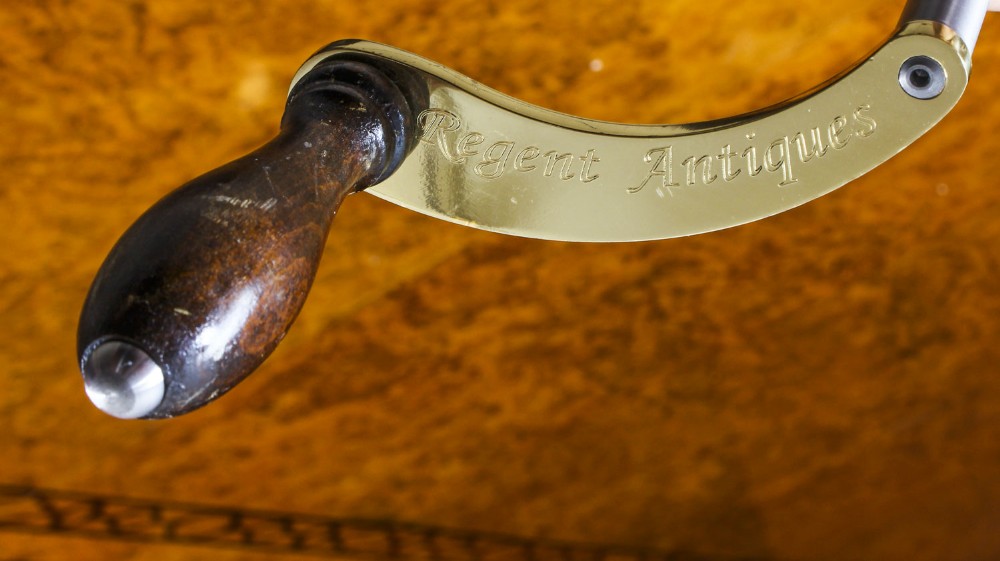
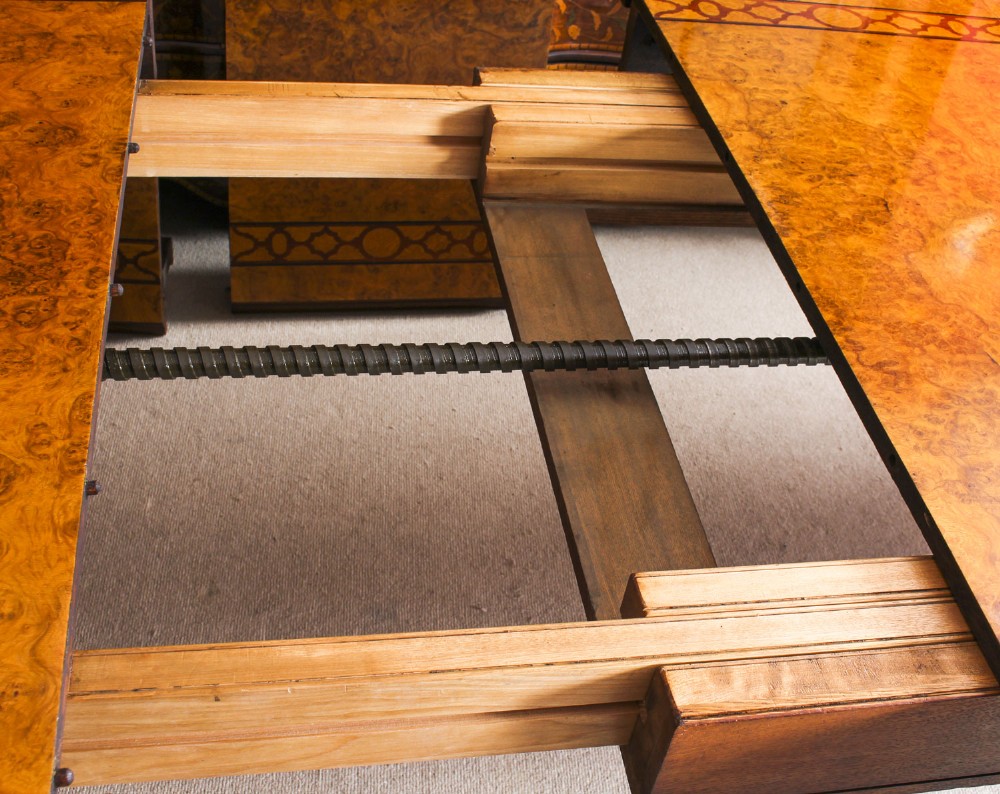
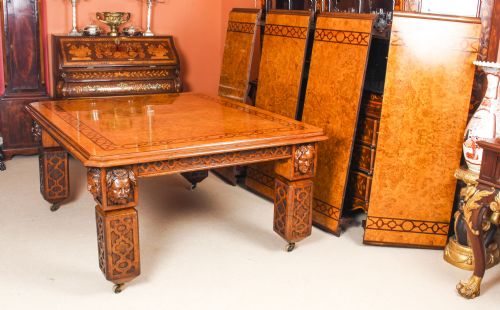
The four leaf extensions can be added or removed as required to suit the occassion by a special winding mechanism.

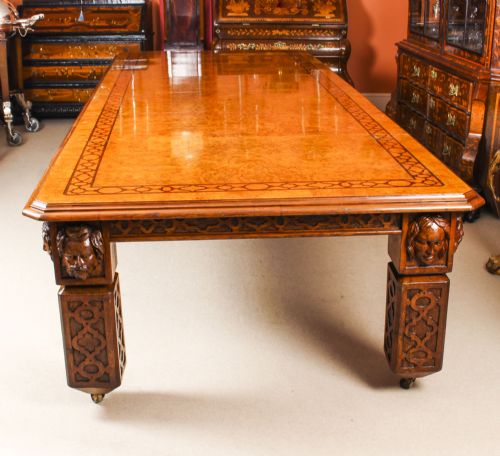
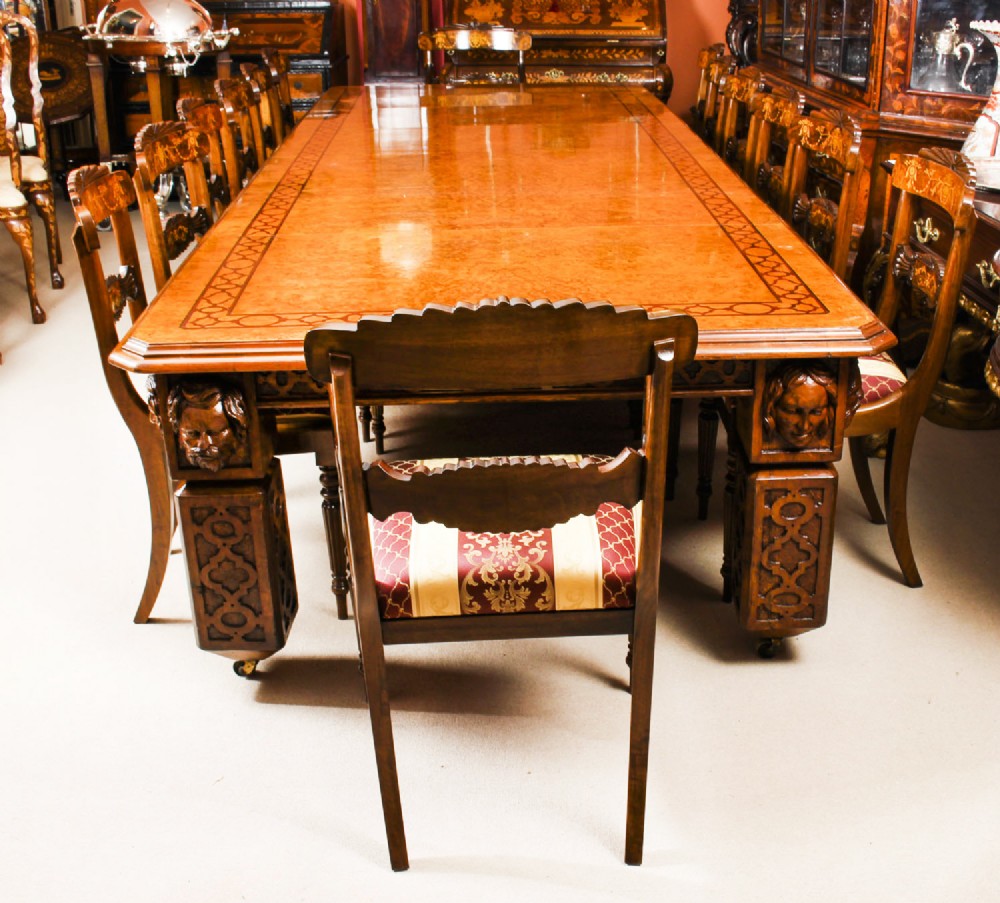
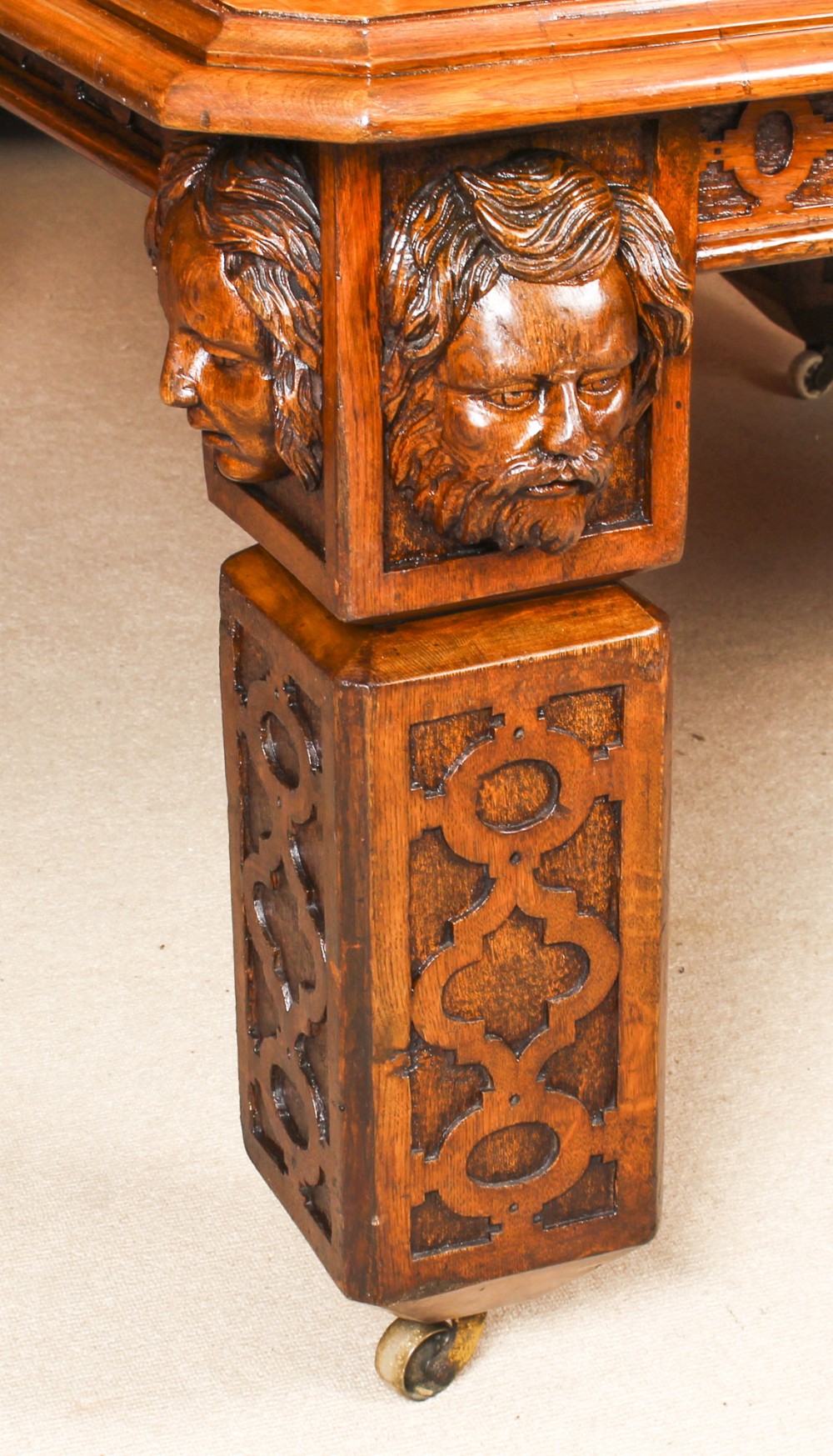
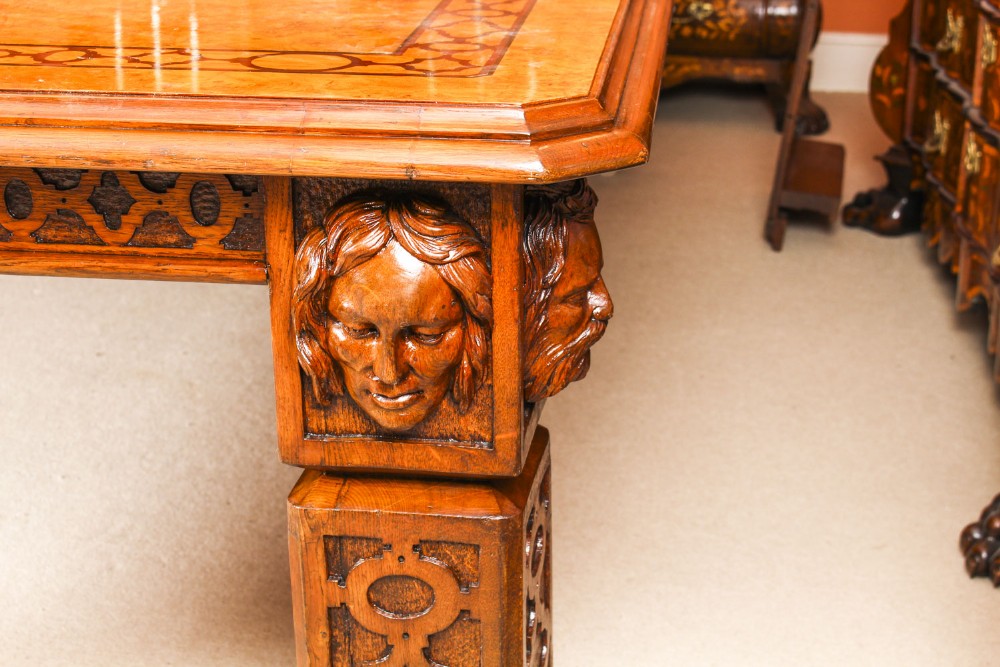
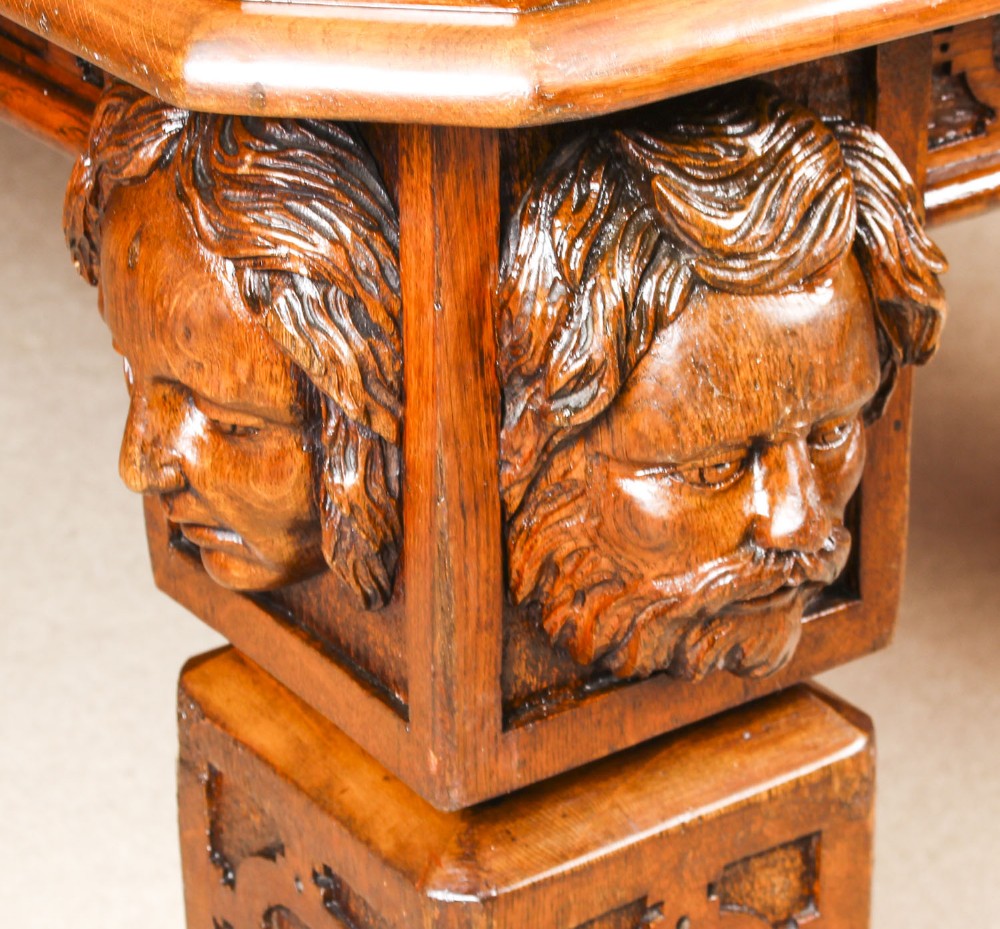
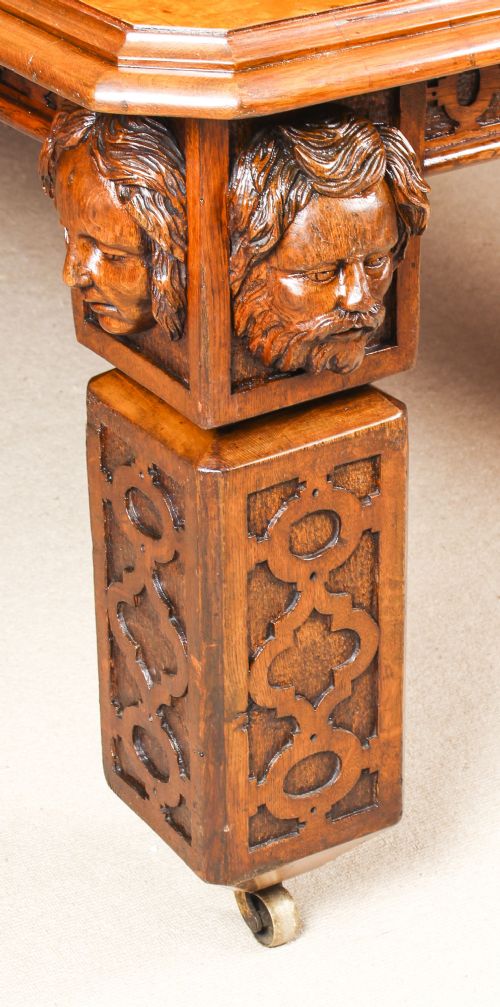
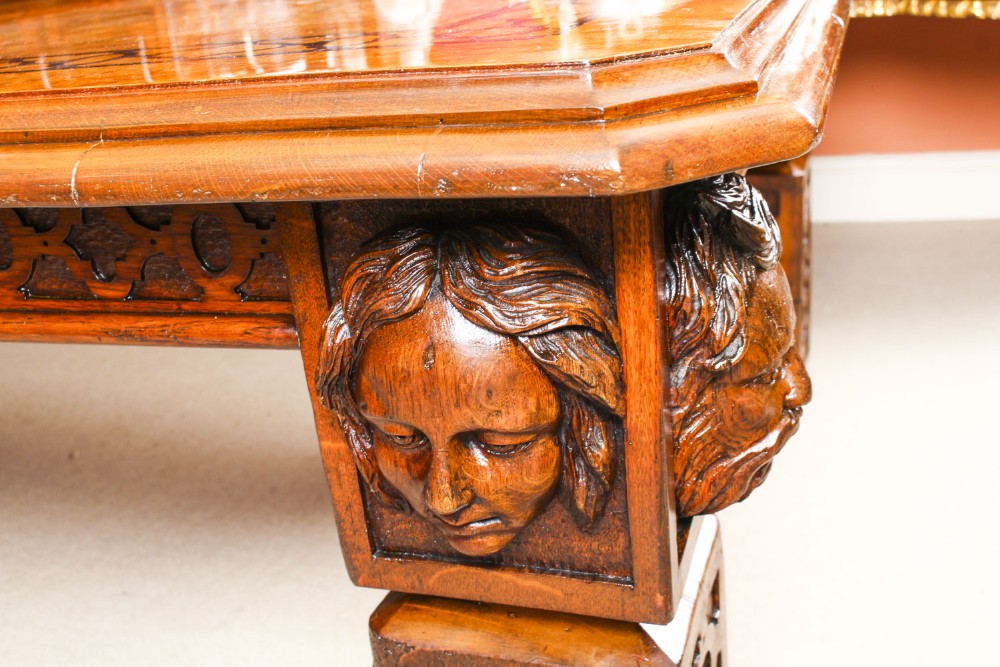
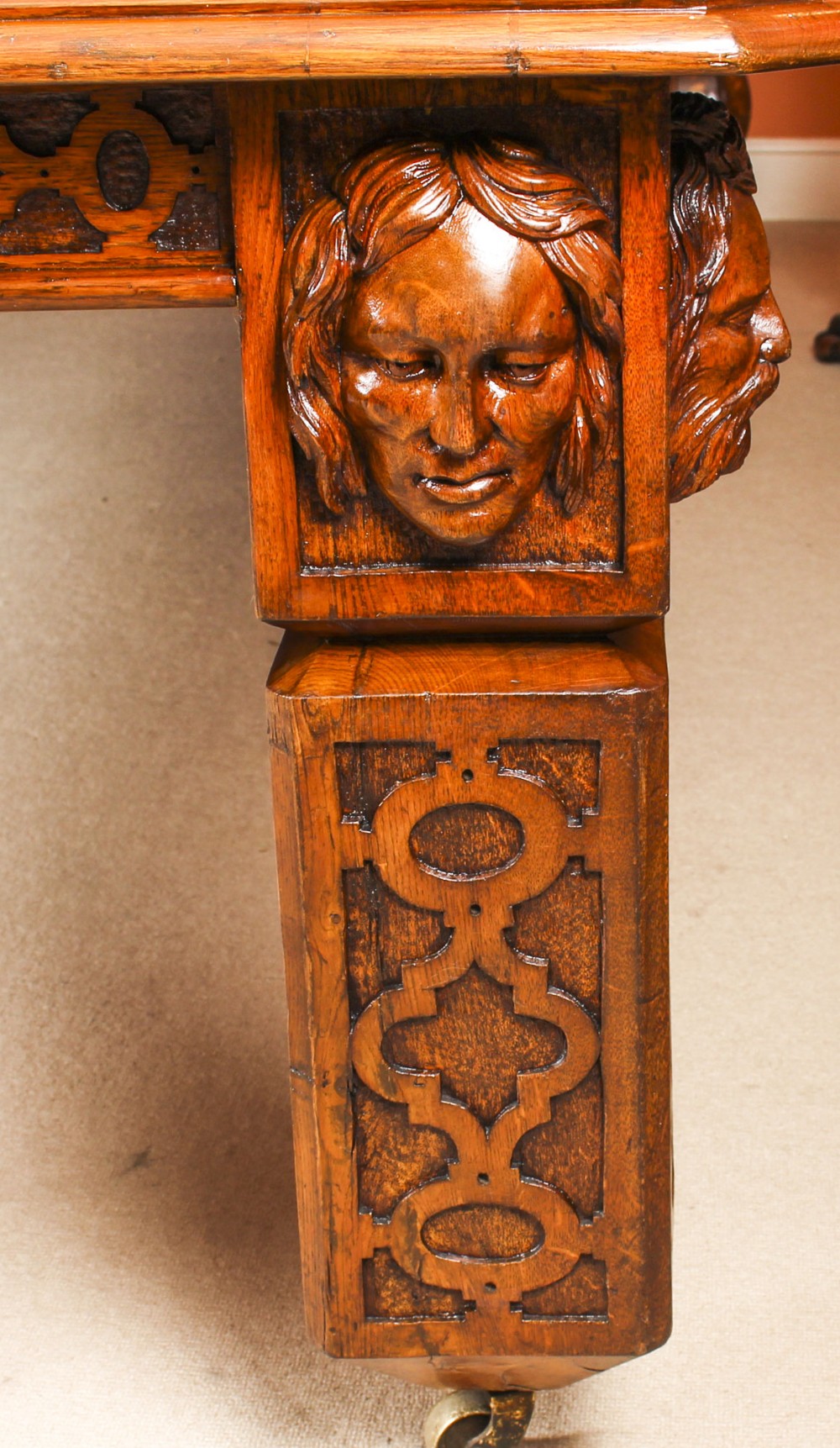
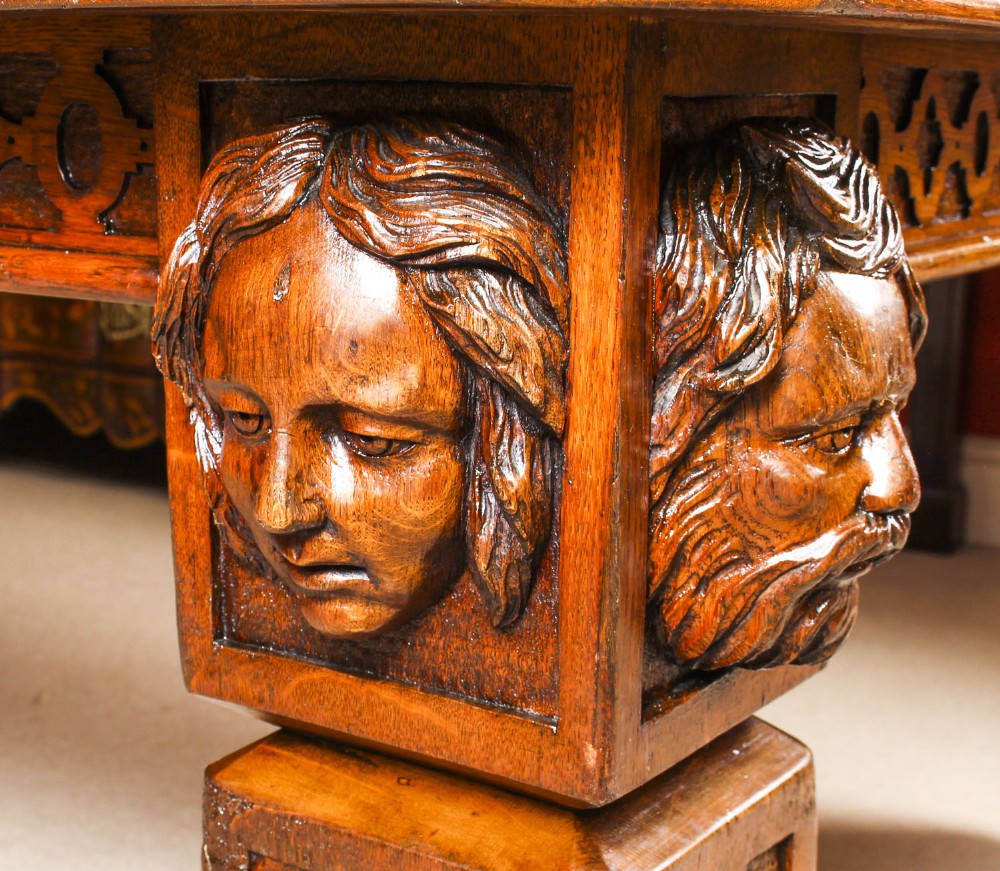
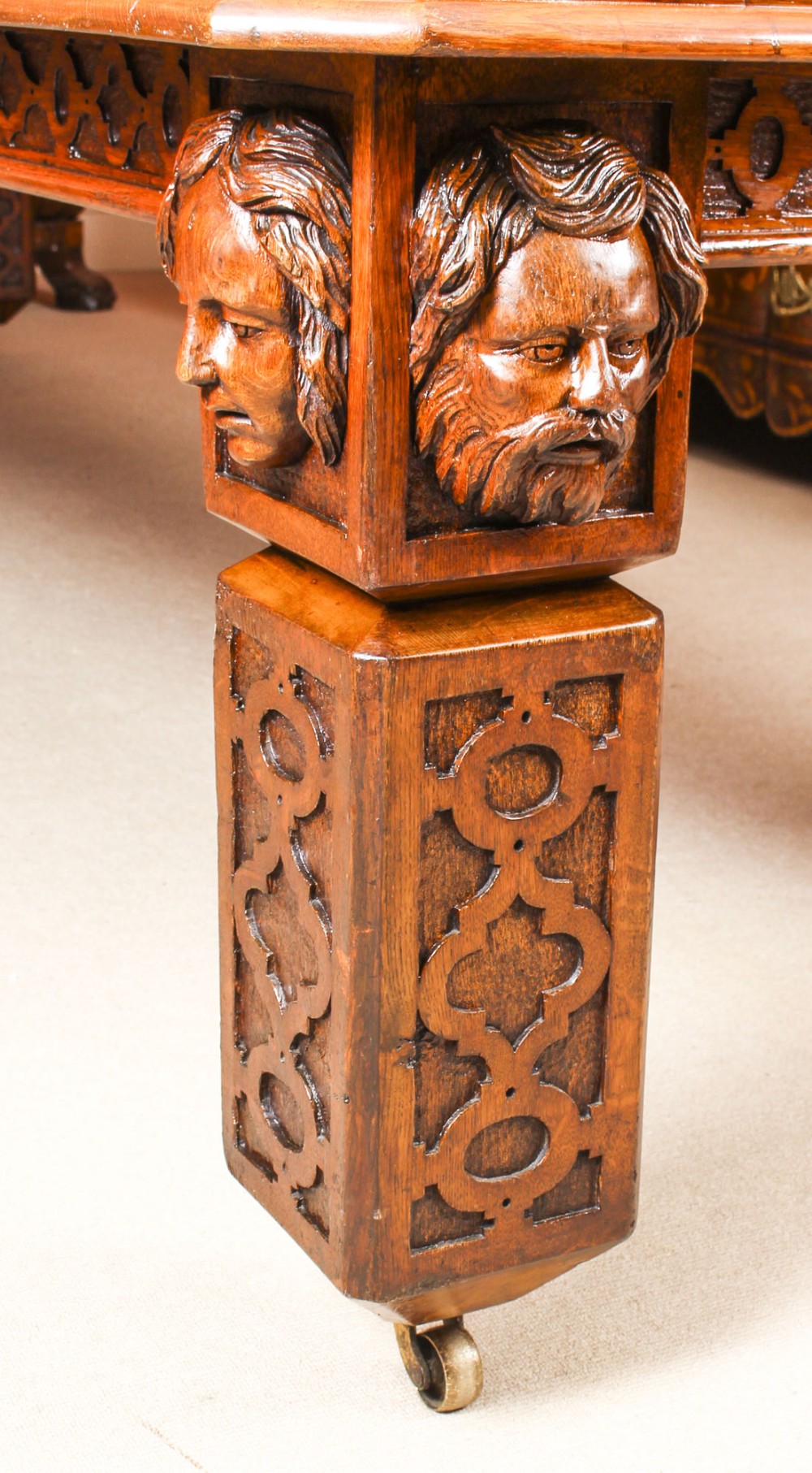
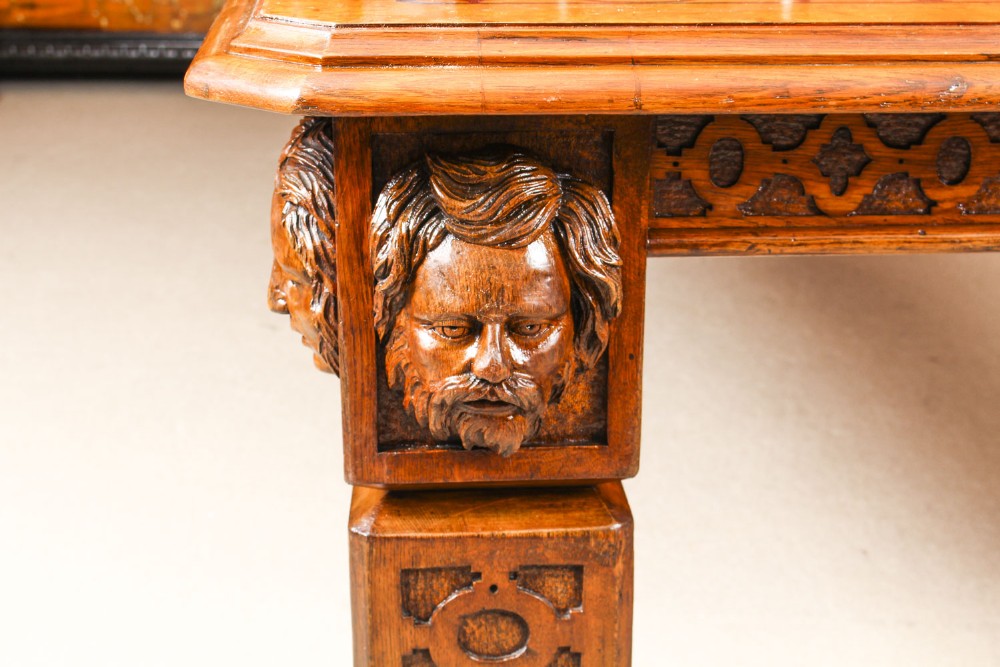
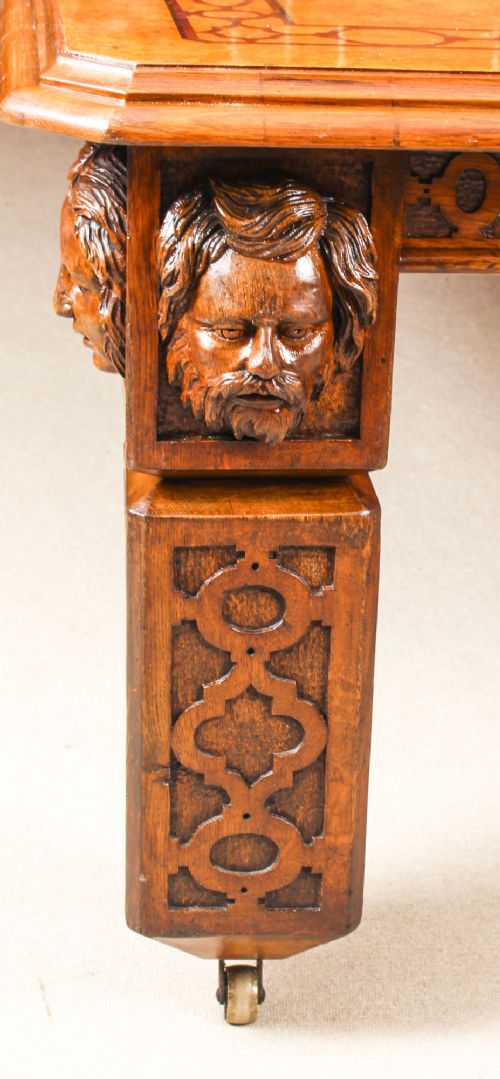
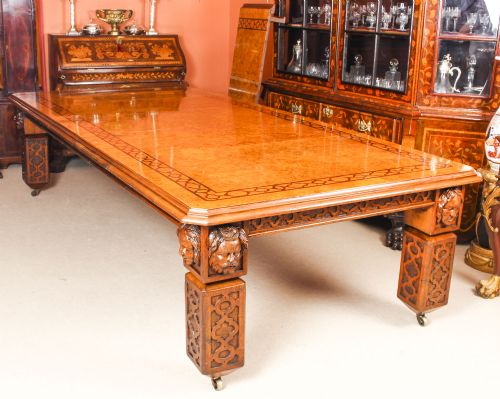
The table is raised on massive hand carved square section legs with blind fret moulding, headed by carved masks, and terminating in brass castors.
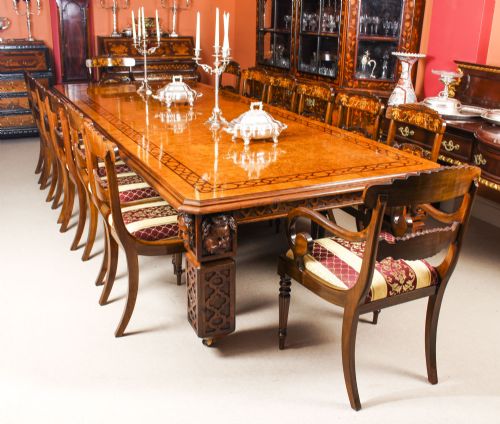
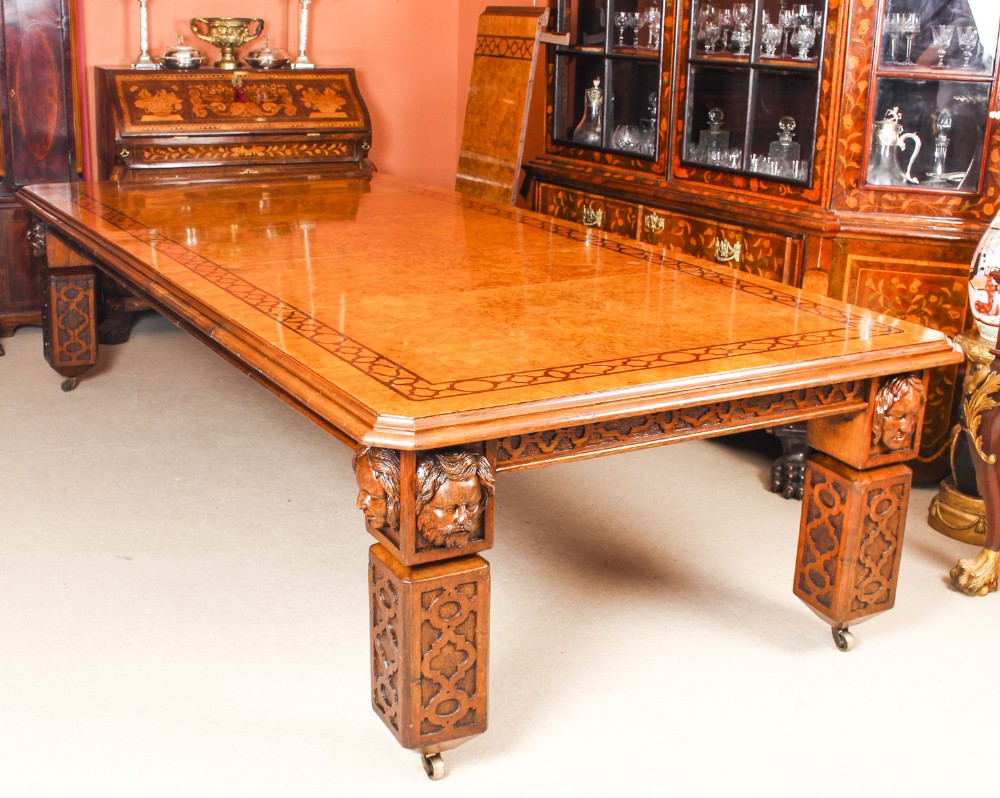
This impressive dining table is exemplary of the early Victorian era with its Pollard oak and delicate inlaid marquetry. It will stand out in your dining or conference room and will become the key piece in your furnishing collection.
Condition:

In excellent condition having been beautifully cleaned, French polished and waxed in our workshops, please see photos for confirmation.

Dimensions in cm:

Height 77 x Width 360 x Depth 142 - Fully Extended
Height 77 x Width 160 x Depth 142 - With all leaves removed

Dimensions in inches:

Height 30.3 x Width 141.7 x Depth 55.9 - Fully Extended

Height 30.3 x Width 63.0 x Depth 55.9 - With all leaves removed

Pollard Oak
Pollarding is a pruning system in which the upper branches of a tree are removed, promoting a dense head of foliage and branches. It has been common in Europe since medieval times and is practised today in urban areas worldwide, primarily to maintain trees at a predetermined height. The bole of the tree, constantly cut back over a period of years, will eventually form a lump, or ‘burr’, which when sawn for veneer, gives a lovely grained, swirling figure.
The effect is similar to that of burr walnut with its distinctive speckled grain. Burrs, or ‘burls’, are growths which appear on the side of tree trunks, resulting from a tree undergoing some form of stress. They may be caused by an injury, virus or fungus.
During the 19th century great strides were made in the mechanisation of cabinet making. Marc Isambard Brunel [ Isambard Kingdom’s father] built the first steam driven saw mill, and invented a circular saw that could be used to cut veneers thinly and evenly for the first time. He also developed the first hydraulic veneer press. The figured wood cut from burrs and pollards is notoriously difficult to cut and lay: the wild grain which makes it so attractive results in a very delicate, brittle veneer. The new machines enabled the Victorian craftsmen to make the most of these beautiful timbers.
Winding Mechanism for extending tables

Winding mechanisms were invented in the early 19th Century.

A man by the name of Samuel Hawkins applied for a patent on a screw expander on June 6th, 1861. Presumably, Mr. Hawkins either died or retired because his business was taken over by a young machinist named Joseph Fitter in 1864.
Joseph Fitter operated a machinist shop where he produced winding mechanisms for extending tables as well as screw expanders for piano stools and other applications at 210 Cheapside, Birmingham England by the name of Britannia Works.

Our reference: 09642

Physical Dimensions
Height
77cm (30.31")
Width
360cm (141.73")
Depth
142cm (55.91")
Declaration

Regent Antiques has dated this Pollard Oak Dining Table to the 19th Century.

Reference Numbers
Sellingantiques Reference
SA761451
Dealers Internal Reference
09642
Description
There is no mistaking the style and sophisticated design of this exquisite rare antique English Elizabethan Revival pollard oak extending dining table, circa 1850 in date.
The striking rectangular pollard oak top with canted corners, inlaid marquetry decoration to match the fret carved frieze, and a moulded edge over the already mentioned beautiful hand carved frieze.
Regent Antiques
fig 1. A 19th-century Elizabethan Revival pollard oak extending dining table featuring an inlaid top border, carved corner mask motifs, geometric fretwork legs, and brass castors.
fig 1. Antique 12ft Elizabethan Revival Pollard Oak Extending Dining Table 19th C

This majestic table has four leaf extensions, can comfortably seat fourteen and has been hand-crafted from solid oak which is not only strong, but has a beautiful grain. The top is in Pollard, oak with twin line inlaid marquetry decoration, which is seen in the intricate burr on the table top.

fig 2. A 19th-century Elizabethan Revival pollard oak extending dining table featuring an inlaid top border, carved corner mask motifs, geometric fretwork legs, and brass castors.
fig 2. Antique 12ft Elizabethan Revival Pollard Oak Extending Dining Table 19th C

The four leaf extensions can be added or removed as required to suit the occassion by a special winding mechanism.

The table is raised on massive hand carved square section legs with blind fret moulding, headed by carved masks, and terminating in brass castors.

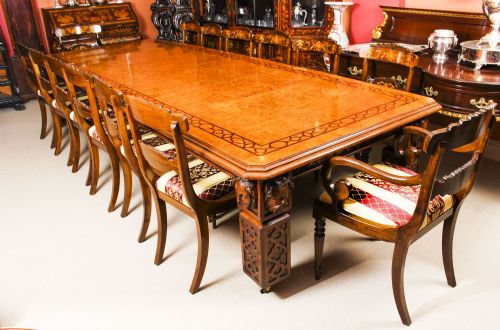
fig 3. A 19th-century Elizabethan Revival pollard oak extending dining table featuring an inlaid top border, carved corner mask motifs, geometric fretwork legs, and brass castors.
fig 3. Antique 12ft Elizabethan Revival Pollard Oak Extending Dining Table 19th C

This impressive dining table is exemplary of the early Victorian era with its Pollard oak and delicate inlaid marquetry. It will stand out in your dining or conference room and will become the key piece in your furnishing collection.

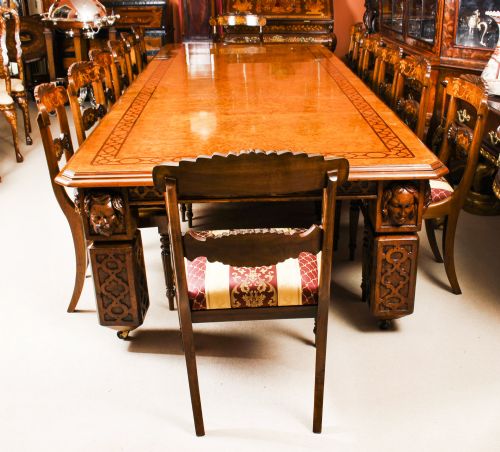
fig 4. A 19th-century Elizabethan Revival pollard oak extending dining table featuring an inlaid top border, carved corner mask motifs, geometric fretwork legs, and brass castors.
fig 4. Antique 12ft Elizabethan Revival Pollard Oak Extending Dining Table 19th C

Condition:

In excellent condition having been beautifully cleaned, French polished and waxed in our workshops, please see photos for confirmation.

Dimensions in cm:

Height 77 x Width 360 x Depth 142 - Fully Extended

fig 5. A 19th-century Elizabethan Revival pollard oak extending dining table featuring an inlaid top border, carved corner mask motifs, geometric fretwork legs, and brass castors.
fig 5. Antique 12ft Elizabethan Revival Pollard Oak Extending Dining Table 19th C

Height 77 x Width 160 x Depth 142 - With all leaves removed

Dimensions in inches:

Height 30.3 x Width 141.7 x Depth 55.9 - Fully Extended

Height 30.3 x Width 63.0 x Depth 55.9 - With all leaves removed

Pollard Oak

fig 6. A 19th-century Elizabethan Revival pollard oak extending dining table featuring an inlaid top border, carved corner mask motifs, geometric fretwork legs, and brass castors.
fig 6. Antique 12ft Elizabethan Revival Pollard Oak Extending Dining Table 19th C

Pollarding is a pruning system in which the upper branches of a tree are removed, promoting a dense head of foliage and branches. It has been common in Europe since medieval times and is practised today in urban areas worldwide, primarily to maintain trees at a predetermined height. The bole of the tree, constantly cut back over a period of years, will eventually form a lump, or ‘burr’, which when sawn for veneer, gives a lovely grained, swirling figure.

fig 7. A 19th-century Elizabethan Revival pollard oak extending dining table featuring an inlaid top border, carved corner mask motifs, geometric fretwork legs, and brass castors.
fig 7. Antique 12ft Elizabethan Revival Pollard Oak Extending Dining Table 19th C

The effect is similar to that of burr walnut with its distinctive speckled grain. Burrs, or ‘burls’, are growths which appear on the side of tree trunks, resulting from a tree undergoing some form of stress. They may be caused by an injury, virus or fungus.

fig 8. A 19th-century Elizabethan Revival pollard oak extending dining table featuring an inlaid top border, carved corner mask motifs, geometric fretwork legs, and brass castors.
fig 8. Antique 12ft Elizabethan Revival Pollard Oak Extending Dining Table 19th C

During the 19th century great strides were made in the mechanisation of cabinet making. Marc Isambard Brunel [ Isambard Kingdom’s father] built the first steam driven saw mill, and invented a circular saw that could be used to cut veneers thinly and evenly for the first time. He also developed the first hydraulic veneer press. The figured wood cut from burrs and pollards is notoriously difficult to cut and lay: the wild grain which makes it so attractive results in a very delicate, brittle veneer. The new machines enabled the Victorian craftsmen to make the most of these beautiful timbers.

fig 9. A 19th-century Elizabethan Revival pollard oak extending dining table featuring an inlaid top border, carved corner mask motifs, geometric fretwork legs, and brass castors.
fig 9. Antique 12ft Elizabethan Revival Pollard Oak Extending Dining Table 19th C

Winding Mechanism for extending tables

Winding mechanisms were invented in the early 19th Century.

A man by the name of Samuel Hawkins applied for a patent on a screw expander on June 6th, 1861. Presumably, Mr. Hawkins either died or retired because his business was taken over by a young machinist named Joseph Fitter in 1864.

fig 10. A 19th-century Elizabethan Revival pollard oak extending dining table featuring an inlaid top border, carved corner mask motifs, geometric fretwork legs, and brass castors.
fig 10. Antique 12ft Elizabethan Revival Pollard Oak Extending Dining Table 19th C

Joseph Fitter operated a machinist shop where he produced winding mechanisms for extending tables as well as screw expanders for piano stools and other applications at 210 Cheapside, Birmingham England by the name of Britannia Works.

Our reference: 09642

Height
77cm (30.31")
Width
360cm (141.73")
Depth
142cm (55.91")
Date of Manufacture

Regent Antiques has dated this Pollard Oak Dining Table to the 19th Century.

Reference Numbers
Sellingantiques Ref
SA761451
Dealers Internal Ref
09642
Regent Antiques
Regent Antiques
Sellingantiques verified Since Sep 2016

We specialise in english and continental furniture, silver, porcelain and decorative items.

Dealer Profile

You can view the stock and full dealer information on the Regent Antiques Profile Page

Trade Associations

Regent Antiques is a registered member of LAPADA  CINOA
PDF SHARE
SAVE
A 19th-century Elizabethan Revival pollard oak extending dining table featuring an inlaid top border, carved corner mask motifs, geometric fretwork legs, and brass castors.
1 / 30
Archive I A 19th-century Elizabethan Revival pollard oak extending dining table featuring an inlaid top border, carved corner mask motifs, geometric fretwork legs, and brass castors.

Antique 12ft Elizabethan Revival Pollard Oak Extending Dining Table 19th C
Archive II A 19th-century Elizabethan Revival pollard oak extending dining table featuring an inlaid top border, carved corner mask motifs, geometric fretwork legs, and brass castors. View II
Archive III A 19th-century Elizabethan Revival pollard oak extending dining table featuring an inlaid top border, carved corner mask motifs, geometric fretwork legs, and brass castors. View III
Archive IV A 19th-century Elizabethan Revival pollard oak extending dining table featuring an inlaid top border, carved corner mask motifs, geometric fretwork legs, and brass castors. View IV
Archive V A 19th-century Elizabethan Revival pollard oak extending dining table featuring an inlaid top border, carved corner mask motifs, geometric fretwork legs, and brass castors. View V
Archive VI A 19th-century Elizabethan Revival pollard oak extending dining table featuring an inlaid top border, carved corner mask motifs, geometric fretwork legs, and brass castors. View VI
Archive VII A 19th-century Elizabethan Revival pollard oak extending dining table featuring an inlaid top border, carved corner mask motifs, geometric fretwork legs, and brass castors. View VII
Archive VIII A 19th-century Elizabethan Revival pollard oak extending dining table featuring an inlaid top border, carved corner mask motifs, geometric fretwork legs, and brass castors. View VIII
Archive IX A 19th-century Elizabethan Revival pollard oak extending dining table featuring an inlaid top border, carved corner mask motifs, geometric fretwork legs, and brass castors. View IX
Archive X A 19th-century Elizabethan Revival pollard oak extending dining table featuring an inlaid top border, carved corner mask motifs, geometric fretwork legs, and brass castors. View X
Archive XI A 19th-century Elizabethan Revival pollard oak extending dining table featuring an inlaid top border, carved corner mask motifs, geometric fretwork legs, and brass castors. View XI
Archive XII A 19th-century Elizabethan Revival pollard oak extending dining table featuring an inlaid top border, carved corner mask motifs, geometric fretwork legs, and brass castors. View XII
Archive XIII A 19th-century Elizabethan Revival pollard oak extending dining table featuring an inlaid top border, carved corner mask motifs, geometric fretwork legs, and brass castors. View XIII
Archive XIV A 19th-century Elizabethan Revival pollard oak extending dining table featuring an inlaid top border, carved corner mask motifs, geometric fretwork legs, and brass castors. View XIV
Archive XV A 19th-century Elizabethan Revival pollard oak extending dining table featuring an inlaid top border, carved corner mask motifs, geometric fretwork legs, and brass castors. View XV
Archive XVI A 19th-century Elizabethan Revival pollard oak extending dining table featuring an inlaid top border, carved corner mask motifs, geometric fretwork legs, and brass castors. View XVI
Archive XVII A 19th-century Elizabethan Revival pollard oak extending dining table featuring an inlaid top border, carved corner mask motifs, geometric fretwork legs, and brass castors. View XVII
Archive XVIII A 19th-century Elizabethan Revival pollard oak extending dining table featuring an inlaid top border, carved corner mask motifs, geometric fretwork legs, and brass castors. View XVIII
Archive XIX A 19th-century Elizabethan Revival pollard oak extending dining table featuring an inlaid top border, carved corner mask motifs, geometric fretwork legs, and brass castors. View XIX
Archive XX A 19th-century Elizabethan Revival pollard oak extending dining table featuring an inlaid top border, carved corner mask motifs, geometric fretwork legs, and brass castors. View XX
Archive XXI A 19th-century Elizabethan Revival pollard oak extending dining table featuring an inlaid top border, carved corner mask motifs, geometric fretwork legs, and brass castors. View XXI
Archive XXII A 19th-century Elizabethan Revival pollard oak extending dining table featuring an inlaid top border, carved corner mask motifs, geometric fretwork legs, and brass castors. View XXII
Archive XXIII A 19th-century Elizabethan Revival pollard oak extending dining table featuring an inlaid top border, carved corner mask motifs, geometric fretwork legs, and brass castors. View XXIII
Archive XXIV A 19th-century Elizabethan Revival pollard oak extending dining table featuring an inlaid top border, carved corner mask motifs, geometric fretwork legs, and brass castors. View XXIV
Archive XXV A 19th-century Elizabethan Revival pollard oak extending dining table featuring an inlaid top border, carved corner mask motifs, geometric fretwork legs, and brass castors. View XXV
Archive XXVI A 19th-century Elizabethan Revival pollard oak extending dining table featuring an inlaid top border, carved corner mask motifs, geometric fretwork legs, and brass castors. View XXVI
Archive XXVII A 19th-century Elizabethan Revival pollard oak extending dining table featuring an inlaid top border, carved corner mask motifs, geometric fretwork legs, and brass castors. View XXVII
Archive XXVIII A 19th-century Elizabethan Revival pollard oak extending dining table featuring an inlaid top border, carved corner mask motifs, geometric fretwork legs, and brass castors. View XXVIII
Archive XXIX A 19th-century Elizabethan Revival pollard oak extending dining table featuring an inlaid top border, carved corner mask motifs, geometric fretwork legs, and brass castors. View XXIX
Archive XXX A 19th-century Elizabethan Revival pollard oak extending dining table featuring an inlaid top border, carved corner mask motifs, geometric fretwork legs, and brass castors. View XXX
Enlarged Archival View
Location
Manor Warehouse
318 Green Lanes
London
N4 1BX
United Kingdom
Verified Since Sep 2016
Items For Sale 643
Items Sold 2,638
Regent Antiques
Regent Antiques
Verified Since Sep 2016
View Dealer Info
Location: Manor Warehouse, 318 Green Lanes, London, N4 1BX, United Kingdom
Verified
Sep 2016
For Sale
643
Sold
2,638
A 19th-century Elizabethan Revival pollard oak extending dining table featuring an inlaid top border, carved corner mask motifs, geometric fretwork legs, and brass castors.
Antique 12ft Elizabethan Revival Pollard Oak Extending Dining Table 19th C
Ref: SA761451
A 19th-century Elizabethan Revival pollard oak extending dining table featuring an inlaid top border, carved corner mask motifs, geometric fretwork legs, and brass castors.
Detail View 1
Detail View 2
Detail View 3
Detail View 4
Detail View 5
Detail View 6
Detail View 7
Detail View 8
Detail View 9
Detail View 10
Detail View 11
Detail View 12
Detail View 13
Detail View 14
Detail View 15
Detail View 16
Detail View 17
Detail View 18
Detail View 19
Detail View 20
Detail View 21
Detail View 22
Detail View 23
Detail View 24
Detail View 25
Detail View 26
Detail View 27
Detail View 28
Detail View 29
Archival Detail
Every single antique dealer on our platform is individually approved by our internal team. We verify their professional trade history, ethical standards, and photographic quality to ensure a secure, high-standard buying environment. Upon joining, every dealer agrees to a strict 9-point code of conduct. While issues can occasionally arise, our dealers typically resolve them swiftly and directly with the buyer. In fact, since our founding in 2002, Sellingantiques has only had to step in to help resolve an issue on roughly five occasions—a true testament to the quality of our dealers and their dedication to your happiness.
Our dealers are highly experienced in packing and shipping fragile, high-value antiques. Because you are in direct contact with the dealer, you will be able to easily go through all available shipping and insurance options together to ensure your item arrives safely.
Antiques are the ultimate green purchase. By choosing historical pieces over newly manufactured goods, you completely eliminate the carbon footprint of modern mass production while preserving exceptional, timeless craftsmanship.

Elizabethan Revival furniture originated during the 19th century as a revival of late 16th-century English Renaissance design. It features architectural silhouettes, heavy strapwork carvings, inlaid wood geometric patterns, and carved figurative motifs such as masks or heraldic elements.

Tables from this era are typically constructed from solid oak or decorative pollard oak veneers, prized for distinctive burr grain patterns. Construction utilises traditional mortise and tenon joinery, geometric inlay banding, and heavy metal screw-extension mechanisms to support additional leaves.

Authentic pieces show period-correct construction markers such as hand-finished wood surfaces, authentic iron or brass castors, and period extension mechanisms. Original timber displays natural oxidisation on underside surfaces and consistent hand-carved detailing across the legs and frieze.

A substantial oak dining table can serve as an anchor in an open-plan dining space or formal dining room. Pairing the table with streamlined contemporary seating or neutral upholstered chairs balances the heavy carved details and prominent timber grain.

Maintain the timber finish by applying high-grade beeswax polish along the direction of the wood grain twice yearly. Protect the surface from liquid spills, heat sources, and direct sunlight, and store extension leaves in a climate-controlled room to prevent warping.
items
Add keywords to the filter
Price
£100
£250000
Era
Movements
Material
Origin
Stock Location
Freshness
Online Payments
Categories