



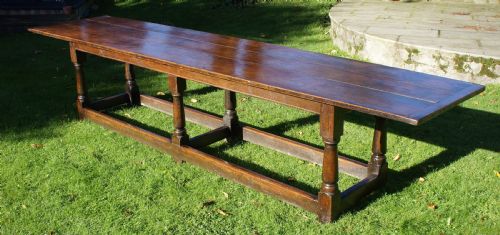


Antique Oak Banquet Table
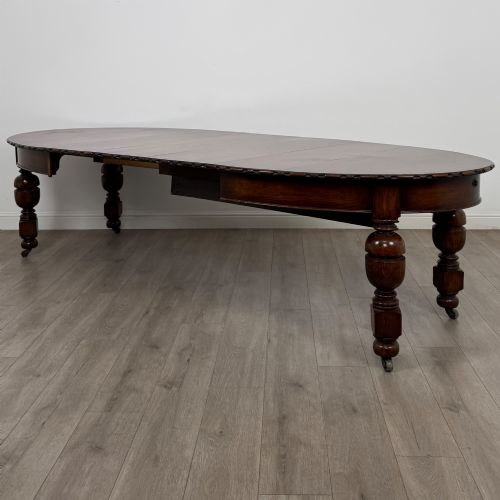
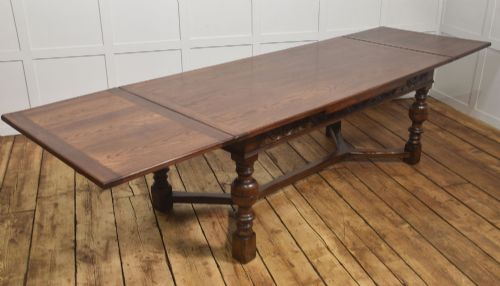
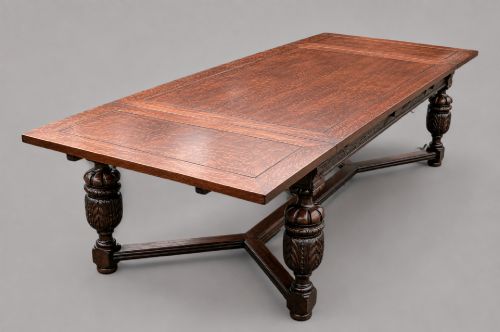
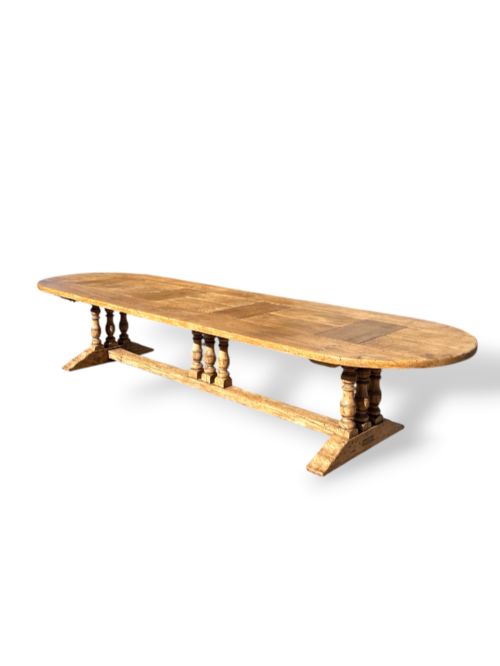
An antique oak banquet table anchors a room with serious timber, offering centuries of joinery and generous length for gatherings.
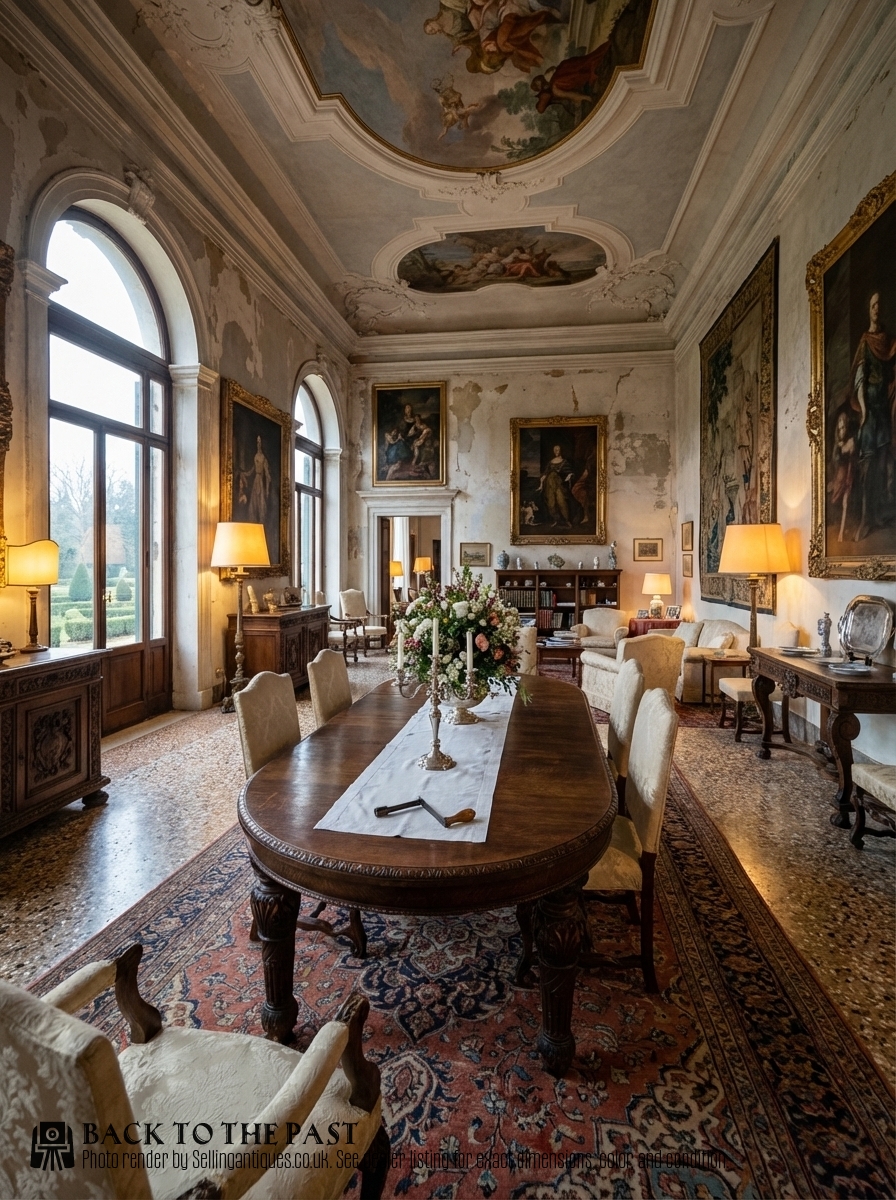
Antique Oak Banquet Table
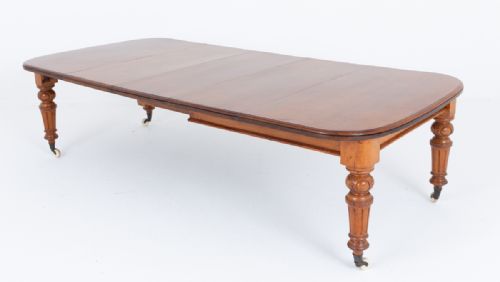
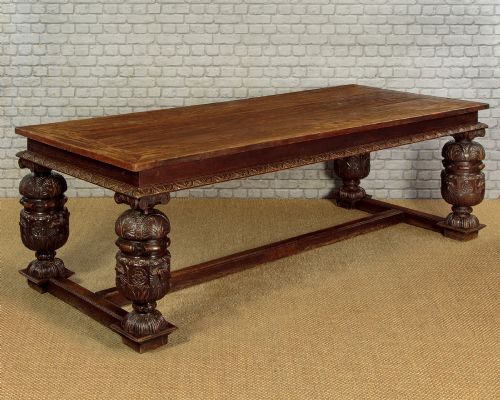
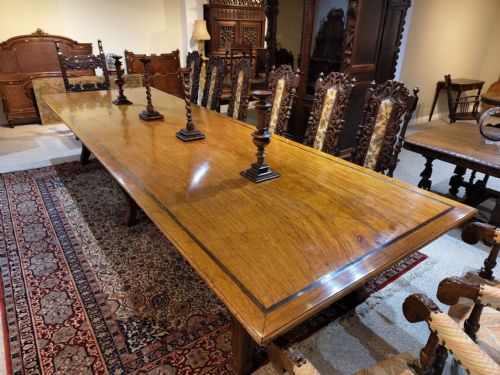
An antique oak banquet table provides substantial dining space, drawing from styles like Jacobean, Elizabethan revival, and Gothic revival. These large boards serve dining rooms and boardrooms alike, accommodating many diners with ease.
You will encounter pieces originating from the seventeenth century through to the Edwardian period and the early twentieth century. Common formats include refectory tables, draw-leaf mechanisms, and long extending tables with multiple leaves.
Construction relies heavily on solid oak, often enhanced by pollard oak veneers or complemented by brass and bronze hardware. Some examples trace their lineage to specific makers such as Maple and Co or carry royal ciphers like the ER stamp.

How They Were Made
Cabinet makers utilised solid timber, frequently selecting oak for its durability and prominent grain pattern. Pollard oak also appears on select surfaces, bringing a mottled, decorative figure to the table top.
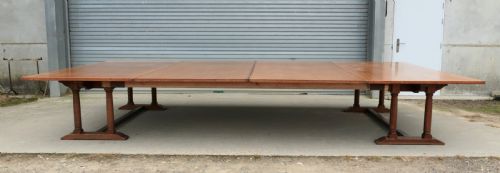
Extension systems range from draw-leaf leaves hidden beneath the main top to wind-out mechanisms supported by extra leaves. Bases vary from cruciform supports and trestles to heavy turned legs and carved pedestals.
Antique Oak Banquet Table Retail Price Guide 2026
Typical asking prices for oak banquet table among the pieces listed under this phrase on Sellingantiques today, from the lower quarter to the upper quarter. They describe what is for sale here now, not the wider market.
Listings feature oak extending tables spanning the seventeenth century to the Edwardian era, incorporating ceramic and brass elements.
What Varies in Quality
The distinction in quality rests on the integrity of the timber selection and the precision of the joinery. Tables featuring dense, well-figured oak with hand-carved detailing stand apart from plainer revival pieces.
Original mechanism smoothness defines the better extending tables. Smooth action in the winding gear and a flush fit across multiple removable leaves indicate superior workshop practice.
Maple and Co
The Antique Oak Banquet Table Glossary
- Refectory table
- A long, narrow dining table traditionally used in monastic refectories. These pieces usually feature stretcher bases for stability.
- Draw-leaf table
- A table with two leaves hidden beneath the main surface that pull out to extend the length. This mechanism alters the seating capacity quickly.
- Pollard oak
- Timber taken from trees that have been pollarded, producing a richly figured, spotty grain pattern. It was favoured for high-status Victorian revival surfaces.
- Gothic revival
- A nineteenth-century design movement inspired by medieval architecture. Tables in this style often incorporate pointed arches and heavy carved tracery.
- Extending table
- A dining table designed to accept additional loose leaves in the centre. Winding mechanisms often assist the opening of the frame.
Antique Oak Banquet Table: Frequently Asked Questions
How do I measure for a banquet table?
Allow sufficient clearance around the perimeter of the room for chairs to pull out comfortably. Remember to account for the extra length added when extension leaves are inserted.
Measure doorways and stairwells prior to purchase, as these long timbers cannot easily be pivoted around tight corners.
How do I care for an antique oak surface?
Maintain the timber by applying traditional beeswax rather than modern silicone sprays. This preserves the patina and feeds the dry oak over time.
Keep tables away from direct heat sources and radiators to prevent the solid timber boards from splitting or warping.
How do I tell an original refectory table from a revival piece?
Examine the underside of the top and the peg construction in the frame. Hand-cut joints and uneven tool marks point towards earlier craftsmanship.
Revival pieces often display uniform machine finishing and standardised timber widths beneath the polish.
How many people can a banquet table seat?
Seating capacity depends directly on the overall length and the presence of extension leaves. Many large examples accommodate ten to thirty diners comfortably.
Check the placement of table legs and trestle bases, as heavily carved stretcher supports can occasionally restrict legroom for guests.