
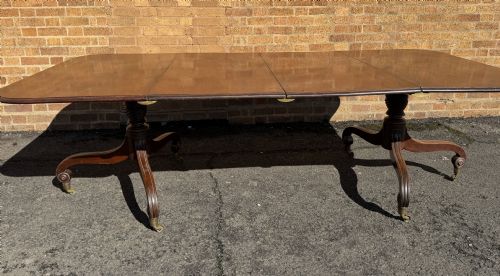
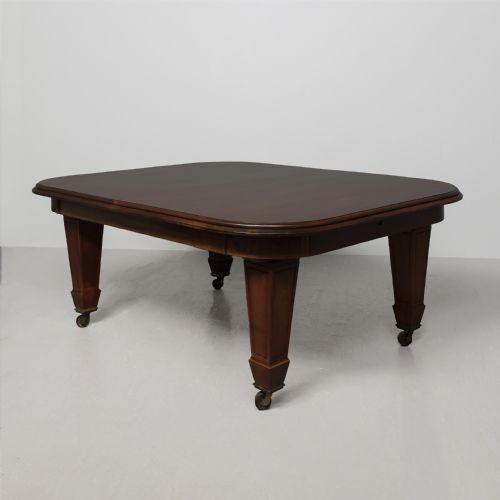
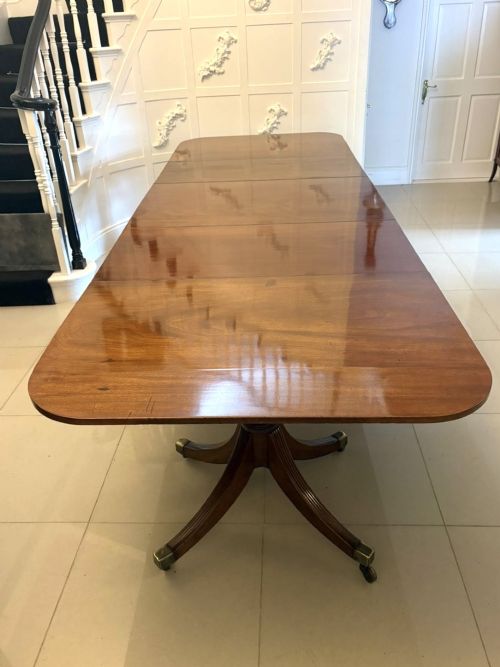
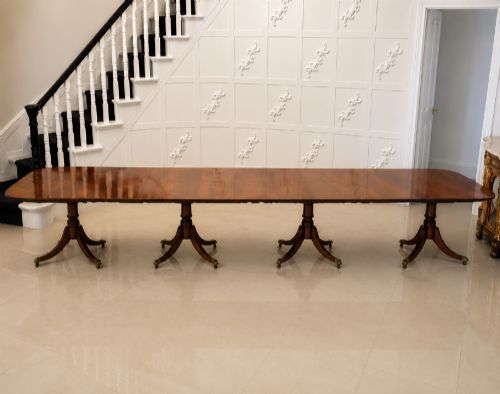


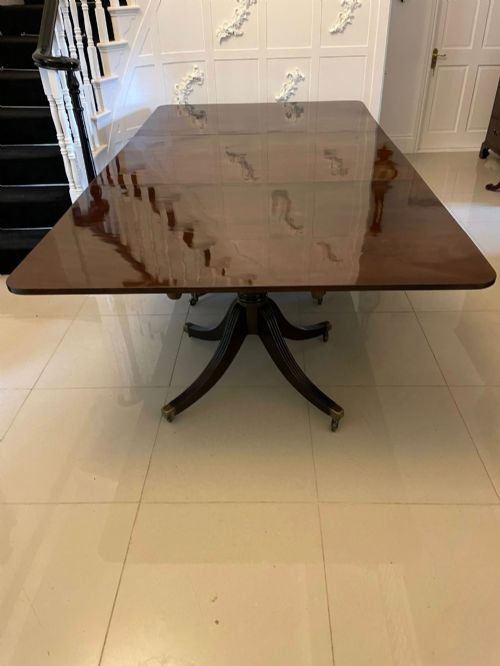
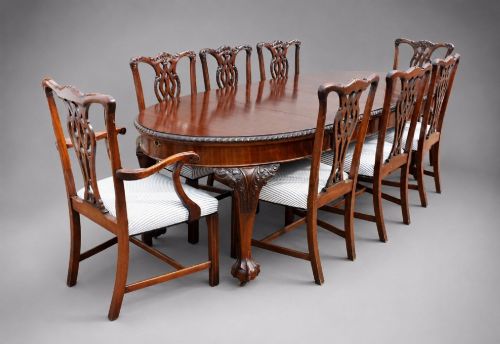
Large Extending Dining Table
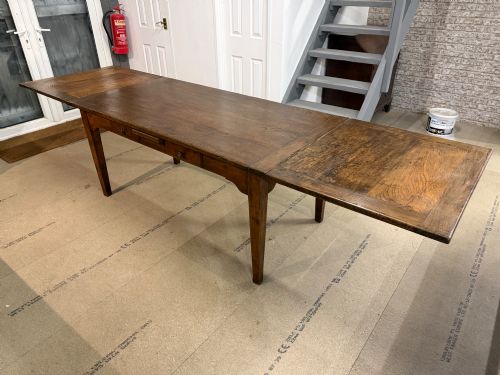
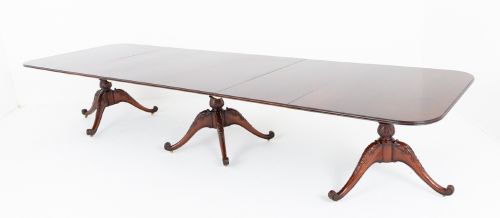
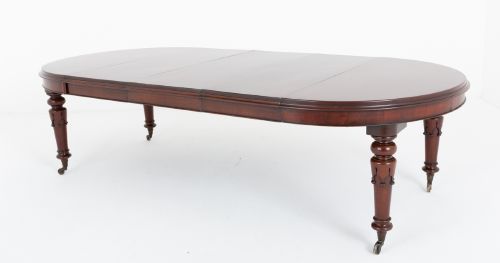
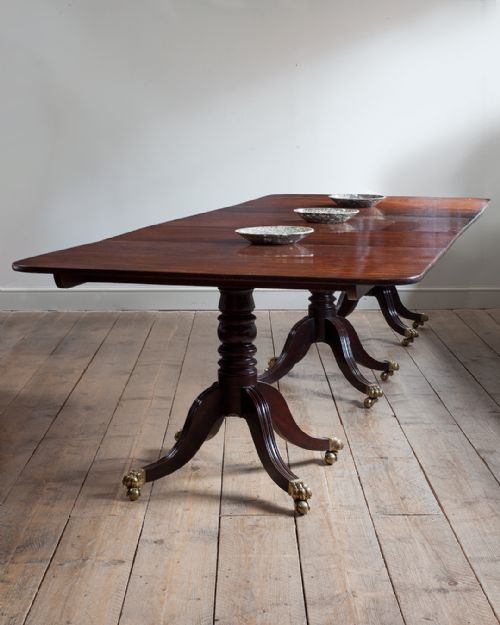
These large extending dining table examples accommodate many guests and adapt effortlessly to family gatherings using period timbers.
What large extending dining table pieces are
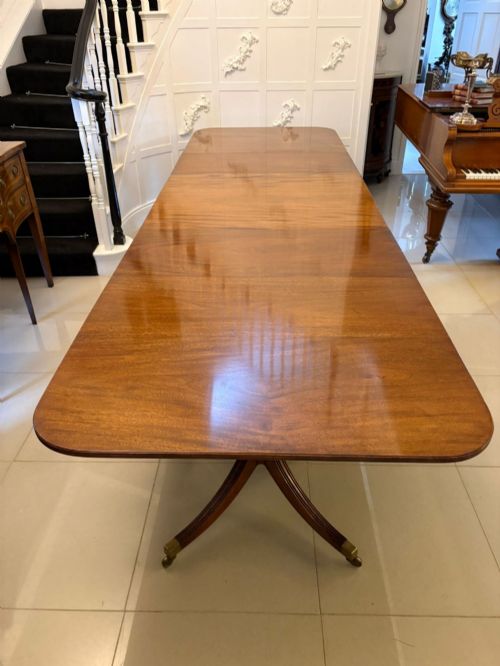
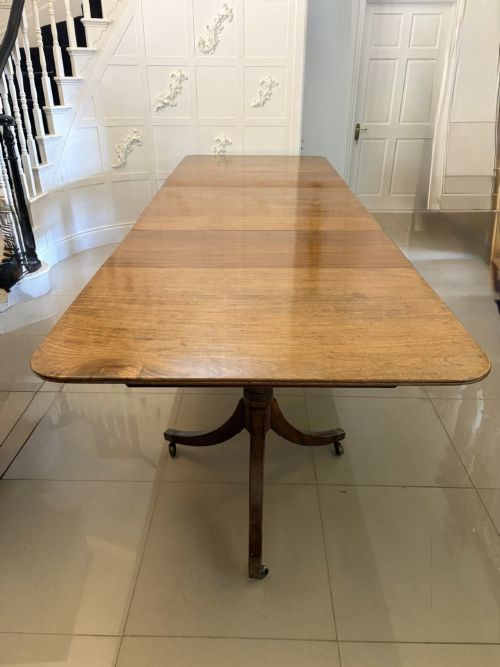
A large extending dining table provides substantial seating capacity for ten to fourteen people through mechanisms involving removable leaves or pull-out frames. These large extending dining table items appear predominantly in nineteenth century forms spanning Regency, William IV, Victorian, and revival styles.
The materials utilised across these pieces include figured mahogany, Cuban mahogany, burr walnut, walnut, pollard oak, oak, and Portuguese rosewood, often paired with brass fittings. Such large extending dining table pieces serve formal dining rooms by expanding to considerable lengths when required.
How they were made
Cabinet makers built these frames using dense hardwoods like mahogany and oak, applying figured veneers to table tops for visual depth. Construction incorporated brass mechanisms, leaf carriers, and sturdy pedestals or multiple reeded legs to support extended lengths.
Joinery methods such as pull-out frames and wind-out systems allowed smooth operation when inserting leaves. Carved details, inlay work, and polished surfaces finished the construction of these substantial dining pieces.
Retail Price Guide 2026
Typical UK retail prices for large extending dining table, calculated from the Sellingantiques database of over a million retail prices indexed since 2003. This retail price guide relies exclusively on Sellingantiques data; no external sources or auction records are used, so the figures do not describe the wider market.
Listings feature eighteenth and nineteenth century periods, including Regency, William IV, Victorian, and revival styles built from mahogany, oak, walnut, and rosewood.
What varies in quality
Superior examples demonstrate meticulous selection of figured mahogany or burr walnut timber, showing rich grain patterns across the top and matching leaves. The refinement of carved elements, such as reeded legs or elaborate pedestals, distinguishes higher grade pieces.
Engineering of the extending mechanism dictates mechanical reliability, where robust brass fittings and well-aligned leaf carriers ensure smooth daily use. Maker attributions, including documented work by notable firms, elevate certain pieces above standard workshop production.
Maple and Co·Gillows·Waring and Gillow
The Large Extending Dining Table Glossary
- Extending table
- A dining table designed with a mechanism or removable leaves to increase its overall surface length for additional seating. This allows the furniture to adapt between daily domestic use and large dinner parties.
- Leaf
- A removable section of timber inserted into the centre of a dining table to lengthen it. Multiple leaves permit various seating configurations.
- Reeded leg
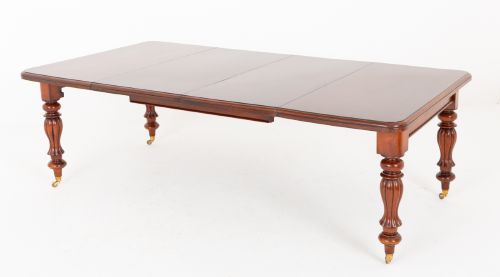
- A column decorated with parallel convex mouldings carved vertically into the wood. This classical decorative feature appears frequently on Regency and Victorian table supports.
- Pedestal
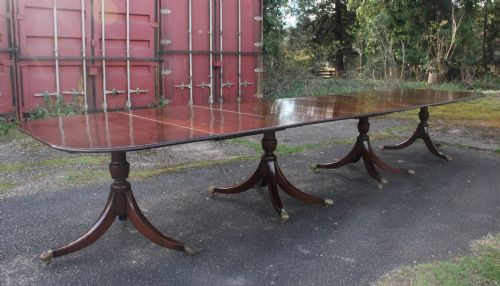
- A central columnar support resting on a platform base with feet, commonly used to hold up large round or rectangular tables. Double and triple pedestal configurations support longer extending formats.
- Figured mahogany
- Timber cut to highlight natural irregularities and patterns in the grain such as flame or curl figures. Cabinet makers reserved this premium wood for prominent display surfaces.
Frequently Asked Questions
How do you operate the extending mechanism?
These tables typically utilise a pull-out frame or a wind-out system that separates the main sections to accommodate additional leaves. Once the framework opens to the required span, the leaves drop into place and secure the surface.
Smooth operation relies on brass runners and leaf carriers designed to distribute weight evenly across the pedestal bases or legs. Regular gentle use keeps these historical mechanisms functioning correctly.
How many people can these tables seat?
Most of these large dining tables accommodate between ten and fourteen guests when fully extended with their leaves in place. Their generous lengths often reach twelve feet or more.
Without leaves inserted, the tables function comfortably for smaller daily gatherings. This versatility made them essential for nineteenth century entertaining.
How do I identify a Victorian table?
Victorian examples frequently feature figured mahogany, heavy proportions, and turned or reeded legs supporting substantial extending frames. Many pieces from this era incorporate multiple pedestals to handle heavy lengths.
Construction details often include robust secondary timbers and mechanical leaf carriers patent to the nineteenth century. Stylistic revivals during this period also borrowed heavily from earlier Georgian and Elizabethan designs.
What is pollard oak?
Pollard oak comes from trees that were cut back close to the trunk to encourage a dense network of branches, producing a heavily knotted and mottled grain pattern. Cabinet makers valued this timber for its distinctive decorative appearance.
Tables utilising pollard oak often date to the nineteenth century revival periods. The rich, textured surface creates a striking alternative to standard mahogany or walnut.