
Banqueting Table
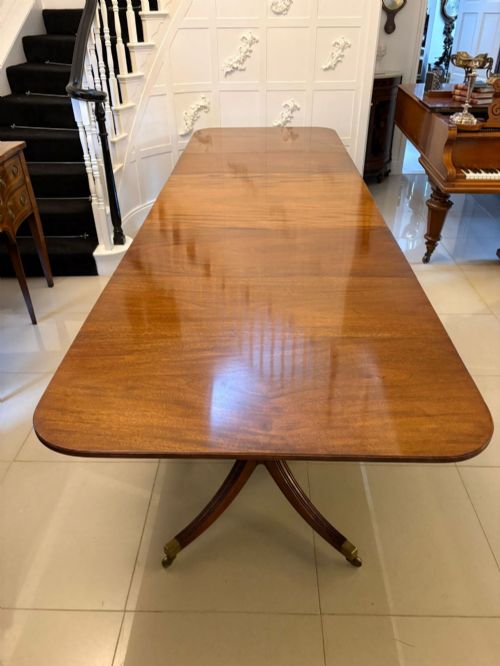
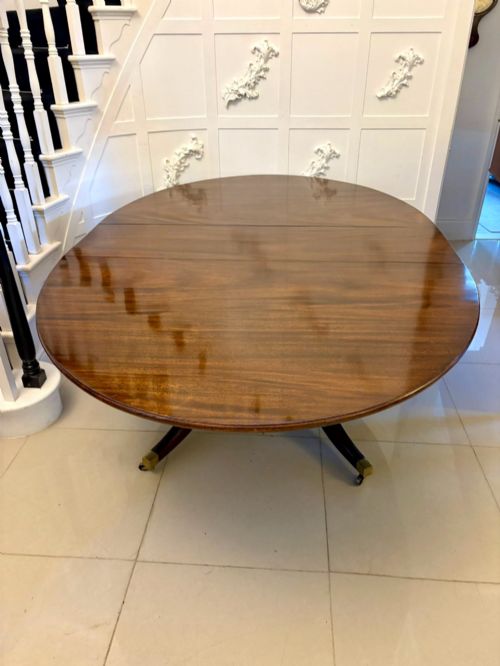
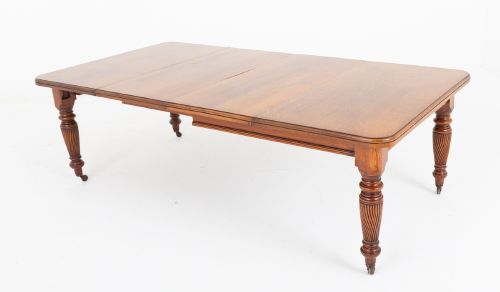
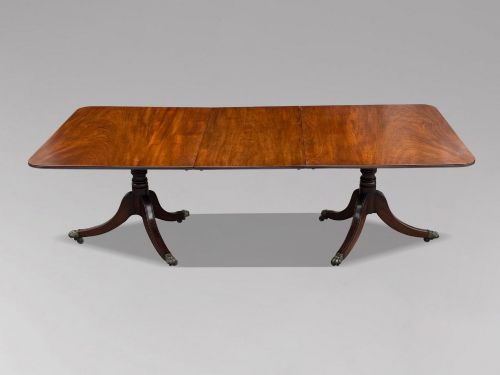
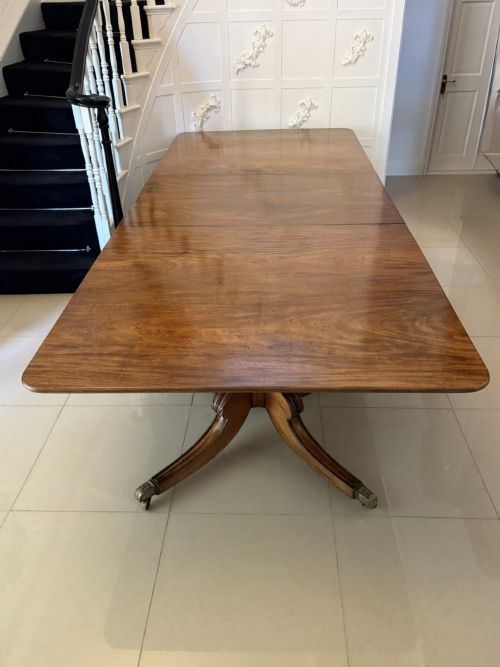
A banqueting table provides the scale and presence needed for large gatherings, taking the form of substantial extending mahogany or oak tables from the Georgian, Victorian, and later revival periods.
Banqueting Table
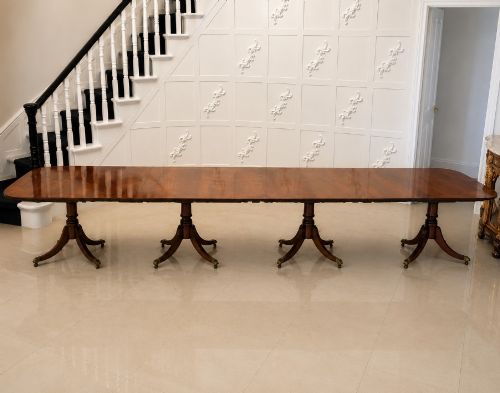
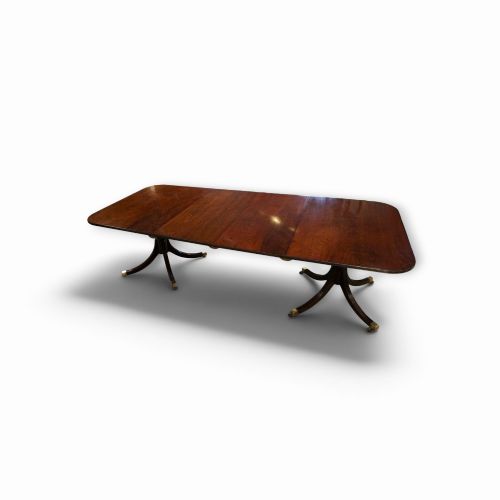
When a buyer searches for a banqueting table, they encounter large dining tables designed to accommodate ten to over twenty guests. These pieces typically rely on multiple pedestals or pillars and removable leaves to extend their length.
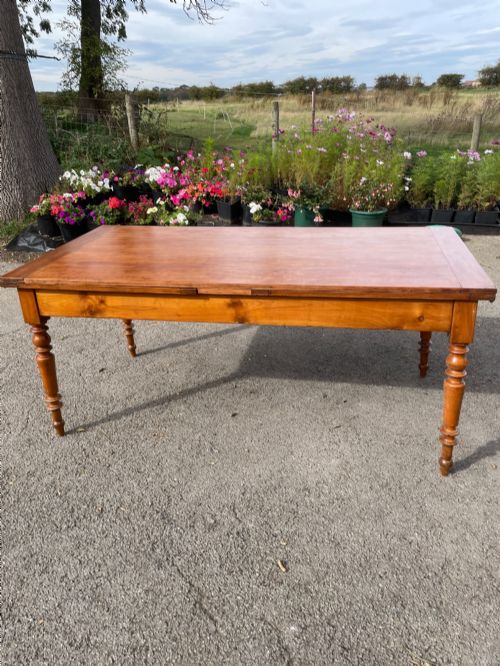
The selection here draws primarily from nineteenth-century origins and subsequent twentieth-century revivals, spanning Georgian, Victorian, and Regency styles alongside refectory formats in oak, walnut, and cherrywood.
Materials and construction
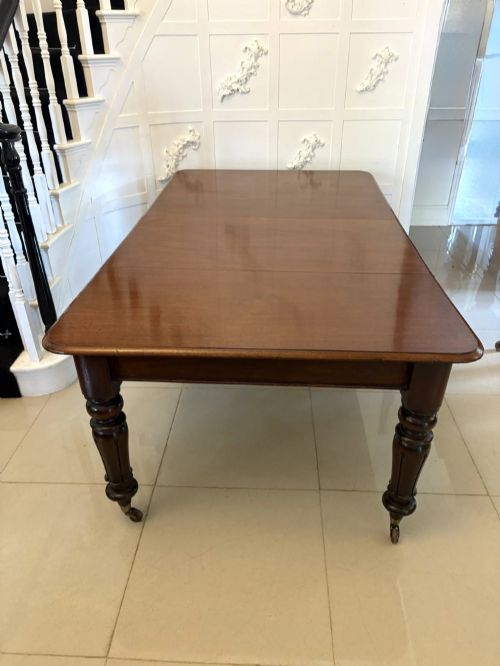
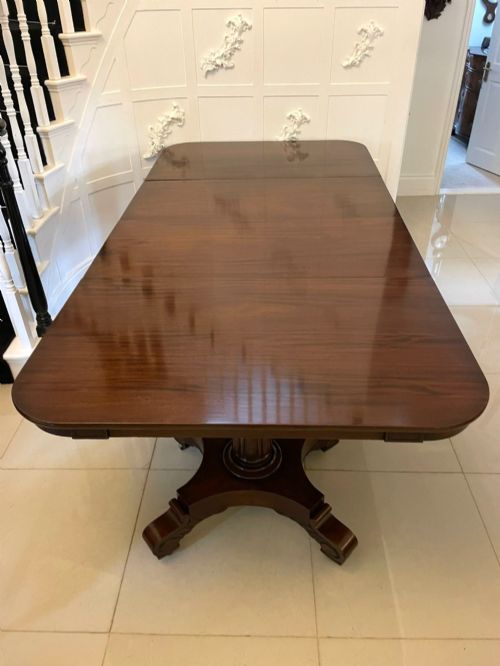
Makers constructed these large dining surfaces predominantly from mahogany, flame mahogany, and oak, frequently incorporating brass mechanisms and fittings to support the weight of multiple leaves.
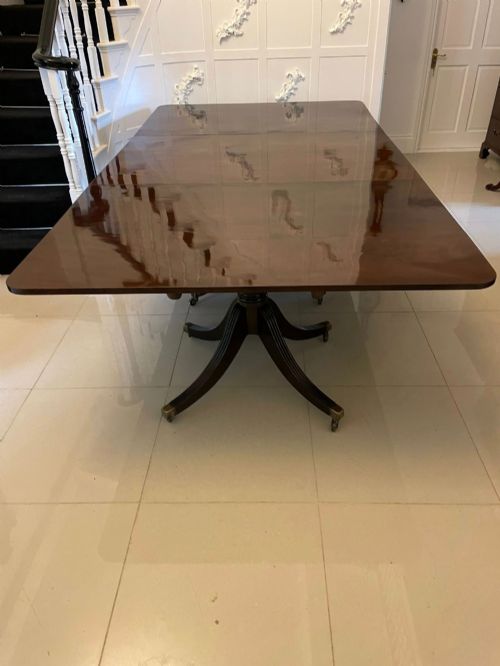
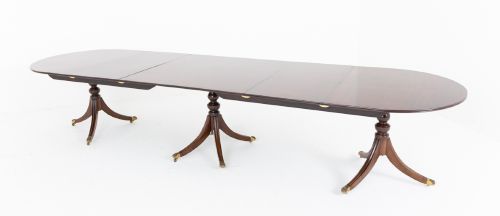
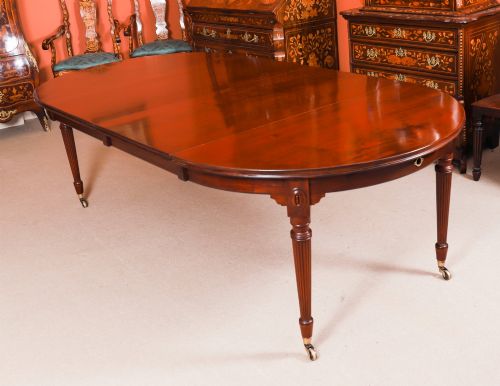
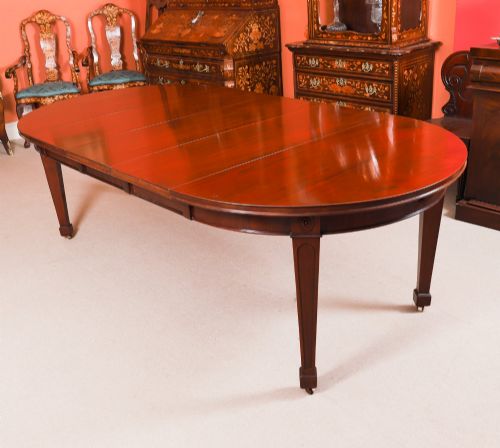
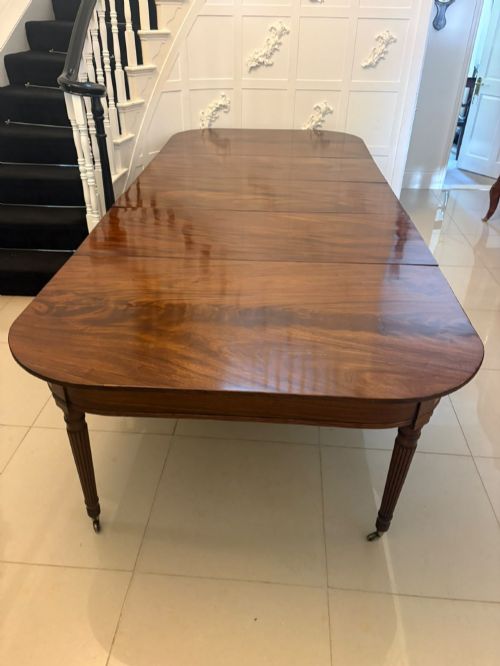
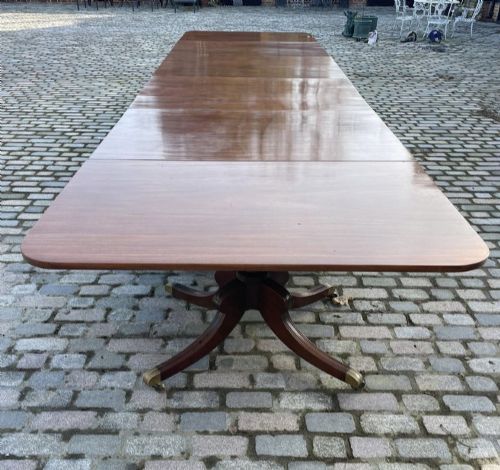
The structural framework often utilises twin, triple, or quadruple pedestals, with some examples incorporating reeded legs or D-end sections to maintain stability across extended lengths.
Several examples stretch past five metres in length, requiring substantial dining rooms and quite a lot of guests to fill them.
Assessing quality
Differentiation across these dining surfaces rests upon the selection of figured timber veneers and the precision of the extending mechanism. Tables retaining their original leaves and constructed with substantial multi-pillar supports represent superior execution.
Attribution to documented makers or workshops, alongside balanced proportions across grand lengths, distinguishes finer examples from standard commercial production.
Gillows·Wylie and Lochead·Maple and Co·Selbat
The Banqueting Table Glossary
- Pedestal
- A central columnar support, often carved or reeded, used singly or in multiples to hold up large dining surfaces.
- Extending table
- A dining table designed with removable leaves and internal mechanisms to increase its overall length.
- Flame mahogany
- A veneer cut from timber that produces a distinctive flame-like pattern across the wood grain.
- D-end
- A table end shaped in the form of a capital letter D, frequently used in modular dining arrangements.
Banqueting Table: Frequently Asked Questions
How do multi-pillar banqueting tables extend?
These tables typically employ a system of pedestals or pillars that separate on runners to accommodate drop-in leaves.
Additional support legs often swing out from beneath the frame to stabilise the central sections when fully opened.
What periods do these dining tables cover?
The available pieces range from the early nineteenth century through the Victorian era and into twentieth-century revivals.
Earlier pieces originate in the Georgian and Regency periods, while later versions adopt these classical proportions.
How many diners can these tables seat?
Capacities vary from ten to over twenty-eight guests, depending on the length and number of pedestals.
Large examples measure several metres in length and incorporate multiple original leaves to achieve maximum seating.
Which woods appear most frequently?
Mahogany and flame mahogany dominate the listings, frequently paired with brass hardware and fixtures.
Oak, walnut, and cherrywood also appear across Victorian examples and continental refectory formats.