

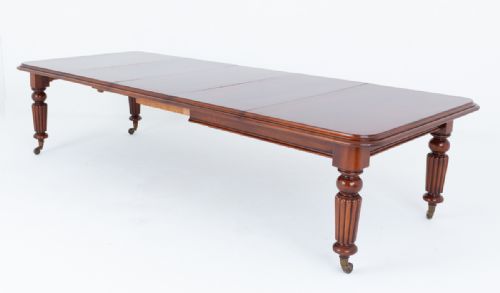


Victorian Pull Out Table
These Victorian pull out table pieces offer solid timber build and flexible leaf systems to solve dining space problems with traditional style.
Victorian Pull Out Table
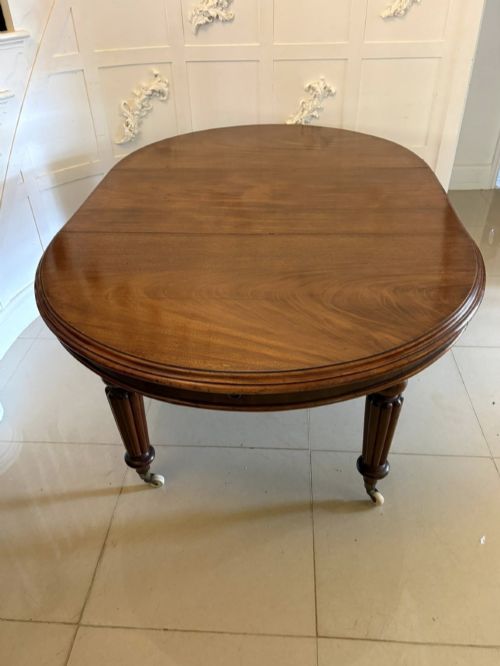
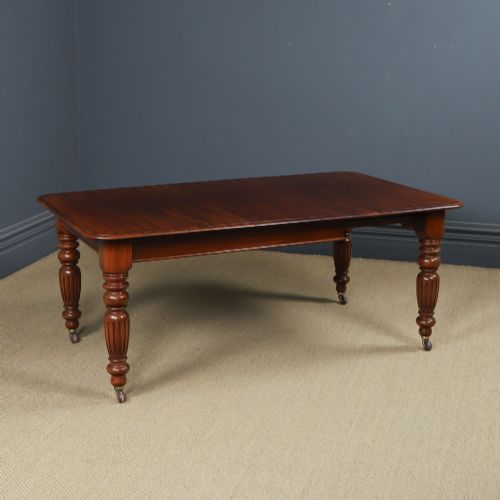
A Victorian pull out table is primarily designed for dining rooms and large gatherings, utilising extra leaves to expand the surface area. The pieces listed show that mahogany is the dominant timber, alongside oak, walnut, pollard oak and burr maple.
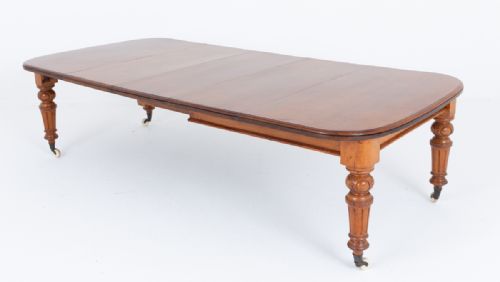
You will most commonly meet mahogany extending dining tables equipped with wind out mechanisms or removable leaves. Forms range from compact four or six seater tables up to fourteen foot dining pieces and occasional side console buffet tables.
Indicators of Quality
Quality rests on the selection of timber figures, such as pollard oak or burr maple veneers, and the structural integrity of the extending frame. Superior pieces maintain smooth operation in their pull out mechanisms and retain their original matching leaves.
Tables with finer turning on the legs, substantial timber thickness and well preserved brass castors sit at the upper end of the range. Simpler constructions in standard oak or plain mahogany form the more utilitarian side of the surviving output.
One exceptional dining table stretches all the way to fourteen feet in length, requiring a dedicated crew just to move it.
Gillows
The Victorian Pull Out Table Glossary
- Wind Out Mechanism
- A mechanical gear system operated by a handle that expands the table frame to accept extra leaves. This innovation defined many nineteenth century dining tables.
- Draw Leaf Table
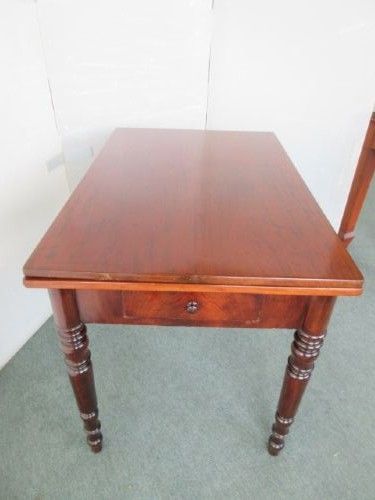
- A table style where extension leaves store beneath the main top and pull out from the ends. This design allows quick adjustment without storing separate boards.
- Pollard Oak
- Timber taken from trees that were cut back at the trunk to produce dense, highly figured grain patterns. Cabinet makers used this decorative wood on prominent surfaces.
- Castor
- A small wheel fitted to the base of table legs to ease movement across floors. They are frequently cast in brass and occasionally paired with ceramic mounts.
- Buffet Side Table
- A low sideboard or serving table placed near the dining area for food and tableware. Some unusual Victorian variants incorporate under tiers and pull out functions.
Victorian Pull Out Table: Frequently Asked Questions
How do you extend the table?
Most examples use a mechanical wind out system or manual pull out tracks. You turn a handle or pull the ends apart to create a gap for the spare leaves.
Once the frame is open to the correct length, you drop the extra leaves into place and wind the mechanism back to secure them tightly.
How many people can sit at these tables?
Seating capacity depends entirely on the number of additional leaves used and the overall length of the frame. Surviving pieces range from compact six seat versions up to grand fourteen foot tables.
You should measure your dining space carefully to ensure clearance for chairs when the table is fully extended.
Are the leaves original?
Many surviving tables retain their original matching leaves, which match the grain and colour of the main top. Some pieces have replacement leaves made later to restore full functionality.
Examining the underside and the edge matching helps determine if the boards belong to the primary construction period.
What woods were used?
Mahogany is by far the most common timber found in these dining tables, appearing in Cuban and standard varieties. Oak, walnut, pollard oak and burr maple also appear across different pieces.
Secondary woods often support internal frames and sliding tracks hidden beneath the main surface.
How do I care for the surface?
Keep the timber away from direct sunlight and extreme heat sources to prevent the wood from drying out or splitting. Use coasters and placemats to protect the polished finish from moisture.
Apply a traditional wax polish occasionally to maintain the sheen of the mahogany or walnut surfaces.