

Extending Oak Kitchen Table
An extending oak kitchen table provides the daily surface for family meals and expands smoothly when guests arrive.
Extending Oak Kitchen Table
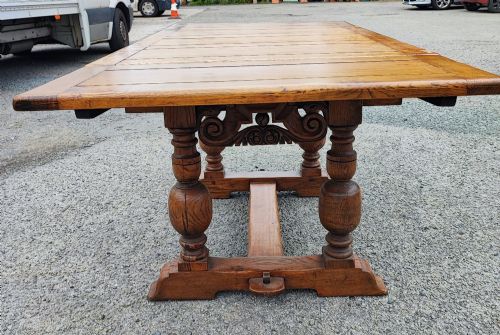
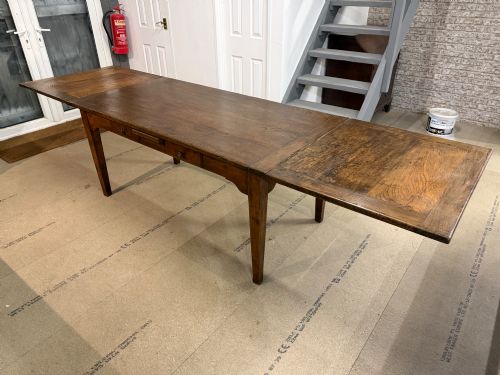
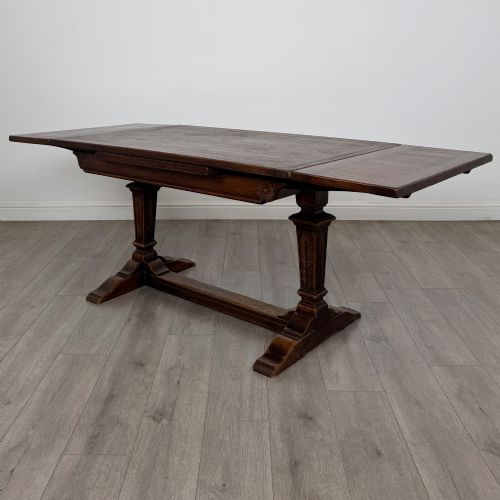
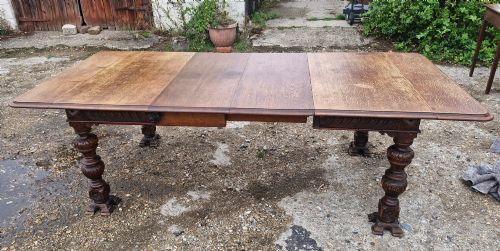
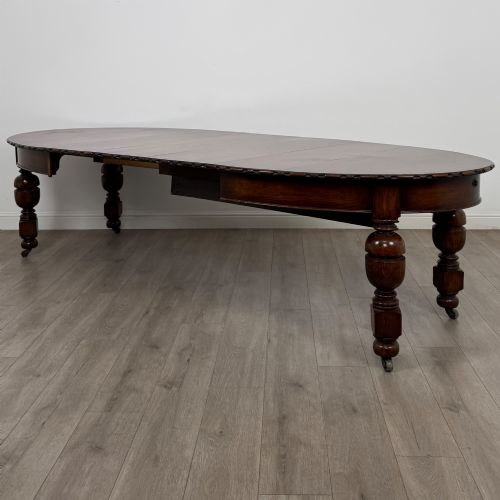
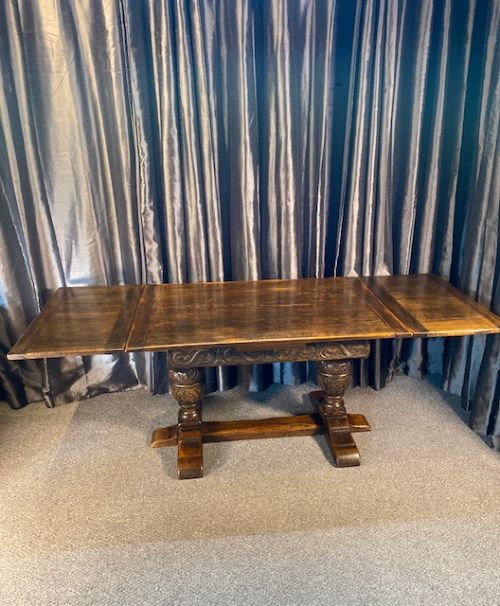
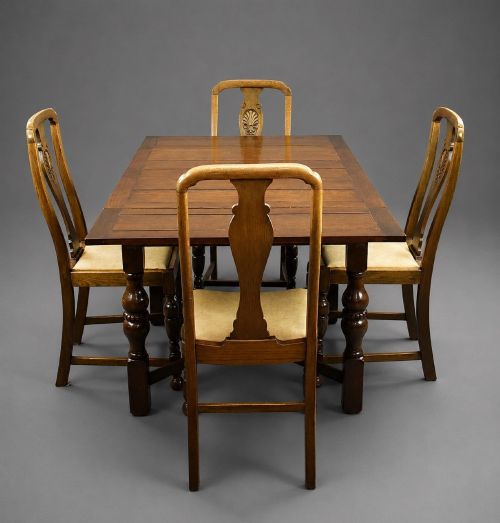
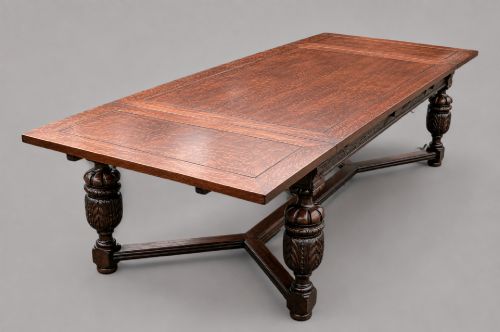
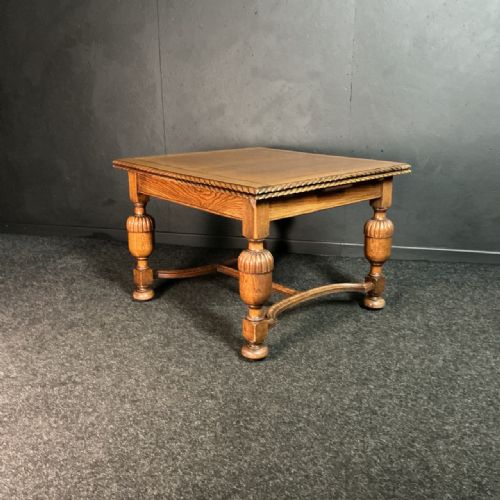
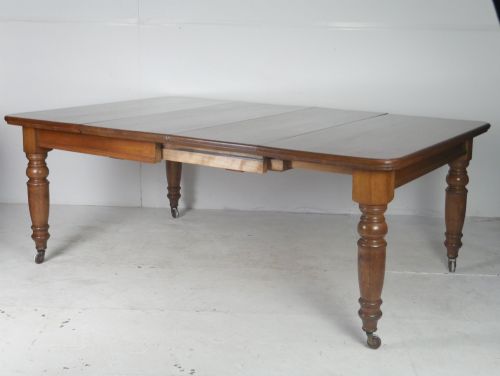
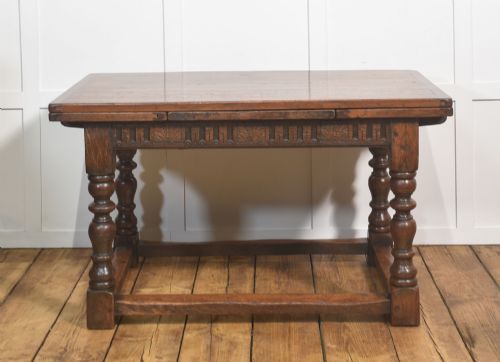
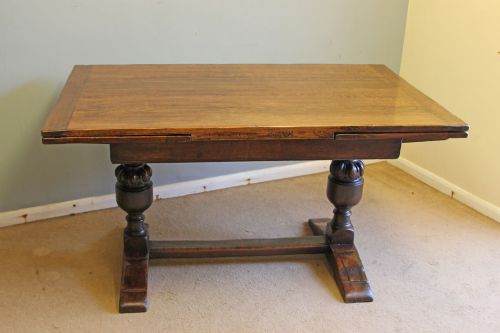
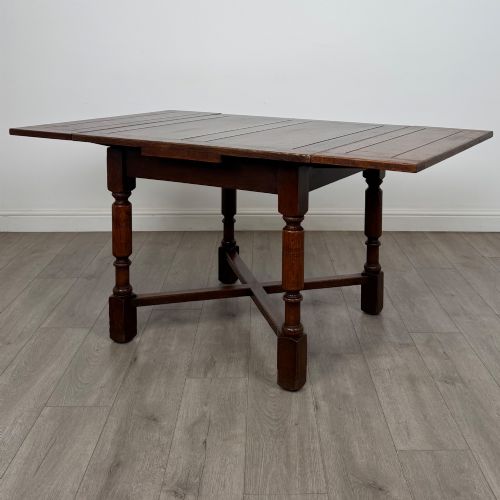
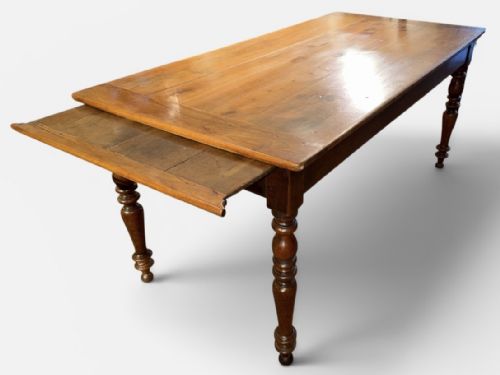
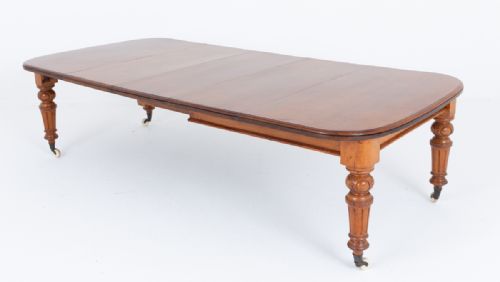
An extending oak kitchen table combines practical everyday dining with the capacity to lengthen for larger gatherings. The pieces on this page appear in various formats, predominantly featuring draw-leaf mechanisms alongside refectory and farmhouse builds from the nineteenth and early twentieth centuries.
Buyers will encounter Edwardian and Victorian examples alongside robust 1920s workshops, spanning styles from rustic farmhouse and French country to Jacobean revival and Arts and Crafts. These tables serve as the hard-wearing centre of the home, designed to handle daily culinary work and large dinner parties alike.
The most common formats rely on draw leaves that slide out from beneath the main top, or refectory constructions built for heavy use. Solid timber remains standard, providing a resilient workspace that develops character with every year of service.
Construction and materials
Makers relied on solid oak and scrubbed oak supplemented occasionally by secondary timbers like beech or fruitwood for internal frames. Brass components appear in the operational fittings of the extending mechanisms, while parquetry surfaces feature on select continental pieces.
Joinery methods prioritize rigidity, utilising sturdy stretcher bases and pegged joints to support the shifting weight of extending leaves. Draw-leaf leaves slide smoothly on internal runners, designed to lock level with the primary surface when fully drawn.
Certain French farmhouse tables arrive equipped with a built-in bread slide, ready to catch crumbs from slicing the daily loaf.
Judging quality
Quality rests in the smoothness of the extending mechanism and the stability of the timber when fully opened. Superior examples maintain a level surface across all leaves without sagging at the joints.
The choice of grain, the thickness of the top boards, and the integrity of the original underframe distinguish workshop production from standard utility pieces. Finer tables display careful timber selection that allows the natural figuring of the oak to show clearly across the extended span.
Maple and Co
The Extending Oak Kitchen Table Glossary
- Draw leaf
- A table design featuring two leaves hidden beneath the main top that pull out to extend the surface length. This mechanism allows a compact daily table to seat extra guests quickly.
- Refectory
- A long, narrow dining table traditionally built for communal dining halls with strong stretcher supports. These forms translate well to domestic kitchens requiring ample length.
- Parquetry
- Geometric wood mosaic work arranged in decorative patterns on a tabletop. French examples frequently employ this technique to add visual texture to the oak surface.
- Scrubbed oak
- Timber that has been thoroughly washed and cleaned down to its raw, pale grain. This finish highlights the natural texture of the wood without heavy varnish.
- Gate leg
- A table style with hinged leaves supported by swing-out legs that pivot like a gate. It offers versatile folding capabilities for smaller kitchen spaces.
Extending Oak Kitchen Table: Frequently Asked Questions
How do draw leaf tables work?
Draw leaf tables operate by sliding two concealed leaves out from underneath the main central top. As the ends are pulled outward, the main top drops slightly to lock them flush.
This clever mechanical design allows one person to lengthen the surface in seconds without needing to store separate loose boards elsewhere.
Are these tables suitable for daily use?
Oak is a hard and resilient timber that withstands daily kitchen duties, family meals and heavy preparation work. Solid construction methods ensure the frame remains steady during frequent extending.
Treating the surface with appropriate oils helps protect the grain from moisture and daily wear while maintaining the natural colour.
How do I tell Victorian from Edwardian tables?
Victorian tables often display darker finishes, heavier carved details, and more substantial proportions influenced by revival styles. Edwardian pieces generally shift toward lighter tones, simpler lines, and the widespread adoption of the draw-leaf format.
Examining the underframe and hardware often reveals clues about the manufacturing period and the workshop traditions of the era.
What is a refectory kitchen table?
A refectory table is a long, narrow form originally built for communal dining, characterised by sturdy legs connected by low longitudinal stretchers. In domestic kitchens, this shape maximises legroom while providing a generous length for seating multiple people.
Many period examples incorporate extension mechanisms into this traditional long format to combine historic style with modern flexibility.