
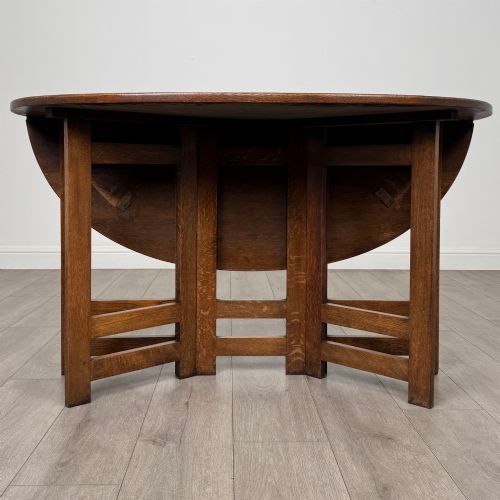


Edwardian Gate Leg Table
An edwardian gate leg table offers a practical drop-leaf surface for compact spaces, built with folding gate legs that support the leaves when open.

Edwardian Gate Leg Table
An edwardian gate leg table is primarily built as a dining table, tea table, or smaller occasional table featuring drop leaves supported by swing-out legs. The pieces seen span compact occasional forms and larger dining versions designed to seat multiple people.
Makers of the period worked in styles ranging from simple Jacobean Revival and Arts & Crafts interpretations to refined Georgian revival designs. Alongside traditional gate legs, the selection includes narrow Sutherland tables and delicate spider-leg variations.
While Edwardian examples predominate, related pieces stretch back to the Victorian and Georgian eras, alongside occasional mid-century interpretations. These tables function well in modern homes where floor space requires flexible furniture.
How they were made
Cabinet makers utilised solid timbers and veneers, predominantly selecting oak and mahogany for their strength and grain. Walnut, satinwood, and brass hardware appear alongside subtle satinwood inlay work.
Structural integrity relies on the pivot joints of the gate legs, which swing outward to bear the weight of the drop leaves. Turned supports, barley twist legs, and delicate spider legs provide the vertical framework.
Edwardian Gate Leg Table Retail Price Guide 2026
Typical asking prices for edwardian gate leg table among the pieces listed under this phrase on Sellingantiques today, from the lower quarter to the upper quarter. They describe what is for sale here now, not the wider market.
Spider legs require remarkable balance to hold a cup of tea without trembling.
What varies in quality
The standard of timber selection and joinery distinguishes finer examples from simpler utilitarian pieces. Superior tables display carefully matched grain patterns across the leaves and stable hinge mechanisms that operate smoothly.
Decorative restraint and refined proportions separate well-executed revival pieces from heavier, plain iterations. The finesse of the leg turning, whether simple barley twist or slender spider legs, reflects the maker's skill.
The Edwardian Gate Leg Table Glossary
- Gate leg table
- A table with hinged leaves supported by one or more legs that swing out like a gate. This design allows the surface area to expand or contract depending on daily requirements.
- Sutherland table
- A narrow style of drop-leaf table featuring particularly slender legs and leaves that drop almost vertically. These were designed to fold into a minimal footprint when not in use.
- Pembroke table
- A rectangular or oval table with two hinged drop leaves on opposing sides, often fitted with one or more drawers. The form dates from the eighteenth century but continued into later periods.
- Spider leg
- A descriptor for extremely thin, delicate turned legs used on occasional tables. They reduce visual weight while providing adequate support for smaller surfaces.
- Drop leaf
- A hinged section of a table top that folds down to save space. When raised, it is supported by a hinged leg, bracket, or sliding arm.
Edwardian Gate Leg Table: Frequently Asked Questions
How do I use a gate leg table daily?
Keep the leaves dropped against the central base to use the piece as a console or side table in a hallway or living room. Pull the swing legs outward and raise the leaves whenever you need a full surface for dining or working.
Ensure the folding gate mechanism moves freely without dragging on the floorboards. Placing felt pads beneath the feet protects both the table joints and delicate flooring during movement.
Where should I place a Sutherland table?
Sutherland tables suit narrow spaces such as hallways, landings, or behind sofas because their folded profile is exceptionally slim. They can easily be moved into the middle of a room when you need a tea table or a surface for books.
Avoid positioning them in direct sunlight or beside intense heat sources to protect the polished mahogany or oak surfaces from drying out.
How do I tell Edwardian from Victorian tables?
Edwardian tables often display lighter timbers, satinwood inlay, and a general air of refinement influenced by Georgian revival aesthetics. Victorian examples frequently utilise heavier proportions, darker finishes, and sturdier turnings.
Examine the construction methods underneath the leaves, as drawer linings and secondary timbers can offer clues regarding the period of manufacture.