


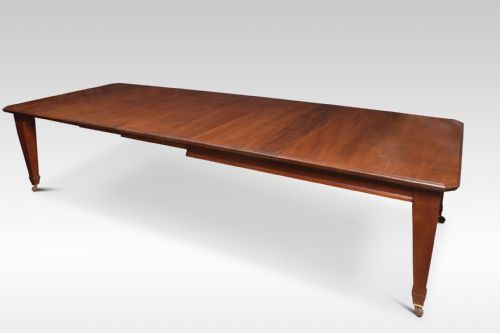


Walnut Extendable Table
These walnut extendable table examples offer rich wood grain and practical dining flexibility, bringing historic craftsmanship straight to your dining room.
Walnut Extendable Table
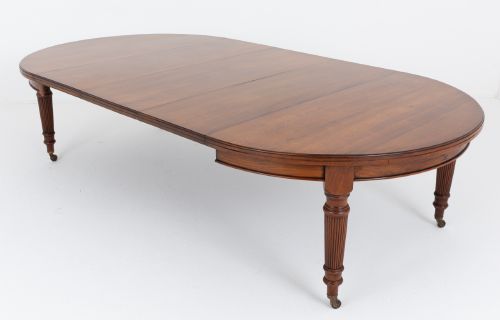
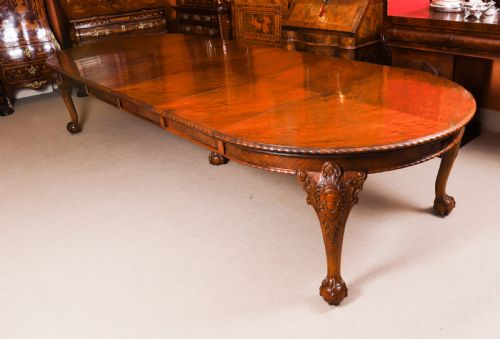
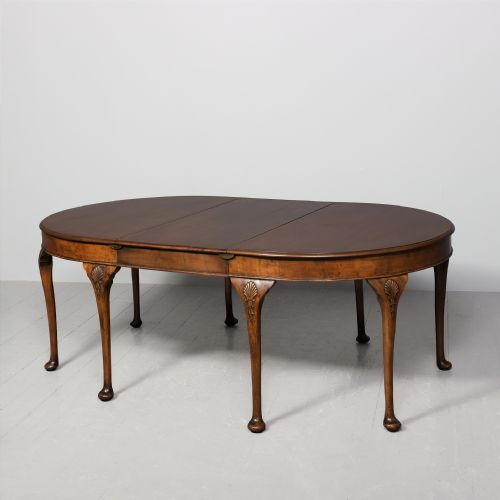
A walnut extendable table provides adaptable dining space through clever mechanism designs integrated into historic wooden frames. When searching for a walnut extendable table, you encounter diverse forms ranging from pull out pull leaf arrangements to drop flap gateleg designs.
The selections span significant periods including the eighteenth century, Victorian era, Edwardian period, and Art Deco movements. Makers utilise rich timbers such as burr walnut, standard walnut, oak, and mahogany to construct these functional dining tables and occasional tea tables.
Victorian and George II styles appear frequently alongside Queen Anne Revival and George III interpretations. These dining tables serve modern homes by expanding easily for guests while maintaining period character.
How they were made
Cabinet makers constructed these dining tables using solid walnut, burr walnut, oak, and mahogany for structural integrity and decorative surface appeal. Skilled joiners utilised brass mechanisms and metal fittings to enable smooth pulling and extending actions for extra leaves.
Carved bases, drop flaps, and gateleg supports required expert woodworking techniques passed through generations of craftsmen. Individual leaves were matched to the main top timber to ensure continuity of grain pattern when fully extended.
Several tables come with enough extra leaves to test just how many chairs can squeeze into a Sunday roast.
What varies in quality
The grade of timber selection dictates visual appeal, with highly figured burr walnut veneers representing superior decorative choice compared to standard hardwood surfaces. Finely carved bases and sophisticated pedestal structures demonstrate higher workshop ambition than plain legs.
Smooth operation of extending mechanisms and precise leaf matching indicate superior historical craftsmanship. Maker attribution also influences standing, as pieces bearing signatures or workshop stamps carry documented provenance.
Maple & Co·Whytock & Reid·Jules Leleu
The Walnut Extendable Table Glossary
- Burr walnut
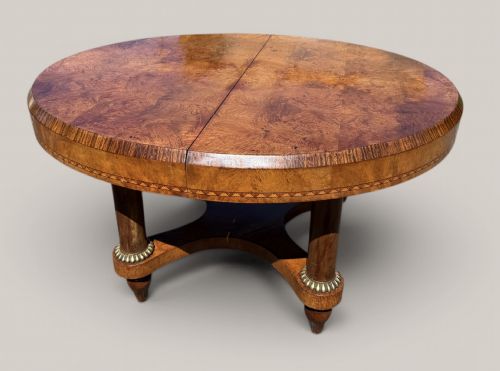
- A prized timber harvested from tree growths that produces intricate, swirling grain patterns. Cabinet makers selected these figured veneers for the most decorative table tops.
- Gateleg table
- A drop flap table featuring hinged legs that swing outward to support the raised leaves. This clever design provides flexible surface area in compact spaces.
- Drop flap
- A hinged table section that folds downward when not in use to save space. These flaps are supported by swing legs or brackets.
- Pedestal table
- A table supported by a central pillar or multiple columns rather than four corner legs. This style allows greater legroom for diners seated around the perimeter.
- Queen Anne Revival
- A decorative style popular in the nineteenth and twentieth centuries that reinterprets eighteenth century curving lines and cabriole forms. Pieces in this style often feature rich walnut veneers.
Walnut Extendable Table: Frequently Asked Questions
How do these tables extend?
Many examples utilise pull out wooden tracks fitted with brass mechanisms to accommodate extra leaves in the centre. Other designs employ drop flaps or gateleg supports to alter the surface area.
These mechanical solutions allowed historical households to adapt their dining furniture for larger gatherings quickly and efficiently.
What materials are used?
Makers constructed these tables primarily from walnut and highly decorative burr walnut veneers. Secondary timbers such as oak, mahogany, and general hardwood often appear in structural frames and internal framing.
Metal components like brass provide functional strength to the extending tracks and hinges.
How do I date a table?
Dating relies on stylistic clues such as George II, Victorian, Edwardian, or Art Deco design characteristics. Cabinet making techniques and timber preparation also offer clues to the era of production.
Recorded dates in our listings span from the eighteenth century through to the mid twentieth century.
How should I care for walnut?
Protect the polished wooden surface from direct sunlight and excessive heat to prevent fading and veneer cracking. Regular dusting with a soft cloth maintains the natural lustre of the timber.
Avoid placing damp items directly onto the polish to preserve the historic finish.