16,639  PAGES BROWSED TODAY PAGES TODAY • 10 ANTIQUES UPLOADED TODAYNEW ARRIVALS
GIFTS
10 ITEMS ADDED TODAY
Sort Order
Items Per Page
Browse Categories
Sort order
Relevant Links
Items per page
ID #SA1243593
FOR SALE
£3,950
Email Phone
Save
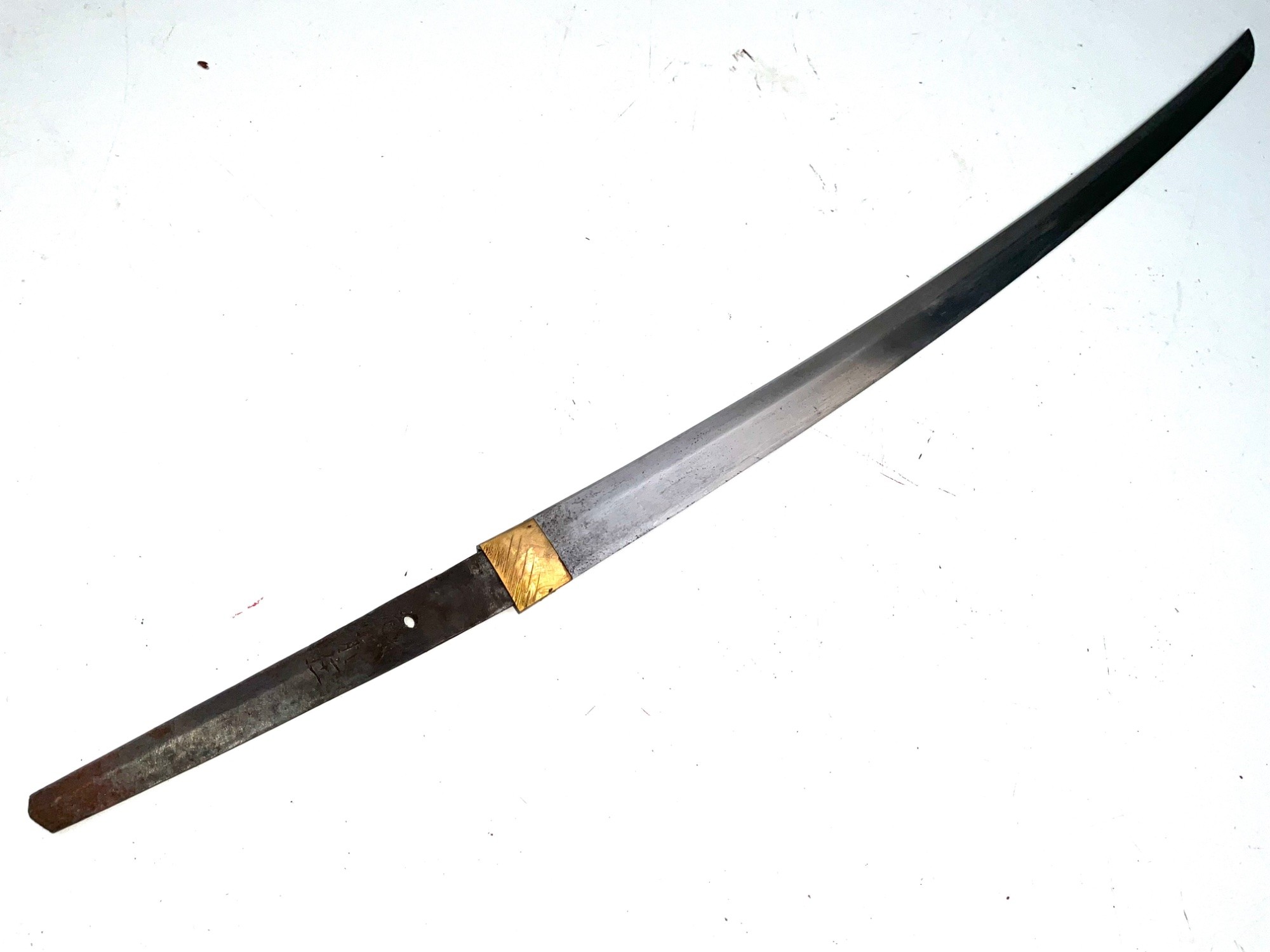
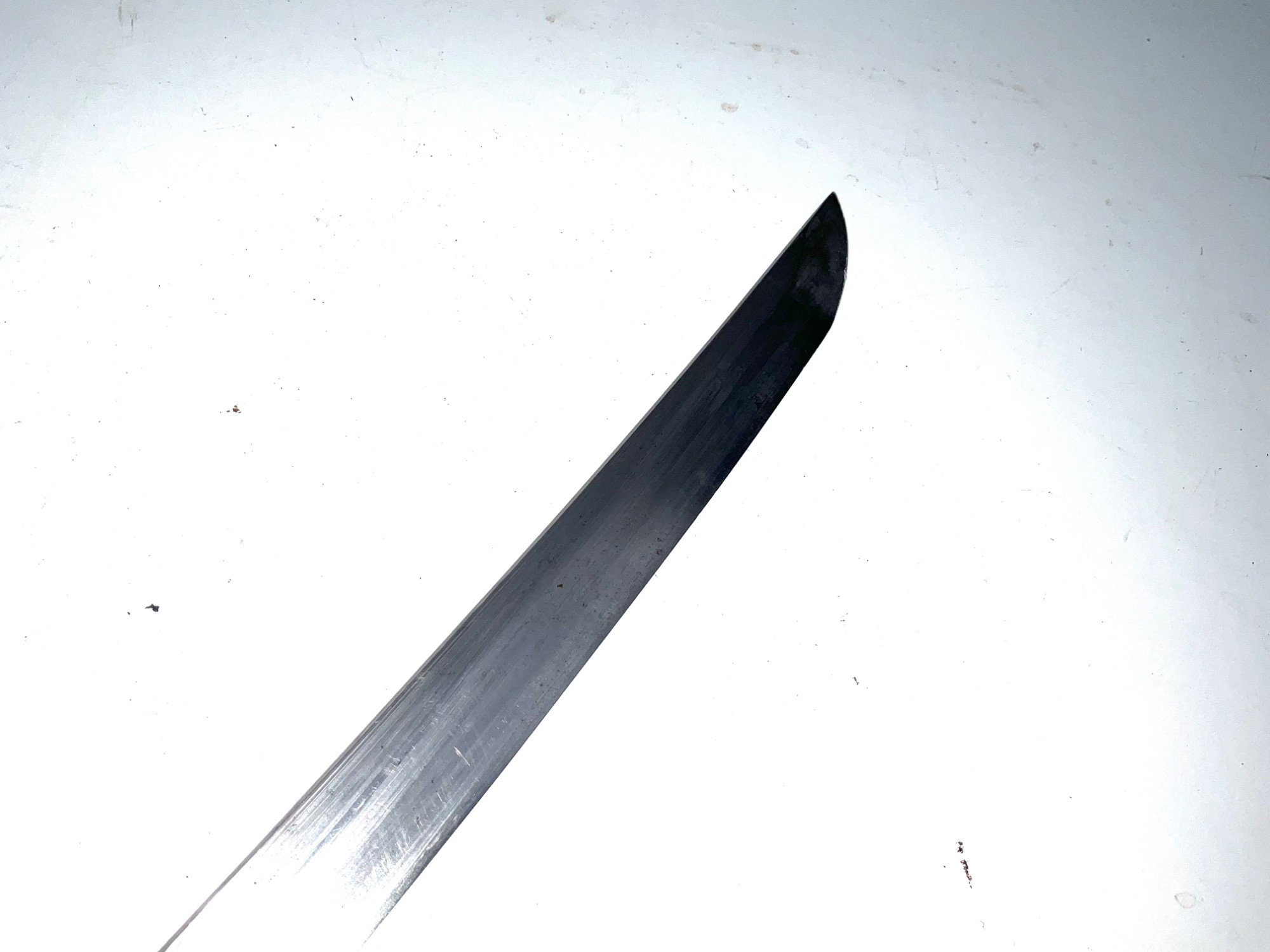
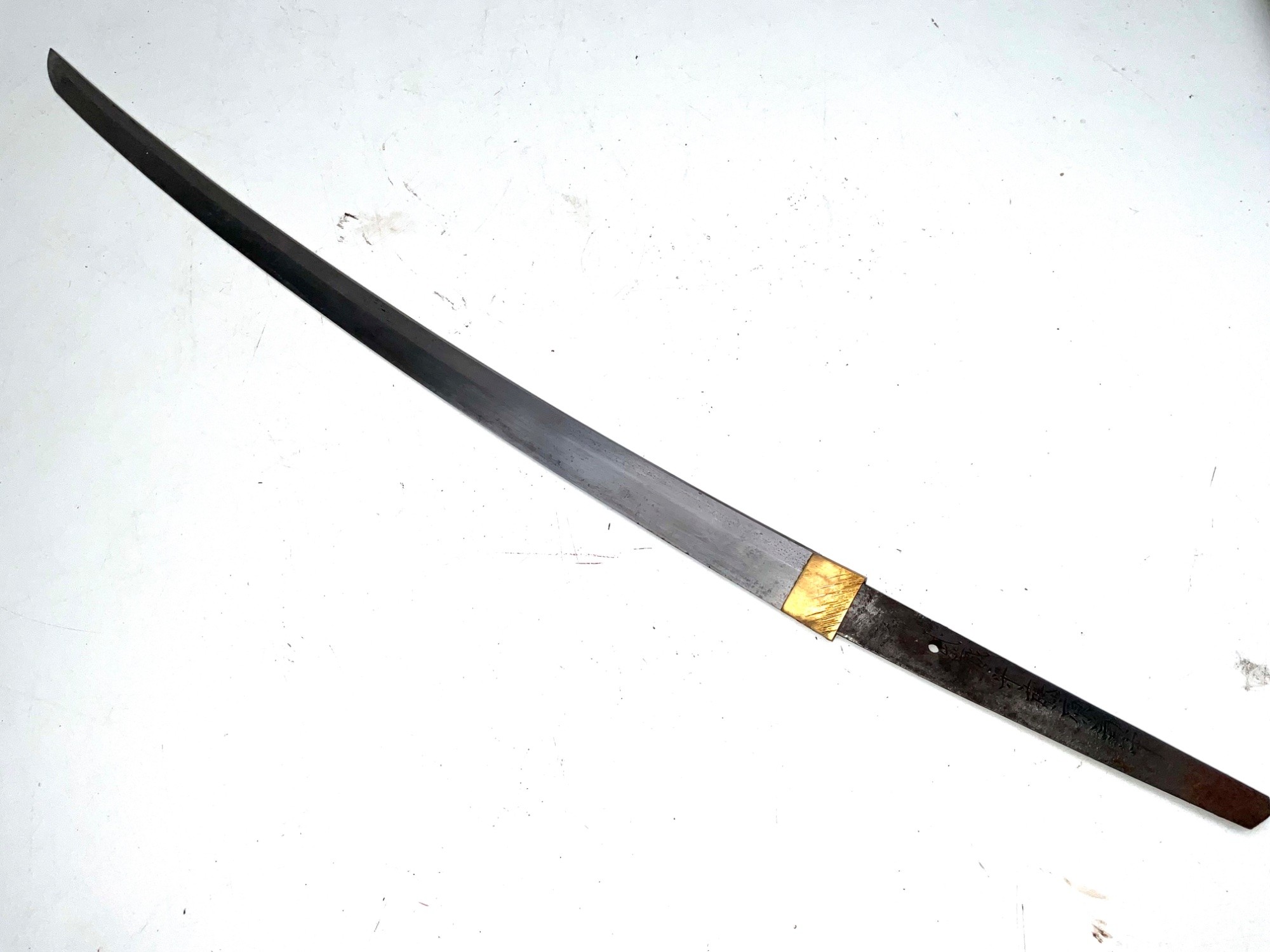
Japanese Sword Family Mounts Signed Blade
For sale by Sovereign Antiques Of Nuneaton
for sale €4,622     $5,017
£3,950
Sovereign Antiques Of Nuneaton

Sovereign Antiques Of Nuneaton

Sellingantiques Verified Since Sep 2017
Browse dealers 224 items
Id #SA1243593
PDF SHARE
SAVE

Japanese Sword Family Mounts Signed Blade

1920 - 1940
Description

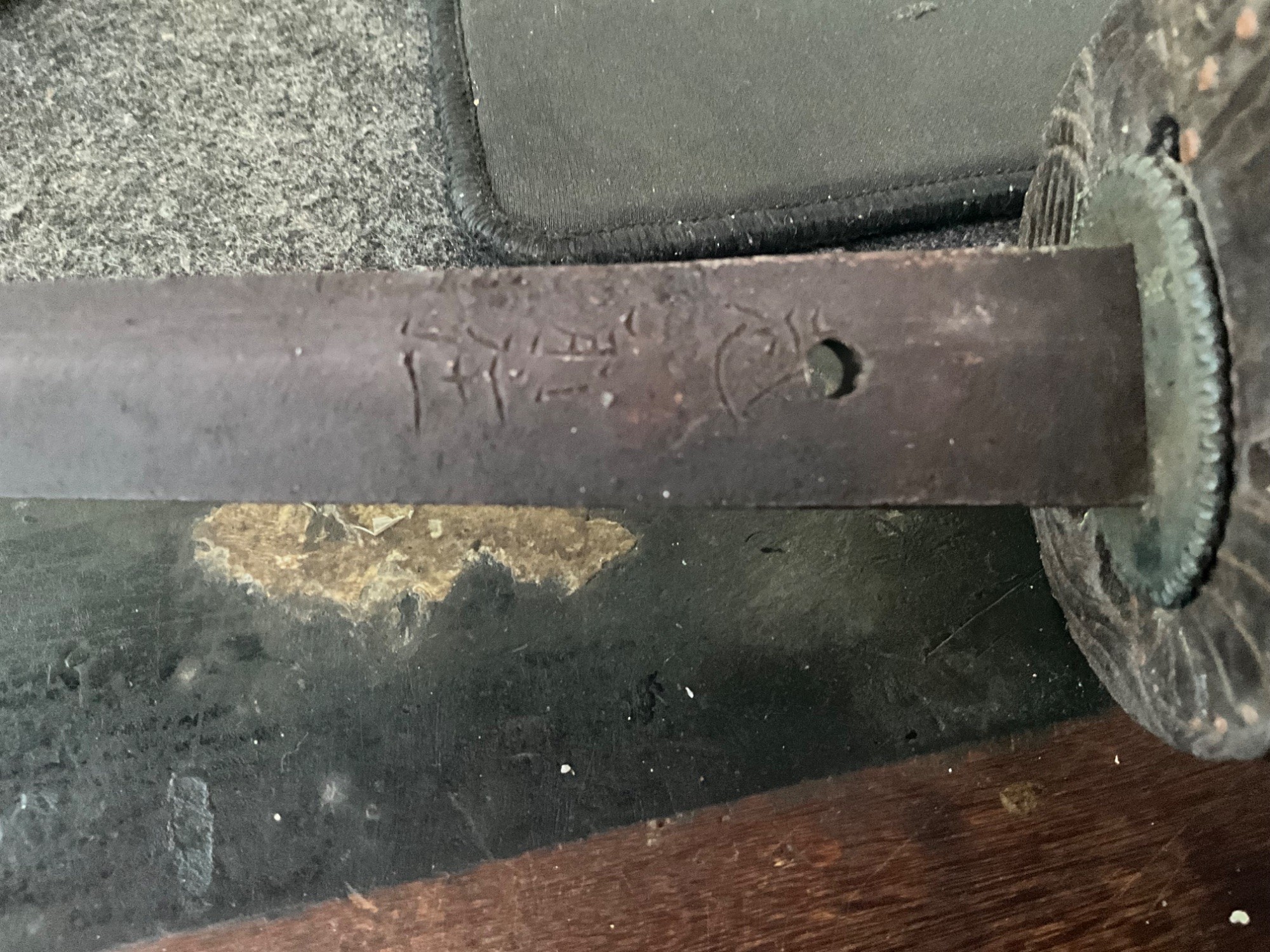
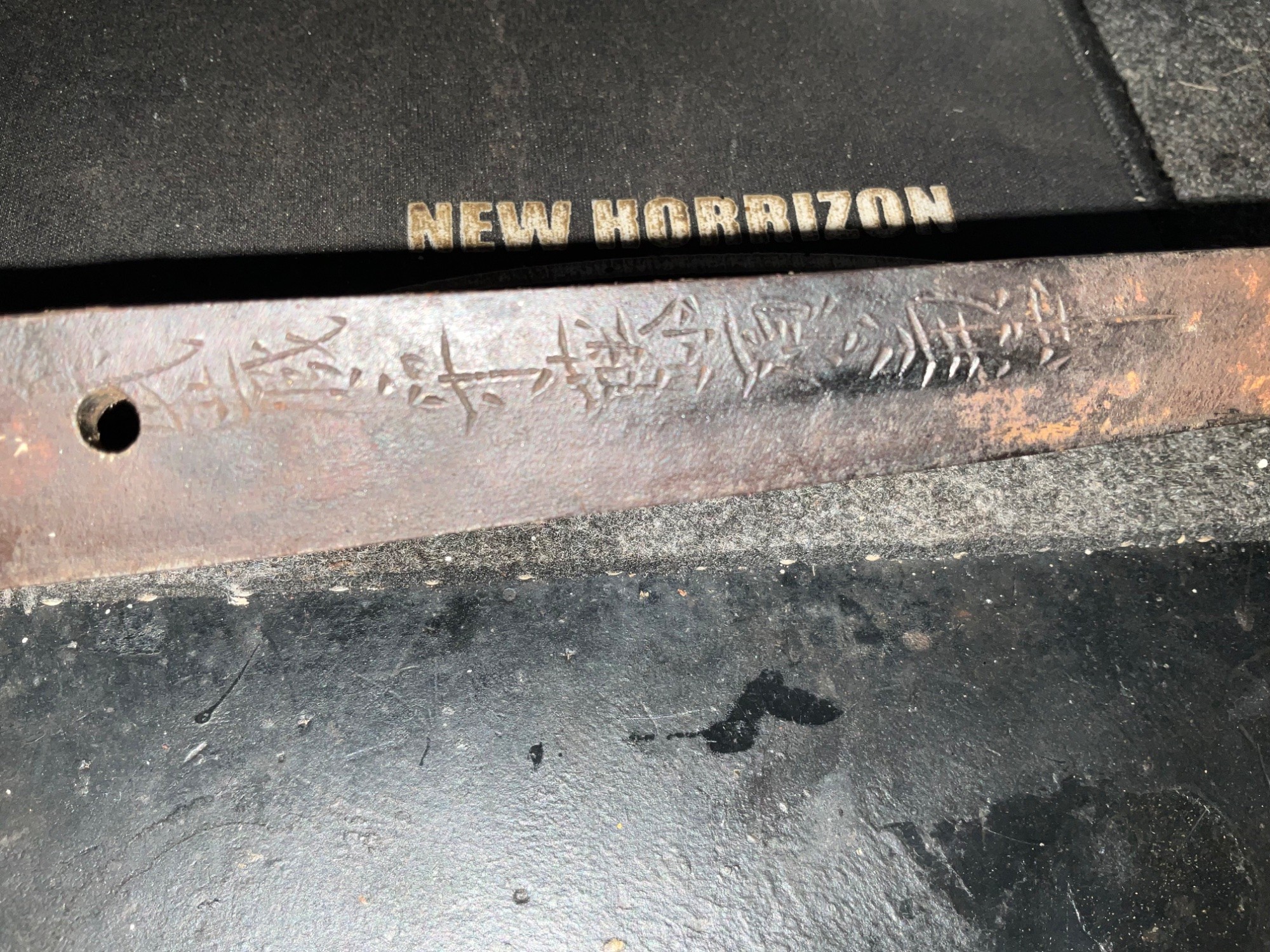
The Swordsmith: The first generation Kanetoki (born Kojima Tokijiro) worked as a highly rated army-appointed swordsmith (Rikugun Jumei Tōshō) during WWII, later passing the name down to his son, Kojima Kanji (2nd Gen Kanetoki), who went on to become the head of the All Japan Swords Association.

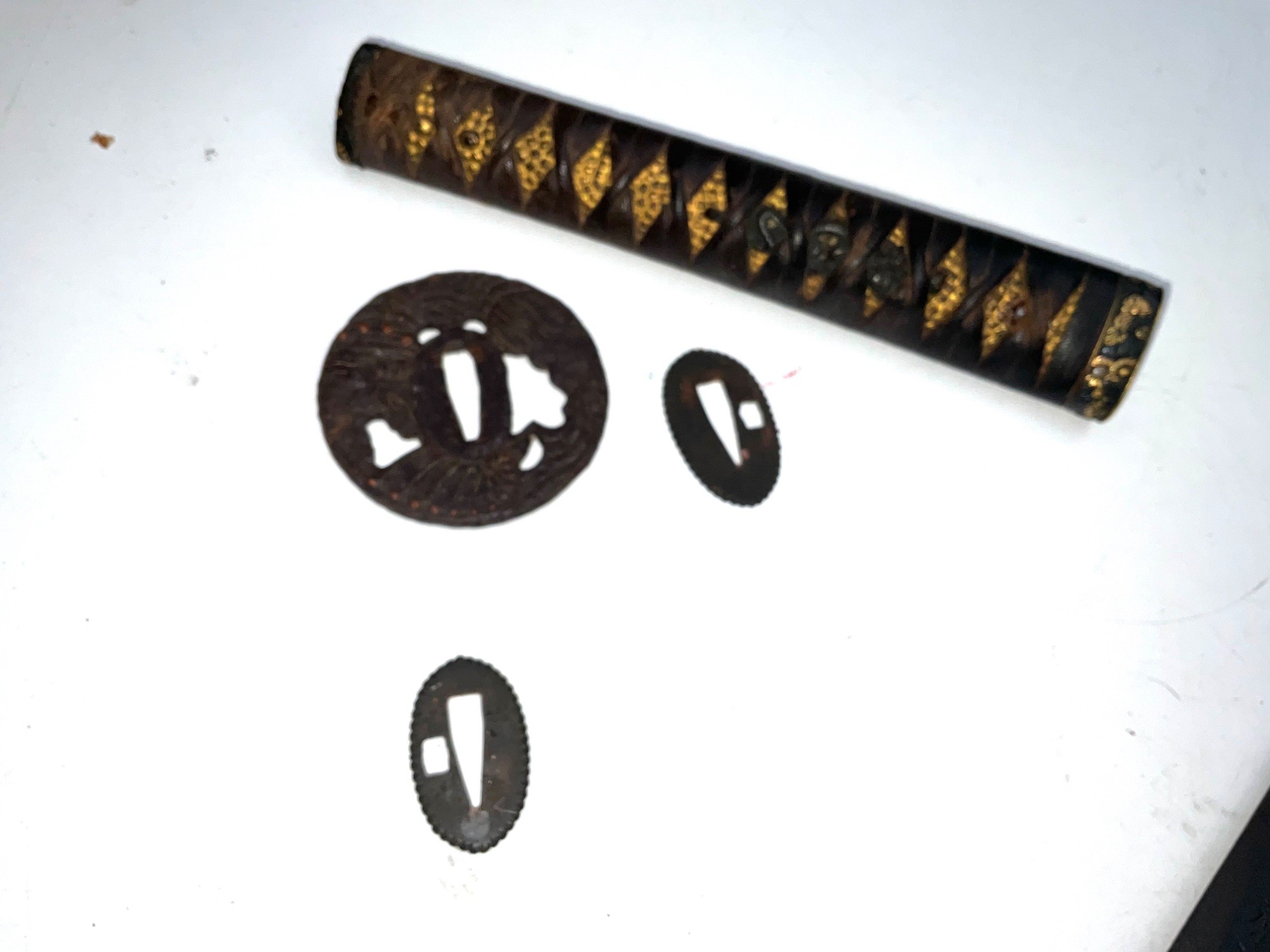
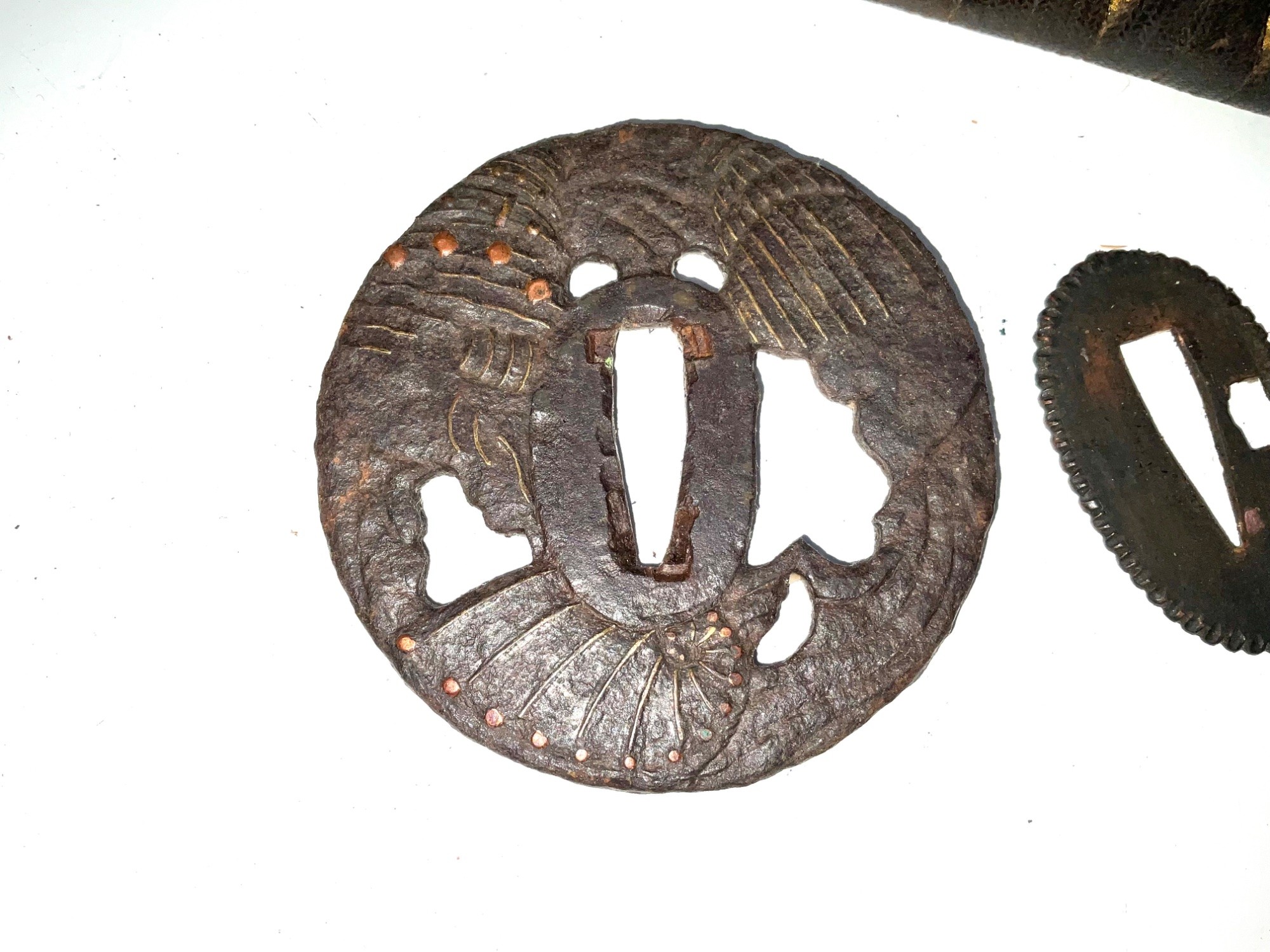
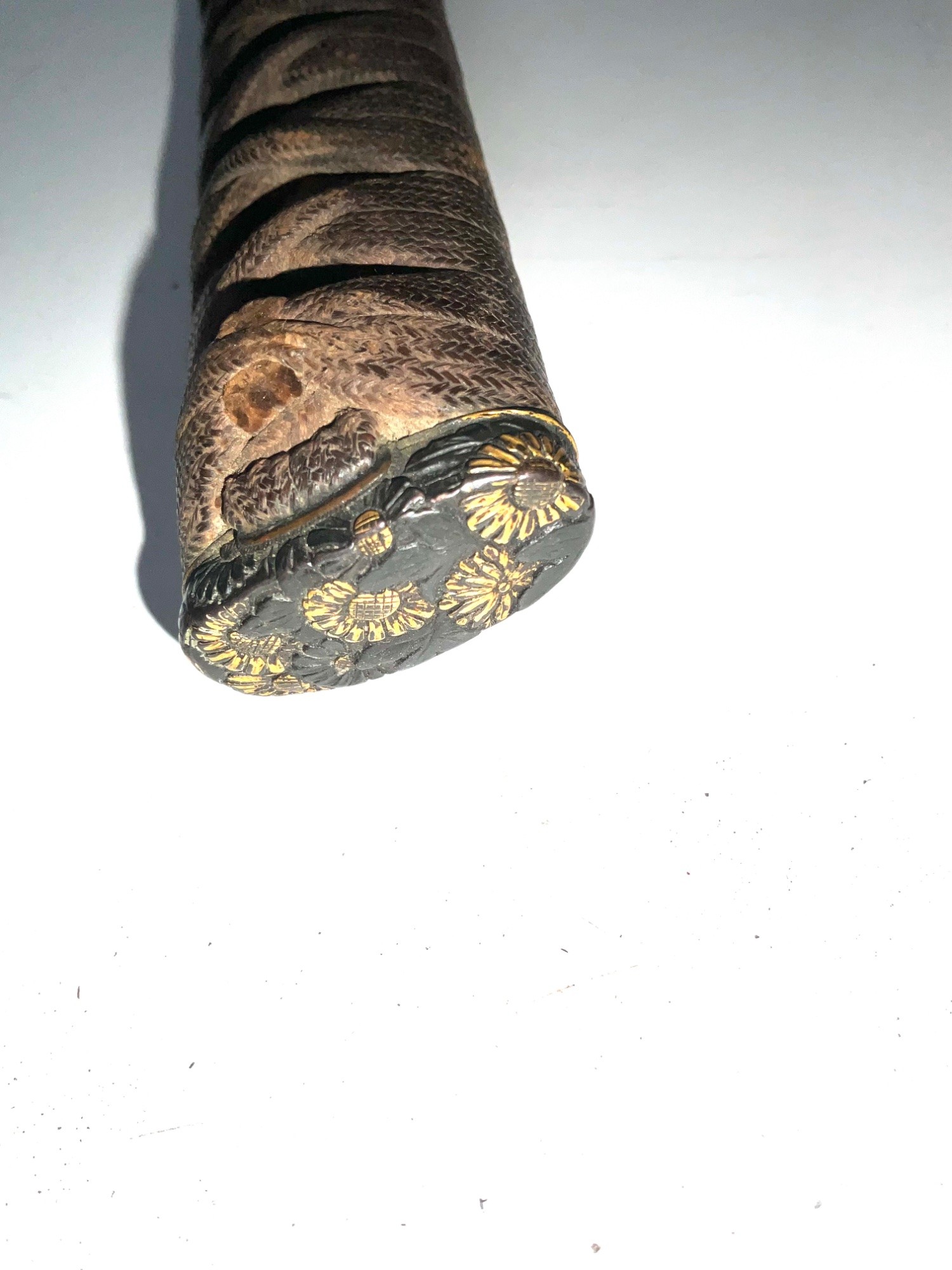
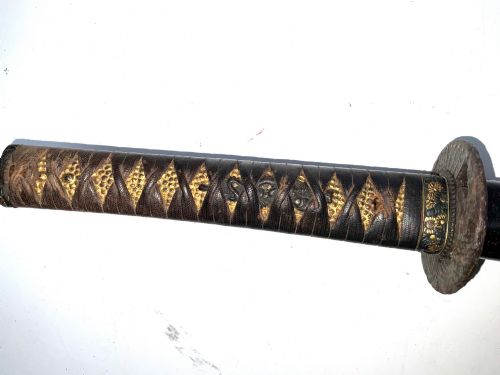
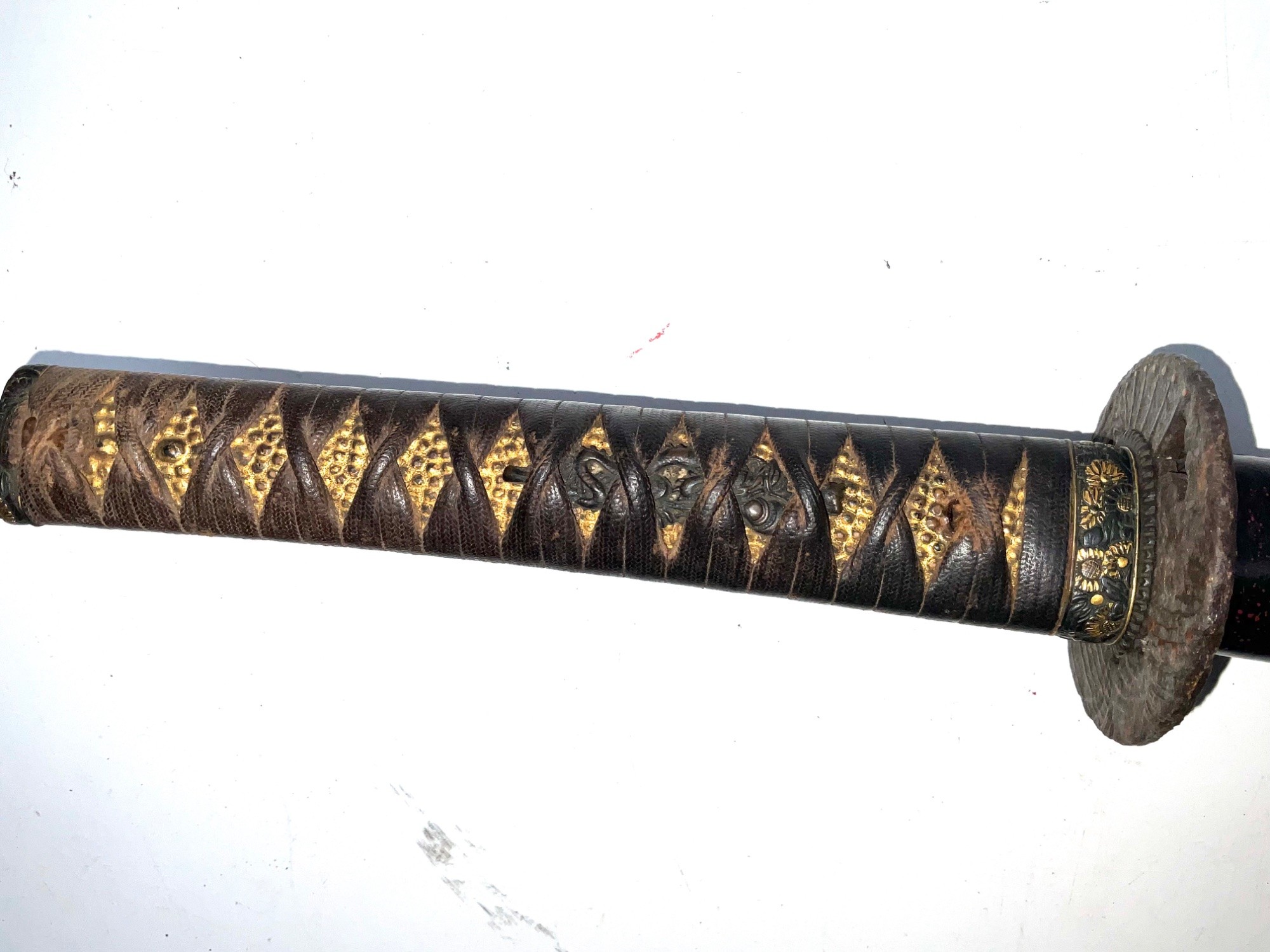
Modern Heritage: The family tradition remains highly active today, with contemporary generations of the Kojima family still hand-forging exceptional custom pieces and Iaido training swords in Seki. This handguard is a classic antique iron tsuba featuring an openwork openwork (sukashi) design of fans (ōgi), likely dating from the mid-to-late Edo Period (1603–1867).
Key Characteristics & Design

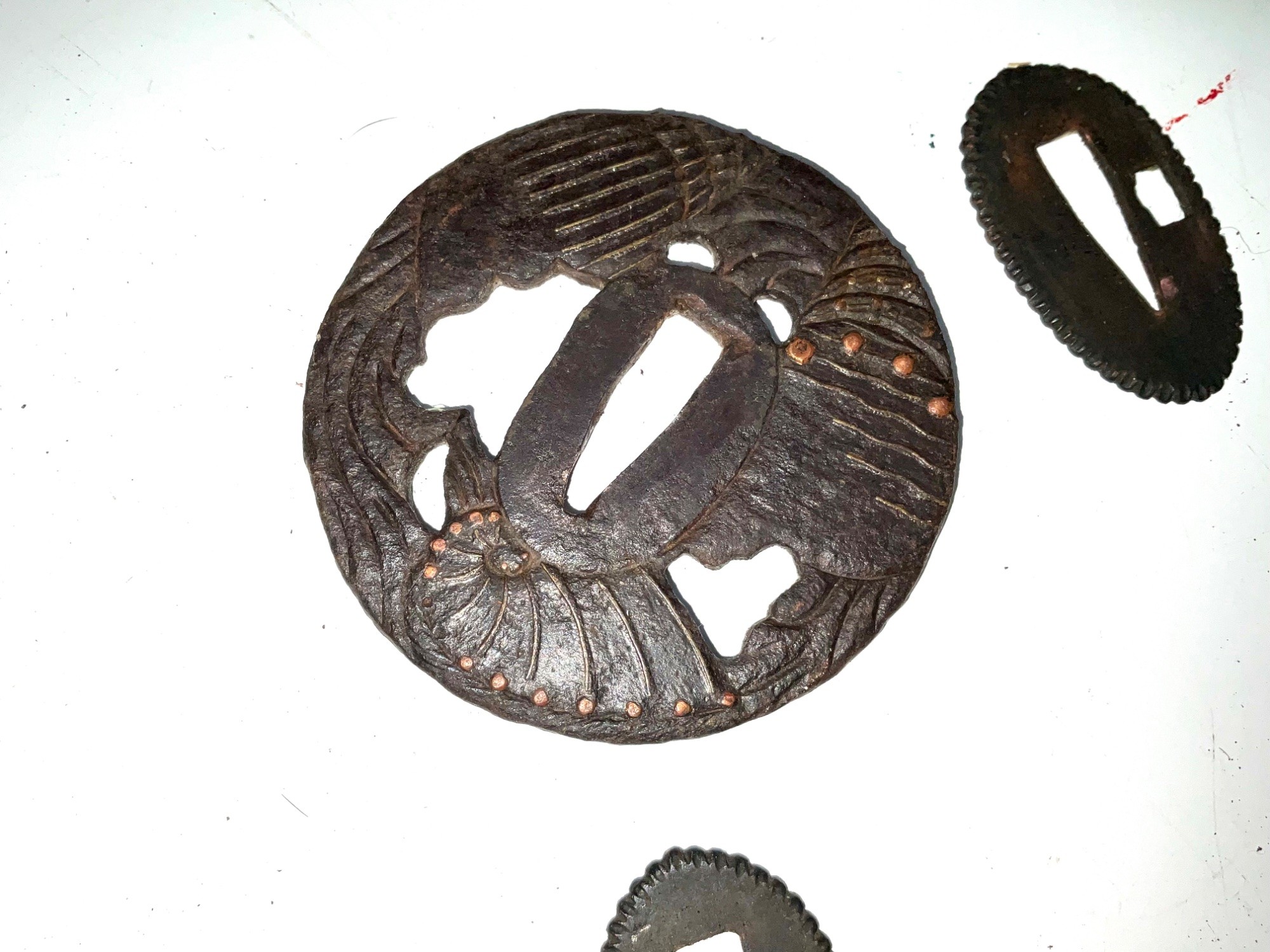
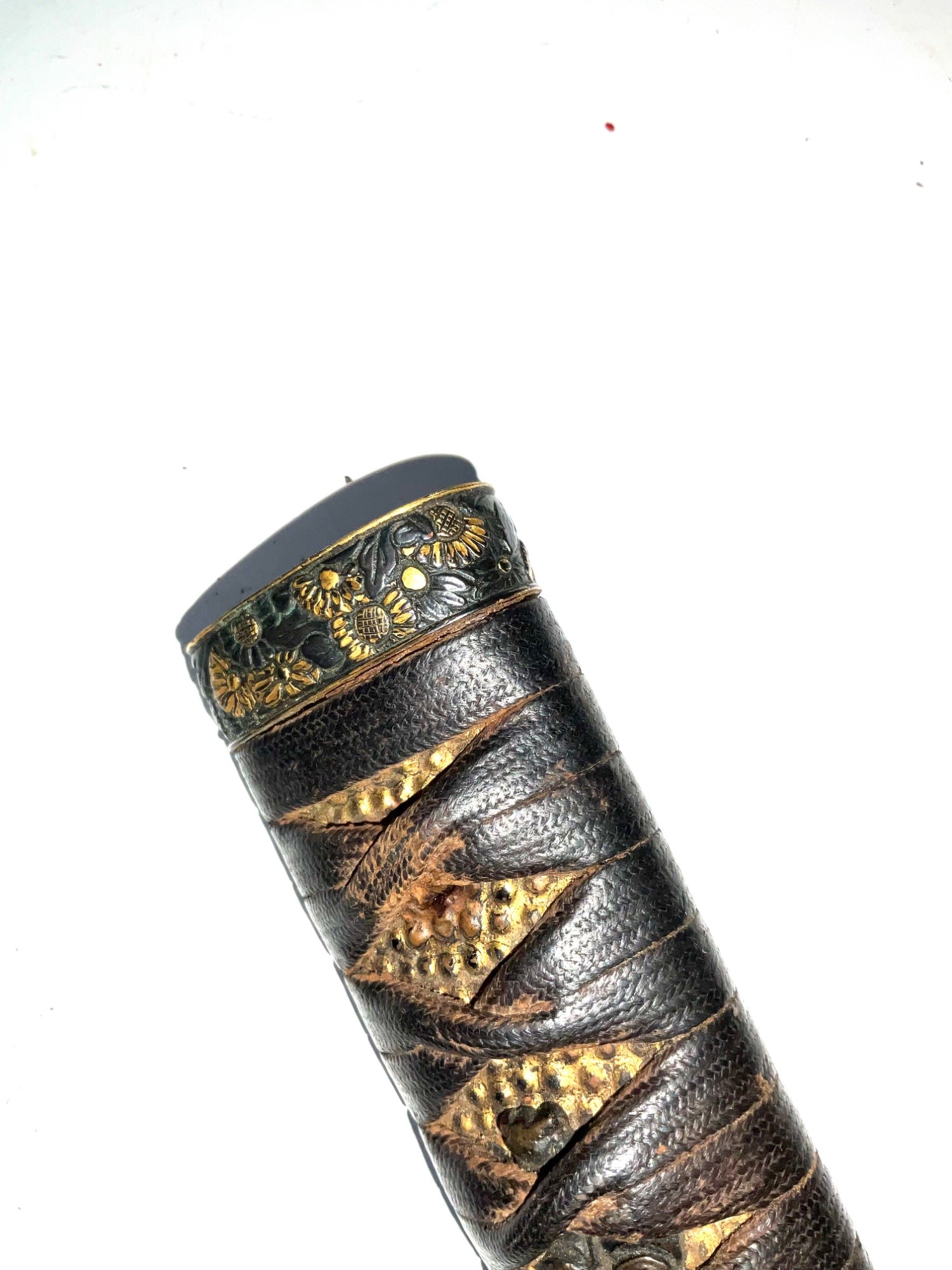
The Motif (Ōgi Sukashi): The guard depicts overlapping traditional folding fans. The pierced geometric gaps form the silhouettes of the open fan panels and ribs, with small copper plugs (ten-zōgan) dotted near the edges to represent rivet pins or decorative points.
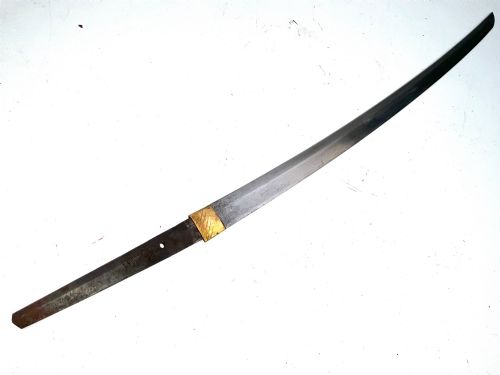
Artistic Style: This highly stylized botanical and everyday-object silhouette work is characteristic of traditional craft centers like the Echizen Kinai school or related regional groups that excelled in carving elegant, flowing openwork out of iron plates.
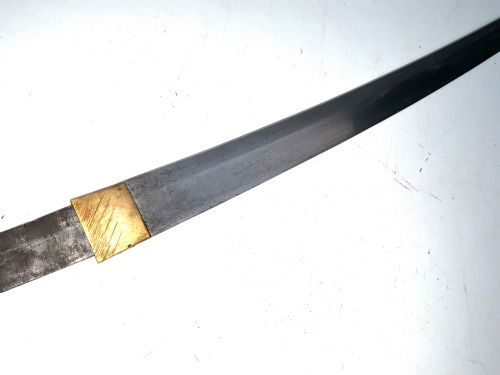
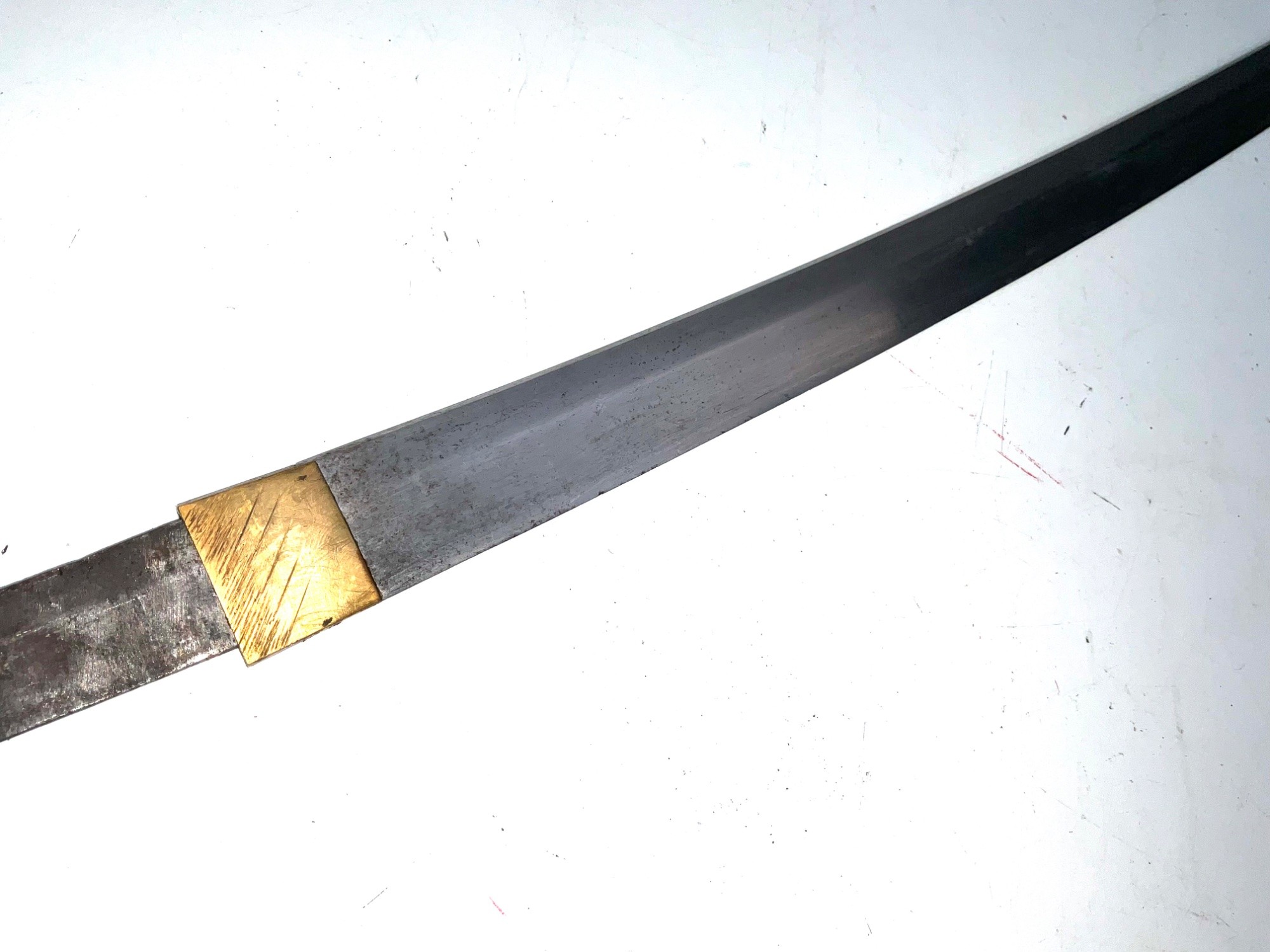
Age and Wear: The dark, deeply textured iron patina and light surface oxidation indicate genuine age. The central opening shows structural wear where it was repeatedly mounted onto a sword tang via copper spacers (seppa). Because the blade is signed by Kanetoki (a lineage highly prominent during and after WWII) while the handguard (tsuba) and hilt fittings are styled in classic Edo-period or Meiji-period aesthetic traditions, it is highly likely a family heirloom assembly. It was very common for late 19th or 20th-century blades to be custom-fitted into beloved ancestral mounts passed down through a family line.

Date of Manufacture

Sovereign Antiques Of Nuneaton has dated this Japanese Katana Samurai Sword to the 1940s.

Reference Numbers
Sellingantiques Reference
SA1243593
Description
The Swordsmith: The first generation Kanetoki (born Kojima Tokijiro) worked as a highly rated army-appointed swordsmith (Rikugun Jumei Tōshō) during WWII, later passing the name down to his son, Kojima Kanji (2nd Gen Kanetoki), who went on to become the head of the All Japan Swords Association.
“
Modern Heritage: The family tradition remains highly active today, with contemporary generations of the Kojima family still hand-forging exceptional custom pieces and Iaido training swords in Seki.
Sovereign Antiques Of Nuneaton

This handguard is a classic antique iron tsuba featuring an openwork openwork (sukashi) design of fans (ōgi), likely dating from the mid-to-late Edo Period (1603–1867).

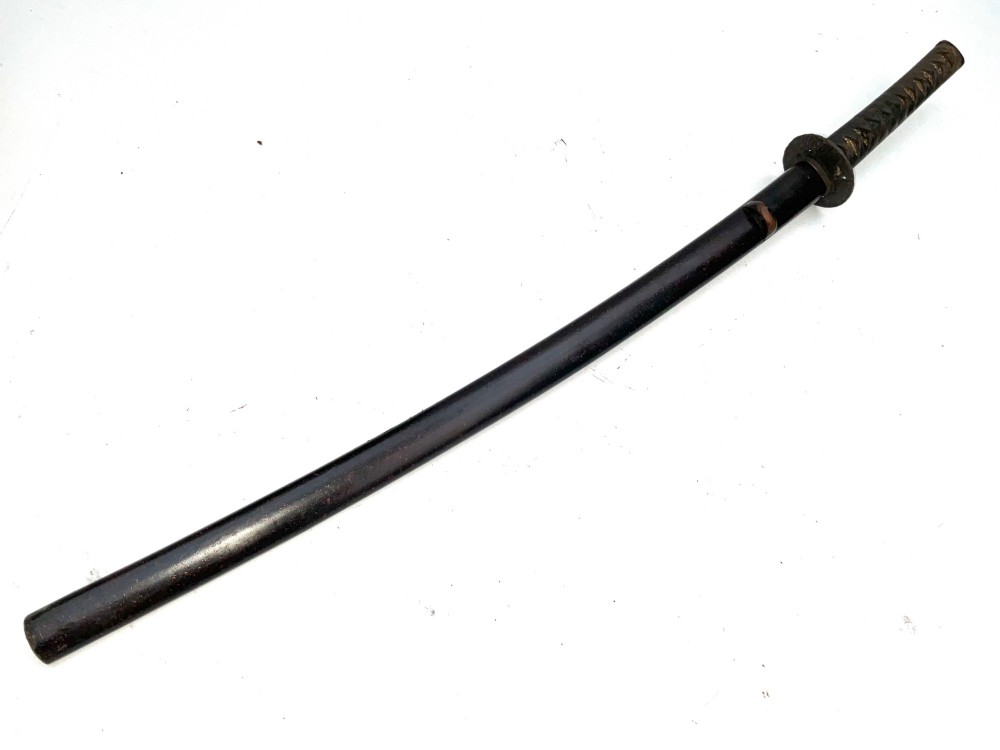
fig 1. A traditional Japanese sword featuring a curved black lacquered scabbard, circular handguard, and woven cord wrapped hilt.
fig 1. Japanese Sword Family Mounts Signed Blade

Key Characteristics & Design

The Motif (Ōgi Sukashi): The guard depicts overlapping traditional folding fans. The pierced geometric gaps form the silhouettes of the open fan panels and ribs, with small copper plugs (ten-zōgan) dotted near the edges to represent rivet pins or decorative points.

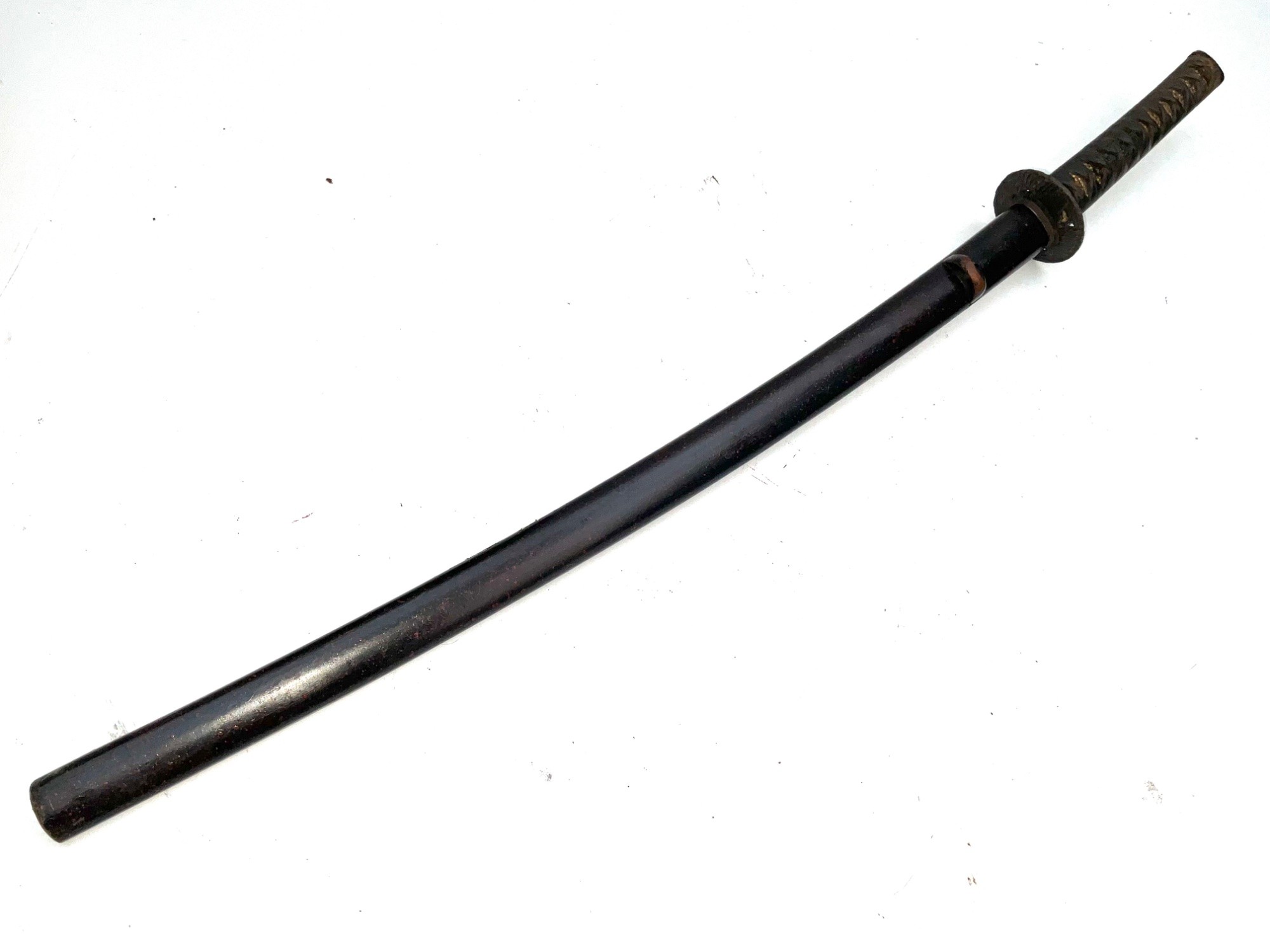
fig 2. A traditional Japanese sword featuring a curved black lacquered scabbard, circular handguard, and woven cord wrapped hilt.
fig 2. Japanese Sword Family Mounts Signed Blade

Artistic Style: This highly stylized botanical and everyday-object silhouette work is characteristic of traditional craft centers like the Echizen Kinai school or related regional groups that excelled in carving elegant, flowing openwork out of iron plates.

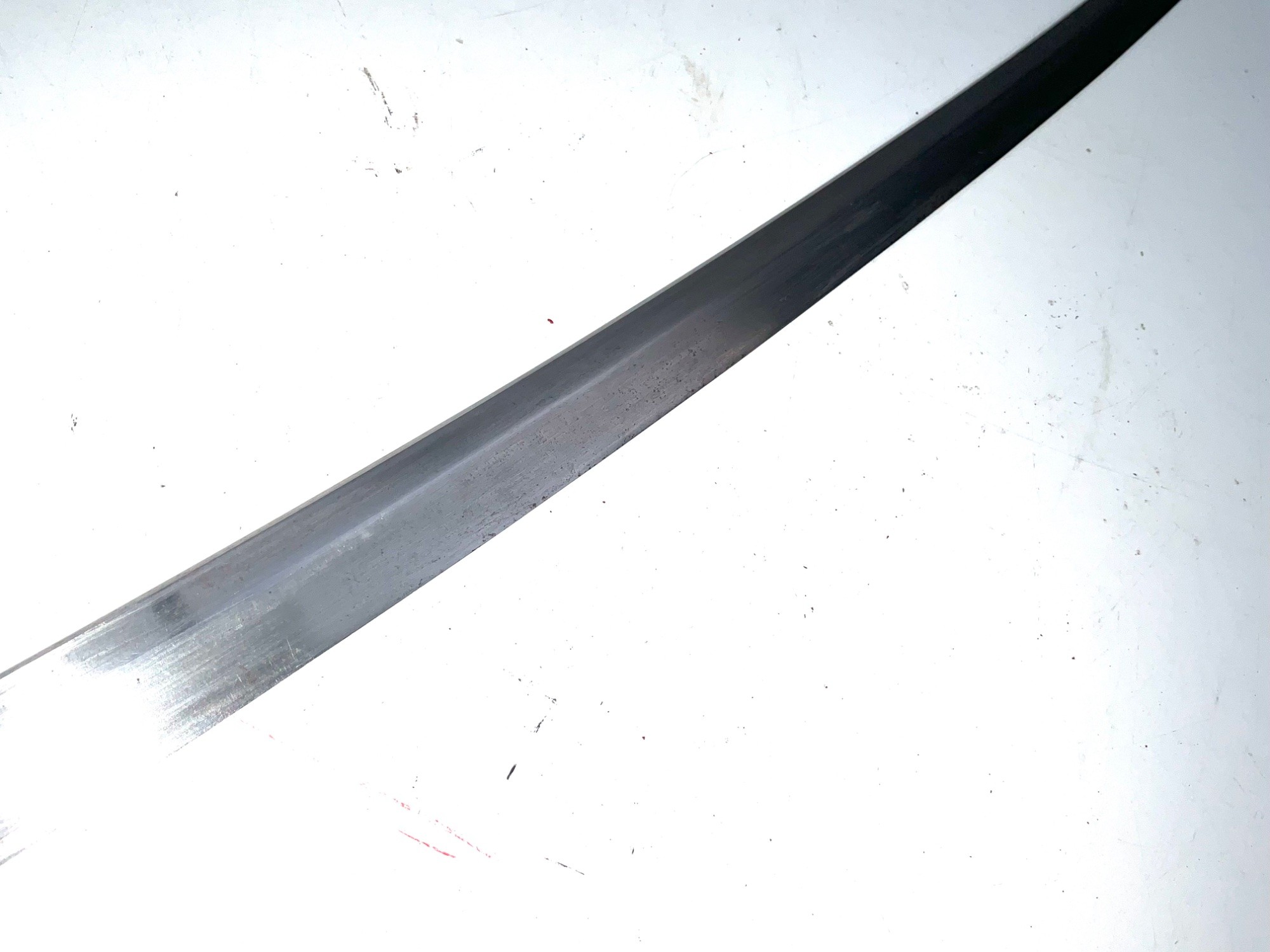
fig 3. A traditional Japanese sword featuring a curved black lacquered scabbard, circular handguard, and woven cord wrapped hilt.
fig 3. Japanese Sword Family Mounts Signed Blade

Age and Wear: The dark, deeply textured iron patina and light surface oxidation indicate genuine age. The central opening shows structural wear where it was repeatedly mounted onto a sword tang via copper spacers (seppa). Because the blade is signed by Kanetoki (a lineage highly prominent during and after WWII) while the handguard (tsuba) and hilt fittings are styled in classic Edo-period or Meiji-period aesthetic traditions, it is highly likely a family heirloom assembly. It was very common for late 19th or 20th-century blades to be custom-fitted into beloved ancestral mounts passed down through a family line.

Date of Manufacture

Sovereign Antiques Of Nuneaton has dated this Japanese Katana Samurai Sword to the 1940s.

Reference Numbers
Sellingantiques Ref
SA1243593
Sovereign Antiques Of Nuneaton
Sellingantiques verified Since Sep 2017
Dealer Profile

You can view the stock and full dealer information on the Sovereign Antiques Of Nuneaton Profile Page
PDF SHARE
SAVE
A traditional Japanese sword featuring a curved black lacquered scabbard, circular handguard, and woven cord wrapped hilt.
1 / 15
Archive I A traditional Japanese sword featuring a curved black lacquered scabbard, circular handguard, and woven cord wrapped hilt.

Japanese Sword Family Mounts Signed Blade
Archive II A traditional Japanese sword featuring a curved black lacquered scabbard, circular handguard, and woven cord wrapped hilt. View II
Archive III A traditional Japanese sword featuring a curved black lacquered scabbard, circular handguard, and woven cord wrapped hilt. View III
Archive IV A traditional Japanese sword featuring a curved black lacquered scabbard, circular handguard, and woven cord wrapped hilt. View IV
Archive V A traditional Japanese sword featuring a curved black lacquered scabbard, circular handguard, and woven cord wrapped hilt. View V
Archive VI A traditional Japanese sword featuring a curved black lacquered scabbard, circular handguard, and woven cord wrapped hilt. View VI
Archive VII A traditional Japanese sword featuring a curved black lacquered scabbard, circular handguard, and woven cord wrapped hilt. View VII
Archive VIII A traditional Japanese sword featuring a curved black lacquered scabbard, circular handguard, and woven cord wrapped hilt. View VIII
Archive IX A traditional Japanese sword featuring a curved black lacquered scabbard, circular handguard, and woven cord wrapped hilt. View IX
Archive X A traditional Japanese sword featuring a curved black lacquered scabbard, circular handguard, and woven cord wrapped hilt. View X
Archive XI A traditional Japanese sword featuring a curved black lacquered scabbard, circular handguard, and woven cord wrapped hilt. View XI
Archive XII A traditional Japanese sword featuring a curved black lacquered scabbard, circular handguard, and woven cord wrapped hilt. View XII
Archive XIII A traditional Japanese sword featuring a curved black lacquered scabbard, circular handguard, and woven cord wrapped hilt. View XIII
Archive XIV A traditional Japanese sword featuring a curved black lacquered scabbard, circular handguard, and woven cord wrapped hilt. View XIV
Archive XV A traditional Japanese sword featuring a curved black lacquered scabbard, circular handguard, and woven cord wrapped hilt. View XV
Enlarged Archival View
Telephone 07505 165 843
Location
Nuneaton
Warwickshire
United Kingdom
Dealer Profile Page sellingantiques.co.uk/sover
Verified Since Sep 2017
Items For Sale 224
Items Sold 183
Sovereign Antiques Of Nuneaton
Verified Since Sep 2017
View Dealer Info
Location: Nuneaton, Warwickshire, United Kingdom
Verified
Sep 2017
For Sale
224
Sold
183
A traditional Japanese sword featuring a curved black lacquered scabbard, circular handguard, and woven cord wrapped hilt.
JAPANESE SWORD FAMILY MOUNTS SIGNED BLADE
Ref: SA1243593
A traditional Japanese sword featuring a curved black lacquered scabbard, circular handguard, and woven cord wrapped hilt.
Detail View 1
Detail View 2
Detail View 3
Detail View 4
Detail View 5
Detail View 6
Detail View 7
Detail View 8
Detail View 9
Detail View 10
Detail View 11
Detail View 12
Detail View 13
Detail View 14
Archival Detail
Every single antique dealer on our platform is individually approved by our internal team. We verify their professional trade history, ethical standards, and photographic quality to ensure a secure, high-standard buying environment. Upon joining, every dealer agrees to a strict 9-point code of conduct. While issues can occasionally arise, our dealers typically resolve them swiftly and directly with the buyer. In fact, since our founding in 2002, Sellingantiques has only had to step in to help resolve an issue on roughly five occasions—a true testament to the quality of our dealers and their dedication to your happiness.
Our dealers are highly experienced in packing and shipping fragile, high-value antiques. Because you are in direct contact with the dealer, you will be able to easily go through all available shipping and insurance options together to ensure your item arrives safely.
Antiques are the ultimate green purchase. By choosing historical pieces over newly manufactured goods, you completely eliminate the carbon footprint of modern mass production while preserving exceptional, timeless craftsmanship.
Written by Sellingantiques from the dealer’s photographs and listing
  • ObjectSwords
  • Period1920 - 1940
  • StyleJapanese Traditional
  • MaterialSteel, Wood, Lacquer, Ray Skin, Copper Alloy
  • ColourBlack, Dark Brown
  • MotifsSilk tsuka-ito wrap, Circular tsuba guard, Lacquered wooden saya, Curved single-edged blade

A katana is a curved, single-edged Japanese sword historically associated with the samurai class. Originating in feudal Japan, these weapons were designed for swift drawing movements and are fitted with specialised decorative mounts known as koshirae.

Traditional Japanese swords feature high-carbon steel blades forged through folding and differential hardening. The hilt fittings incorporate stingray skin (samegawa), woven silk or cotton cord (tsuka-ito), bronze or iron guards (tsuba), and a wooden scabbard (saya) finished with protective lacquer.

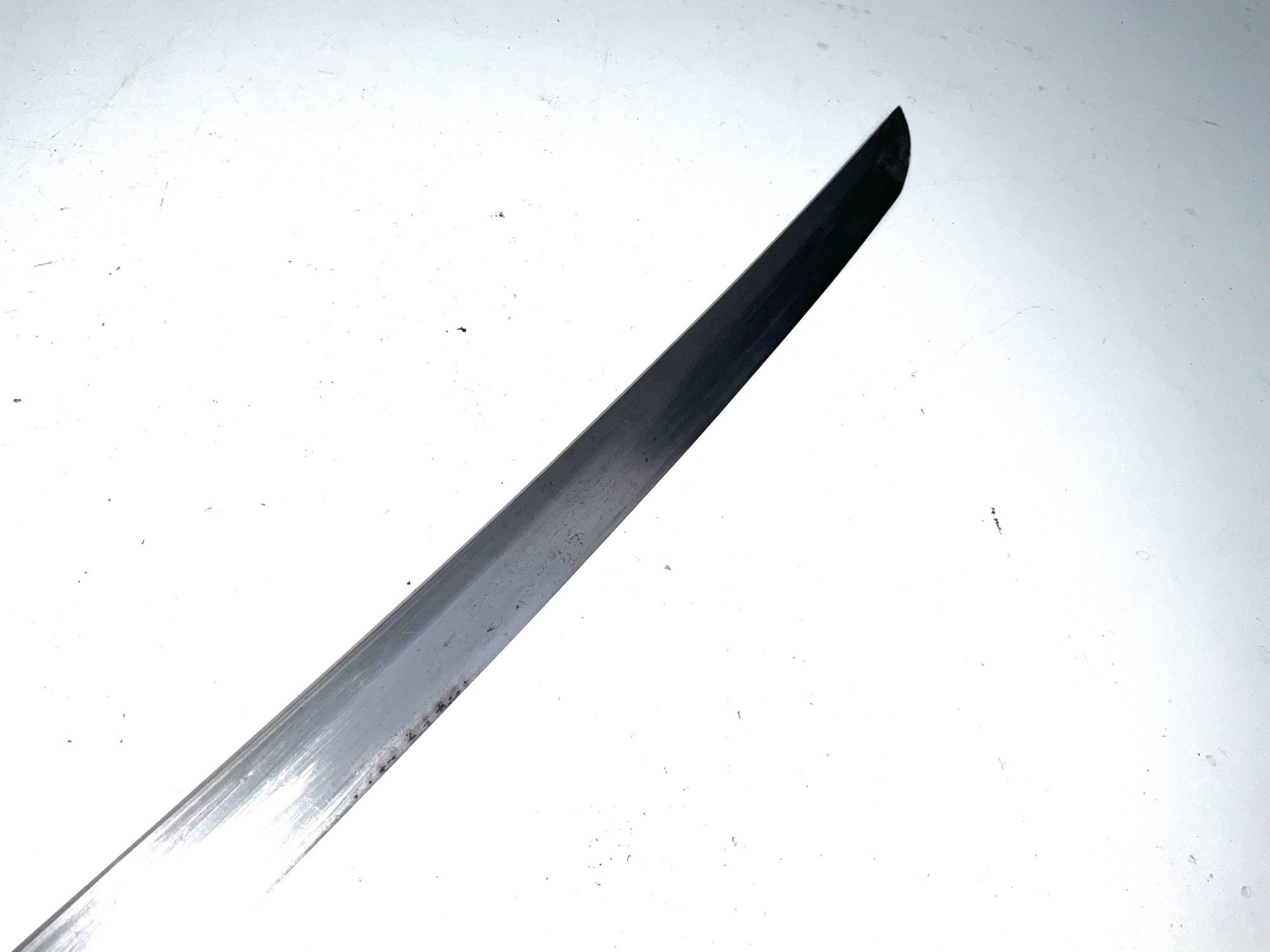
Authentic swords exhibit a distinct temper line (hamon) created during heat treatment, alongside visible steel grain patterns (hada). Removing the hilt reveals the tang (nakago), which often contains maker signatures (mei), file marks (yasurime), and peg holes (mekugi-ana).

A Japanese sword is traditionally presented horizontally on a dedicated display stand set atop a sideboard, bookshelf, or mantelpiece. Mounting the blade with the cutting edge facing upwards and the hilt to the left reflects historical etiquette signifying a peaceful state.

Preserve the steel blade by applying mineral oil, such as choji oil, using a soft lint-free cloth to prevent oxidisation. Keep the sword in a climate-controlled environment away from direct sunlight and moisture, avoiding direct hand contact with the exposed metal blade.
items
Add keywords to the filter
Price
£100
£250000
Era
Period
Style
Material
Origin
Stock Location
Recently Added
Online Payments
Categories