41,304  PAGES BROWSED TODAY PAGES TODAY • 176 ANTIQUES UPLOADED TODAYNEW ARRIVALS
GIFTS
176 ITEMS ADDED TODAY
Sort Order
Items Per Page
Browse Categories
Sort order
Relevant Links
Items per page
ID #SA1239606
FOR SALE
£995
Email Phone
Save
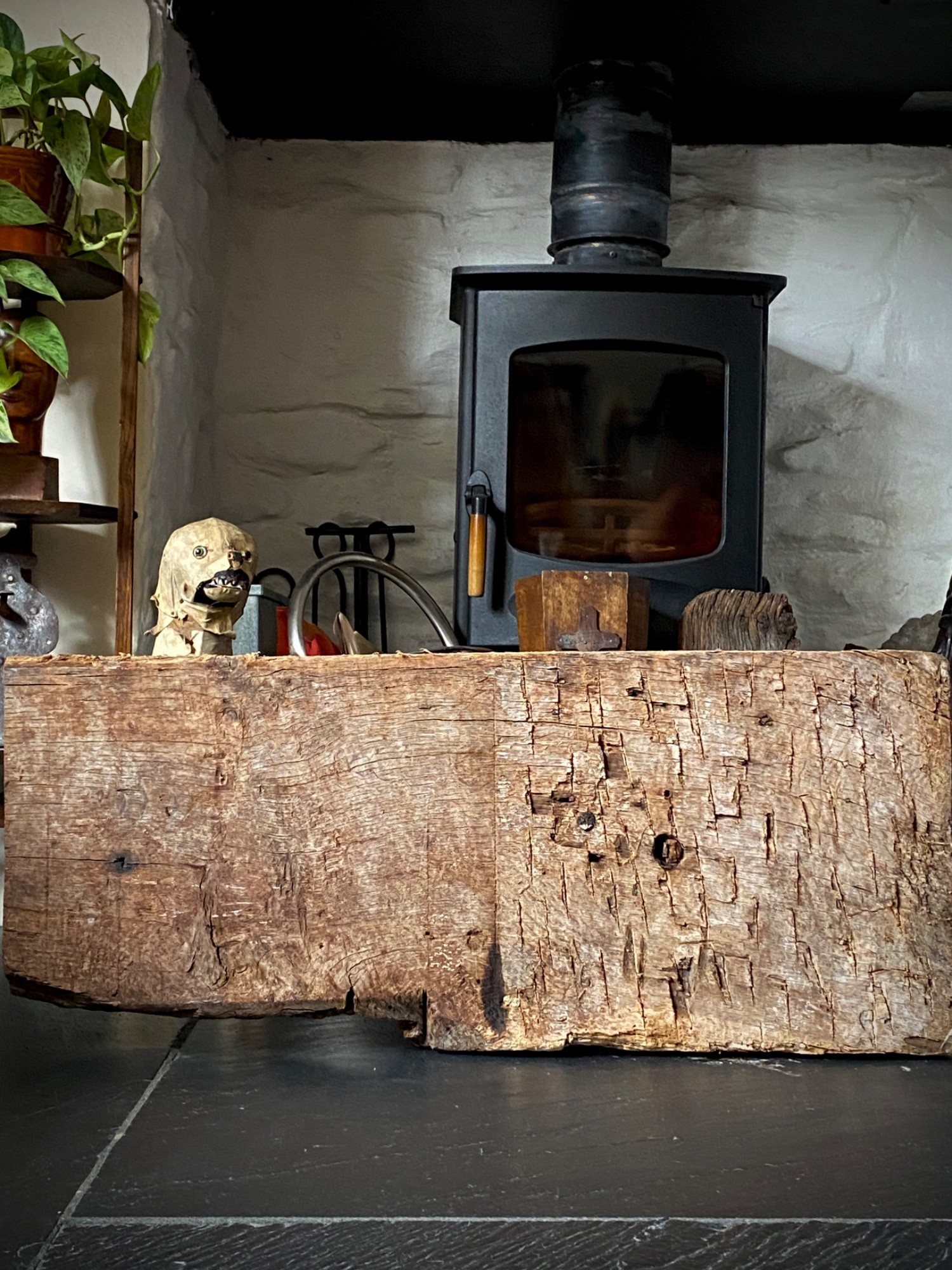
Rare Salvaged Antique 17th Century Solid Oak Inglenook Beam End with Apotropaic Taper Burn
For sale by Folk and Fable Antiques
for sale €1,164     $1,264
£995
Folk and Fable Antiques

Folk and Fable Antiques

Sellingantiques Verified Since Oct 2026
Browse dealers 14 items
Id #SA1239606
PDF SHARE
SAVE

Rare Salvaged Antique 17th Century Solid Oak Inglenook Beam End with Apotropaic Taper Burn

17th century
Description

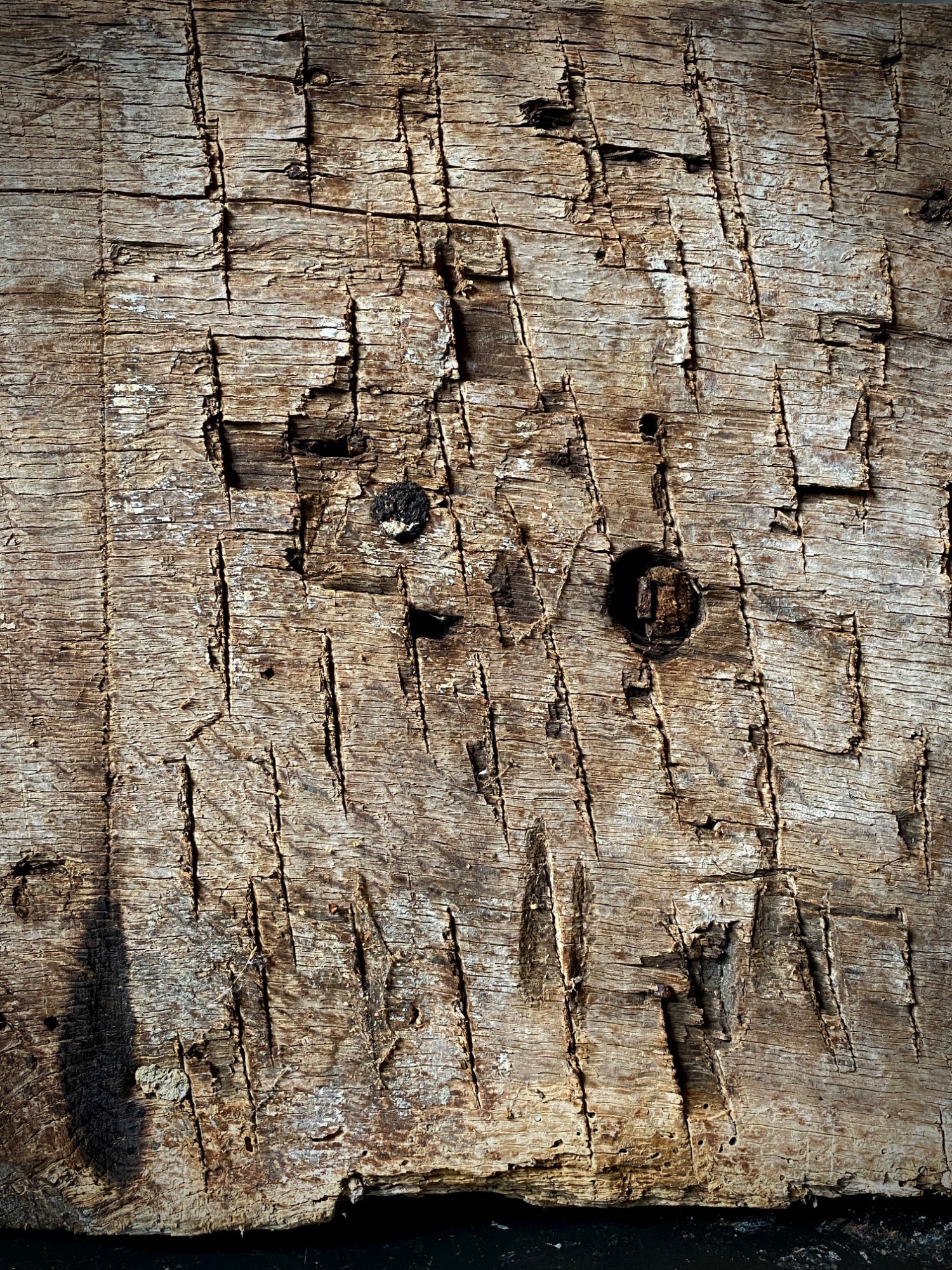
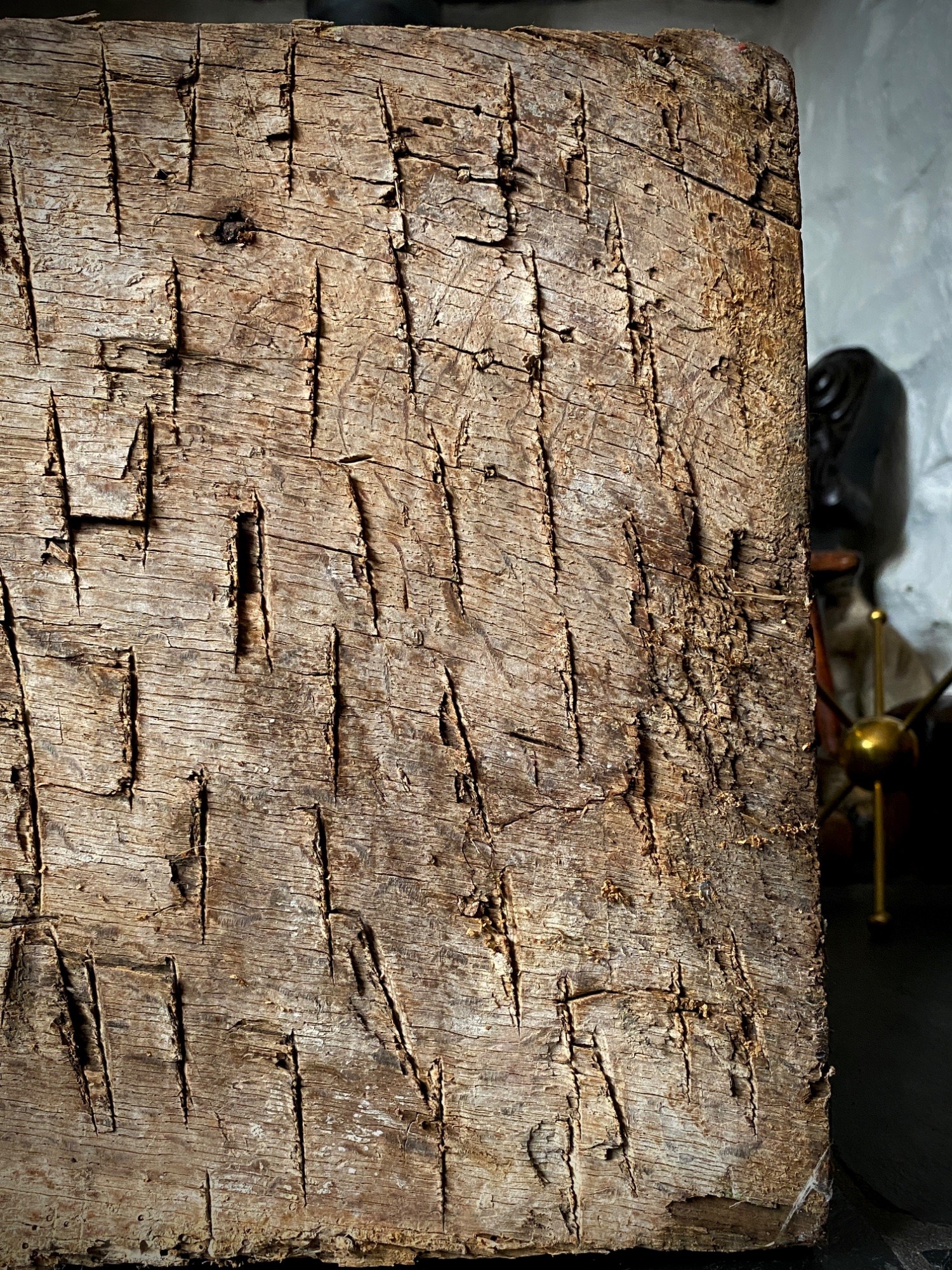
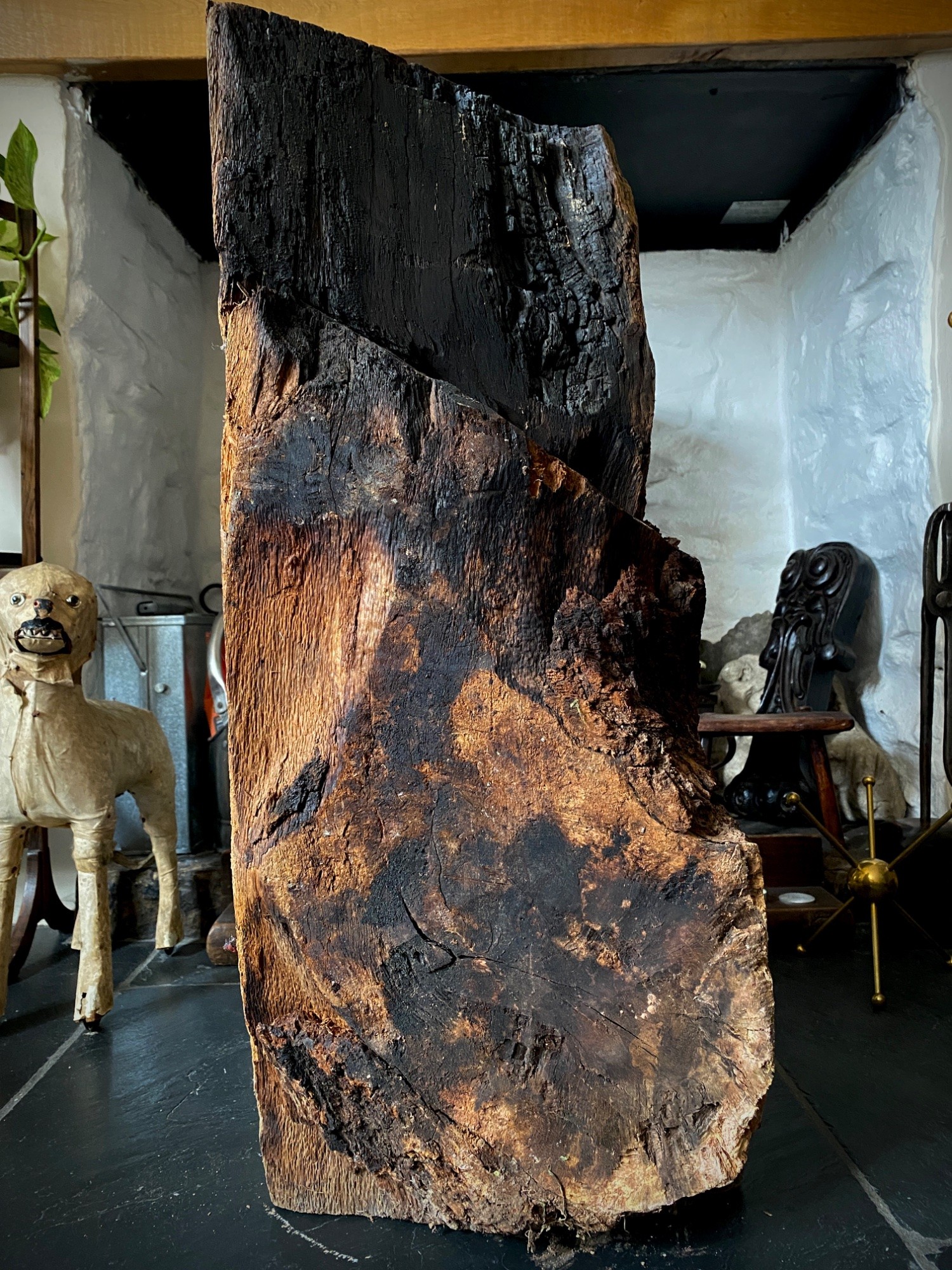
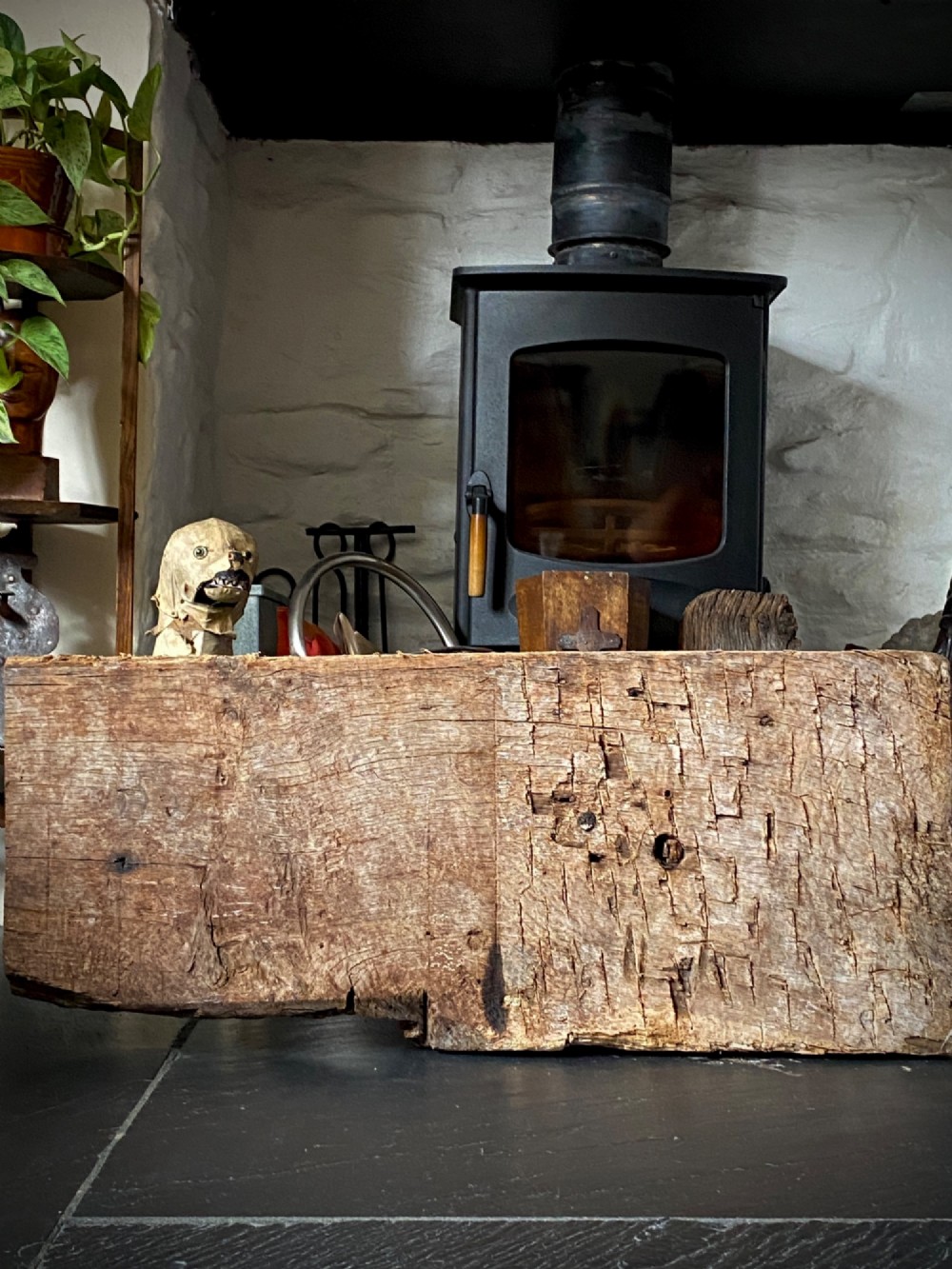
This rare 17th century solid oak inglenook beam end, salvaged directly from a historic farmhouse in Herefordshire, has an exceptionally well preserved apotropaic taper burn. Once forming part of a massive hearth bressummer beam, this beautiful piece of oak serves as a tangible reminder of how people felt vulnerable and how they went about protecting themselves during the 1600’s.

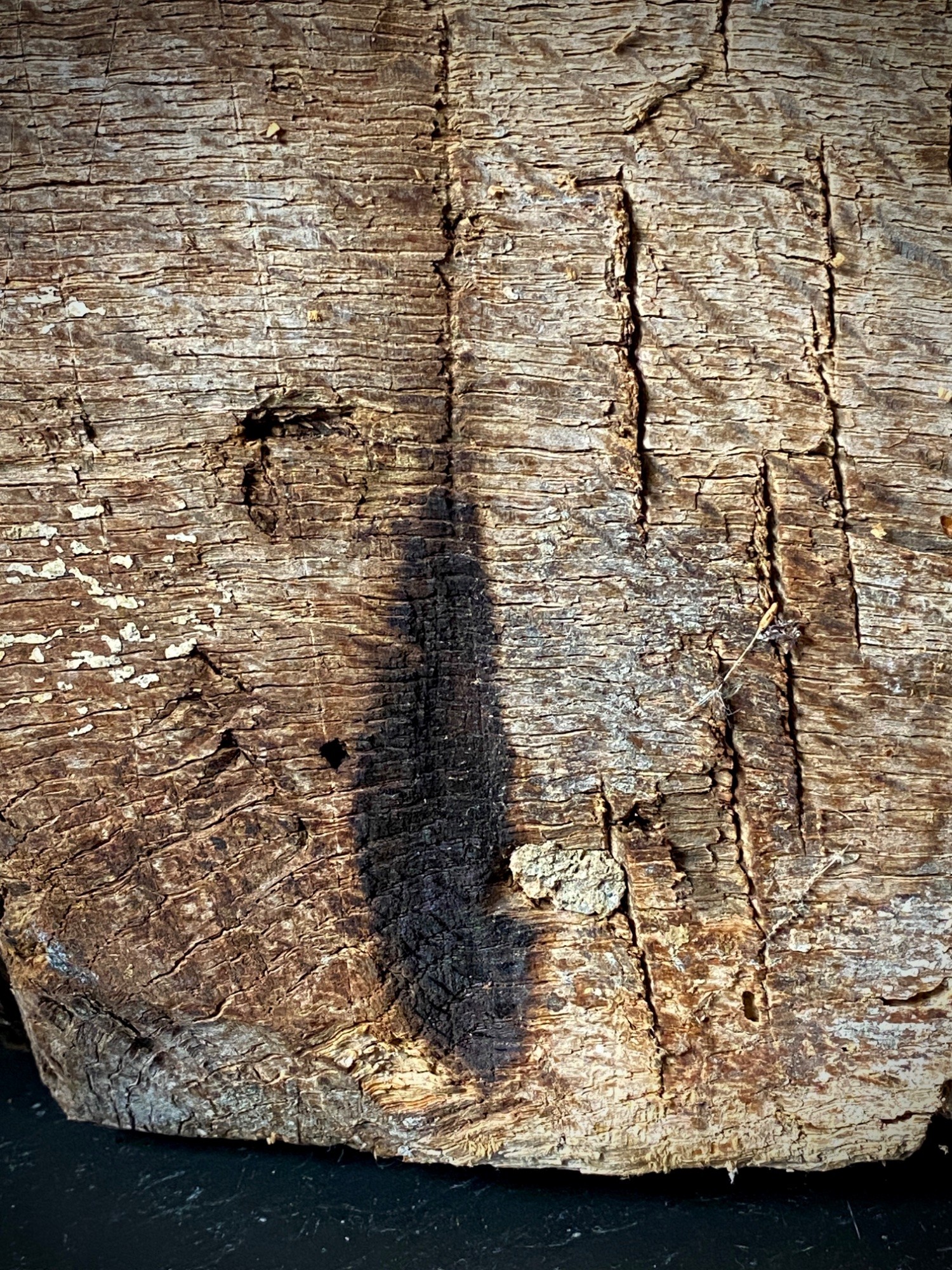
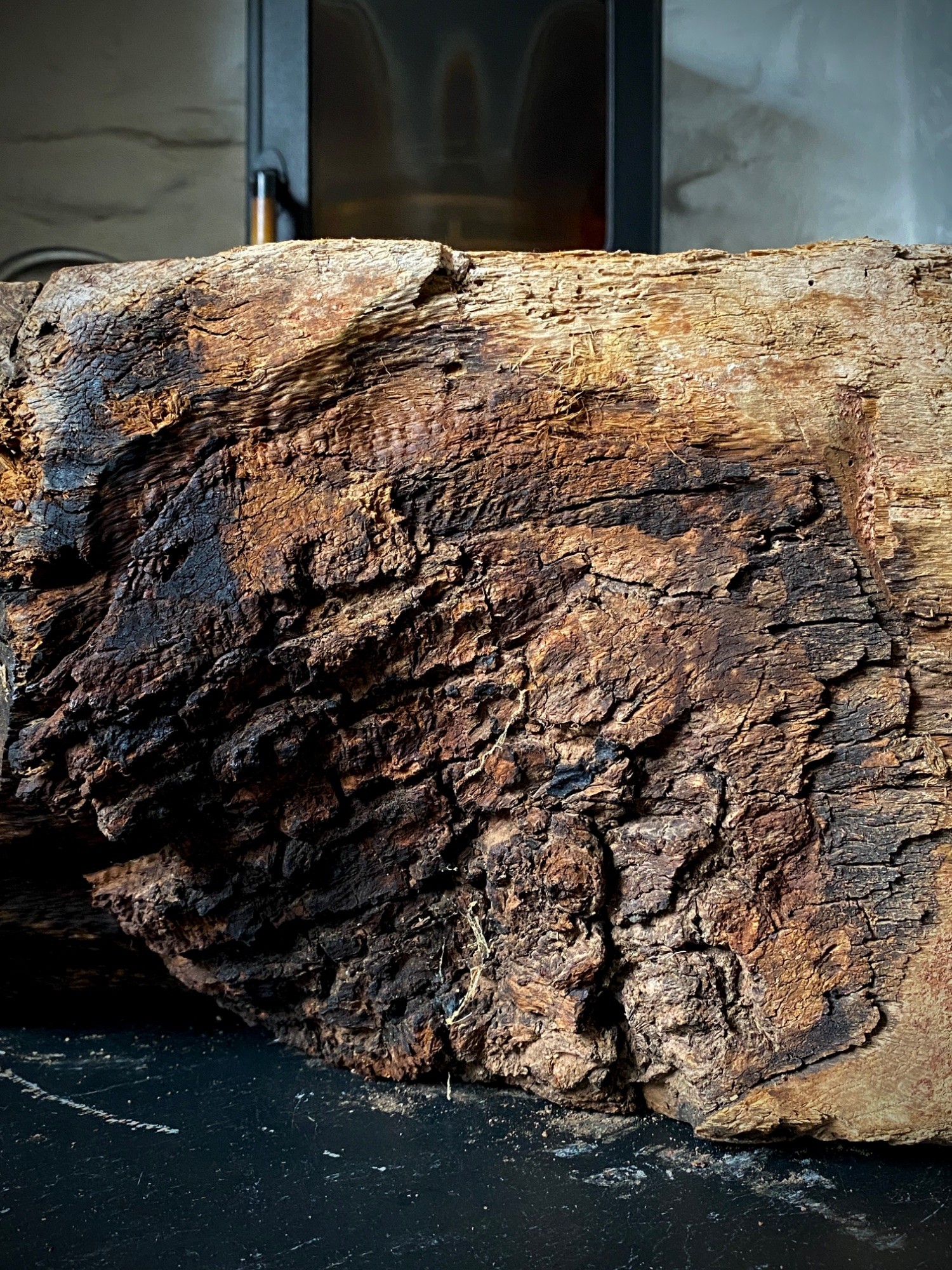
Taper burns were deliberately created scorches on the wooden beams of homes, used as a form of ritual folk magic to ward off evil spirits, witches, and protect against fire or lightning strikes.

They were strategically placed at vulnerable structural entry points, such as fireplaces, doorways, and windows, where a controlled, ritualised burn was believed to spiritually inoculate the timber framed home against fire and evil spirits.

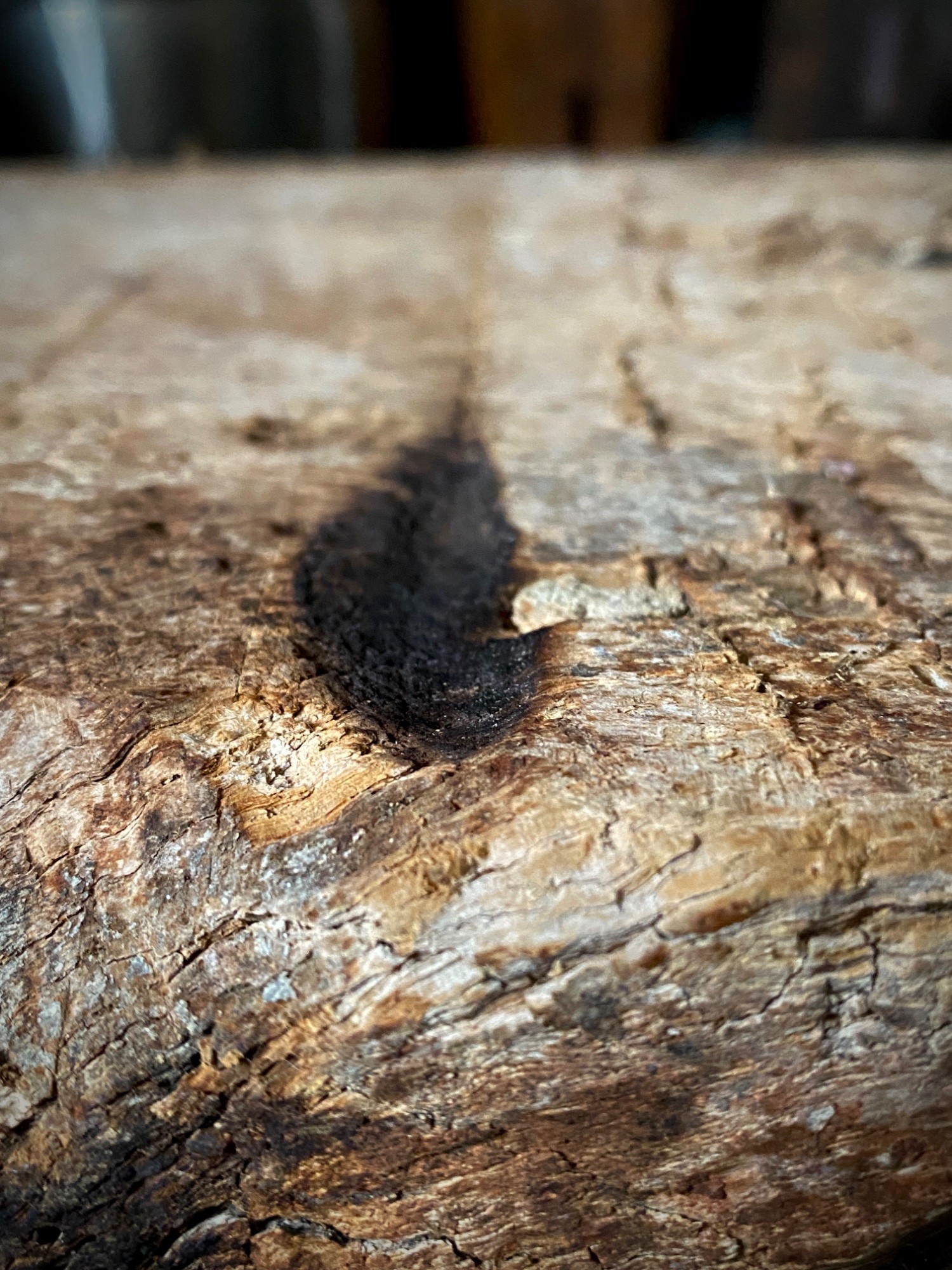
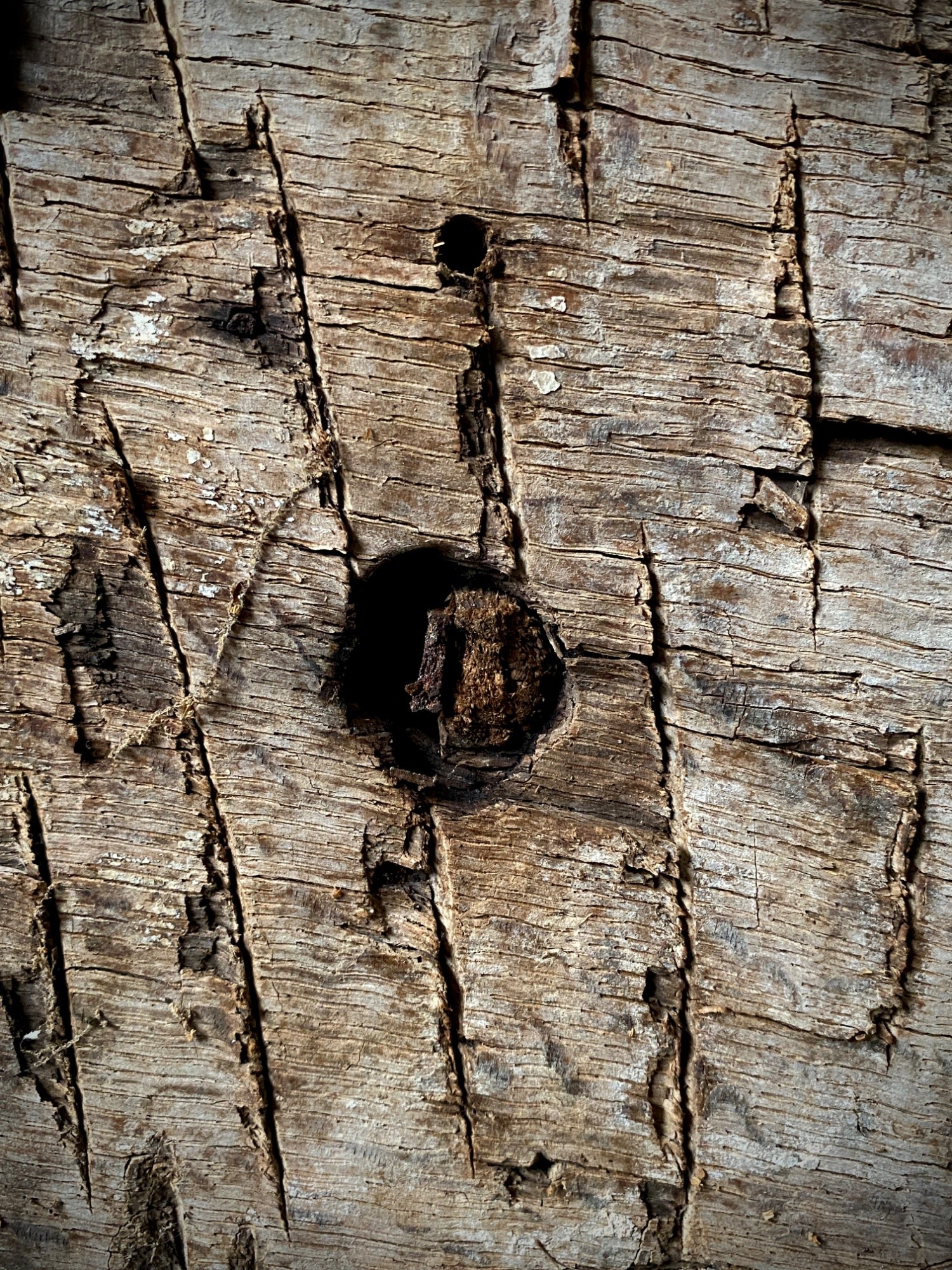
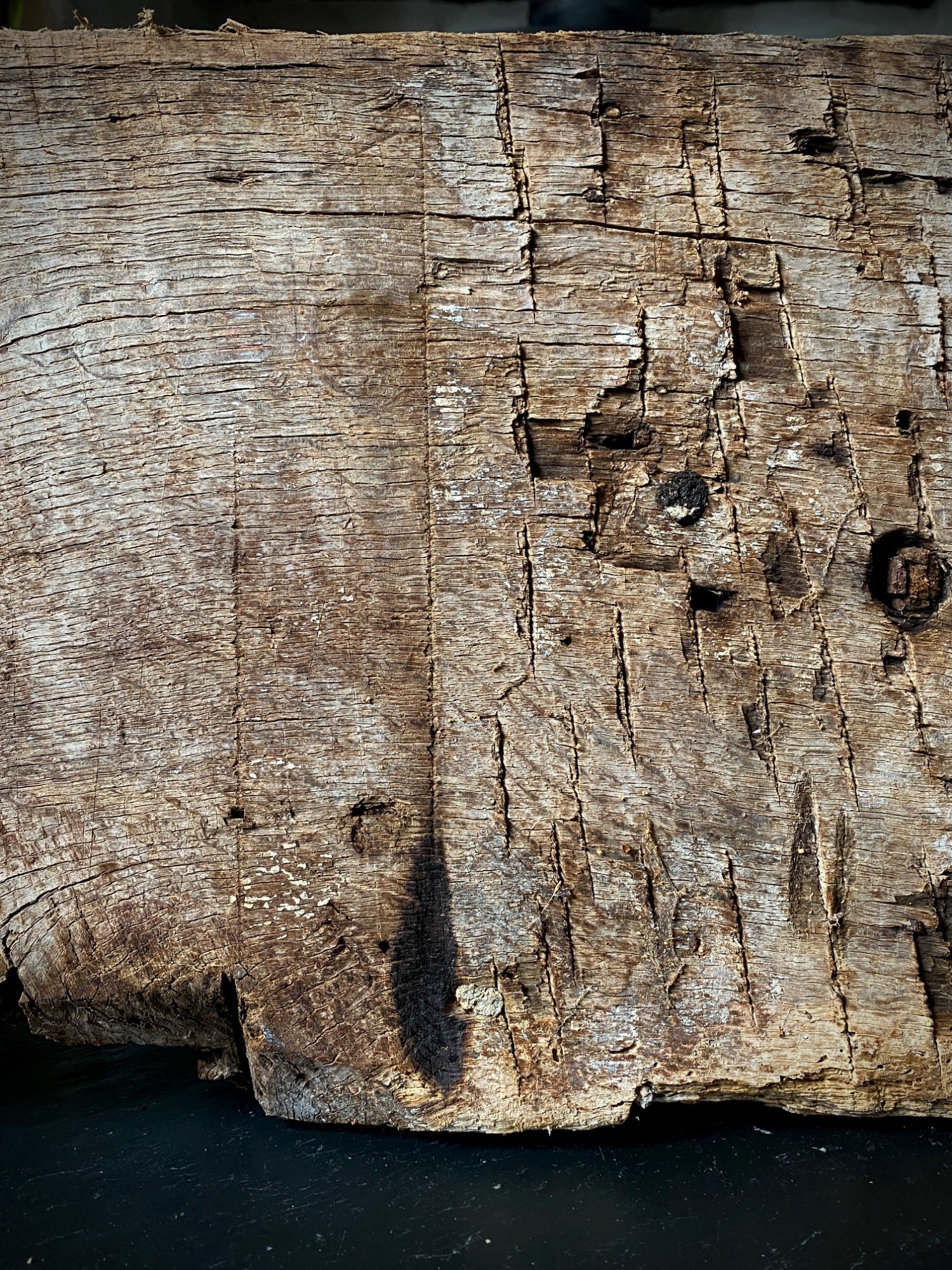
For centuries, historians assumed these distinct, tear shaped char marks were accidents caused by unattended candles. However, modern experimental archaeology has proven that they were intentionally crafted by holding a candle or rushlight at a 45 degree angle against the wood for up to 15 minutes, often requiring multiple rounds of burning and scraping to form a deep, permanent indentation.

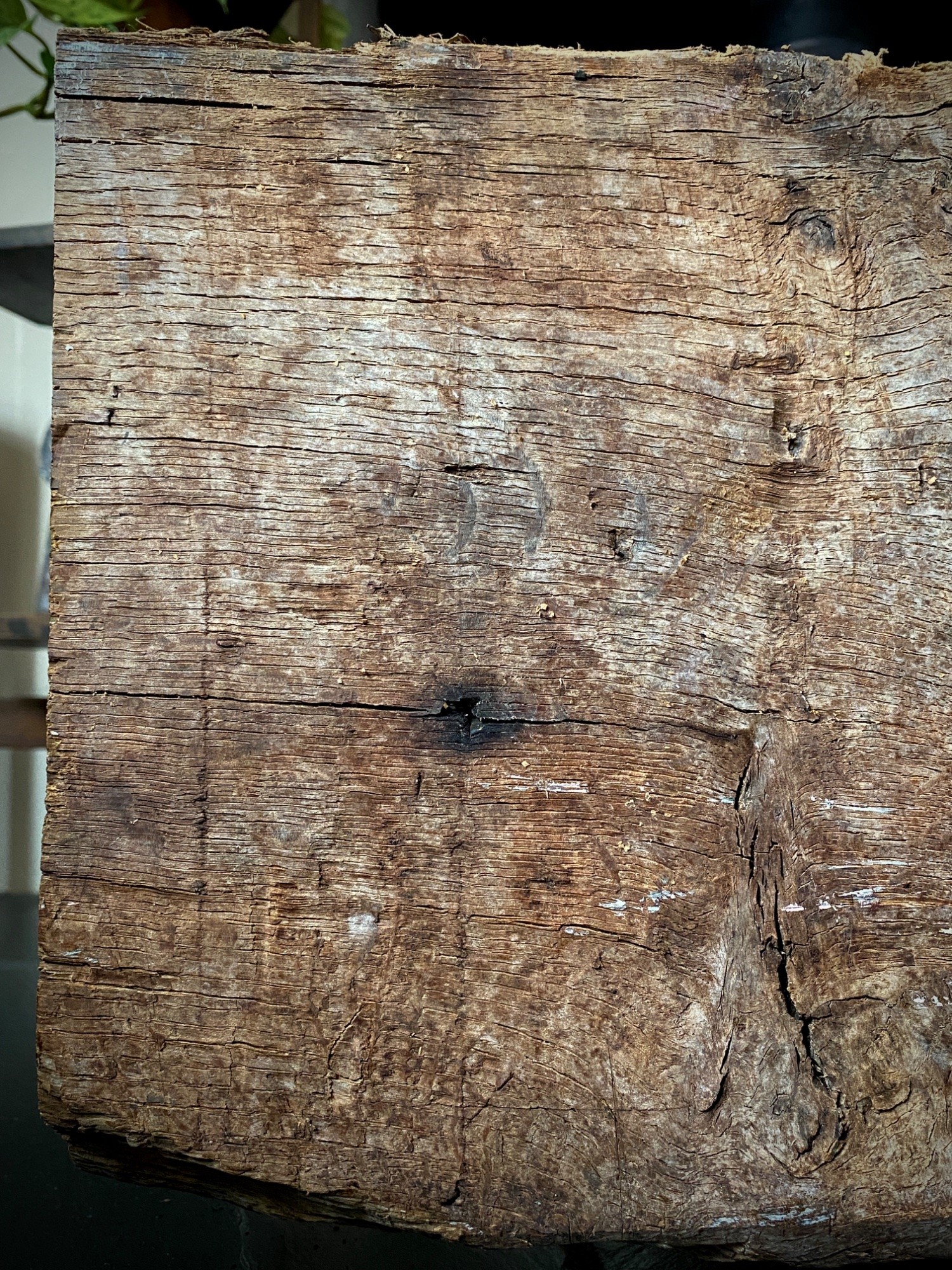
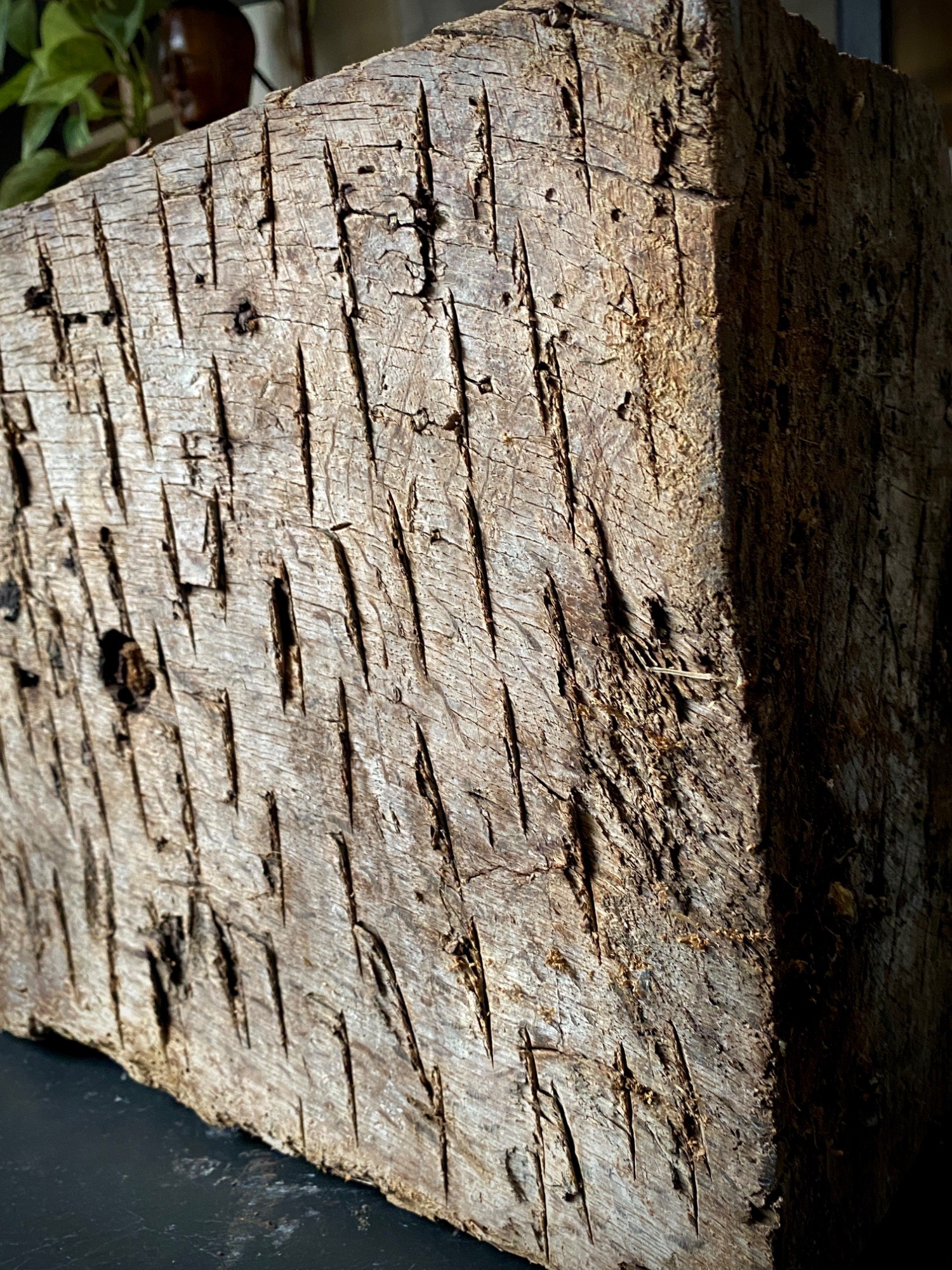
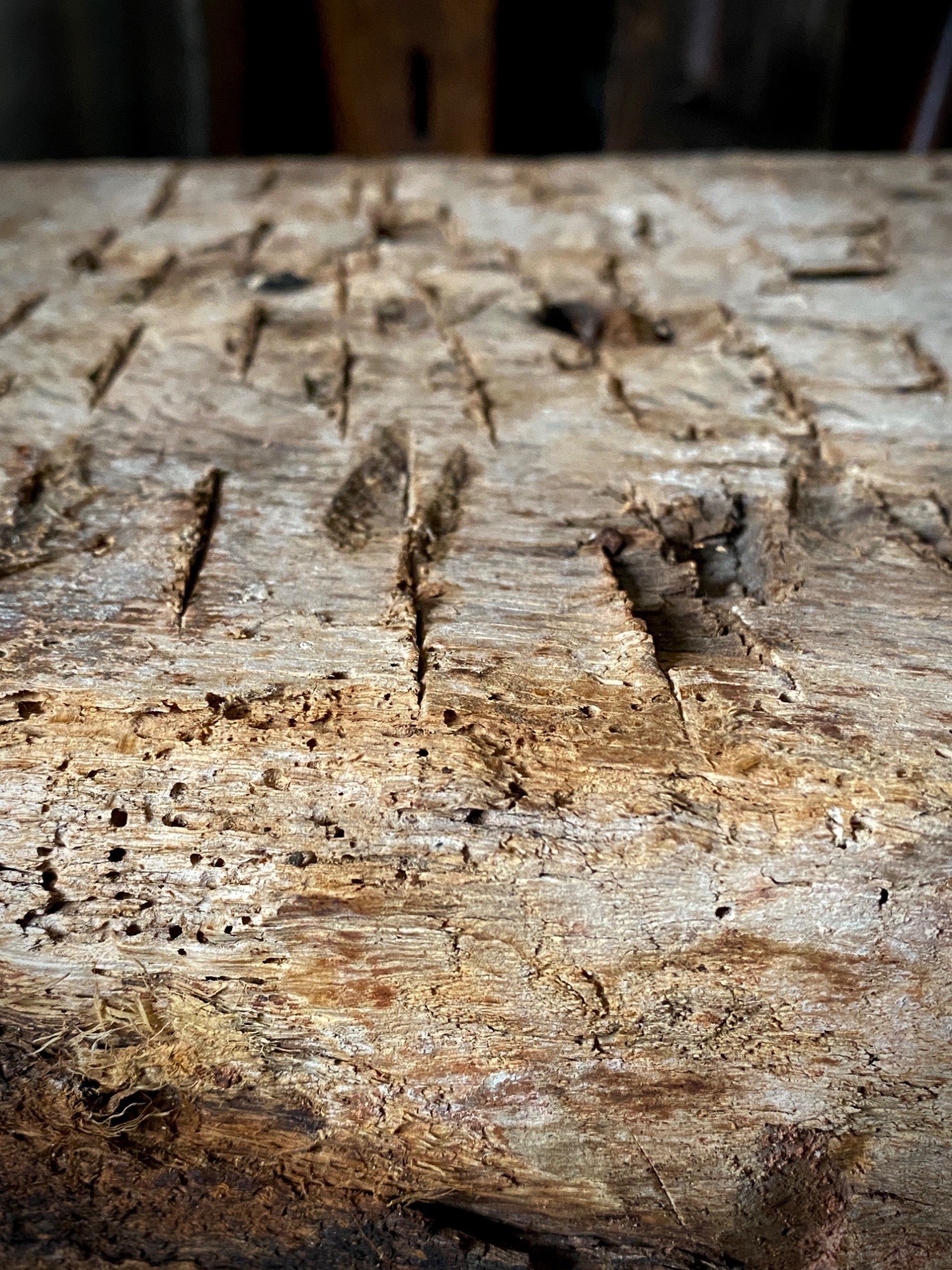
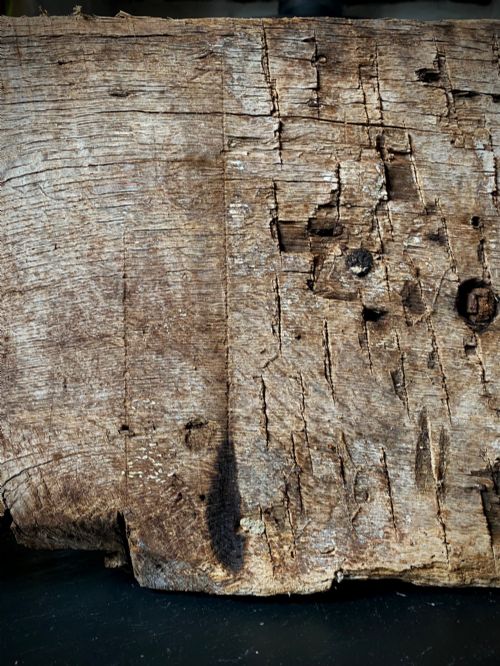
You’ll see it also has examples of scarification. These dense, vertical, and diagonal V-shaped slices were intentionally hacked into the wood using a hatchet or an adze. The rough surface gave the historic lime mortar or plaster a physical, mechanical grip to cling to.

It displays magnificently and is a beautiful, solid piece of oak in its own right.

Condition is good, commensurate with age and use. Structurally sound. Charred to the back as an inglenook beam should be.

Measures 71cm x 30cm x 22cm

Weighs 25,650 grams

Physical Dimensions
Height
30cm (11.81")
Declaration

Folk and Fable Antiques has dated this Antique Oak Inglenook Beam to the 17th Century.
Reference Numbers
Sellingantiques Reference
SA1239606
Description
This rare 17th century solid oak inglenook beam end, salvaged directly from a historic farmhouse in Herefordshire, has an exceptionally well preserved apotropaic taper burn. Once forming part of a massive hearth bressummer beam, this beautiful piece of oak serves as a tangible reminder of how people felt vulnerable and how they went about protecting themselves during the 1600’s.
“
Taper burns were deliberately created scorches on the wooden beams of homes, used as a form of ritual folk magic to ward off evil spirits, witches, and protect against fire or lightning strikes.
Folk and Fable Antiques
fig 1. A thick section of hand-hewn solid oak timber displaying natural wood grain, fissures, and surface burn markings.
fig 1. Rare Salvaged Antique 17th Century Solid Oak Inglenook Beam End with Apotropaic Taper Burn

They were strategically placed at vulnerable structural entry points, such as fireplaces, doorways, and windows, where a controlled, ritualised burn was believed to spiritually inoculate the timber framed home against fire and evil spirits.
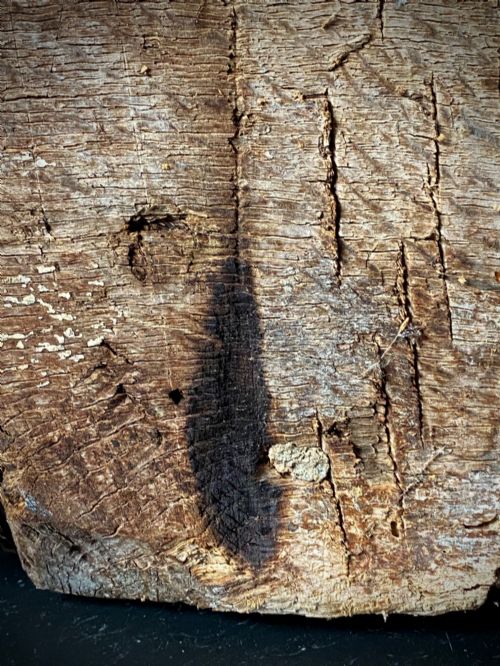
fig 2. A thick section of hand-hewn solid oak timber displaying natural wood grain, fissures, and surface burn markings.
fig 2. Rare Salvaged Antique 17th Century Solid Oak Inglenook Beam End with Apotropaic Taper Burn

For centuries, historians assumed these distinct, tear shaped char marks were accidents caused by unattended candles. However, modern experimental archaeology has proven that they were intentionally crafted by holding a candle or rushlight at a 45 degree angle against the wood for up to 15 minutes, often requiring multiple rounds of burning and scraping to form a deep, permanent indentation.
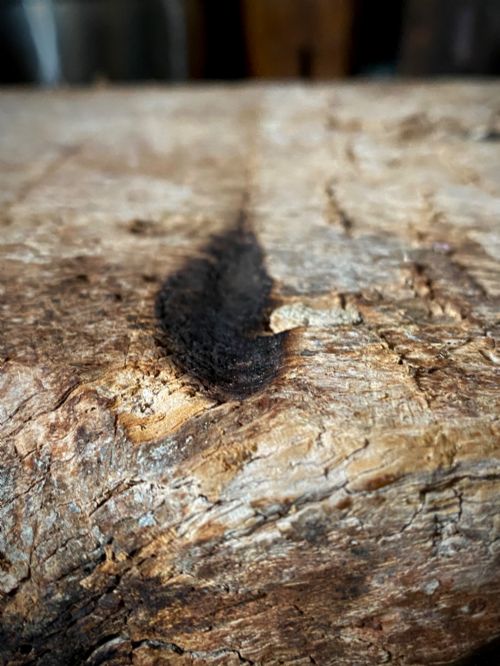
fig 3. A thick section of hand-hewn solid oak timber displaying natural wood grain, fissures, and surface burn markings.
fig 3. Rare Salvaged Antique 17th Century Solid Oak Inglenook Beam End with Apotropaic Taper Burn

You’ll see it also has examples of scarification. These dense, vertical, and diagonal V-shaped slices were intentionally hacked into the wood using a hatchet or an adze. The rough surface gave the historic lime mortar or plaster a physical, mechanical grip to cling to.
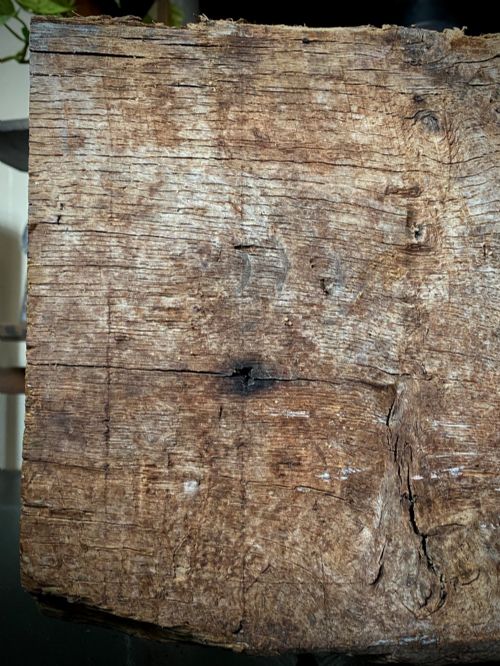
fig 4. A thick section of hand-hewn solid oak timber displaying natural wood grain, fissures, and surface burn markings.
fig 4. Rare Salvaged Antique 17th Century Solid Oak Inglenook Beam End with Apotropaic Taper Burn

It displays magnificently and is a beautiful, solid piece of oak in its own right.

Condition is good, commensurate with age and use. Structurally sound. Charred to the back as an inglenook beam should be.

Measures 71cm x 30cm x 22cm

Weighs 25,650 grams

Height
30cm (11.81")
Date of Manufacture

Folk and Fable Antiques has dated this Antique Oak Inglenook Beam to the 17th Century.
Reference Numbers
Sellingantiques Ref
SA1239606
Folk and Fable Antiques
Sellingantiques verified Since Oct 2026
Dealer Profile

You can view the stock and full dealer information on the Folk and Fable Antiques Profile Page
PDF SHARE
SAVE
A thick section of hand-hewn solid oak timber displaying natural wood grain, fissures, and surface burn markings.
1 / 12
Archive I A thick section of hand-hewn solid oak timber displaying natural wood grain, fissures, and surface burn markings.

Rare Salvaged Antique 17th Century Solid Oak Inglenook Beam End with Apotropaic Taper Burn
Archive II A thick section of hand-hewn solid oak timber displaying natural wood grain, fissures, and surface burn markings. View II
Archive III A thick section of hand-hewn solid oak timber displaying natural wood grain, fissures, and surface burn markings. View III
Archive IV A thick section of hand-hewn solid oak timber displaying natural wood grain, fissures, and surface burn markings. View IV
Archive V A thick section of hand-hewn solid oak timber displaying natural wood grain, fissures, and surface burn markings. View V
Archive VI A thick section of hand-hewn solid oak timber displaying natural wood grain, fissures, and surface burn markings. View VI
Archive VII A thick section of hand-hewn solid oak timber displaying natural wood grain, fissures, and surface burn markings. View VII
Archive VIII A thick section of hand-hewn solid oak timber displaying natural wood grain, fissures, and surface burn markings. View VIII
Archive IX A thick section of hand-hewn solid oak timber displaying natural wood grain, fissures, and surface burn markings. View IX
Archive X A thick section of hand-hewn solid oak timber displaying natural wood grain, fissures, and surface burn markings. View X
Archive XI A thick section of hand-hewn solid oak timber displaying natural wood grain, fissures, and surface burn markings. View XI
Archive XII A thick section of hand-hewn solid oak timber displaying natural wood grain, fissures, and surface burn markings. View XII
Enlarged Archival View
Telephone 07788216610
Location
United Kingdom
Verified Since Oct 2026
Items For Sale 14
Folk and Fable Antiques
Verified Since Oct 2026
View Dealer Info
Location: United Kingdom
Verified
Oct 2026
For Sale
14
A thick section of hand-hewn solid oak timber displaying natural wood grain, fissures, and surface burn markings.
Rare Salvaged Antique 17th Century Solid Oak Inglenook Beam End With Apotropaic Taper Burn
Ref: SA1239606
A thick section of hand-hewn solid oak timber displaying natural wood grain, fissures, and surface burn markings.
Detail View 1
Detail View 2
Detail View 3
Detail View 4
Detail View 5
Detail View 6
Detail View 7
Detail View 8
Detail View 9
Detail View 10
Detail View 11
Archival Detail
Every single antique dealer on our platform is individually approved by our internal team. We verify their professional trade history, ethical standards, and photographic quality to ensure a secure, high-standard buying environment. Upon joining, every dealer agrees to a strict 9-point code of conduct. While issues can occasionally arise, our dealers typically resolve them swiftly and directly with the buyer. In fact, since our founding in 2002, Sellingantiques has only had to step in to help resolve an issue on roughly five occasions—a true testament to the quality of our dealers and their dedication to your happiness.
Our dealers are highly experienced in packing and shipping fragile, high-value antiques. Because you are in direct contact with the dealer, you will be able to easily go through all available shipping and insurance options together to ensure your item arrives safely.
Antiques are the ultimate green purchase. By choosing historical pieces over newly manufactured goods, you completely eliminate the carbon footprint of modern mass production while preserving exceptional, timeless craftsmanship.
Written by Sellingantiques from the dealer’s photographs and listing
  • ObjectArchitectural Salvage
  • Period17th century
  • Style17th Century / Vernacular
  • MaterialOak
  • ColourWarm Brown
  • MotifsApotropaic burn marks, Hand-hewn texture, Grain fissures, Adze marks
  • SizeH 30 cm (12 in)

This 17th-century architectural salvage piece comprises a heavy section of solid oak salvaged from a historic farmhouse inglenook beam in Herefordshire. The warm brown timber exhibits a hand-hewn texture with distinct adze marks, grain fissures, and a well-preserved apotropaic taper burn alongside dense vertical and diagonal V-shaped scarification slices. Measuring 71 cm wide by 30 cm high and 22 cm deep, it possesses a substantial form and weighs 25,650 grams. The item serves as a tactile display object for a rustic farmhouse interior, standing securely on a flat surface or shelf. Its historic ritual scorch marks and rough adze-hacked surface provide a direct connection to seventeenth-century domestic protection practices and vernacular timber framing methods.

An inglenook beam end is a section of a heavy timber header historically positioned above an open fireplace hearth. Apotropaic marks, often termed taper burns or ritual symbols, were intentionally created on historic building timbers during the 16th and 17th centuries to ward off harm and protect the dwelling.

Timbers from this period were crafted from solid English oak, shaped by hand using broadaxes and adzes. These structural components feature dense grain configurations, hand-carved joints, and surface character created by slow natural seasoning over centuries.

Genuine period oak exhibits irregular hand-hewn tool marks, structural shrinkage fissures following the natural grain, and deep oxidisation around old iron fixings. Authentic pieces also display historic ritual markings or carpenter marks rather than uniform modern machine-cut finishes.

A salvaged timber section can serve as a decorative display riser on a side table, a sculptural block, or an architectural focal point on open shelving. The natural grain and dark patination offer a tactile contrast when set against contemporary, minimalist backdrops.

Keep historic oak in a stable indoor environment away from direct heat sources to prevent rapid humidity changes and excessive splitting. Dust regularly with a soft dry brush and apply a thin layer of clear beeswax polish occasionally to preserve the wood grain without darkening the original patina.
items
Add keywords to the filter
Price
£100
£250000
Era
Period
Style
Material
Origin
Stock Location
Recently Added
Online Payments
Categories