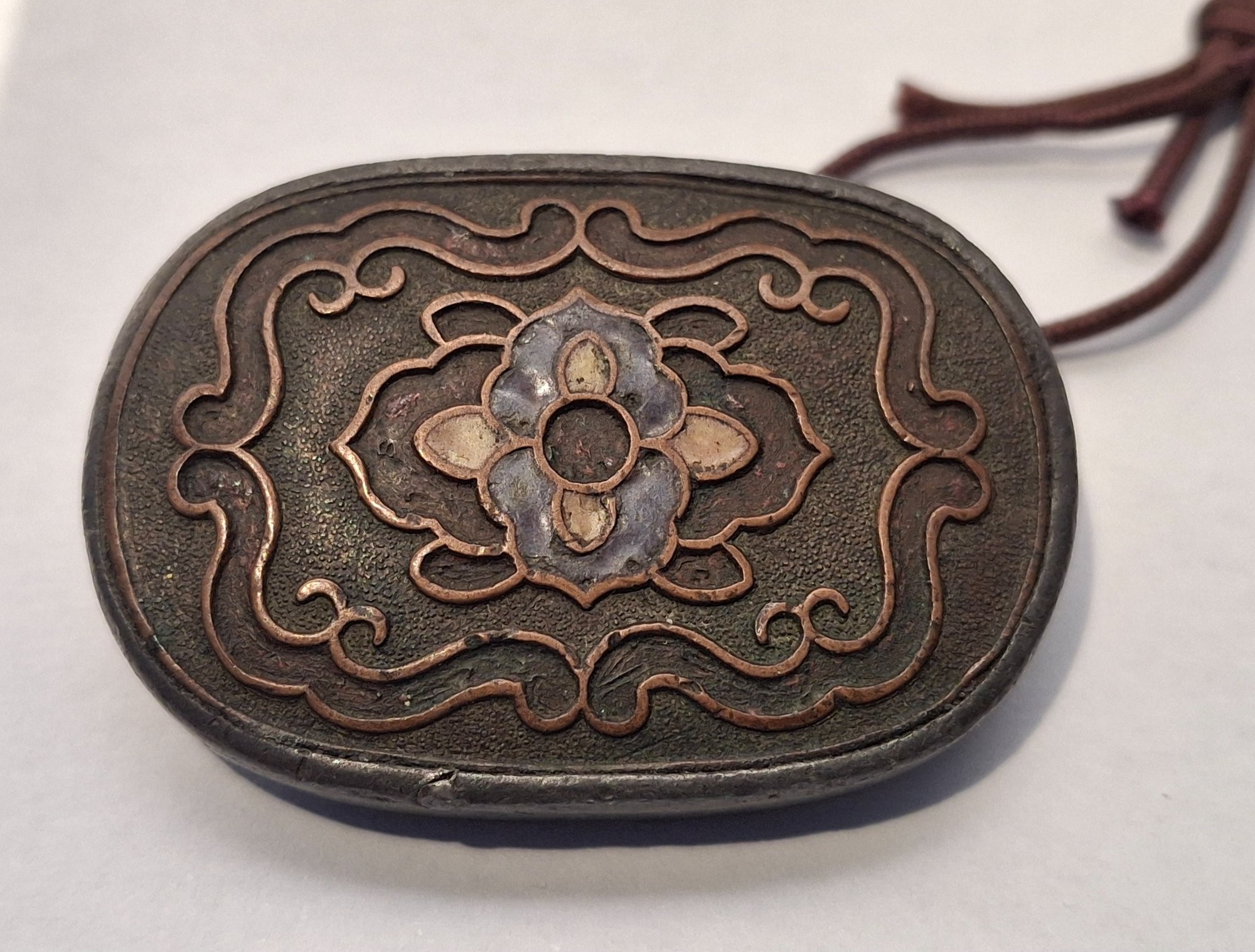
Dragoncharger Antiques has dated this Japanese Champleve Enamel Netsuke to the 1850s.
This Independent Date Guide was compiled by Sellingantiques using its own proprietary system. It works only from the photographs shown on this page and is never told the date the dealer has declared. It is a guide, not a guarantee of age, and occasional errors can occur.
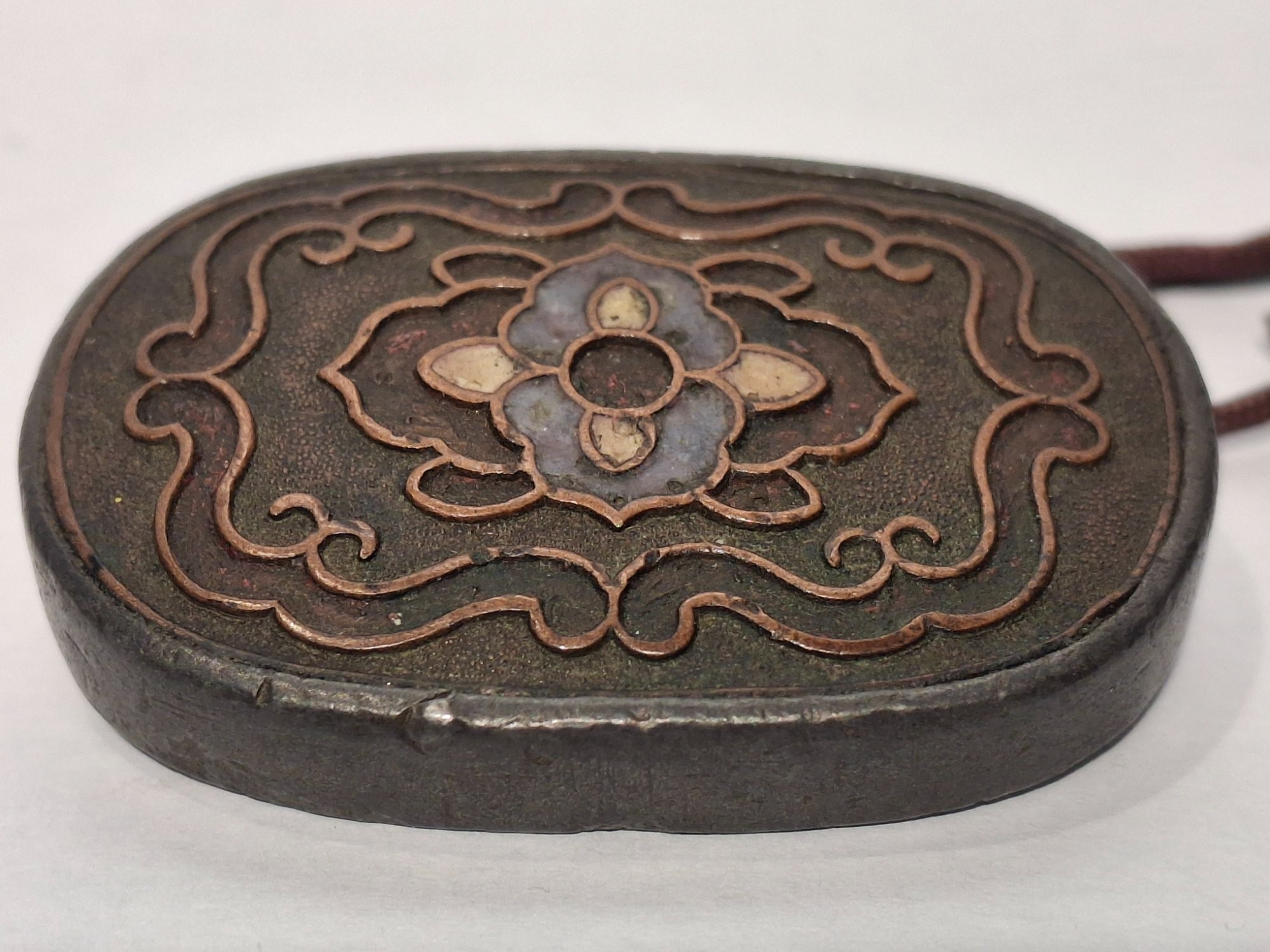
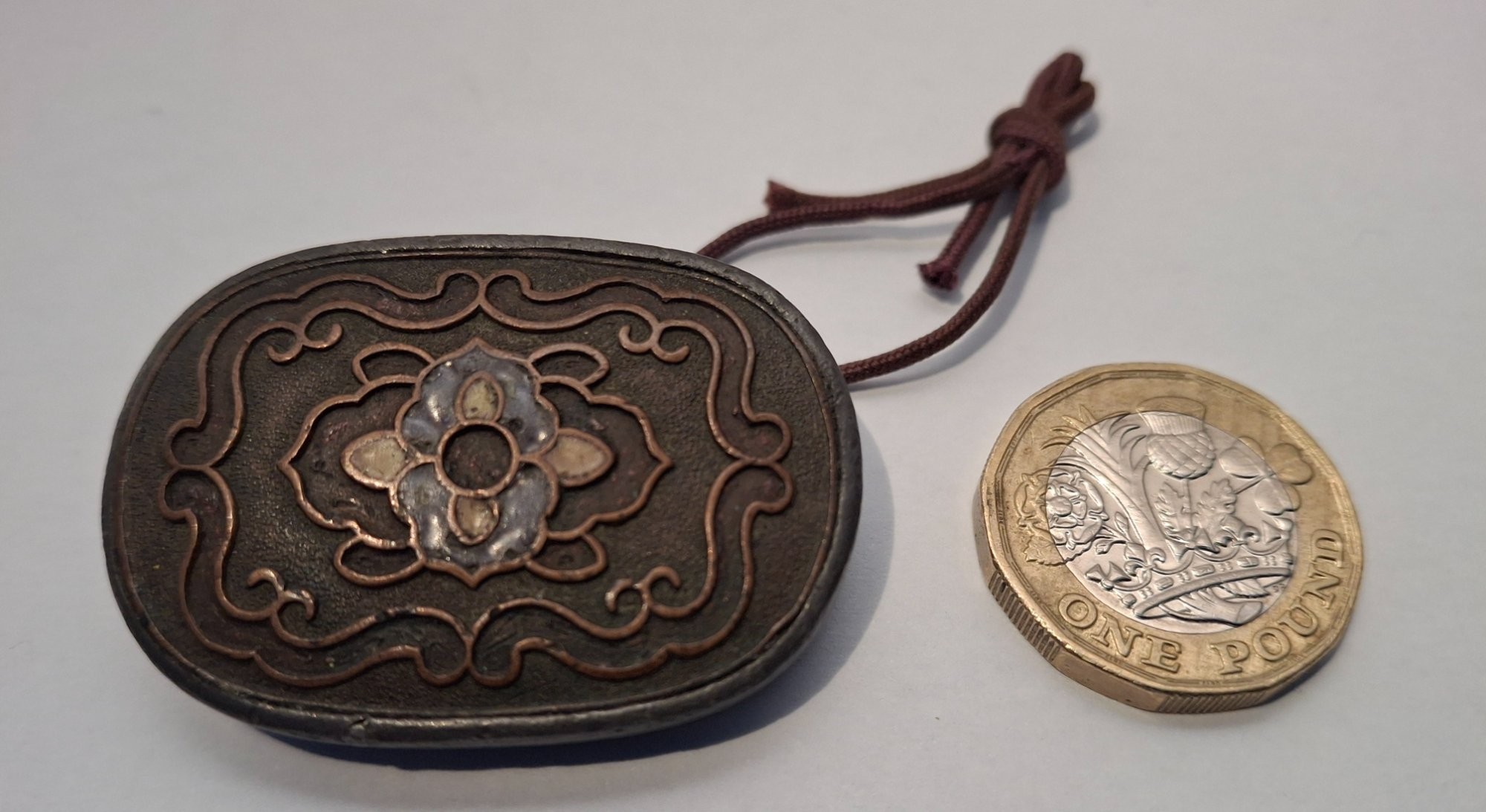
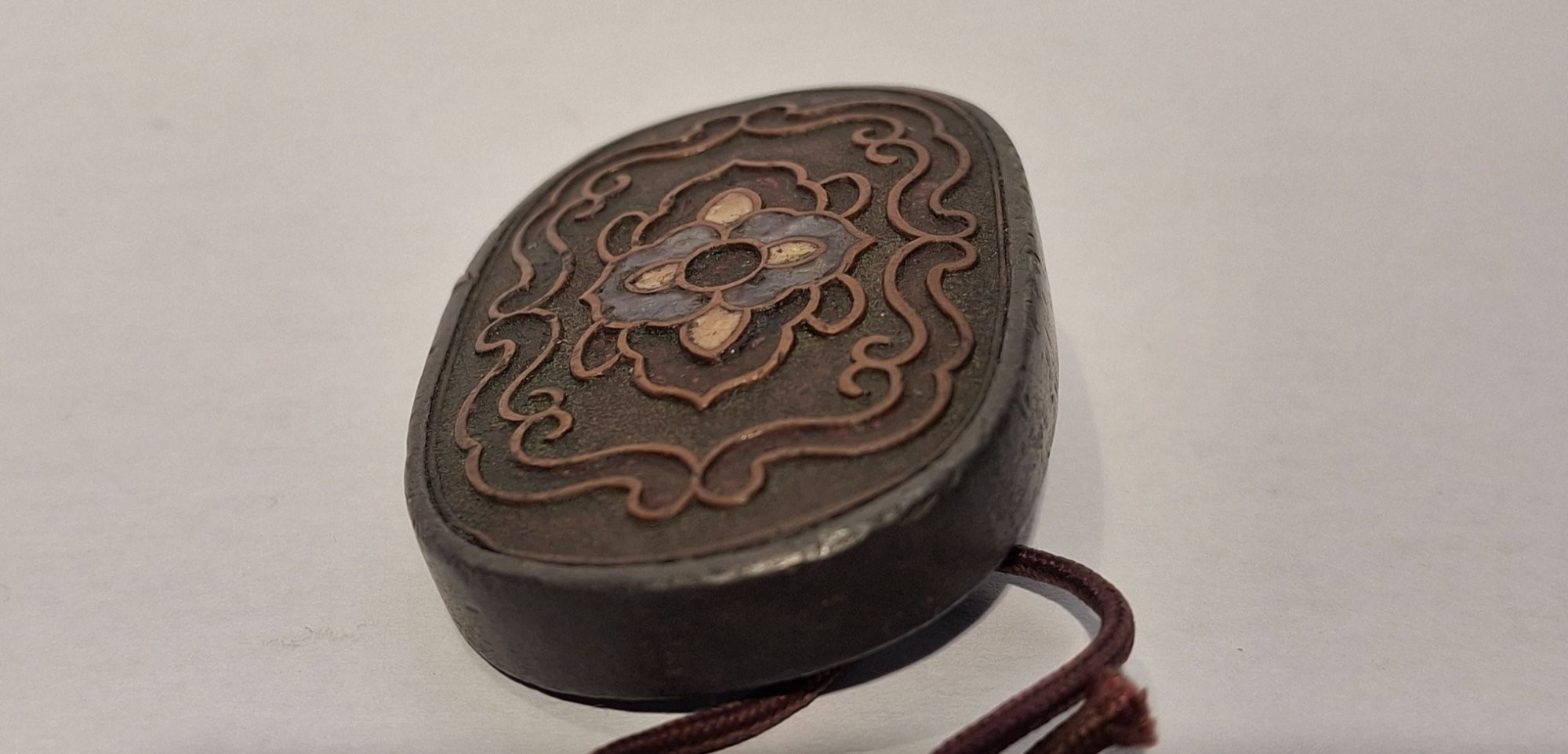
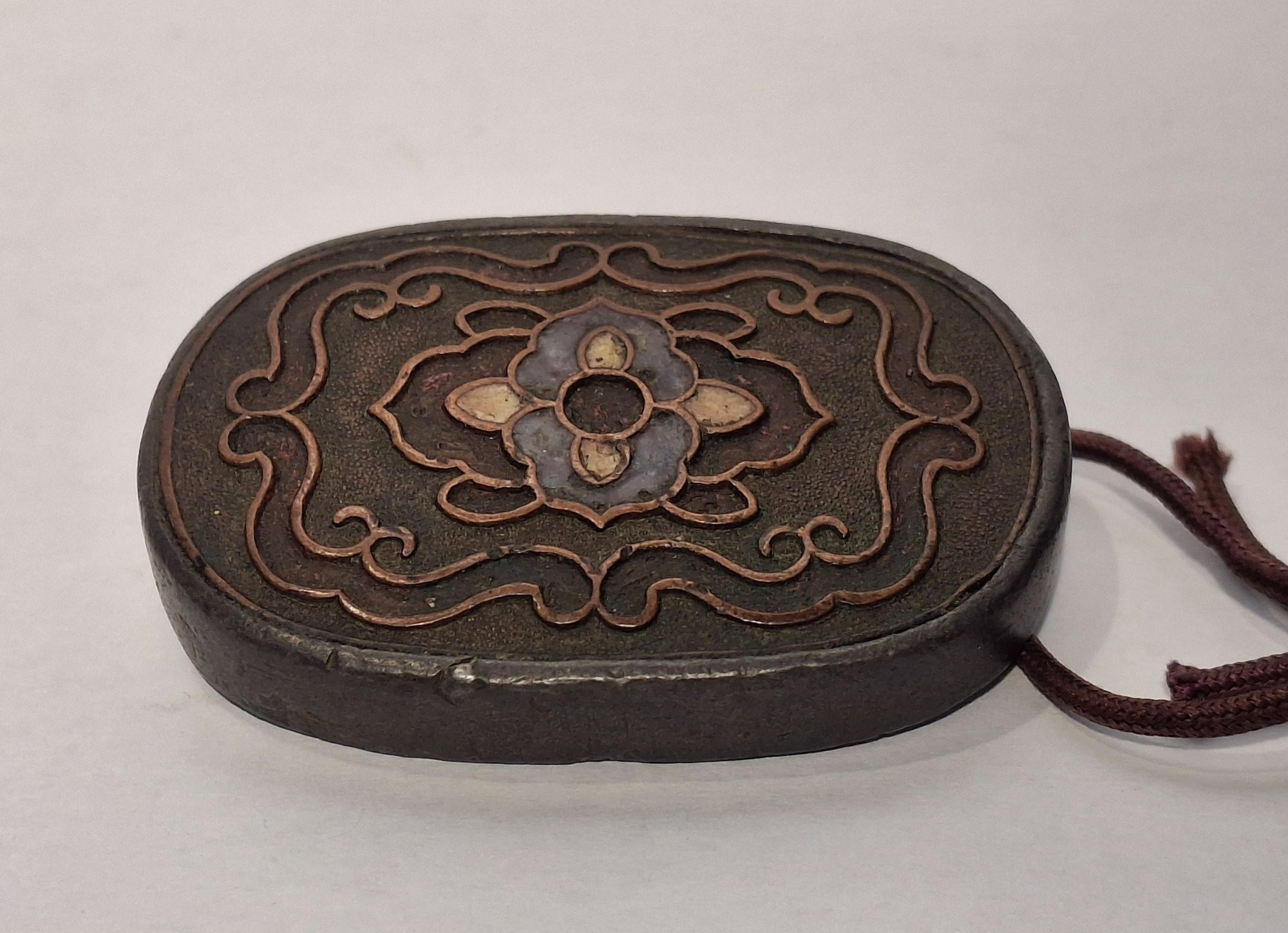
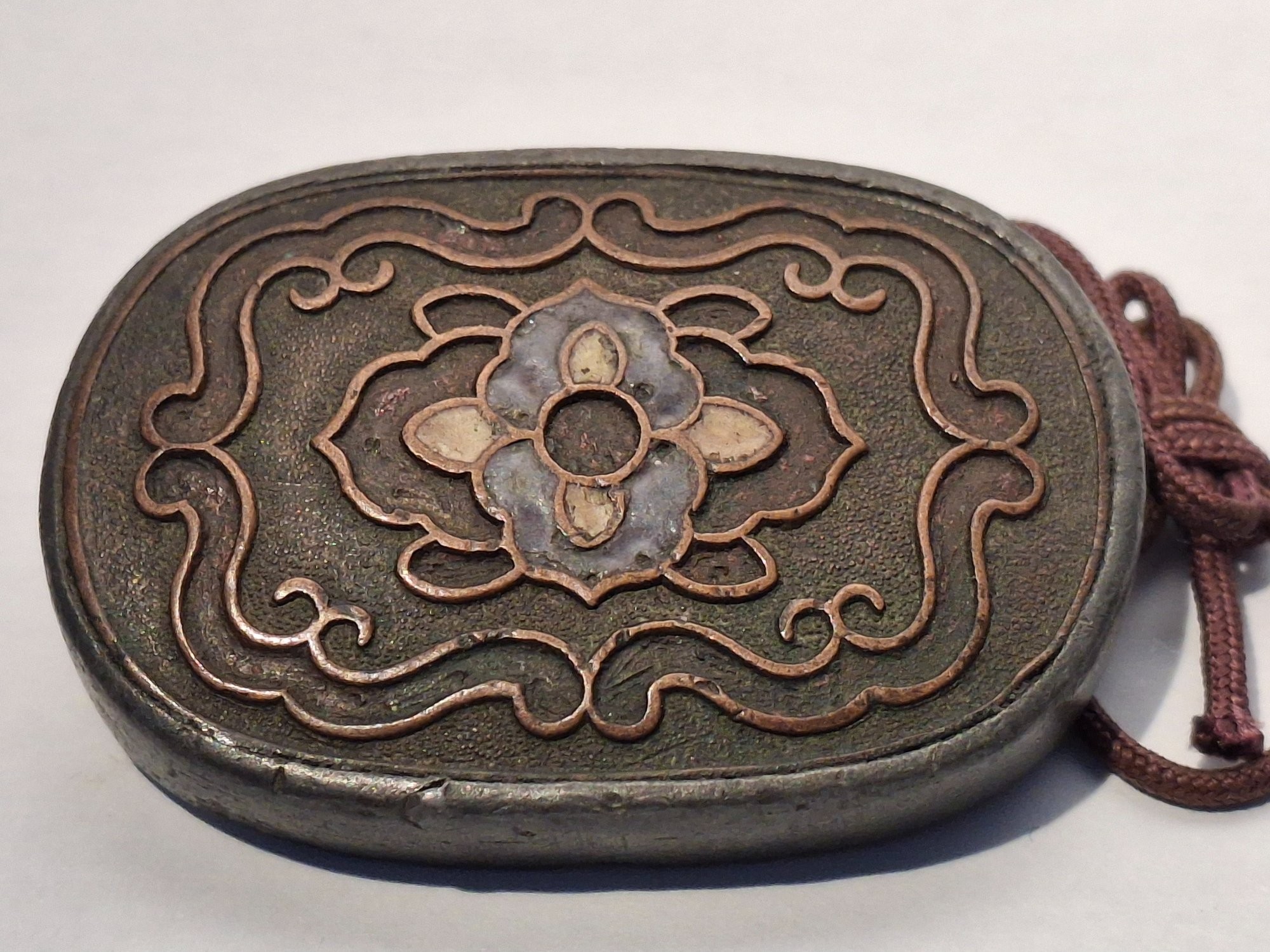
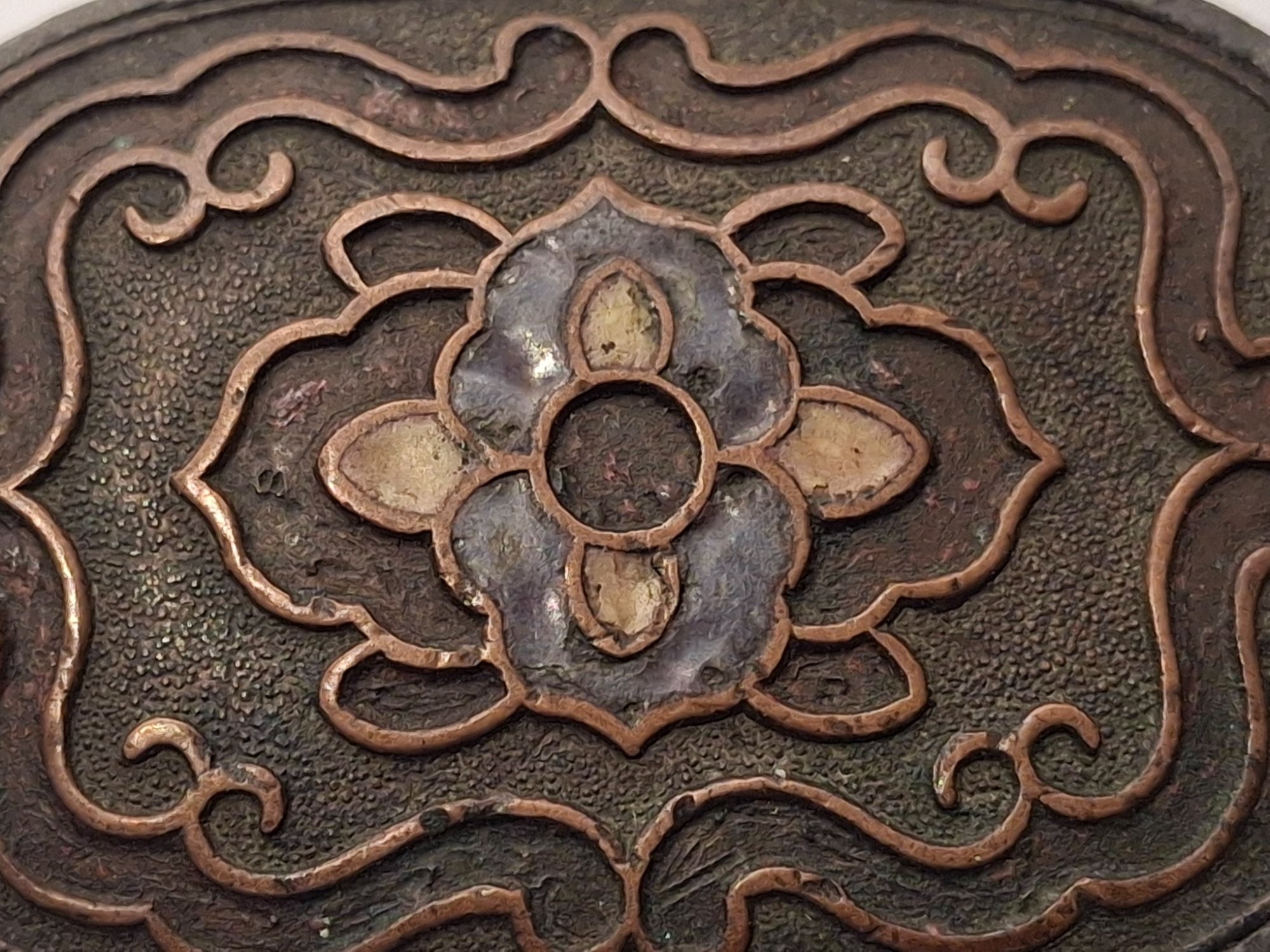
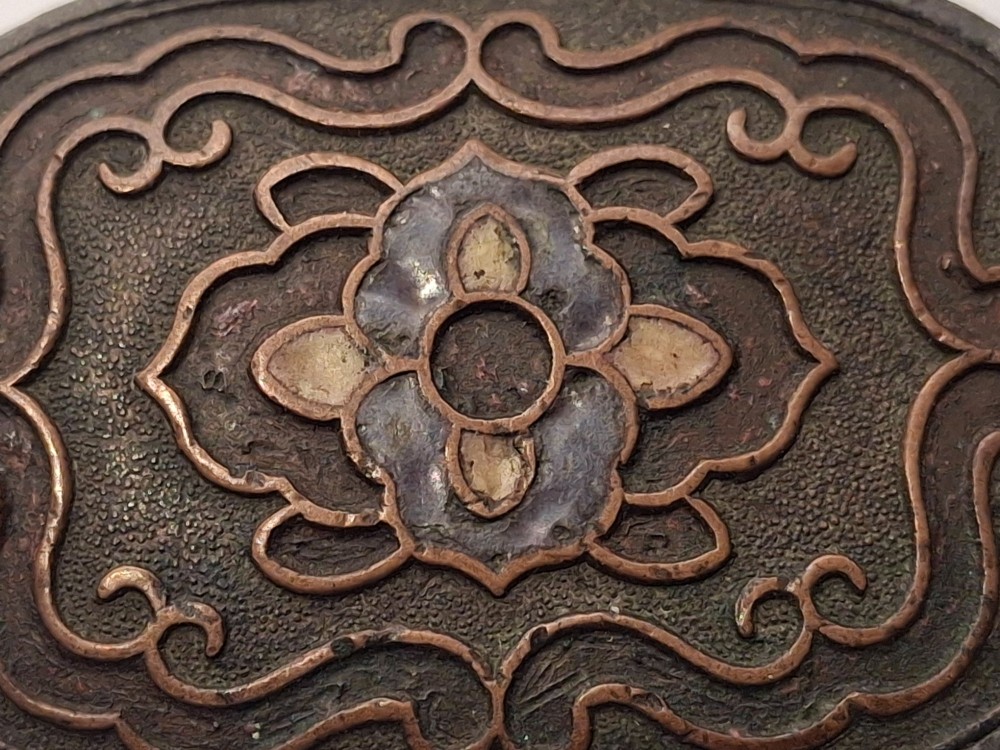
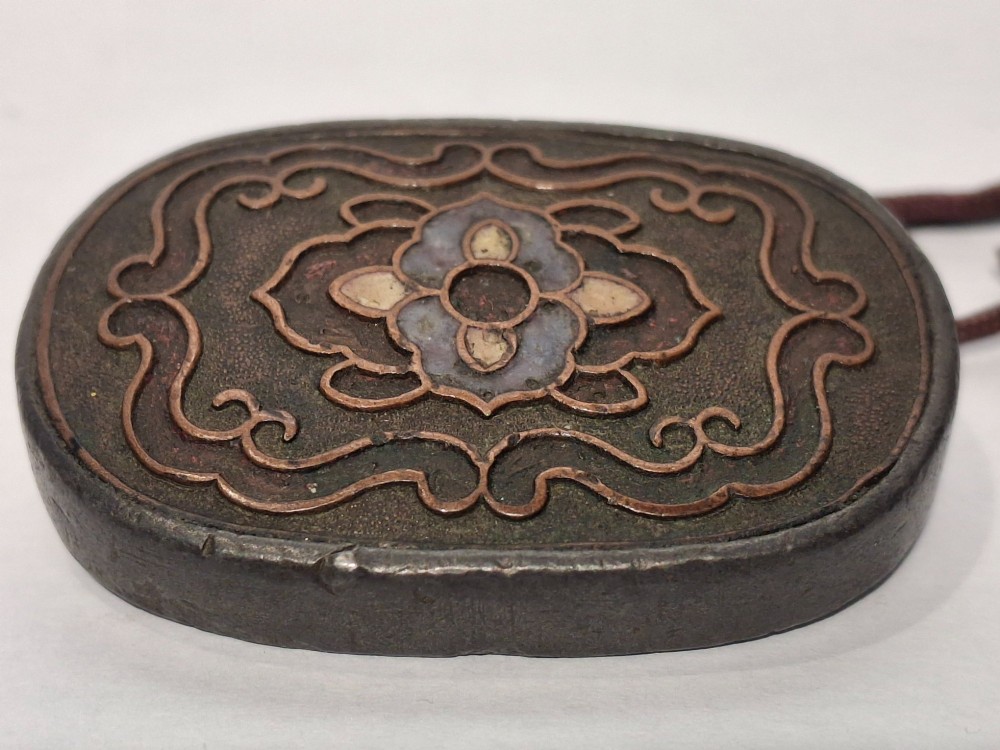
Champleve enamel netsuke in oblong manju form.
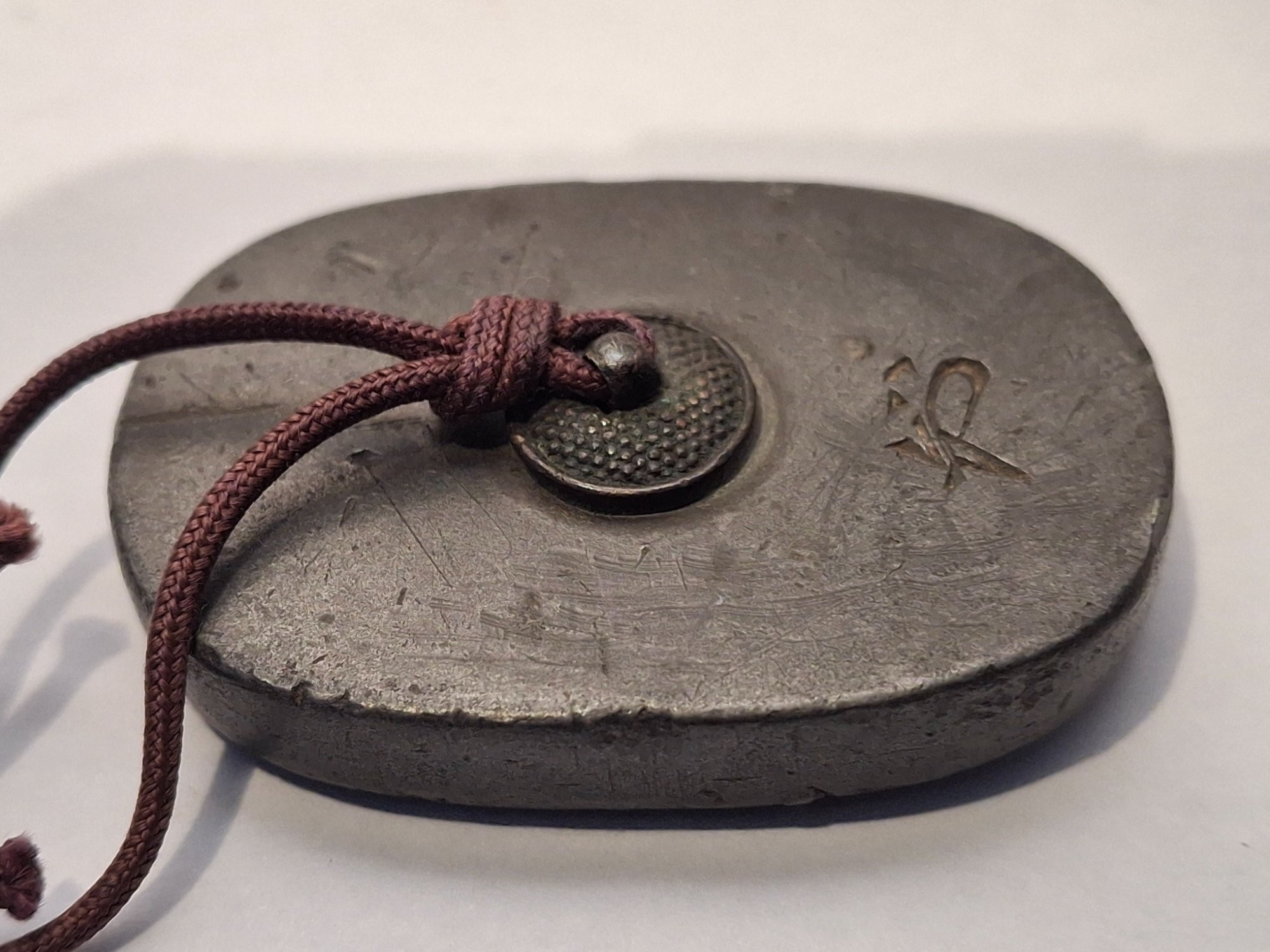
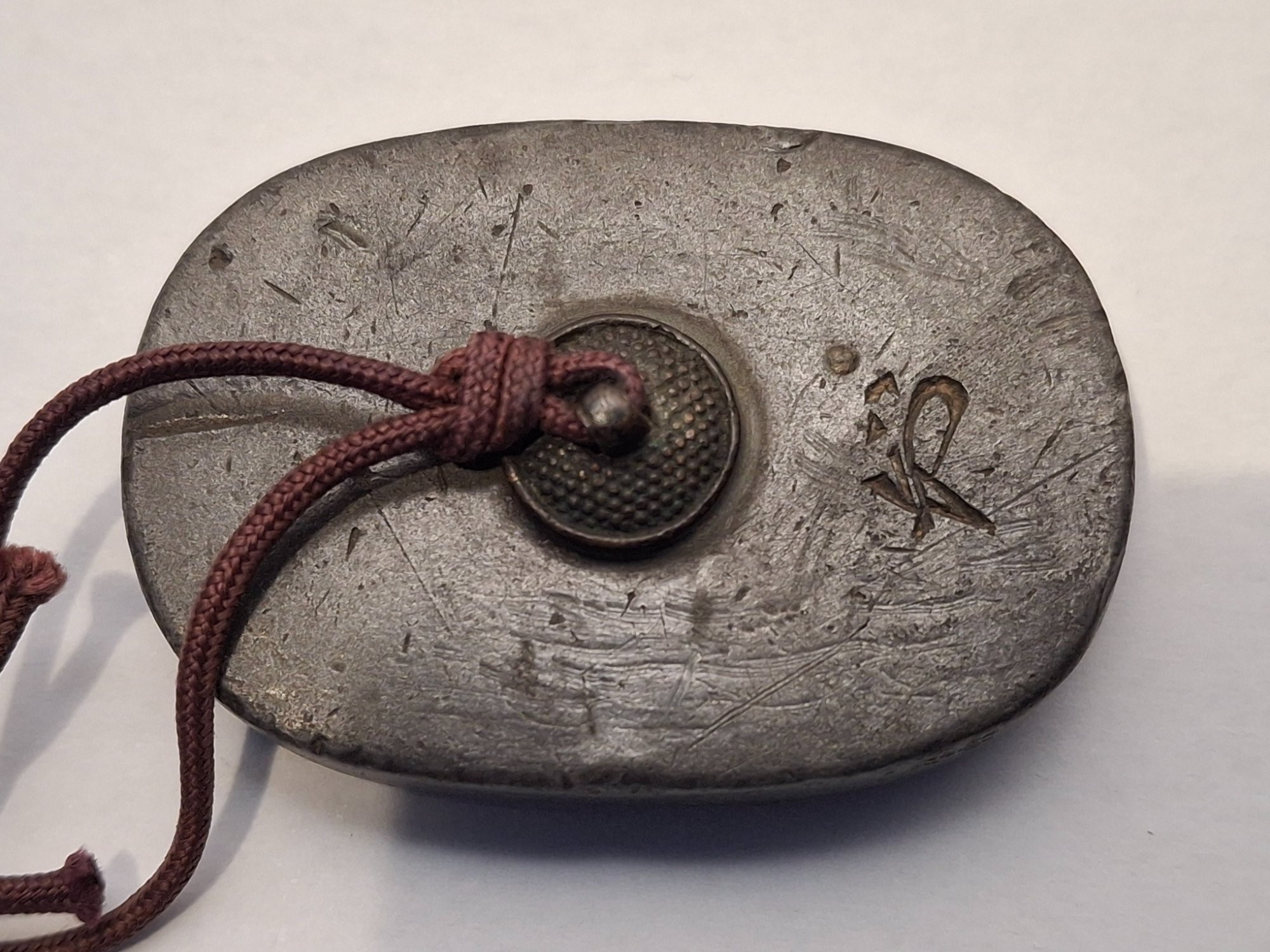
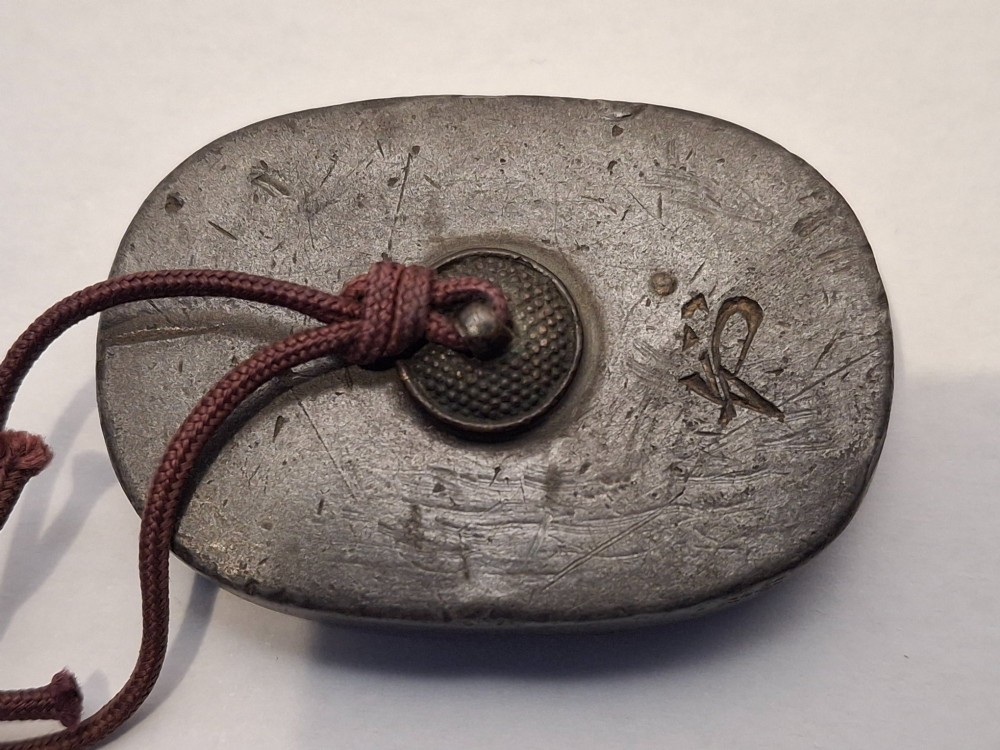
The reverse signed. A chord is attached to a central circular fixing point resembling an acorn hat / cap. Botanists call this cap the cupule. In Japanese, it is charmingly referred to as the boushi, which literally means "hat."
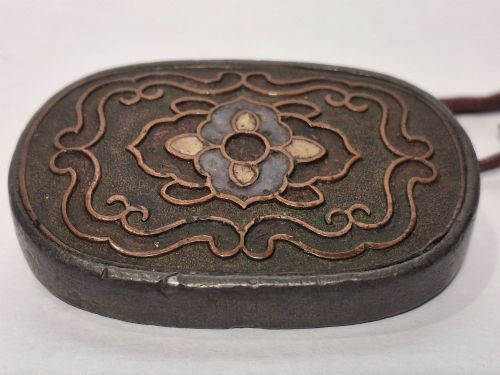
An early dimunitive and extremely rare enamel object made by a highly skilled artisan in the early era of mastering cloisonne techniques in Japan. While most netsuke are carved figures (katabori) or made of organic materials, metal or pewter manju represent specialized craftsmanship from the Edo Period. This relatively heavy manju would have been used to secure hanging pouches or containers from a kimono sash.
Condition: In excellent condition with some minor marks commensurate with age.
Dimensions:
Height = 2.9 cm
Width = 4.2 cm
Depth (Thickness) = 0.6 cm
Weight: 34g
Dragoncharger Antiques has dated this Japanese Champleve Enamel Netsuke to the 1850s.
This is an independent date report produced by Sellingantiques using its own proprietary system. The process uses the photographs shown on this page. The system is never told the date the dealer has declared. This report shows that the two dates corroborate.
Specialising in early japanese cloisonne, edo enamel artisan period.
You can view the stock and full dealer information on the Dragoncharger Antiques Profile Page
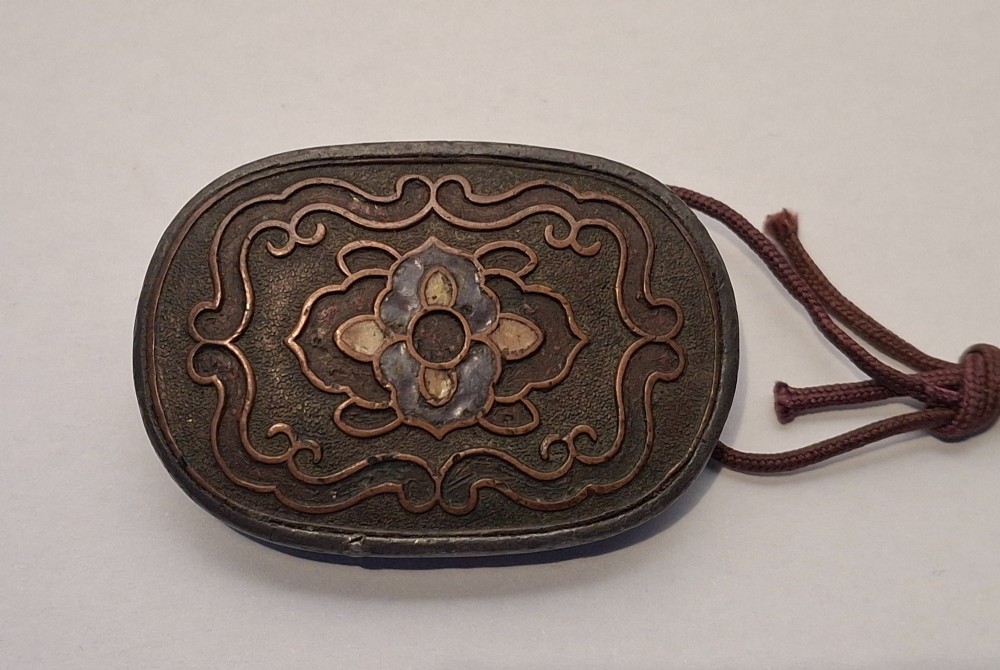
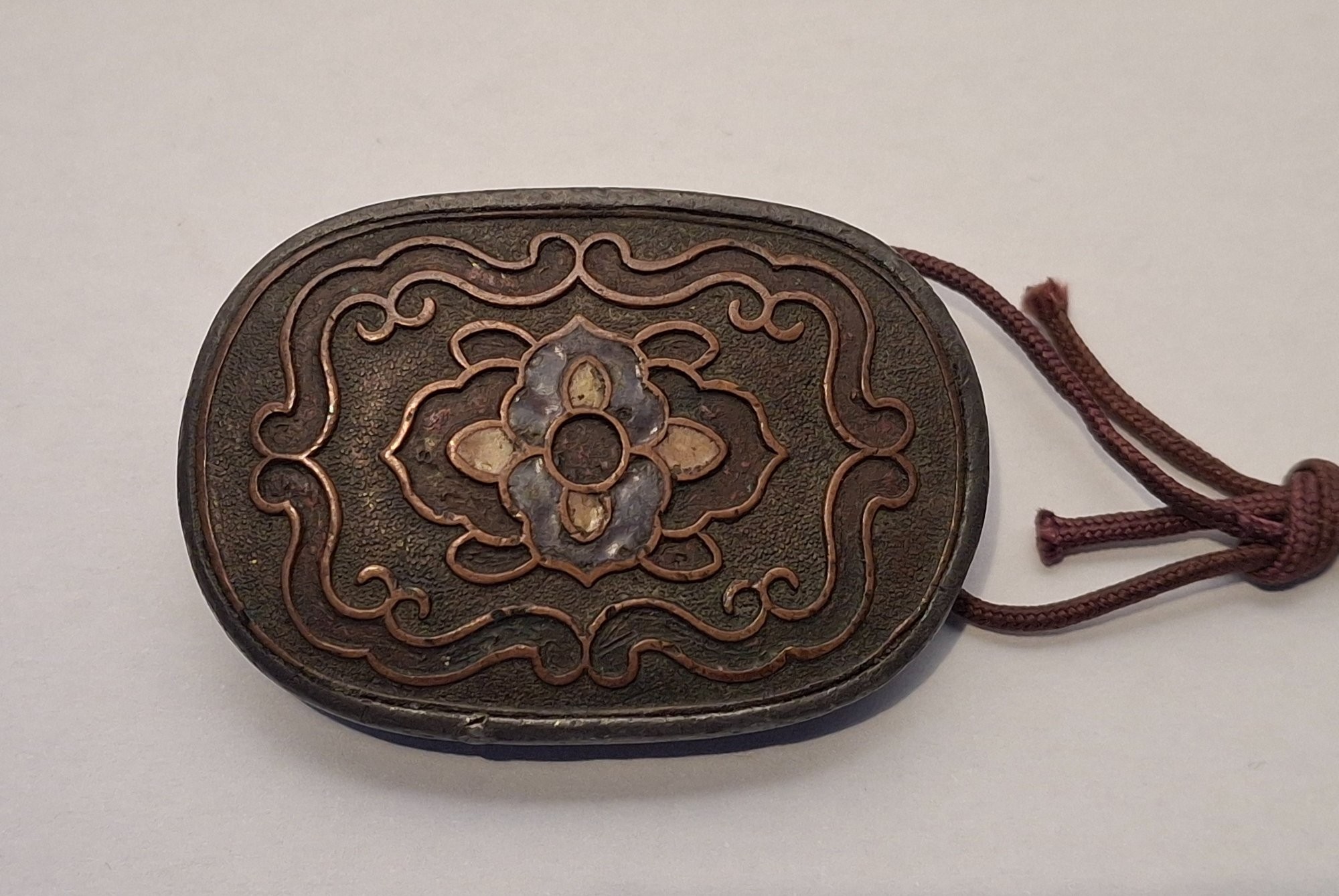
Rare Japanese Champleve Enamel Netsuke / Manju in Pewter. Signed. Circa 1850.