
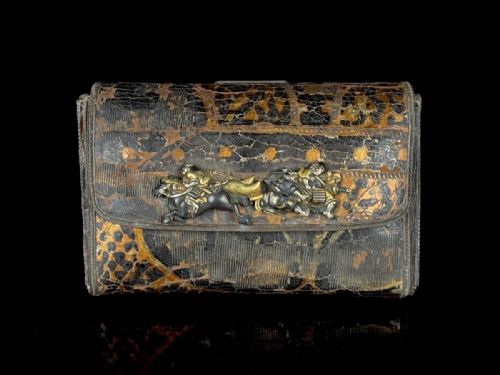


Antique Japanese Sagemono
Antique japanese sagemono are historical hanging containers and accessories worn from the traditional obi sash, offering miniature feats of craftsmanship.
Antique Japanese Sagemono
Antique japanese sagemono comprise a distinct group of personal effects historically suspended from traditional kimono sashes, combining practical storage with miniature art. These portable items encompass several distinct forms including multi-compartmented medicine cases, tobacco pouches, decorative boxes, spectacle cases, and the toggles used to secure them.
The pieces appearing here span from the Edo period through the Meiji and Taisho periods, reflecting shifts in Japanese craftsmanship across the nineteenth and early twentieth centuries. Surviving examples demonstrate how daily accessories transformed into canvases for detailed carving and metalwork.
Materials and construction
Maker construction relies heavily on native and imported woods such as boxwood, carved meticulously to form tactile toggles and containers. Lacquer techniques, including carved black lacquer known as tsuikoku, provide durable and decorative surfaces across multi-layered panels.
Metalworking techniques appear frequently in clasps and related cases, utilising gold, silver, and mixed-metal inlays alongside champleve cloisonne enamel. Leather and silk add textile flexibility to tobacco pouches and associated carrying gear, shaped through specialised tooling.
Materials represented include wood, lacquer, silk, leather, gold, silver, and mixed metal.
Factors of quality
Quality rests in the precision of the carving and the fidelity of the naturalistic detail found on wood and lacquer surfaces. Superior examples display crisp definition in figures within landscapes or animal subjects without loss of tactile appeal.
The integration of metal inlay work, such as gold and silver on clasps, distinguishes finer pieces by the security of the fit and the subtlety of the contrast. Preservation of the original lacquer finish or the integrity of the textile tooling dictates the enduring visual strength of the object.
The Antique Japanese Sagemono Glossary
- Inro
- A traditional multi-tiered case used for carrying small items, traditionally suspended from an obi. These containers fit together closely section by section.
- Netsuke
- A small carved toggle secured to the end of a cord, preventing suspended containers from slipping through the sash. They are typically sculpted from wood or ivory.
- Tsuikoku
- A technique of carved black lacquer built up in multiple layers before being deeply incised with designs. This method creates strong textural contrast.
- Manju kagamibuta
- A circular toggle shaped like a bun or mirror cover, often combining a dense body with a metal disk insert. They frequently feature intricate metalwork.
- Obi
- The traditional sash worn around a kimono, which serves as the anchor point for suspending various hanging sagemono accessories.
Antique Japanese Sagemono: Frequently Asked Questions
What is an antique japanese sagemono?
Antique japanese sagemono refer to hanging personal accessories traditionally worn suspended from a kimono sash. They include multi-tiered cases, tobacco pouches, and protective containers for spectacles.
These items were designed for daily utility while functioning as displays of miniature craftsmanship. The category encompasses both the containers themselves and the toggles used to secure them.
How were sagemono worn?
Sagemono were suspended from the traditional obi sash using a cord attached to a toggle known as a netsuke. The cord passed under the sash, and the toggle rested on top to anchor the weight.
This system allowed the wearer to carry small personal items safely without pockets in traditional garments. The design ensured the containers remained accessible during movement.
What materials are used in sagemono?
Materials vary widely depending on the specific object type and its period of origin. Wood, boxwood, and carved lacquer are common for rigid containers and toggles.
Textiles such as leather and silk appear in tobacco pouches, while gold, silver, and mixed metals provide decorative clasps and inlays. Each material requires distinct conservation approaches.
How do I date a sagemono?
Dating relies on stylistic markers, material choices, and the specific signatures or manufacturing techniques associated with the Edo, Meiji, and Taisho periods. Nineteenth-century pieces often display particular naturalistic carving styles.
Examining the wear patterns on organic materials and the composition of metal alloys helps establish a chronological context. Changes in production methods across the Meiji restoration provide further chronological clues.