




Antique Wooden Netsuke
These antique wooden netsuke are tactile Japanese toggle carvings shaped from boxwood and other timbers during the Edo and Meiji periods.
Antique Wooden Netsuke
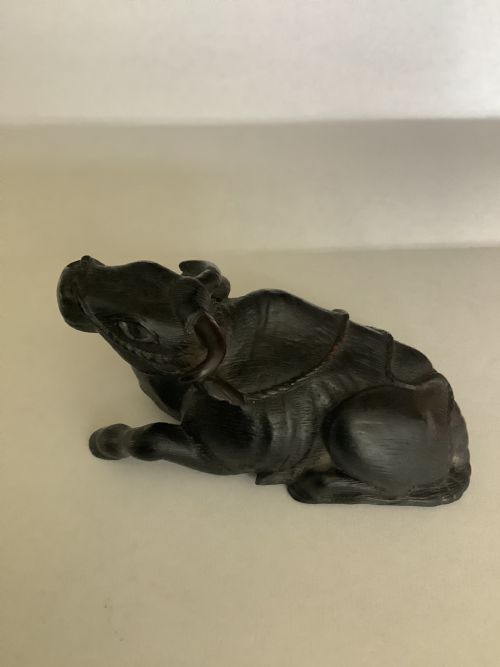
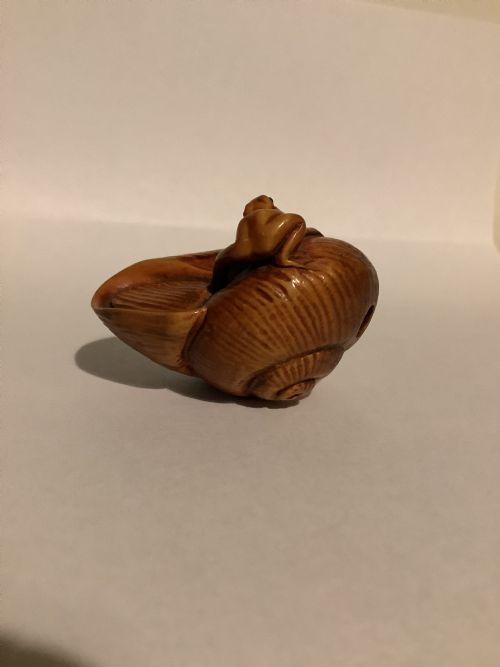
Antique wooden netsuke are small, intricately carved toggles designed to secure suspended pouches and containers to the traditional kimono sash. These charming pieces take the form of animals, figures, and natural motifs such as frogs, toads, rodents, and clusters of nuts. Most examples originate from the nineteenth century, spanning the Edo and Meiji periods, alongside related tobacco boxes and okimono figures.
The objects on this page reflect traditional Japanese subjects, including figures like Daruma and Ebisu, carved with a high degree of naturalism. Alongside standard netsuke, buyers will encounter manju kagamibuta forms incorporating champleve cloisonne enamel, boxwood figural pieces, and horn or mother-of-pearl accents.
What varies in quality
Quality rests in the precision of the carving and the dexterity shown in rendering fine details on subjects like robes, hair, and animal fur. Signatures from recognised carvers elevate certain pieces, distinguishing standard workshop output from masterworks.
The choice of timber and the preservation of the natural surface patina significantly influence the overall character of each toggle. Pieces that retain crisp definition without heavy wear demonstrate superior original craftsmanship.
Several small animals and figures populate these carvings, including a toad, a rodent, two rabbits, and a young boy sitting on a ram.
Tomochika·Masayuki
The Antique Wooden Netsuke Glossary
- Netsuke
- A small carved toggle used in traditional Japanese dress to suspend a container from a sash. These functional items evolved into miniature sculptures of great artistic merit.
- Boxwood
- A dense, pale hardwood favoured by carvers for its fine grain and ability to hold intricate detail without splintering. It develops a rich patina with handling.
- Edo Period
- A historical epoch in Japan spanning from sixteen-thiry-three to eighteen-sixty-eight, characterised by peace and the flourishing of urban arts. Many traditional netsuke originate from this era.
- Meiji Period
- The era of Japanese history following the Edo period, running from eighteen-sixty-eight to nineteen-twelve, known for increased opening to Western trade and technical mastery. Carvings from this time often display heightened naturalism.
- Okimono
- A Japanese decorative figurine intended for display rather than fastening to a kimono sash. These stand-alone sculptures share themes and materials with netsuke.
- Kagamibuta
- A flat, bowl-shaped netsuke featuring a metal disc fitted into the top like a mirror lid. They frequently incorporate cloisonne enamel and other decorative metals.
Antique Wooden Netsuke: Frequently Asked Questions
What is an antique wooden netsuke?
An antique wooden netsuke is a small, hand-carved toggle historically used in Japan to secure pouches and small containers to a kimono sash.
These pieces doubled as functional fasteners and miniature works of art, depicting animals, mythical figures, and daily scenes.
How were netsuke used?
Owners threaded a cord through the toggle and attached it to a small container such as a medicine box or tobacco pouch.
The item was then tucked behind the fabric sash, allowing the hanging container to remain securely suspended from the belt.
How do I care for boxwood netsuke?
Keep wooden netsuke away from direct sunlight and extreme humidity fluctuations to prevent the timber from splitting.
Gentle handling allows the natural oils from the skin to maintain the historic patina without requiring polishing agents.
How can I tell the Edo period from the Meiji period?
Edo period carvings typically display traditional stylisation and robust forms associated with earlier Japanese craftsmanship.
Meiji period pieces often exhibit a shift toward heightened naturalism and anatomical precision following the opening of international trade.