




Edo Period Netsuke
These edo period netsuke are traditional Japanese toggles carved from wood, antler, and bone, designed to secure pouches and boxes to kimono sashes.
Edo Period Netsuke
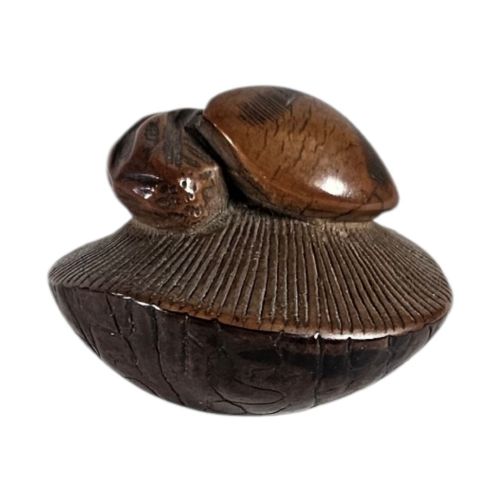
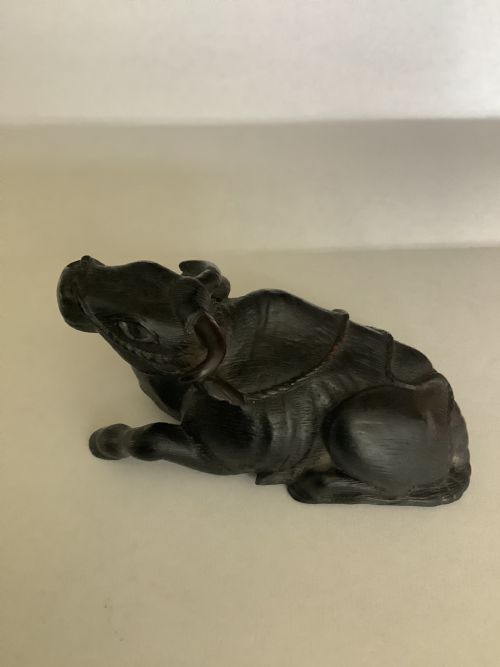
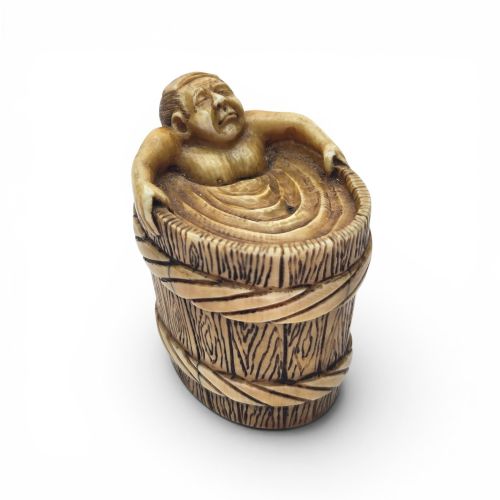
Edo period netsuke are miniature sculptures functioning as practical toggles in traditional Japanese dress, securing suspended items like inro boxes and tobacco pouches from the sash. The pieces on this page span the nineteenth century and encompass traditional motifs such as figures, animals, masks, and natural forms.
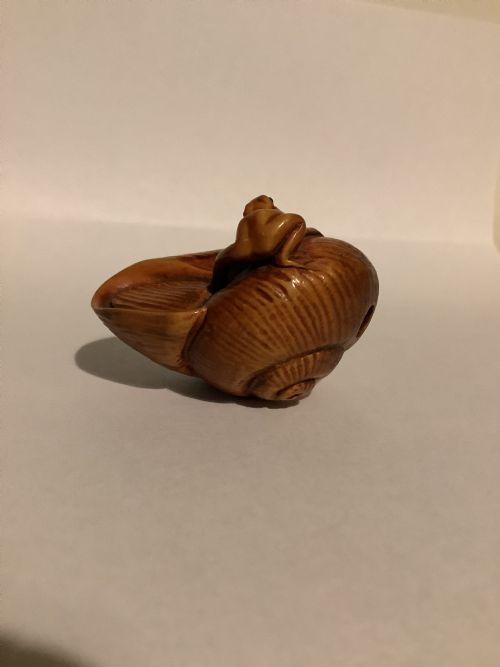
Wooden examples, particularly boxwood, dominate the current selection alongside stag antler, cherry amber, and bone variants. Carved depictions range from frogs and cats to mythical figures, wise men, and theatrical Noh masks.
Most entries originate from the nineteenth century, reflecting both the later Edo era and the transition into the Meiji period. Forms include standard figural carvings, manju kagamibuta styles set with champleve cloisonne enamel, and longer sashi netsuke designed for pipe cases.
How they were made
Carvers utilised dense organic materials, primarily boxwood and stag antler, which accepted fine detail without splintering during intricate shaping. Artisans also employed cherry amber, bone, mother-of-pearl, and metal accents such as champleve cloisonne enamel.
Techniques relied on hand-chiselling, piercing, and polishing to create tactile surfaces that fit comfortably in the hand. Many items incorporate natural cord attachment channels, known as himotoshi, integrated directly into the sculptural design.
Several pieces depict legendary figures and animals, including a frog resting on a mushroom and a toad supervising bamboo shoots.
What varies in quality
Quality rests in the precision of the carving and the vitality of the subject, distinguishing master carvers from routine workshops. The depth of undercutting, the naturalism of anatomical details, and the preservation of the material surface define the upper tier.
Signed pieces and works attributed to recognised schools demonstrate superior artistry through balanced composition and expressive characterisation. Wear patterns and the smoothness acquired through handling also influence the tactile appeal of surviving examples.
Masayuki·Masatomo·Masatada·Kusai
The Edo Period Netsuke Glossary
- Netsuke
- A miniature carved toggle used in traditional Japanese dress to suspend containers from a kimono sash. These objects secured items such as medicine boxes and tobacco pouches.
- Inro
- A traditional Japanese portable tiered case for carrying small valuables or medicines, suspended from the sash by a cord and secured with a netsuke. These containers often featured lacquer and metalwork decoration.
- Manju
- A flat, circular style of netsuke shaped like a traditional Japanese confection, frequently decorated with carved reliefs or inlaid metalwork. They provide a smooth surface well suited for intricate detailing.
- Sashi
- A long, slender variety of netsuke designed to be thrust directly behind the kimono sash rather than suspended on a cord. This form often served to secure pipe cases and tobacco sets.
- Himotoshi
- The passage or channels carved into a netsuke for the suspension cord to thread through. These holes are integrated into the sculptural form to maintain visual harmony.
Edo Period Netsuke: Frequently Asked Questions
What were edo period netsuke used for?
These carvings served as practical toggles in traditional Japanese dress, preventing hanging pouches and medicine cases from slipping down the sash.
Wearers threaded cords through the integrated channels to secure everyday personal items safely to their clothing.
How do you date an edo period netsuke?
Dating relies on material characteristics, carving style, subject matter, and recorded signatures spanning the nineteenth century.
Examinations often compare the piece against known school attributes and archival examples from the same era.
What materials are netsuke carved from?
Carvers utilised dense organic materials including boxwood, other woods, stag antler, bone, and ivory.
Selected examples also incorporate cherry amber, mother-of-pearl, lacquer, and champleve cloisonne enamel details.
Are signed netsuke more valuable?
Signatures attributed to recognised carvers or historical workshops indicate higher artisan status and sculptural ambition.
Master carvers produced works with superior anatomical precision and expressive detail compared to unsigned workshop pieces.