




Carved Boxwood Netsuke
These carved boxwood netsuke are tactile Japanese miniatures carved from dense boxwood, prized by collectors for their intricate figurative detail.
Carved Boxwood Netsuke
When you search for carved boxwood netsuke, you are looking at miniature Japanese toggles designed to secure small pouches or containers to a traditional kimono sash. These pieces emerge primarily from the nineteenth century, spanning both the Edo and Meiji periods.
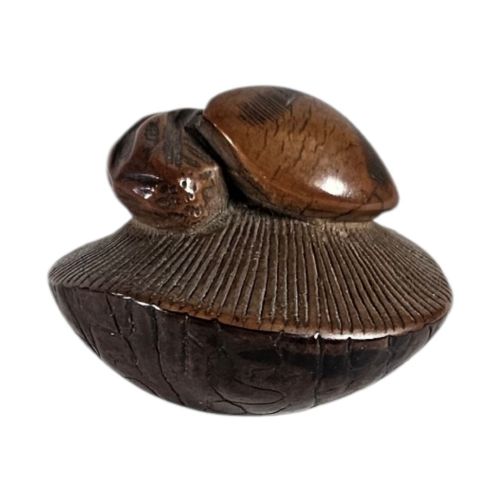
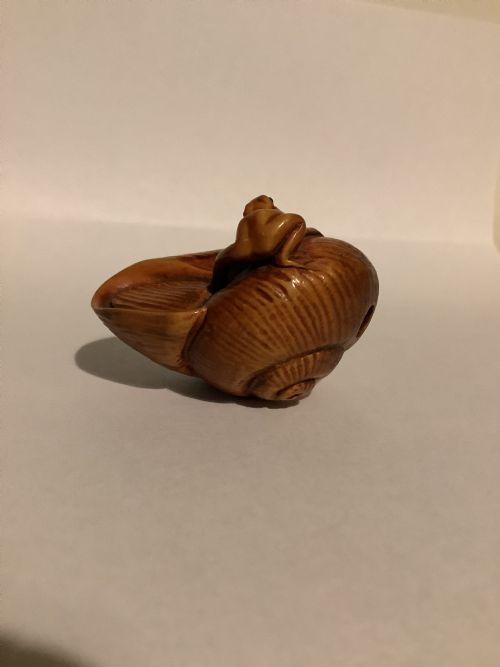
The subjects on this page range widely across traditional motifs, including animals such as toads, rats, and snails, alongside human figures like wise men and young girls. Most examples take the form of traditional netsuke, though closely related figurative carvings and okimono also appear in the selection.
How they were made
Carvers shaped these miniature sculptures predominantly from boxwood, a dense and fine-grained timber well suited to crisp, minute detailing. Some variations incorporate stained finishes or inlaid horn details to add tonal contrast and texture.
Artisans employed careful hand-carving techniques to render naturalistic forms, ranging from the bumpy skin of a toad to the complex folds of a priest's robes. Many pieces bear signature stamps or incisions denoting the hand of the maker.
Several boxwood toads on this page come complete with warted skin textures.
What varies in quality
The distinction between average and exceptional work lies in the depth and liveliness of the carving. Superior examples demonstrate a keen eye for naturalism, where the posture and anatomical details of an animal or human figure feel dynamic and convincing.
Another measure of quality is the subtlety of the finish and the preservation of the crisp wood grain over time. Signed pieces by recognised carvers typically command greater attention from collectors due to the documented skill of the execution.
Tomochika·Masayuki·Masanao
The Carved Boxwood Netsuke Glossary
- Netsuke
- A small Japanese toggle used to anchor a cord attached to a suspended pouch on a kimono. These objects served a practical daily function while doubling as miniature works of art.
- Okimono
- A Japanese decorative figurine intended for display rather than utility. They share the same materials and sculptural techniques as netsuke.
- Edo Period
- A historical epoch in Japan lasting from 1603 to 1868, characterised by economic growth and the flourishing of arts and crafts. Pieces from this time often reflect traditional iconography.
Carved Boxwood Netsuke: Frequently Asked Questions
What is a netsuke?
A netsuke is a small carved toggle traditionally used in Japan to secure personal containers hung from a kimono sash. They were essential accessories in daily attire.
Over time, these functional toggles evolved into highly collectible miniature sculptures showcasing exceptional craftsmanship and naturalistic subjects.
How do I care for boxwood?
Boxwood benefits from stable environmental conditions away from direct sunlight and extreme humidity changes. This helps prevent the dense timber from drying out or splitting.
Handle the pieces with clean hands to preserve the natural patina that develops on the wood over decades of touch.
Are these pieces signed?
Many boxwood netsuke feature signature carvings left by the artist or workshop. These signatures typically appear on the underside or base of the object.
Signatures add historical interest, though unsigned pieces can display an equivalent level of sculptural finesse.
What subjects are common?
Carvers drew inspiration from nature and folklore, frequently depicting animals such as toads, rats, monkeys, and snails. Human figures and mythological characters also feature prominently.
These subjects often carried symbolic meanings of good fortune, resilience, or cleverness in Japanese culture.