




Brown Wood Netsuke
These brown wood netsuke pieces are finely carved Japanese miniature sculptures offering tactile appeal and traditional form.
Understanding brown wood netsuke
When you search for brown wood netsuke, you are looking at small Japanese carvings shaped from boxwood, horn, and other woods. These items function as traditional toggle fasteners for garments.
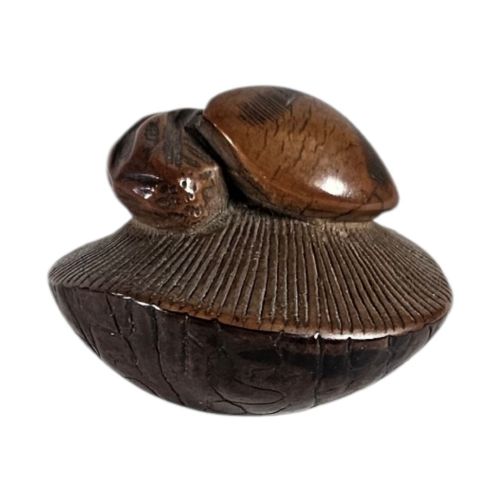
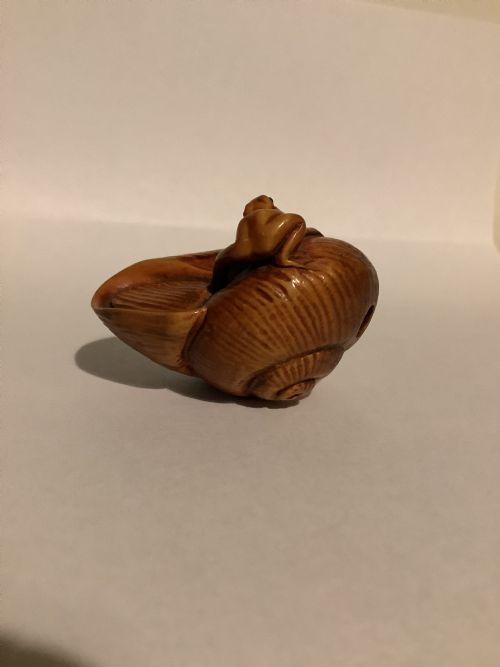
You are most likely to meet nineteenth-century examples on this page, spanning the Edo and Meiji periods. The forms include a snail on a mushroom, a wise man on a horse, a rodent, a frog, and a cluster of nuts.
Materials and construction
The carvers utilise boxwood and general wood, sometimes applying stain to alter the surface tone and accentuate the details of the miniature sculpture. Horn also appears as a primary material in the selection.
Each piece is carved with fine detail to render subjects such as animals, insects, and botanical clusters. Signatures occasionally appear on the surface alongside the carved imagery.
Carvers rendered a humble snail creeping across a mushroom with the same seriousness as a wise man on a stately horse.
Judging the quality
The degree of finesse in the carving separates simpler items from superior examples. Naturalism in animal forms and botanical subjects indicates greater skill.
Signed pieces by named carvers command attention through distinct artistry. The handling of the wood and the precision of the staining further distinguish the work.
Masayuki
The Brown Wood Netsuke Glossary
- Boxwood
- A dense, pale hardwood favoured for intricate miniature carving due to its fine grain. It accepts sharp detail without splintering.
- Okimono
- A Japanese decorative sculpture designed for display on a shelf or in a tokonoma alcove rather than for fastening clothing. These figures share subject matter with netsuke.
- Edo Period
- A historical epoch in Japan associated with traditional arts and crafts. Pieces from this era often display specific stylistic conventions.
Frequently Asked Questions
What is a brown wood netsuke?
A brown wood netsuke is a small Japanese toggle carved from boxwood or general wood. They were traditionally used to anchor small hanging containers to a kimono sash.
Today, collectors appreciate them as miniature sculptures displaying traditional craftsmanship and subjects like animals and botanical clusters.
How do I date these carvings?
Dating relies on stylistic conventions and period attribution, primarily spanning the nineteenth century. Edo and Meiji period markers help place the items chronologically.
Examining the wear, material choice, and carving technique provides additional clues regarding the age of the piece.
What subjects appear on these netsuke?
Common subjects include animals such as frogs, rodents, and horses, alongside botanical themes like nuts and mushrooms. Human figures, including wise men, also appear.
Each subject is rendered through detailed carving in wood or boxwood, sometimes featuring a stain.
Are these items signed?
Some pieces feature signatures inscribed by the carver into the wood surface. Signed examples attribute the work to specific traditional artists.
Unsigned pieces remain common and display similar dedication to fine carving techniques and naturalistic detail.