
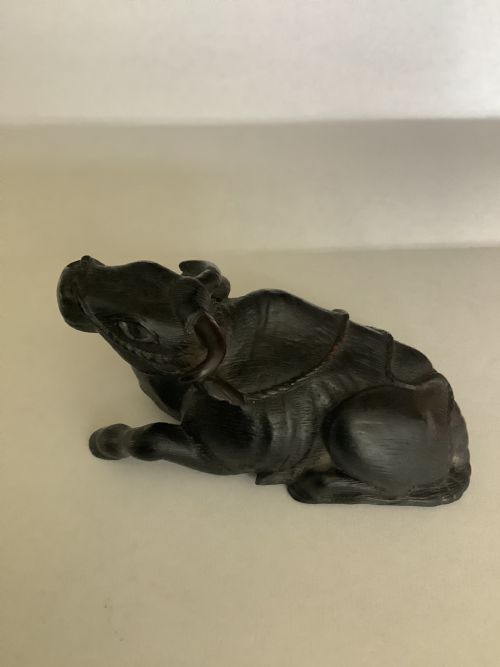


Dark Wood Netsuke
Dark wood netsuke are tactile Japanese toggles carved from rich timbers, offering intimate miniature sculptures that collectors prize for their intricate detail and hand-carved character.
What dark wood netsuke are
Dark wood netsuke comprise small, functional toggles alongside figurine forms that span the Edo and Meiji periods. These pieces include standard figural carvings and flat manju kagamibuta variations inset with contrasting metals or enamel.
The selections encountered here represent nineteenth-century Japanese craftsmanship, showcasing subjects from traditional mythology such as Ebisu with a tai fish to figures of young boys with animals. Makers utilise dense boxwood and general carved wood to shape these miniature decorative objects.
Forms extend from traditional netsuke and sculptures to specialised kagamibuta structures, combining organic timber bodies with copper alloy and vitreous enamel elements.
How they were made
Certain examples incorporate champleve cloisonne enamel and copper alloy plates into wood bodies, requiring precision metalwork alongside woodworking. Finished carvings frequently bear signature marks carved directly into the timber surface by the maker.
Retail Price Guide 2026
Typical UK retail prices for dark wood netsuke, calculated from the Sellingantiques database of over a million retail prices indexed since 2003. This retail price guide relies exclusively on Sellingantiques data; no external sources or auction records are used, so the figures do not describe the wider market.
Listings feature boxwood and carved wood materials across the nineteenth century, including specific dates from eighteen fifty and eighteen seventy.
What varies in quality
The sophistication of the hand-carving defines the upper tier of these objects, separating fluid, deeply undercut forms from simpler, stiffer execution. Signed pieces by recognised carvers demonstrate a higher degree of sculptural ambition.
Integration of secondary materials like enamel and copper alloy alters the complexity of a piece, particularly in kagamibuta where metalwork meets wood. The preservation of the original timber patina and crispness of detail dictate the overall stature of the carving.
The Dark Wood Netsuke Glossary
- Netsuke
- A small carved toggle fastened to the end of a cord on a traditional Japanese container or pouch. These items secured personal belongings to the sash of a kimono.
- Manju
- A round, flat style of netsuke shaped like a traditional Japanese sweet. They often feature carved wooden bodies or metal faceplates.
- Kagamibuta
- A specific form of netsuke featuring a bowl-shaped wooden base fitted with a metal lid. The metal disc often displays intricate cloisonne enamel work.
- Meiji Period
- A Japanese historical era spanning from eighteen sixty-eight to nineteen twelve. Carvings from this time display refined decorative techniques.
Frequently Asked Questions
What is a dark wood netsuke used for?
These pieces served as practical toggles in historical Japanese dress, anchoring pouches and small containers to garments.
Today, collectors appreciate them as standalone miniature sculptures that display detailed nineteenth-century carving techniques.
How do I date a wooden netsuke?
Dating relies on stylistic markers from the Edo and Meiji periods alongside material characteristics like boxwood grain and wear.
Signatures from period carvers also help historians place the object within the nineteenth century.
What is a kagamibuta netsuke?
A kagamibuta is a round toggle combining a carved wooden bowl with a decorated metal disc lid.
These pieces frequently integrate copper alloy and enamel elements into the wooden body.
Are these netsuke signed?
Certain examples feature carved signatures from period makers on the reverse or base of the wood.
Signed pieces reflect individual workshop output from nineteenth-century Japanese carvers.