


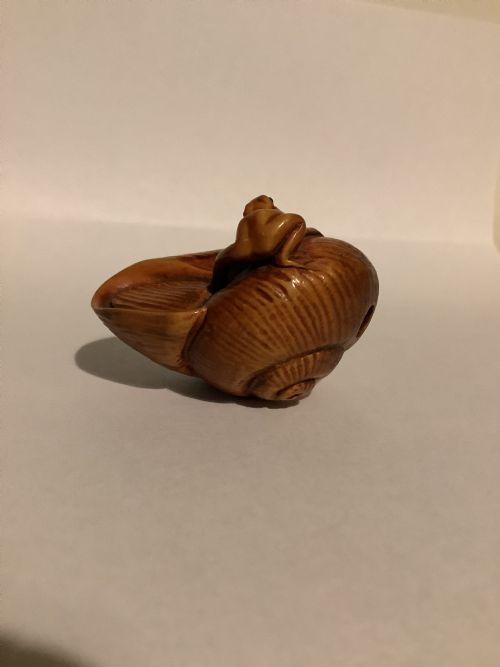


Antique Wooden Toggle
These antique wooden toggle items span fine nineteenth-century Japanese carvings and Victorian domestic fittings.
Antique Wooden Toggle
When you search for an antique wooden toggle, you encounter small traditional Japanese fastenings alongside nineteenth-century domestic hardware. The Japanese examples take the form of netsuke, carved to secure small pouches or boxes worn against the kimono.
The selection here includes carved boxwood and exotic wood pieces depicting wise men, toads, frogs, rams, and clusters of nuts. Alongside these traditional Japanese works, the listings also feature Victorian porcelain and wooden lever light switches acting as architectural toggles.
Materials and construction
Makers utilised dense boxwood and various carved timbers to achieve intricate naturalistic detail and tactile surfaces. Boxwood provides the fine grain necessary for crisp execution of small figures and animal subjects.
Certain pieces incorporate champleve cloisonne enamel, copper alloy, and inlaid horn to add contrasting colour and texture to the timber body.
Listings span nineteenth-century boxwood netsuke, champleve enamel pieces, and Victorian wooden light switches.
Judging quality
Quality rests upon the depth and precision of the carving, distinguishing fluid, lifelike representations of animals and figures from simpler work. The handling of the wood grain and the smoothness achieved through handling affect the tactile appeal of each piece.
In composite examples featuring enamel or metal elements, the integration of these materials alongside the primary wood determines the refinement of the object.
The Antique Wooden Toggle Glossary
- Netsuke
- A small carved toggle worn in traditional Japanese dress to suspend pouches or containers from the sash. These objects frequently depict animals, mythical figures, or natural forms.
- Kagamibuta
- A specific style of netsuke featuring a shallow wooden bowl fitted with a decorated metal disc. The metal component often displays enamel work.
- Boxwood
- A dense, pale timber favoured by carvers for its fine, even grain and resistance to splitting. It allows for microscopic detail in miniature sculptures.
- Champleve
- An enamelling technique where metal cells are gouged out of the surface and filled with enamel paste before firing. This method creates bold coloured patterns on decorative mounts.
Antique Wooden Toggle: Frequently Asked Questions
What is a netsuke toggle?
A netsuke is a small carved toggle historically used in Japan to secure hanging containers to a kimono sash. They combine practical fastening with miniature sculpture.
Carvers shaped these items from boxwood and other timbers, depicting subjects ranging from animals to human figures.
How do I date these items?
Dating relies on stylistic markers associated with the Edo and Meiji periods, alongside Victorian domestic hardware conventions. Nineteenth-century examples often display traditional Japanese motifs or nineteenth-century British architectural fittings.
Examining the wear patterns and materials helps place the object within its production era.
What woods were used?
Boxwood is the predominant timber found in these carvings due to its fine grain and suitability for intricate detail. Other pieces utilise unidentified exotic woods chosen for their natural grain and tactile qualities.
Enamel, copper alloy, and horn occasionally supplement the wooden construction.
How were they used?
Japanese toggles functioned as counterweights on cords attached to personal items tucked into kimono sashes. Victorian examples served as mechanical light switches in domestic interiors.
Both applications rely on the toggle mechanism to secure or operate a connected item.