28,164  PAGES BROWSED TODAY PAGES TODAY • 105 ANTIQUES UPLOADED TODAYNEW ARRIVALS
GIFTS
105 ITEMS ADDED TODAY
Sort Order
Items Per Page
Browse Categories
Sort order
Relevant Links
Items per page
ID #SA1220256
SOLD
Email Phone
Save
Chinese Imari Porcelain Dish, C. 1740, Qing Dynasty.
Sold by Philip Carrol Antiques
sold SA1220256
Sorry, but this item has been sold.
Philip Carrol Antiques

Philip Carrol Antiques

Sellingantiques Verified Since Dec 2017
Browse dealers 94 items
  • About Us
    Philip carrol antiques was established in 1983
  • Trade Associations
    Philip Carrol Antiques is a registered member of BADA 
Id #SA1220256
PDF SHARE
SAVE

Chinese Imari Porcelain Dish, C. 1740, Qing Dynasty.

18th century
Sold 1 January 1900 · Philip Carrol Antiques
This “Chinese Imari Porcelain Dish, C. 1740, Qing Dynasty” found a buyer.

It was listed by Philip Carrol Antiques. Sold pieces stay on Sellingantiques as a record of what has passed through, and the next one is rarely far away.

Description

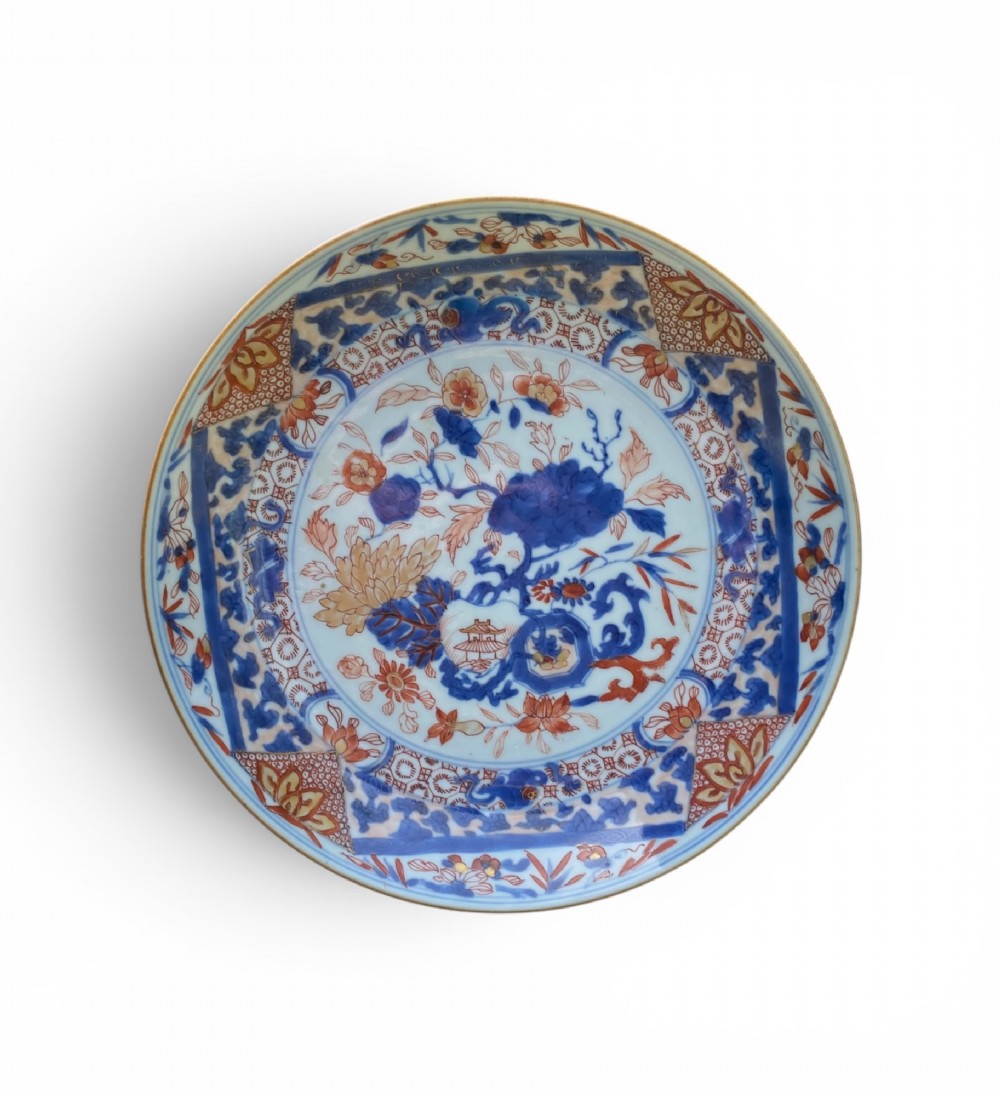
Chinese Imari porcelain dish, c. 1740, Qing Dynasty. The centre hand painted in the Imari style, with flowering plants, and a panel containing a view of a pavilion.

The cavetto with floral scroll, and a band of cell diaper motif, within a brown glazed rim.

Having two stylised branches to the reverse.

Diameter – 24 cm, 9 3/8”.

Condition – Excellent. No damage. No restoration.

Date of Manufacture

Philip Carrol Antiques has dated this Chinese Imari Porcelain Dish to the 18th Century.

Reference Numbers
Sellingantiques Reference
SA1220256
Description
Chinese Imari porcelain dish, c. 1740, Qing Dynasty.
“
The centre hand painted in the Imari style, with flowering plants, and a panel containing a view of a pavilion.
Philip Carrol Antiques

The cavetto with floral scroll, and a band of cell diaper motif, within a brown glazed rim.

Having two stylised branches to the reverse.

Diameter – 24 cm, 9 3/8”.

Condition – Excellent. No damage. No restoration.

Date of Manufacture

Philip Carrol Antiques has dated this Chinese Imari Porcelain Dish to the 18th Century.

Reference Numbers
Sellingantiques Ref
SA1220256
Philip Carrol Antiques
Sellingantiques verified Since Dec 2017

Philip carrol antiques was established in 1983

Dealer Profile

You can view the stock and full dealer information on the Philip Carrol Antiques Profile Page

Trade Associations

Philip Carrol Antiques is a registered member of BADA 

PDF SHARE
SAVE
An 18th-century Chinese Imari porcelain dish decorated with underglaze cobalt blue foliage, iron-red enamel florals, and geometric diaper border patterns. SOLD6+ MONTHS AGO
1 / 6
Archive I An 18th-century Chinese Imari porcelain dish decorated with underglaze cobalt blue foliage, iron-red enamel florals, and geometric diaper border patterns. SOLD6+ MONTHS AGO

Chinese Imari Porcelain Dish, C. 1740, Qing Dynasty.

Archive II An 18th-century Chinese Imari porcelain dish decorated with underglaze cobalt blue foliage, iron-red enamel florals, and geometric diaper border patterns. View II
Archive III An 18th-century Chinese Imari porcelain dish decorated with underglaze cobalt blue foliage, iron-red enamel florals, and geometric diaper border patterns. View III
Archive IV An 18th-century Chinese Imari porcelain dish decorated with underglaze cobalt blue foliage, iron-red enamel florals, and geometric diaper border patterns. View IV
Archive V An 18th-century Chinese Imari porcelain dish decorated with underglaze cobalt blue foliage, iron-red enamel florals, and geometric diaper border patterns. View V
Archive VI An 18th-century Chinese Imari porcelain dish decorated with underglaze cobalt blue foliage, iron-red enamel florals, and geometric diaper border patterns. View VI
Enlarged Archival View
Telephone 07860 525 579
Location
North Yorkshire
United Kingdom
Verified Since Dec 2017
Items For Sale 94
Items Sold 1,161
Philip Carrol Antiques
Verified Since Dec 2017
View Dealer Info
Location: North Yorkshire, United Kingdom
Verified
Dec 2017
For Sale
94
Sold
1,161
An 18th-century Chinese Imari porcelain dish decorated with underglaze cobalt blue foliage, iron-red enamel florals, and geometric diaper border patterns.
Chinese Imari porcelain dish, c. 1740, Qing Dynasty.
Ref: SA1220256
An 18th-century Chinese Imari porcelain dish decorated with underglaze cobalt blue foliage, iron-red enamel florals, and geometric diaper border patterns.
Detail View 1
Detail View 2
Detail View 3
Detail View 4
Detail View 5
Archival Detail
Every single antique dealer on our platform is individually approved by our internal team. We verify their professional trade history, ethical standards, and photographic quality to ensure a secure, high-standard buying environment. Upon joining, every dealer agrees to a strict 9-point code of conduct. While issues can occasionally arise, our dealers typically resolve them swiftly and directly with the buyer. In fact, since our founding in 2002, Sellingantiques has only had to step in to help resolve an issue on roughly five occasions—a true testament to the quality of our dealers and their dedication to your happiness.
Our dealers are highly experienced in packing and shipping fragile, high-value antiques. Because you are in direct contact with the dealer, you will be able to easily go through all available shipping and insurance options together to ensure your item arrives safely.
Antiques are the ultimate green purchase. By choosing historical pieces over newly manufactured goods, you completely eliminate the carbon footprint of modern mass production while preserving exceptional, timeless craftsmanship.
Written by Sellingantiques from the dealer’s photographs and listing
  • ObjectDecorative Dish
  • Period18th century
  • StyleChinese Export
  • MaterialPorcelain, Cobalt Blue, Iron Red Enamel
  • ColourBlue, Red, White
  • MotifsPeony florals, Diaper pattern border, Underglaze blue foliage, Geometric panelling

This Chinese Imari porcelain dish dates to circa 1740 during the Qing Dynasty in the eighteenth century. The circular decorative dish has a white ground finished with a brown glazed rim, hand-painted in the Imari style using cobalt blue and iron-red enamel. The centre displays flowering peony plants alongside a panel containing a view of a pavilion, surrounded by a cavetto with floral scrollwork and a cell diaper pattern band. Geometric panelling decorates the border, and two stylised branches appear on the reverse. The diameter measures 24 cm, 9 3/8 inches. Placed on top of a sideboard, this porcelain piece functions as a decorative display item in an English country house interior.

Chinese Imari porcelain describes ceramics manufactured in China, predominantly during the 18th-century Qing Dynasty, designed to compete with Japanese Imari export wares. It is characterised by a distinct colour palette combining underglaze cobalt blue with overglaze iron-red enamel and occasional gilded accents.

These ceramics were formed from refined kaolin clay and fired at high temperatures. The primary blue decoration was painted directly onto the unfired body in cobalt before glazing, followed by a second lower-temperature firing to fix overglaze iron-red enamels and gold leaf highlights.

Authentic 18th-century pieces typically display tiny iron spot impurities within the glaze, subtle pinholes, and a slightly blue or greenish tint to the white porcelain body. The iron-red enamel often shows gentle surface wear, while the base usually features an unglazed foot rim with natural orange-brown firing marks.

Plates and dishes can be mounted on brass display stands within open shelving, framed in acrylic boxes on gallery walls, or arranged on a sideboard top to provide rich colour contrast against neutral backdrops.

Dust surfaces gently with a soft microfibre cloth and avoid harsh chemical cleaners or abrasive scouring pads. If cleaning is required, use tepid water with mild liquid soap, avoiding prolonged immersion to protect vulnerable overglaze enamels.
items
Add keywords to the filter
Price
£100
£250000
Era
Period
Style
Material
Origin
Stock Location
Recently Added
Online Payments
Categories