




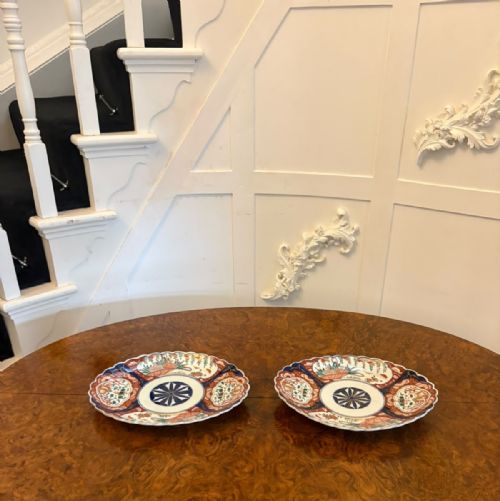


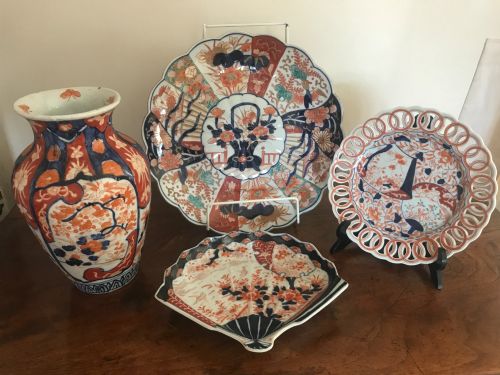
Blue and Red Porcelain Dish
These pieces known as a blue and red porcelain dish bring rich palettes and intricate floral or bird motifs into a room, offering historic character for daily display.
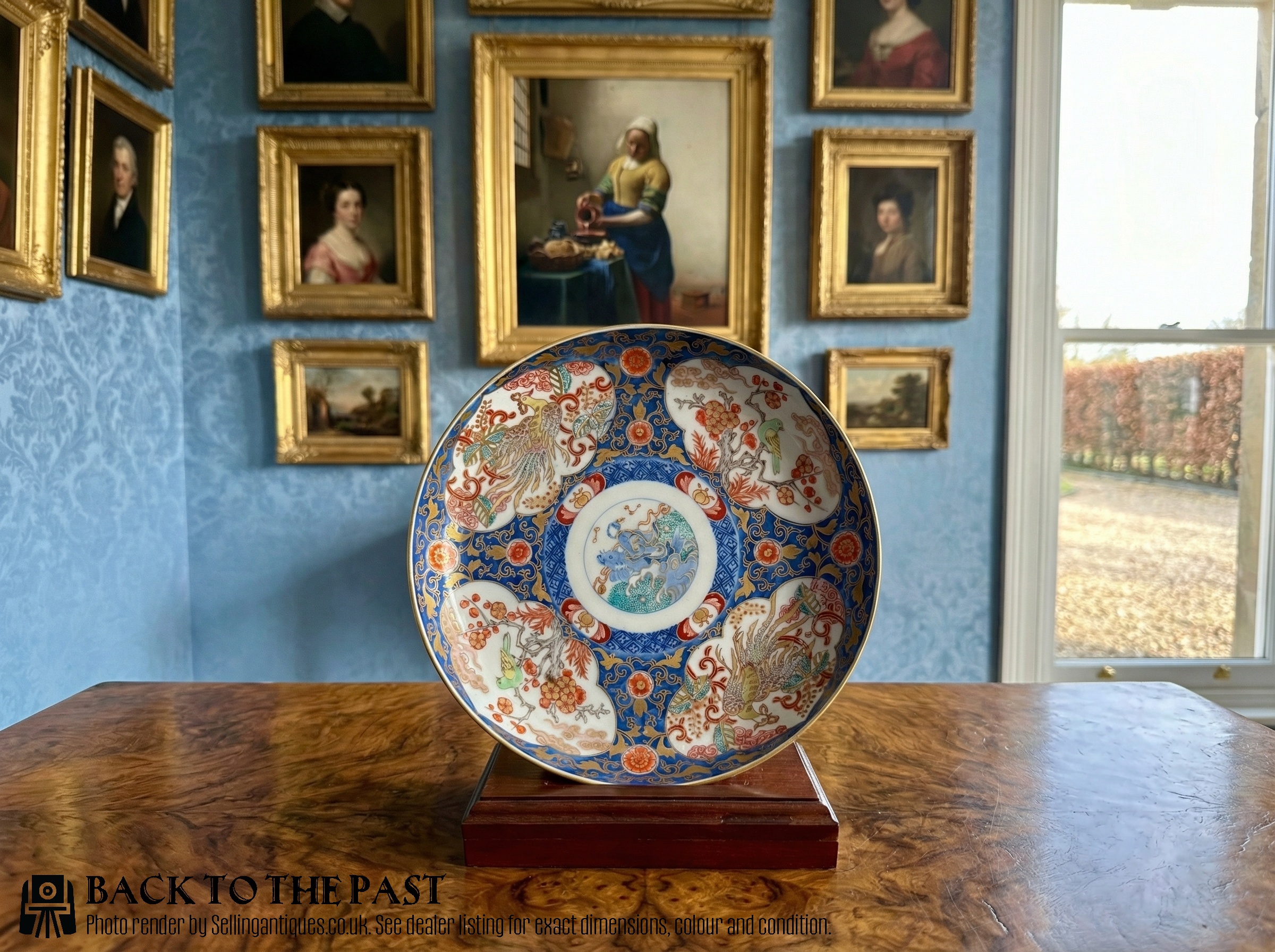
Blue and Red Porcelain Dish
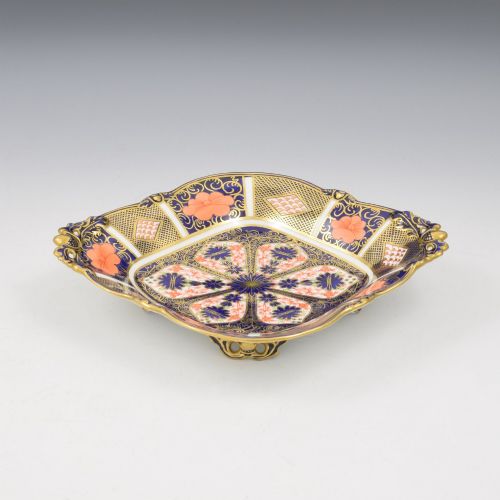
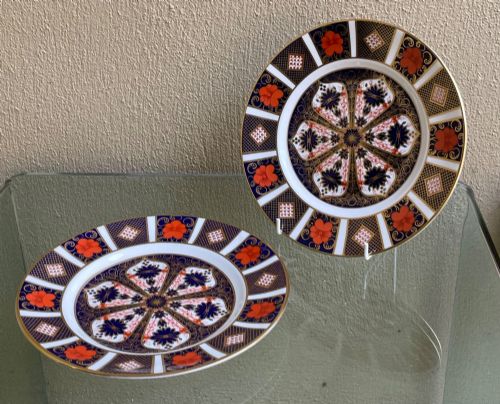
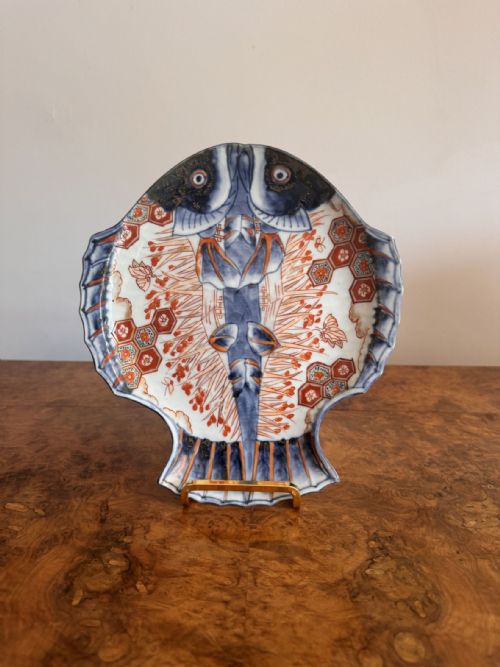
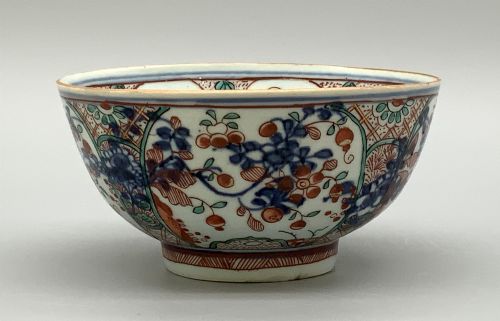
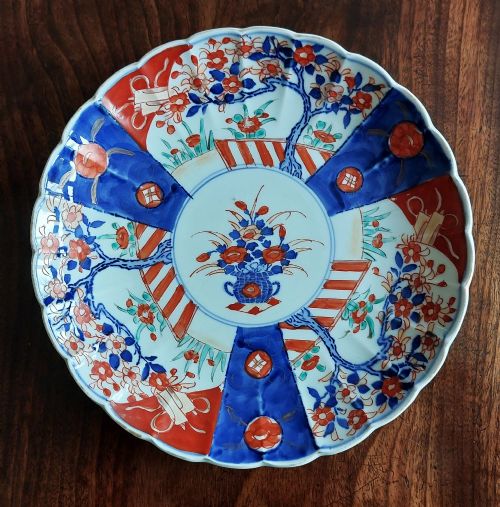
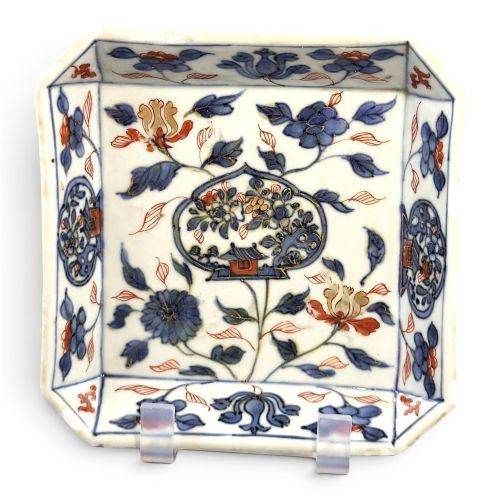
A blue and red porcelain dish encompasses items produced across several centuries, drawing heavily on Chinese export traditions and Japanese Imari aesthetics. Buyers searching for a blue and red porcelain dish frequently encounter Japanese Meiji period chargers, plates, and bowls featuring scalloped edges or unusual geometric forms like fish and squares.
The selections span from eighteenth-century pieces originating in China to nineteenth-century and early twentieth-century Japanese works, alongside English ironstone interpretations. Most items serve as decorative display plates, bowls, or chargers designed to catch the eye with distinct cobalt blue and iron red pigments.
Materials and construction
Makers utilised ceramic and porcelain bodies, applying underglaze blue and overglaze iron red enamel pigments to build complex pictorial surfaces. Many historical examples incorporate touches of gold leaf, gilt, or gilding to highlight floral patterns and bird motifs.
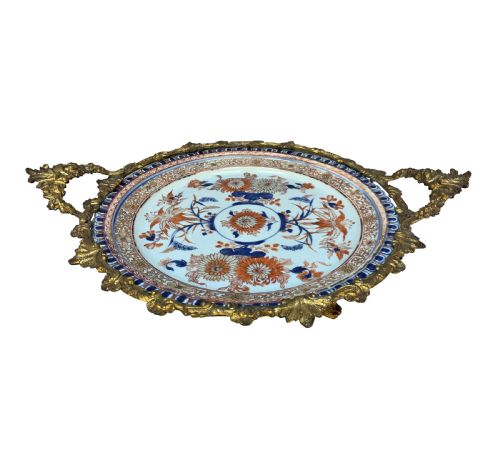
Certain pieces feature applied bronze or brass ormolu mounts, uniting Asian ceramic forms with European decorative frameworks. The firing and painting techniques demand precise kiln control to keep the distinct red and blue tones from bleeding into one another.
Listings span several eras, recording periods from the eighteenth century through the Georgian and Meiji eras up to the mid-twentieth century.
Factors separating ordinary examples from exceptional ones
Distinctions in quality often rest on the crispness of the hand-painted brushwork and the complexity of the design, such as exotic birds or intricate floral borders. Superior pieces display steady, confident lines in the red enamel and deep, luminous tones in the cobalt underglaze.
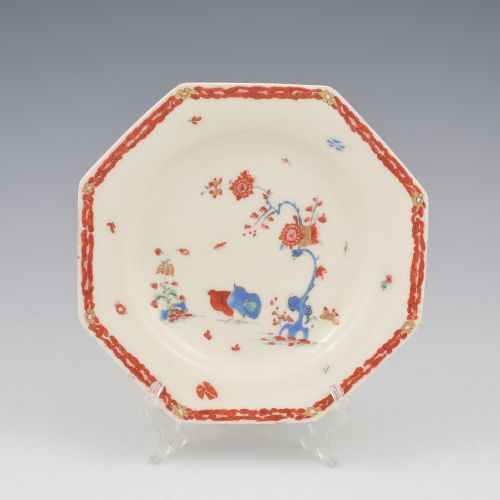
Form also dictates standing, with uncommon shapes like fish outlines, chamfered squares, or octagonal plates commanding greater attention than standard round dishes. The integration of extra elements like ormolu mounts or well-preserved gilding further elevates an item.
Royal Crown Derby·Bow
The Blue and Red Porcelain Dish Glossary
- Imari Style
- A decorative ceramic tradition featuring a palette primarily composed of cobalt blue, iron red, and gold, originating in Japan and later copied in Europe. This style creates a strong contrast between deep underglaze blue and bright overglaze red.
- Porcelain
- A hard, fine-grained ceramic material fired at high temperatures, known for its translucence and vitrified body. It forms the essential base for the dishes found in this category.
- Ormolu
- Cast and gilt bronze mounts applied to furniture, clocks, and porcelain vessels for decorative effect. These metal additions often frame eighteenth-century Chinese export pieces.
- Charger
- A large ornamental plate intended for display on a wall or sideboard rather than for serving food. These pieces typically measure significantly larger than standard dining plates.
Blue and Red Porcelain Dish: Frequently Asked Questions
How were these dishes used historically?
These pieces primarily served as decorative display items, placed on tables, mounted on walls, or showcased in cabinets. Their striking palettes made them centerpieces for formal rooms.
Export wares travelled across continents to adorn European households, reflecting global trade tastes of the eighteenth and nineteenth centuries.
What distinguishes Japanese Imari from Chinese export pieces?
Japanese Imari examples frequently display dense floral and bird patterns with heavy iron red and dark cobalt blue, often featuring moulded or scalloped edges. Pieces from China tend to show distinct paste qualities and specific period characteristics.
Both traditions influenced European factories, which subsequently produced their own versions of the ironstone and porcelain designs.
How do I care for antique porcelain dishes?
Gentle dusting with a soft, dry cloth keeps the surface clean without risking the overglaze enamel or gilding. Avoid using liquid cleaners or abrasive materials that might degrade the historic pigments.
Display plates securely on stable stands or wall hangers designed to bear the weight of heavy porcelain and chargers safely.
Can I use these dishes for serving food?
Antique porcelain and ironstone dishes are best reserved for display due to their age and the delicate nature of overglaze enamels and gilding. Modern detergents and cutlery can cause irreversible wear to the historic painted surfaces.
Enjoying them as visual objects preserves their condition and structural integrity for future years.