
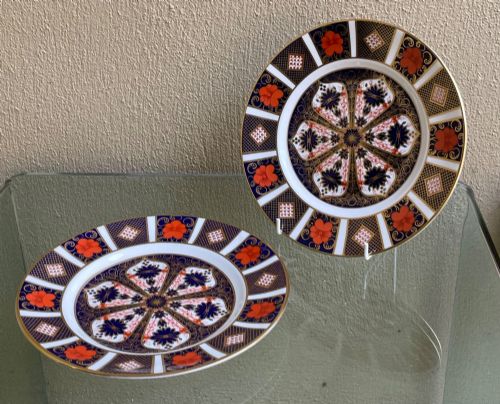






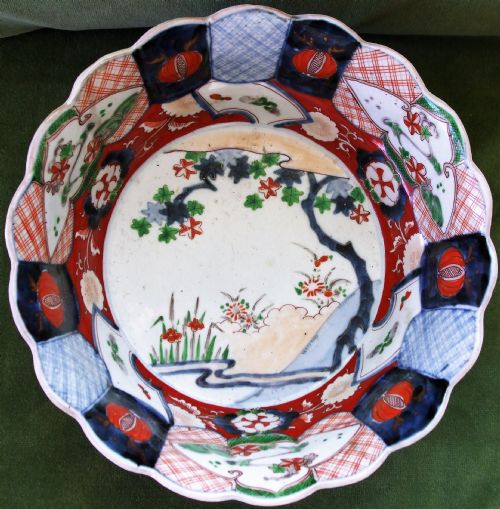
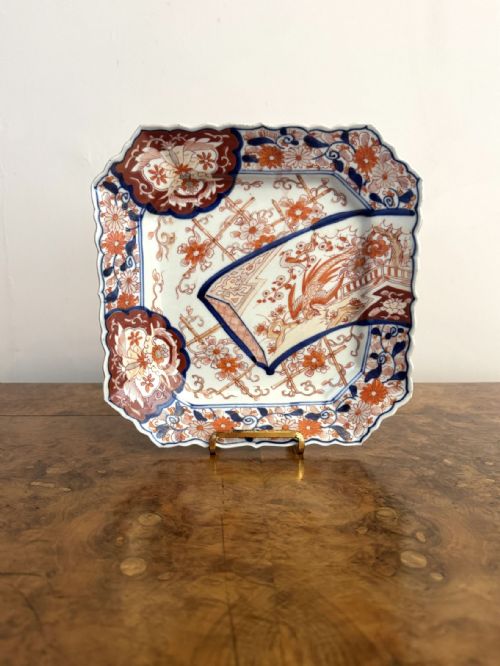
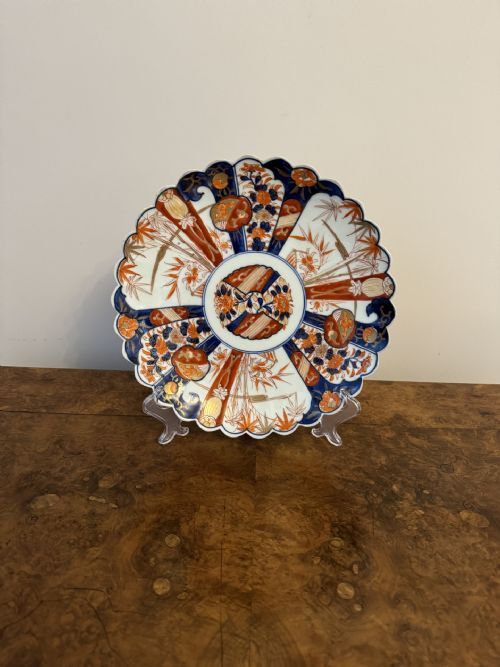

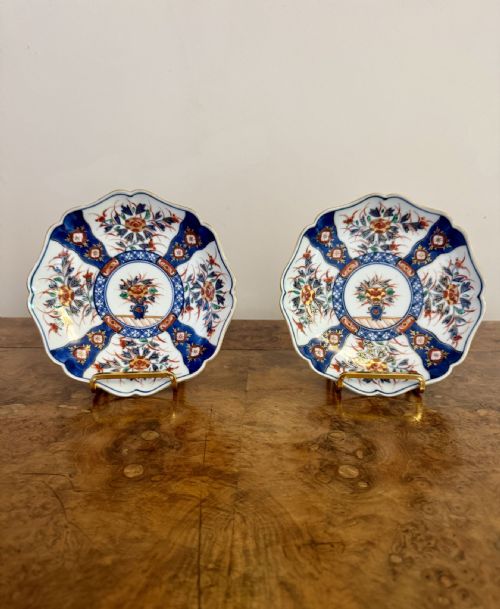
Imari Porcelain Display Dish
An imari porcelain display dish brings vibrant traditional palettes and rich iron red and cobalt blue tones directly into a room.
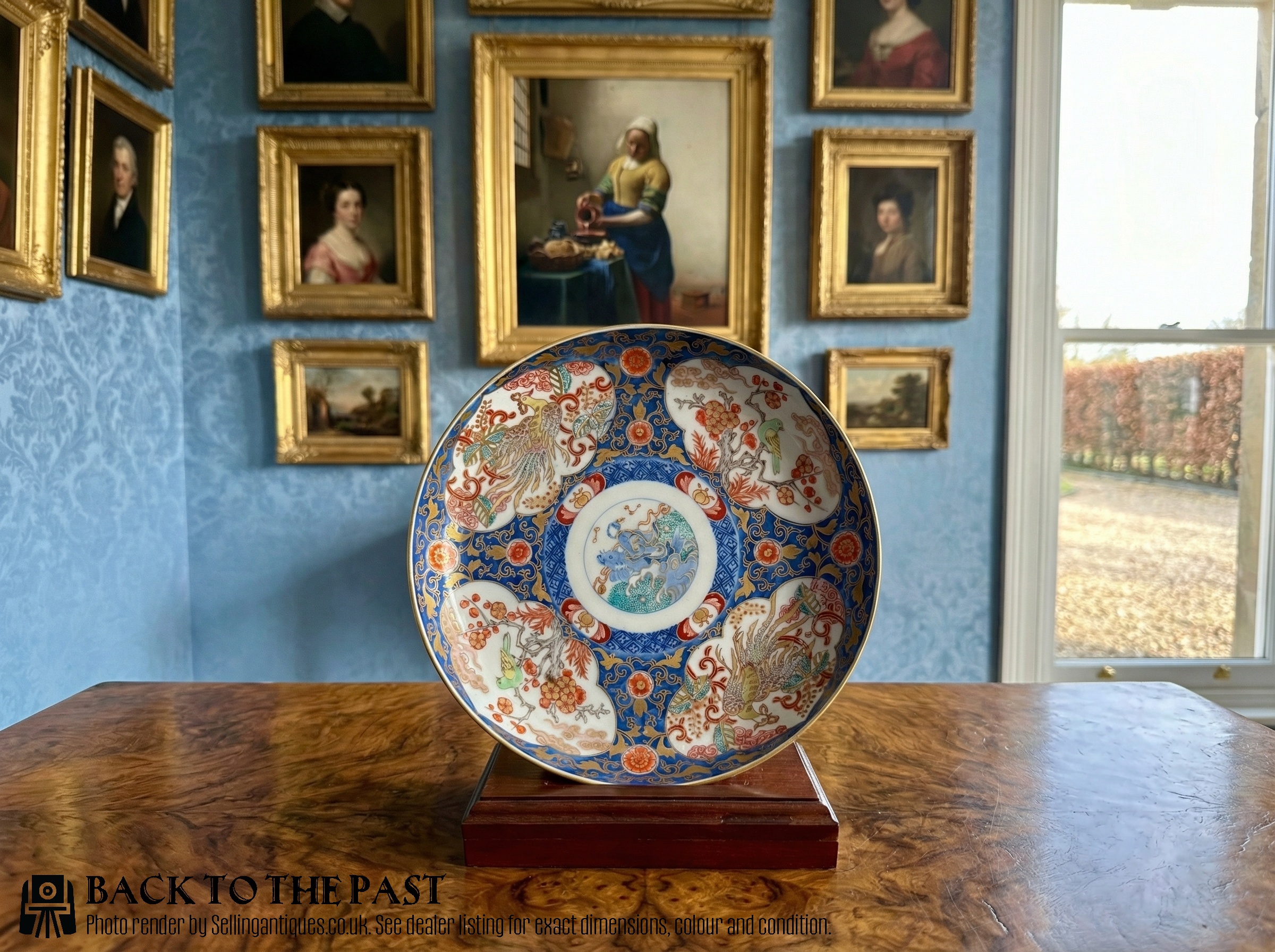
Imari Porcelain Display Dish
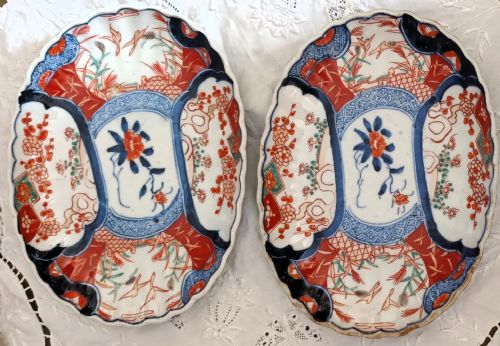
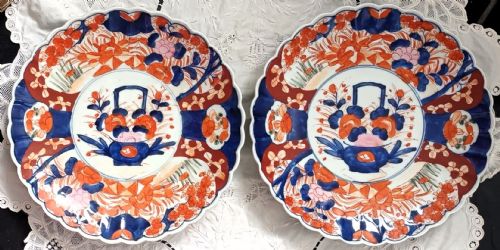
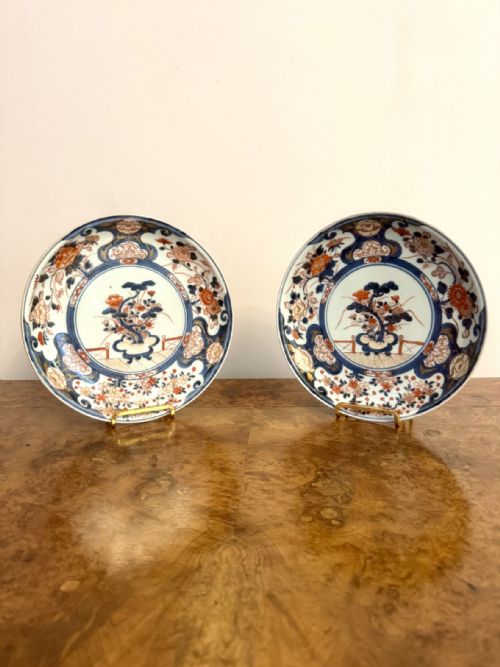
An imari porcelain display dish is a decorative ceramic piece intended primarily for visual exhibition rather than daily dining. When searching for this phrase, a buyer encounters a range of forms spanning large wall chargers, deep bowls, and flat plates created for decorative display.
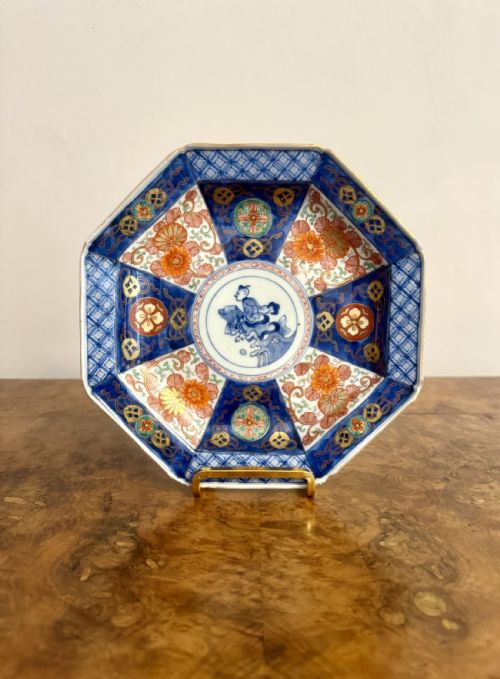
The selections on this page are dominated by Japanese Arita and Meiji period examples alongside English and Chinese interpretations. Buyers most frequently meet nineteenth century Japanese chargers and plates featuring scalloped edges, hexagonal outlines, and floral or avian motifs.
How they were made
These pieces are constructed from dense ceramic paste finished with traditional glaze and fired at high temperatures. Artisans then applied intricate overglaze enamel work in iron red and cobalt blue, frequently complemented by gold leaf and gilding.
Makers shaped these wares into circular, square, and hexagonal profiles, often utilising moulded or scalloped edges to create dimensional depth. The combination of underglaze blue and overglaze red and gold defined the characteristic palette seen across the pieces.
Listings feature porcelain pieces spanning the eighteenth, nineteenth, and twentieth centuries, including Victorian era imports and Chinese export variations.
What varies in quality
The refinement of the hand painted details separates finer examples from standard production wares. Precision in the depiction of exotic birds, floral arrangements, and figural scenes such as the Seven Lucky Gods indicates superior artisan skill.
The richness and preservation of the gilding and overglaze enamel pigments also determine the grade of the piece. Crisp body forms, particularly on complex hexagonal or scalloped edges, show a higher standard of ceramic manufacturing.
Royal Crown Derby·Flight Barr And Barr
The Imari Porcelain Display Dish Glossary
- Imari
- A style of ceramic decoration originating in Japan that uses a distinctive palette of underglaze cobalt blue, iron red, and gilt overglaze. The name derives from the port town used for shipping these wares.
- Charger
- A large decorative plate intended for display on a sideboard or wall rather than for serving food. These pieces measure considerably larger than standard dining plates.
- Meiji Period
- A Japanese historical era lasting from eighteen sixty eight to nineteen twelve, associated with a surge in decorative arts exported to Western markets. Pieces from this time often display meticulous hand painted detail.
- Overglaze enamel
- Coloured glass paste applied over the fired glaze and subjected to a lower temperature secondary firing. This technique allows for brilliant reds, greens, and gilt highlights.
- Arita
- The Japanese town in Hizen province famous as the historic centre of porcelain production. Artisans here pioneered the techniques used for export imari wares.
Imari Porcelain Display Dish: Frequently Asked Questions
How do I hang an imari charger?
Display chargers require a secure wire spring hanger that grips the rim without applying excessive pressure to the ceramic body. Ensure the wall fixing is anchored into a stud or uses a rated plaster toggle.
Position the dish at eye level away from direct sunlight to protect the overglaze enamels and gold leaf highlights from fading over time.
Are these dishes meant for food?
These historical pieces function primarily as decorative display items rather than practical tableware for daily meals. Older overglaze enamels and gilding can wear away or react when exposed to acidic foods and frequent washing.
Gentle dusting with a dry microfibre cloth is sufficient to maintain the surface without risking damage to the delicate painted motifs.
How do I date a Japanese imari plate?
Dating relies on examining the body paste, the characteristics of the foot ring, and the style of the hand painted palette. Nineteenth century Meiji period pieces often exhibit bright iron red tones and dense floral compositions.
Earlier examples from the Edo period or Chinese export variations show different weight distributions and distinct cobalt blue hues under magnification.
What is the difference between a plate and a charger?
A plate generally measures under ten inches in diameter and served functional dining roles in historical settings. A charger is significantly larger, often exceeding twelve inches, and was designed exclusively for display.
Larger chargers provide a wider canvas for complex pictorial scenes involving figures, landscapes, and elaborate bird designs.