
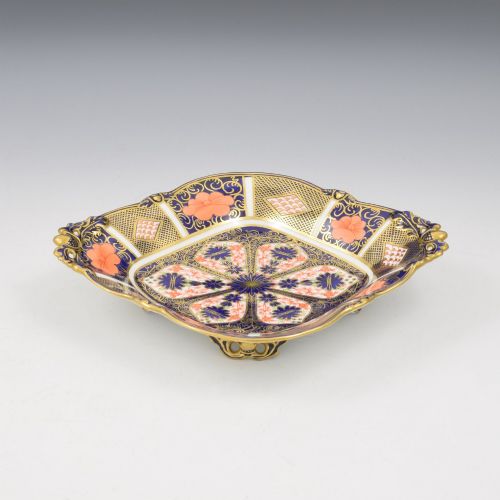
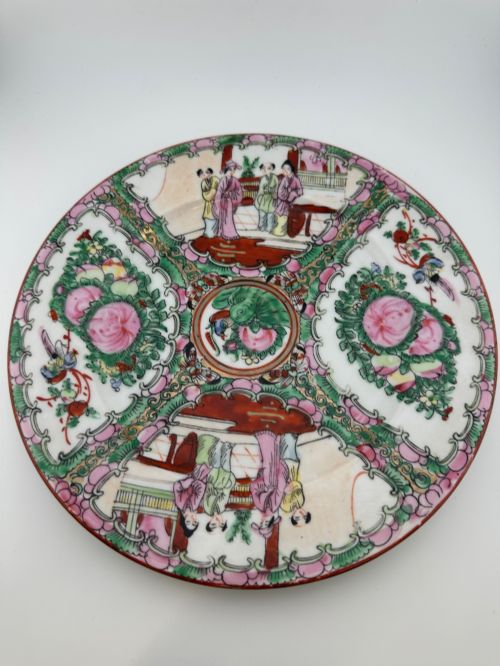




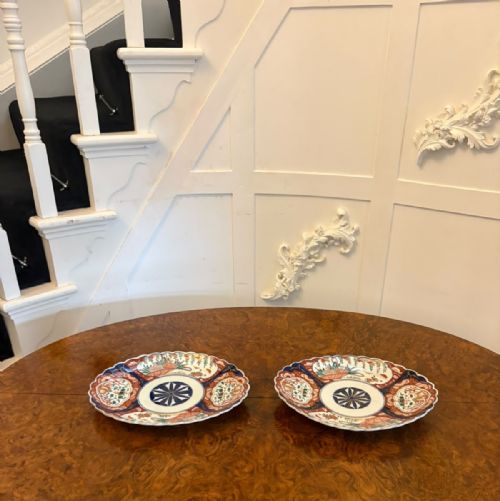


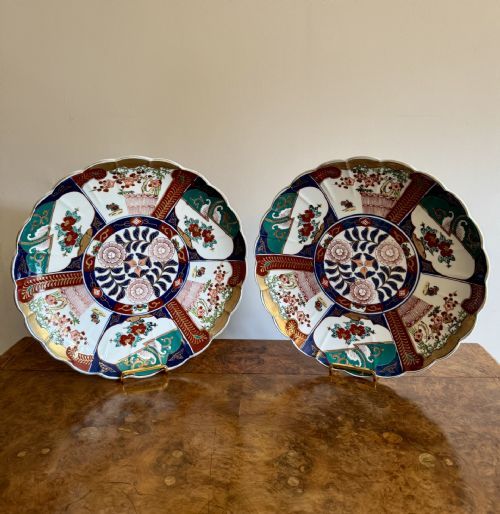
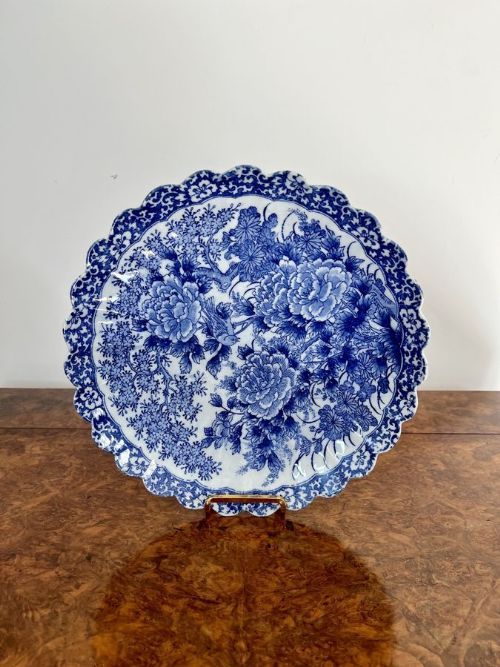
Japanese Porcelain Platter
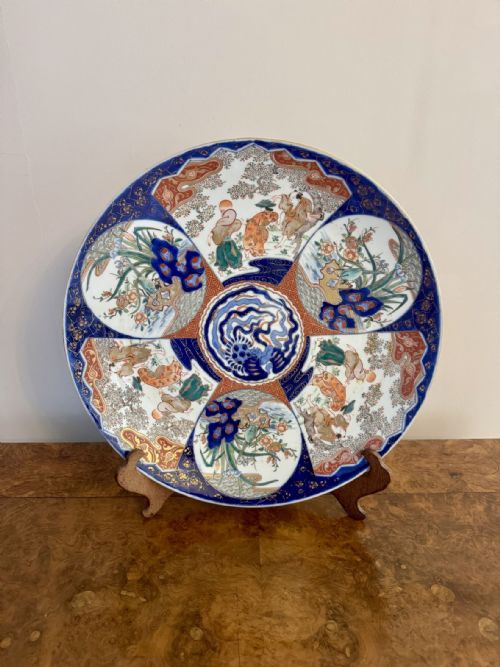
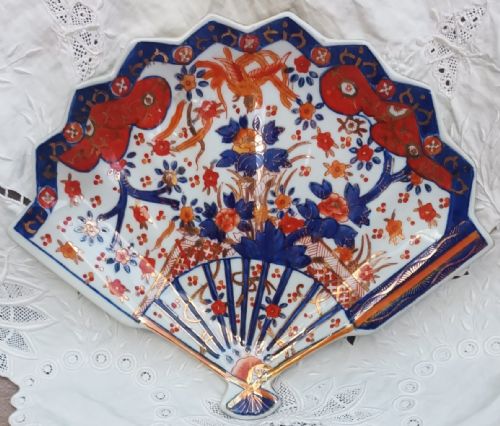
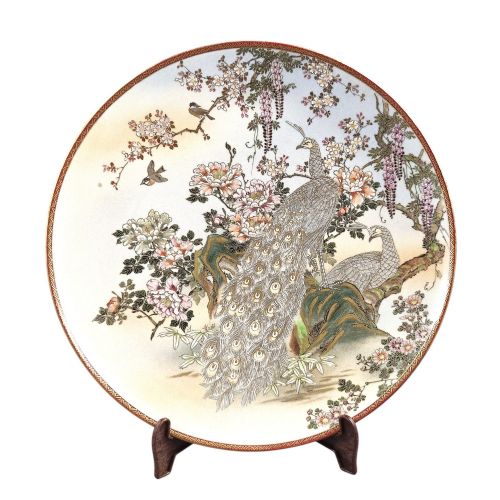
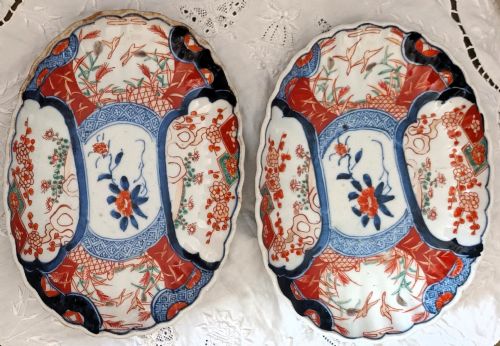
These Japanese porcelain platters bring hand-painted narrative scenes and traditional palettes straight into the room.

Japanese Porcelain Platter
A japanese porcelain platter takes the form of a large charger, decorative plate, or serving dish originating from workshops across Japan. You meet these pieces most frequently in Imari, Kutani, Arita, and Satsuma varieties spanning the Meiji and Edo periods.
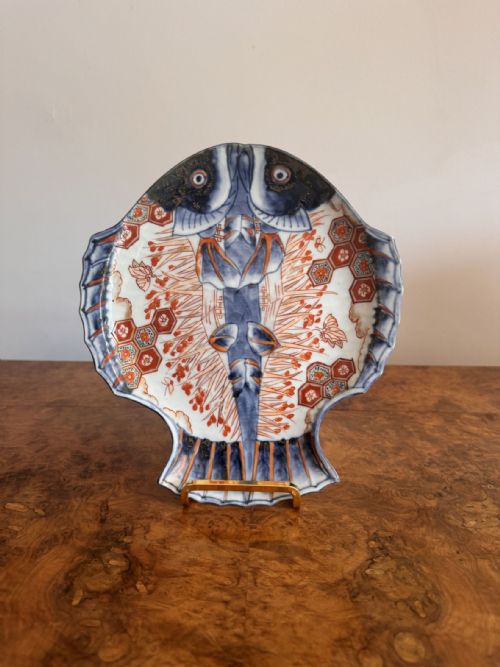
Makers shaped these surfaces into rounds, squares, fans, clamshells, and fish forms to serve varied decorative and functional roles. The selection ranges from robust blue and white export pieces to intricate polychrome designs carrying gold leaf and enamel.
Production spans centuries of distinct Japanese ceramic traditions, with many examples originating during the late nineteenth century. Collectors encounter varied motifs including floral arrangements, birds, cranes, and depictions of the Seven Lucky Gods.
How they were made
Potters shaped ceramic bodies from refined clay before applying cobalt underglaze pigments for foundational blue decoration. Artisans then layered enamel paints, gold leaf, and gilt over the fired glaze to build intricate polychrome patterns.
Specialised techniques include moriage application, where slip is piped onto the surface to create raised textural relief work on chargers. Totai shippo methods combine porcelain bodies with cloisonné enamel designs resembling tree bark and natural textures.
Japanese Porcelain Platter Retail Price Guide 2026
Typical asking prices for japanese porcelain platter among the pieces listed under this phrase on Sellingantiques today, from the lower quarter to the upper quarter. They describe what is for sale here now, not the wider market.
Materials recorded across current inventory include cobalt underglaze, enamel, gold leaf, and cloisonné tree bark effects.
What varies in quality
Brushwork precision separates standard export wares from superior artistic achievements across these platters. Hand-painted details exhibit varying degrees of control, from loose floral repetitions to meticulous depictions of figures and plumage.
The application of gold leaf and enamel layers influences the visual depth and preservation of each piece. Heavier ceramic throwing, balanced glaze coverage, and crisp moulding on scalloped or shaped edges indicate higher workshop standards.
The Japanese Porcelain Platter Glossary
- Imari
- A style of Japanese porcelain decorated in underglaze blue, iron red, and gilt. This palette became immensely popular in European export markets during the Edo and Meiji periods.
- Kutani
- A style of Japanese painted porcelain known for vibrant polychrome enamels and generous use of gold. These wares often feature detailed pictorial scenes of flora, fauna, and figures.
- Arita
- A Japanese town and regional centre for porcelain production that supplied numerous chargers and dishes. Pieces from this area established technical standards for Japanese ceramic exports.
- Moriage
- A decorative ceramic technique using piped clay slip to build raised patterns and textures. This method creates tactile surfaces on Satsuma and related Japanese wares.
- Totai shippo
- A composite technique applying cloisonné enamel directly over a porcelain core. This unusual method mimics metalwork while retaining a ceramic foundation.
Japanese Porcelain Platter: Frequently Asked Questions
How do I date a Japanese porcelain platter?
Dating relies on stylistic markers, materials, and documented kiln periods such as the Edo or Meiji eras. Evidence from glazes and motifs helps narrow down the production decade.
Export markings and stylistic evolution between eighteenth-century wares and later nineteenth-century pieces provide further chronological context for collectors.
What is the difference between Imari and Kutani?
Imari wares typically combine cobalt blue and iron red with gilt highlights in structured geometric and floral layouts. They focus on contrasting primary tones.
Kutani wares lean toward dense polychrome enamels and extensive gold leaf, often depicting narrative scenes, birds, and peonies across the entire surface.
How were these large platters used historically?
Many of these large pieces functioned as decorative chargers displayed on walls or furniture within formal interiors. Their substantial size made them ideal centerpieces for presentation.
Other shaped dishes and platters served functional roles during dining and ceremonial gatherings before entering collections as display items.
How should I display a charger safely?
Wall mounting requires specialised plate hangers designed to distribute weight evenly across the rim without stressing the ceramic body. Secure fixings protect against accidental slips.
Tabletop display benefits from sturdy stands that support the base and lower edge securely while keeping the painted surface visible.