



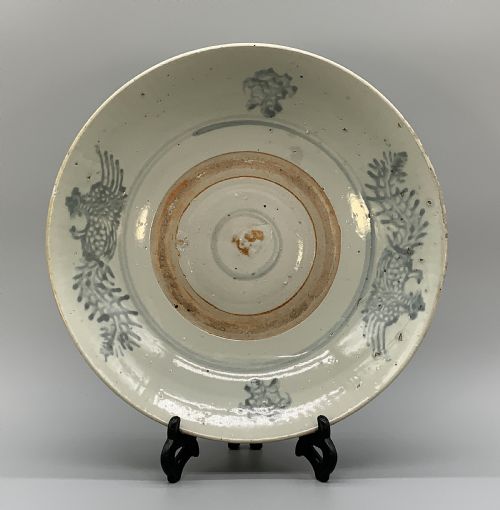
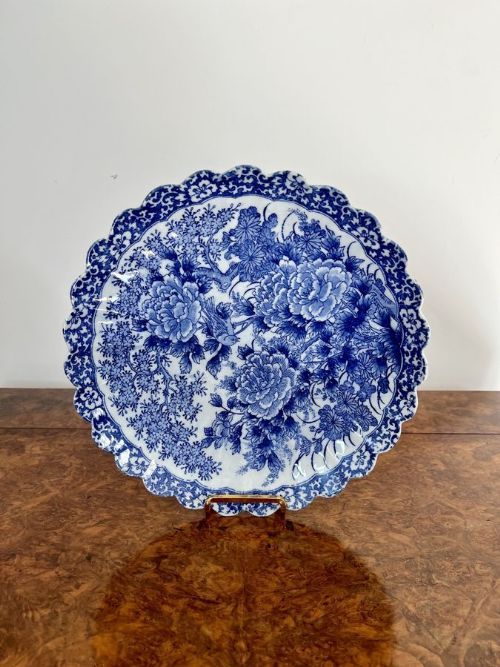


Blue White Porcelain Charger
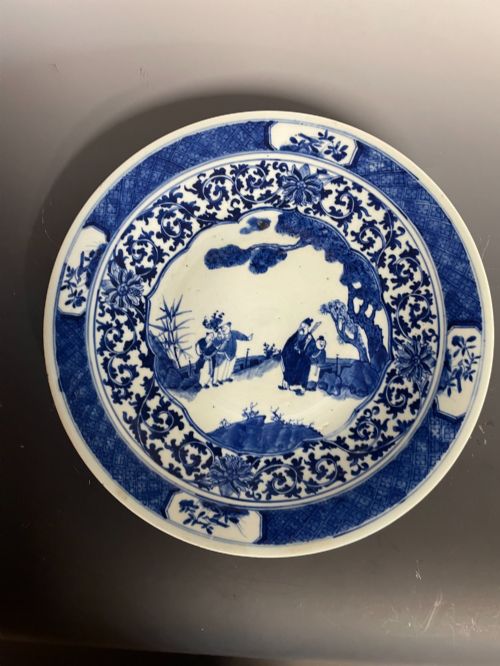
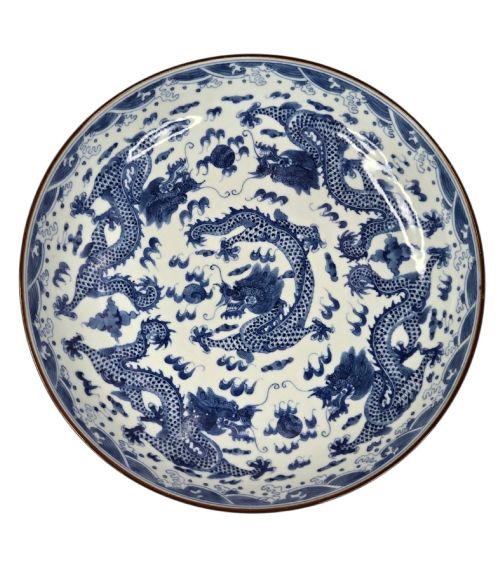
A blue white porcelain charger brings monumental scale and painted depth to a table, combining centuries of ceramic tradition with striking cobalt patterns.
Blue White Porcelain Charger
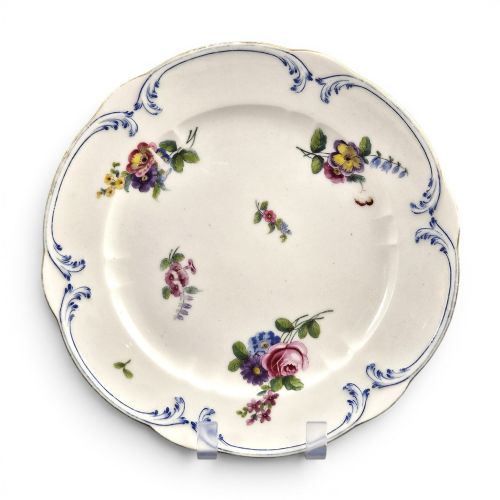
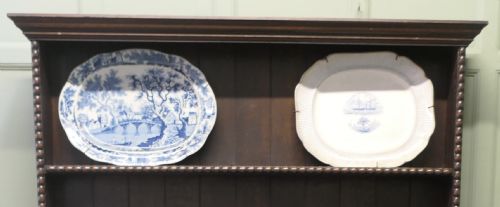
A blue white porcelain charger serves as a wide decorative plate or platter, originating from workshops across China, Japan, Europe, and England.
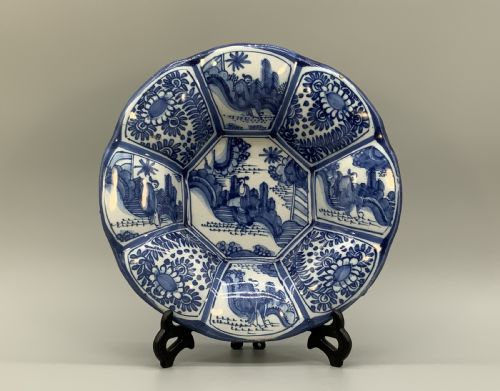
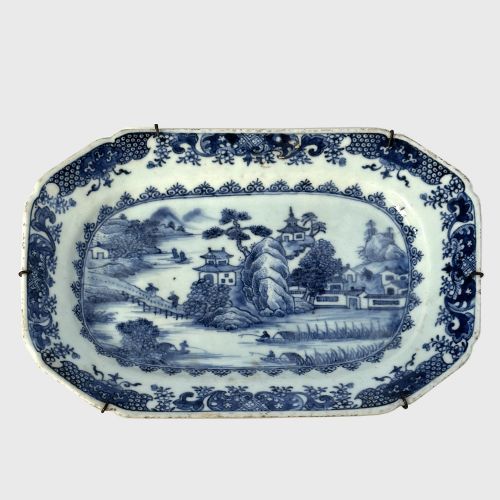
Buyers seeking a blue white porcelain charger frequently encounter Japanese Arita and Imari wares, alongside 18th-century Chinese export pieces and Dutch Delft examples.
The selection spans from the Ming and Qing dynasties through the Meiji period and into 19th-century European potteries, providing diverse regional interpretations of cobalt painting.
Materials and technique
Potters shape porcelain, earthenware, or ceramic bodies before applying cobalt pigment beneath a transparent glaze to achieve the characteristic blue decoration.
Firing at high temperatures fuses the cobalt underglaze with the porcelain body, yielding a permanent vitreous surface that resists wear over centuries.
Certain examples incorporate soft-paste porcelain or enamel details over the glaze, adding texture and varied colour tones to the fired surface.
Blue White Porcelain Charger Retail Price Guide 2026
Typical asking prices for blue white porcelain charger among the pieces listed under this phrase on Sellingantiques today, from the lower quarter to the upper quarter. They describe what is for sale here now, not the wider market.
Look closely for hand-painted Koi carp swimming across the porcelain glaze, bringing centuries-old rivers directly to the collector's wall.
Judging execution
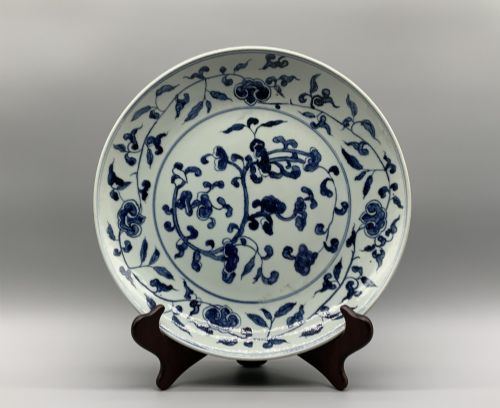
Execution rests upon the clarity of the cobalt pigment and the precision of the hand-painted brushwork across scrolling foliate or pictorial motifs.
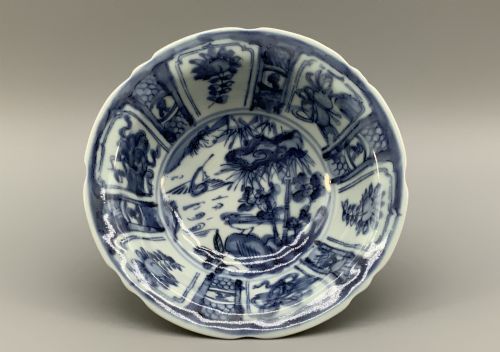
The sophistication of the glaze surface, the symmetry of lobed or scalloped rims, and the crispness of underglaze blue definition separate standard production from masterworks.
Van Genden·Ambroise Michel
The Blue White Porcelain Charger Glossary
- Charger
- A large decorative plate or platter historically used for ceremonial display or serving at grand tables. These pieces measure significantly larger than standard dinner plates.
- Imari
- A Japanese export style originating in Arita, typically featuring cobalt blue and iron red combined with gilt highlights. The aesthetic was heavily copied by European potteries.
- Kraak
- A type of Chinese export porcelain characterised by panelled borders and central motifs of birds, flowers, or landscapes. Originating in the Ming dynasty, it heavily influenced Dutch Delft potters.
- Cobalt Underglaze
- A mineral pigment applied directly to the unglazed ceramic body before a clear glaze coat is applied and fired. This technique protects the blue decoration beneath a glassy seal.
- Swatow
- A category of coarse-paste Chinese ceramics produced for export during the late Ming dynasty. These pieces often exhibit bold brushwork and generous potting.
Blue White Porcelain Charger: Frequently Asked Questions
How were blue white porcelain chargers used?
These large vessels functioned primarily as display pieces on sideboards or dining tables, showcasing wealth and international trade connections in domestic interiors.
Over time, collectors shifted their focus from utilitarian dining functions to wall hanging or cabinet display, appreciating the painted narratives and geometric borders.
How do you date a blue white porcelain charger?
Dating relies on examining the potting characteristics, the tone of the cobalt blue, base markings, and stylistic shifts between Ming, Qing, Edo, and European revivals.
Foot rims and glaze pooling offer further clues, as earlier pieces display specific clay maturity and unglazed contact points acquired during high-temperature kiln stacking.
Are these chargers suitable for daily use?
While technically durable due to high-fire vitrification, antique chargers are generally treated as display objects to preserve their historical glazes and hand-painted surfaces.
Displaying them on plate stands or specialised wall mounts protects the edges and foot rims from modern impact damage while highlighting the cobalt artwork.
What is the difference between Arita and Imari?
Arita refers to the Japanese town where the porcelain clay was mined and fired, serving as the epicentre of production for Japanese blue and white wares.
Imari was simply the port from which these Arita ceramics were shipped to Europe, though the term later came to describe the specific palette of blue, red, and gold.