



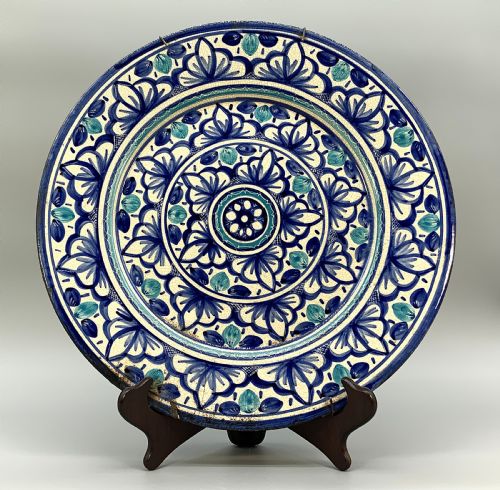
Blue White Ceramic Platter
A blue white ceramic platter brings centuries of global trade and kitchen craft directly to the dining table.
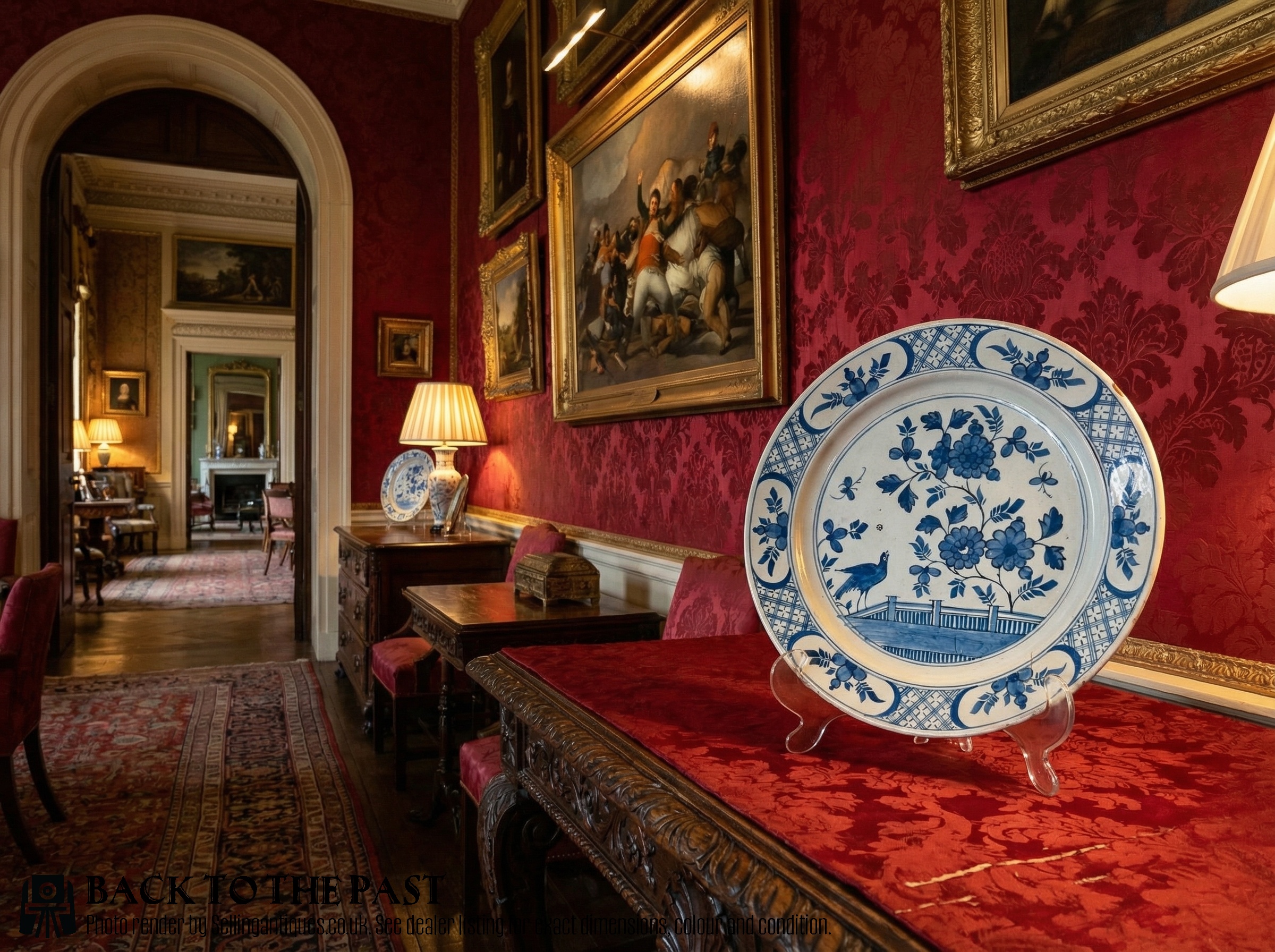
Blue White Ceramic Platter
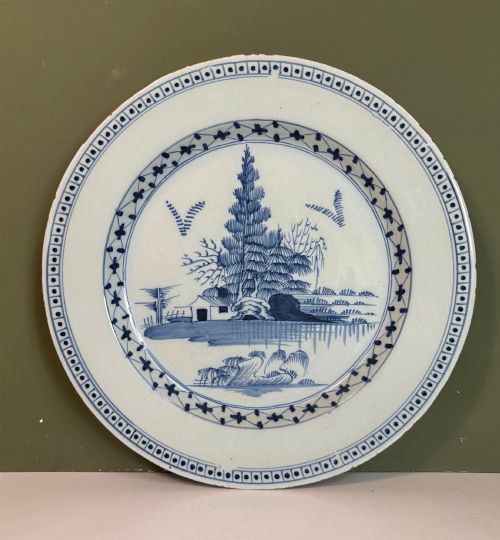
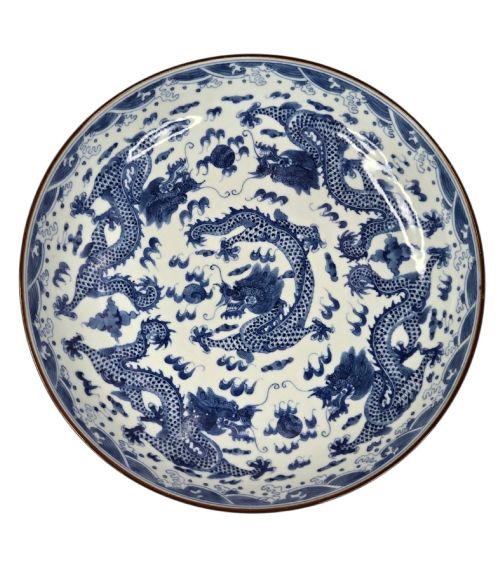
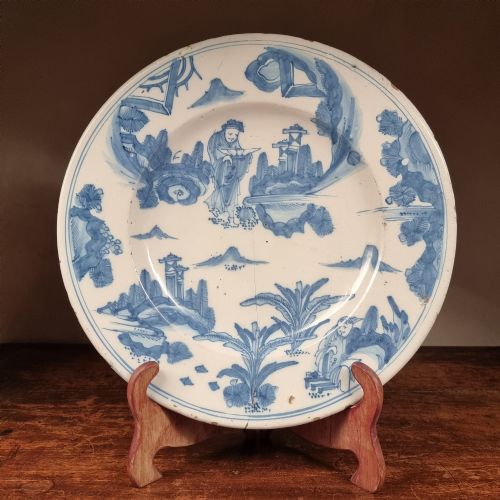
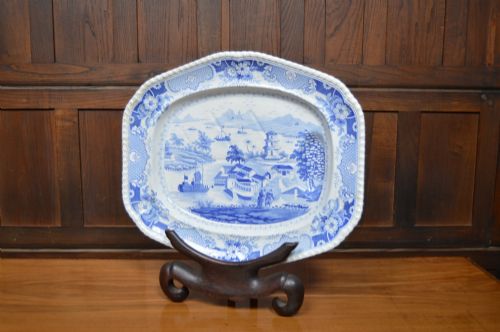
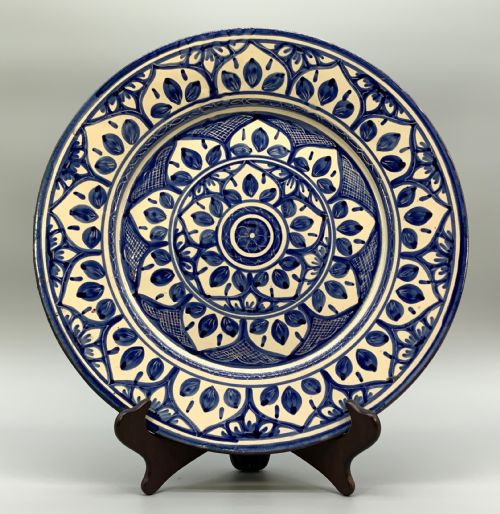
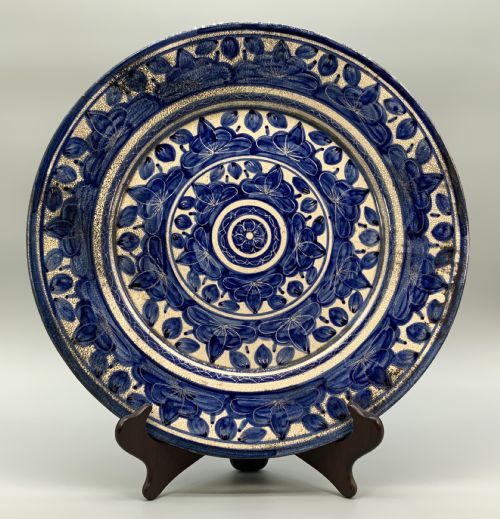
A blue white ceramic platter encompasses large serving dishes, decorative chargers, and meat plates found across various historical periods. Buyers examining this page encounter pieces ranging from eighteenth-century English earthenware to Chinese export porcelain and Japanese Imari wares.
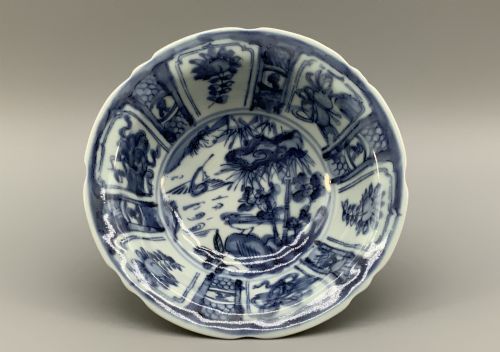
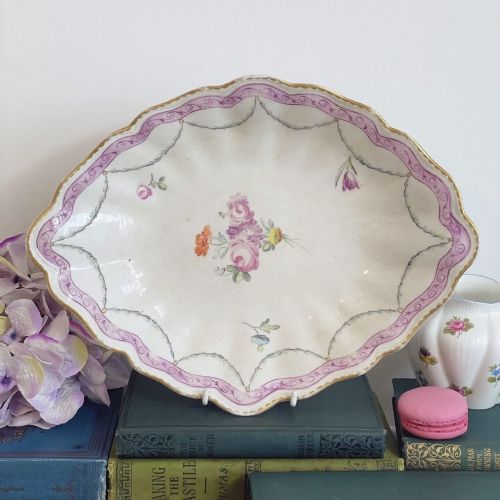
The selection includes serving dishes designed for formal dining alongside large decorative chargers intended for display. Forms span simple scalloped edges, lobed bowls, and expansive platters shaped for meat and game service.
Origins stretch from European potteries in England and Holland to Asian kilns in China and Japan. Eighteenth and nineteenth-century examples dominate the offerings, reflecting shifts in domestic dining habits and international trade.
Materials and Technique
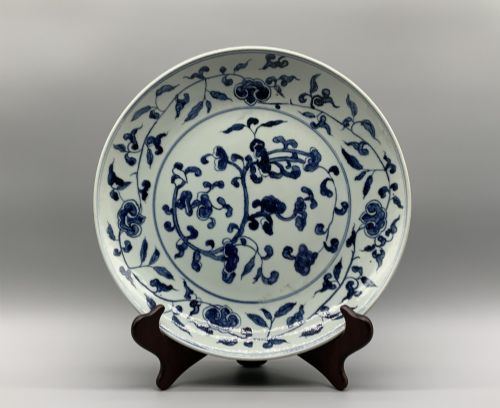
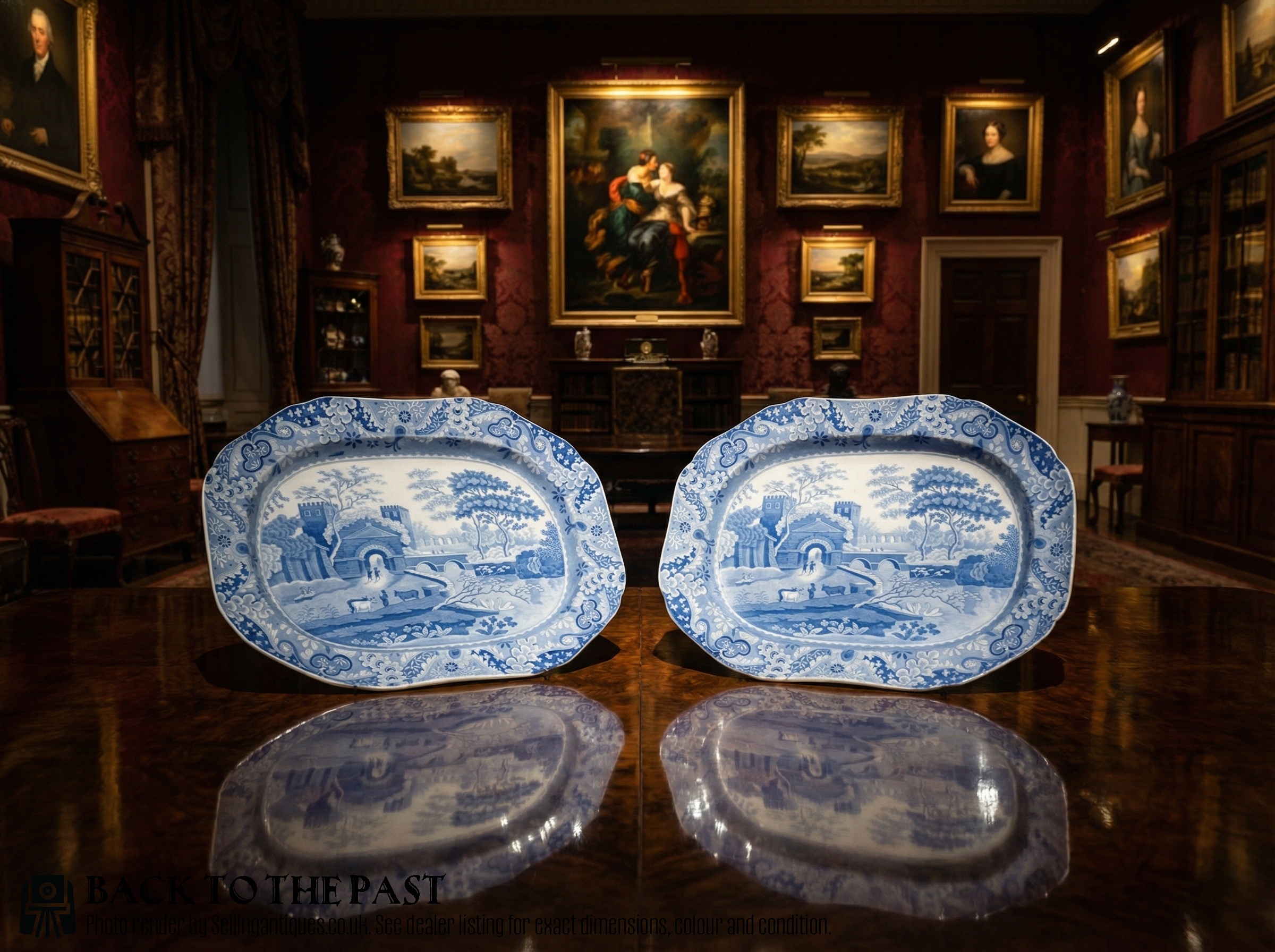
Potters utilised earthenware, pearlware, and porcelain as the primary body materials for these wares, applying cobalt pigment beneath a clear glaze. Cobalt underglaze painting allowed artisans to create intricate botanical, landscape, and figural designs that survived high-temperature firing without fading.
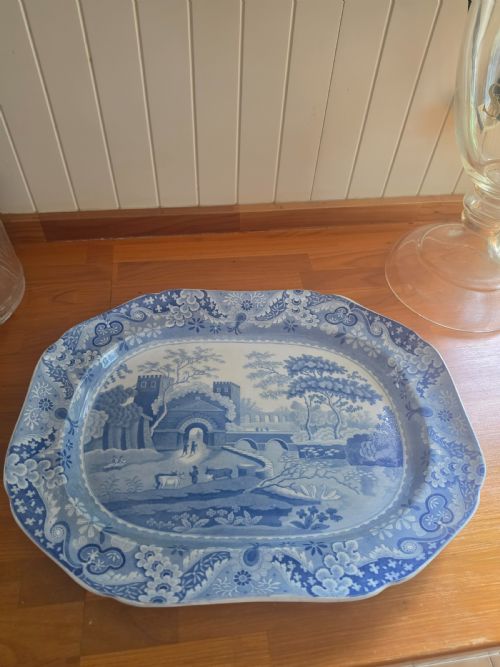
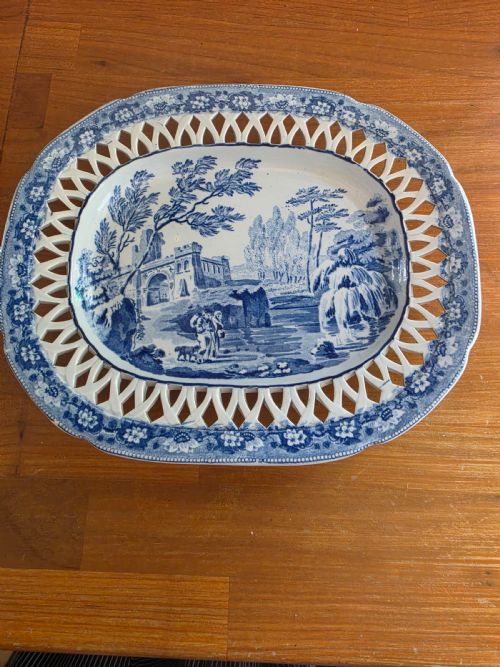
Transfer printing emerged during the Georgian and Victorian periods, allowing factories to apply complex scenes like the India Temple or Piping Shepherd patterns onto pottery platters with mechanical precision. Handpainted examples from Dutch Delft, Chinese export kilns, and Japanese Arita workshops show the brushwork of individual decorators.
Blue White Ceramic Platter Retail Price Guide 2026
Typical asking prices for blue white ceramic platter among the pieces listed under this phrase on Sellingantiques today, from the lower quarter to the upper quarter. They describe what is for sale here now, not the wider market.
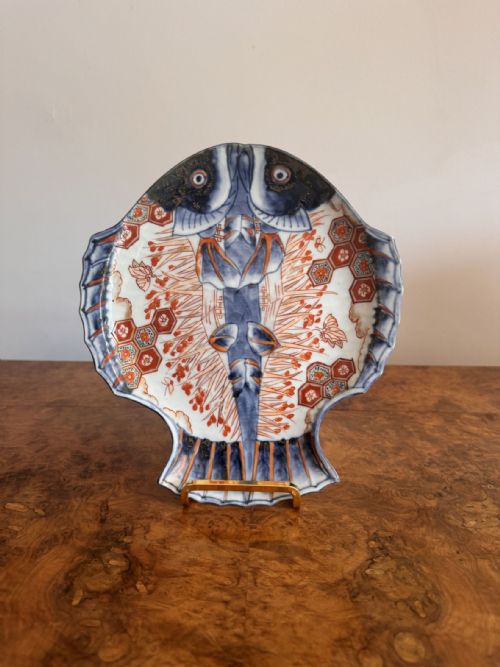
Several platters abandon traditional round geometry entirely to present themselves as swimming fish or scalloped botanical leaves.
Assessing Craftsmanship
Quality rests upon the crispness of the cobalt application, the stability of the white glaze, and the balance of the ceramic form during firing. Superior pieces display deep, vibrant cobalt pigment that sits cleanly beneath the glaze without blurring or bleeding into the surrounding ceramic body.
Artisanal execution distinguishes finer items from standard production wares, particularly in handpainted details found on Chinese export porcelain and Japanese Imari chargers. Early English transfer-printed meat platters achieve distinction through deep impressions, clear pattern registration, and well-proportioned potting.
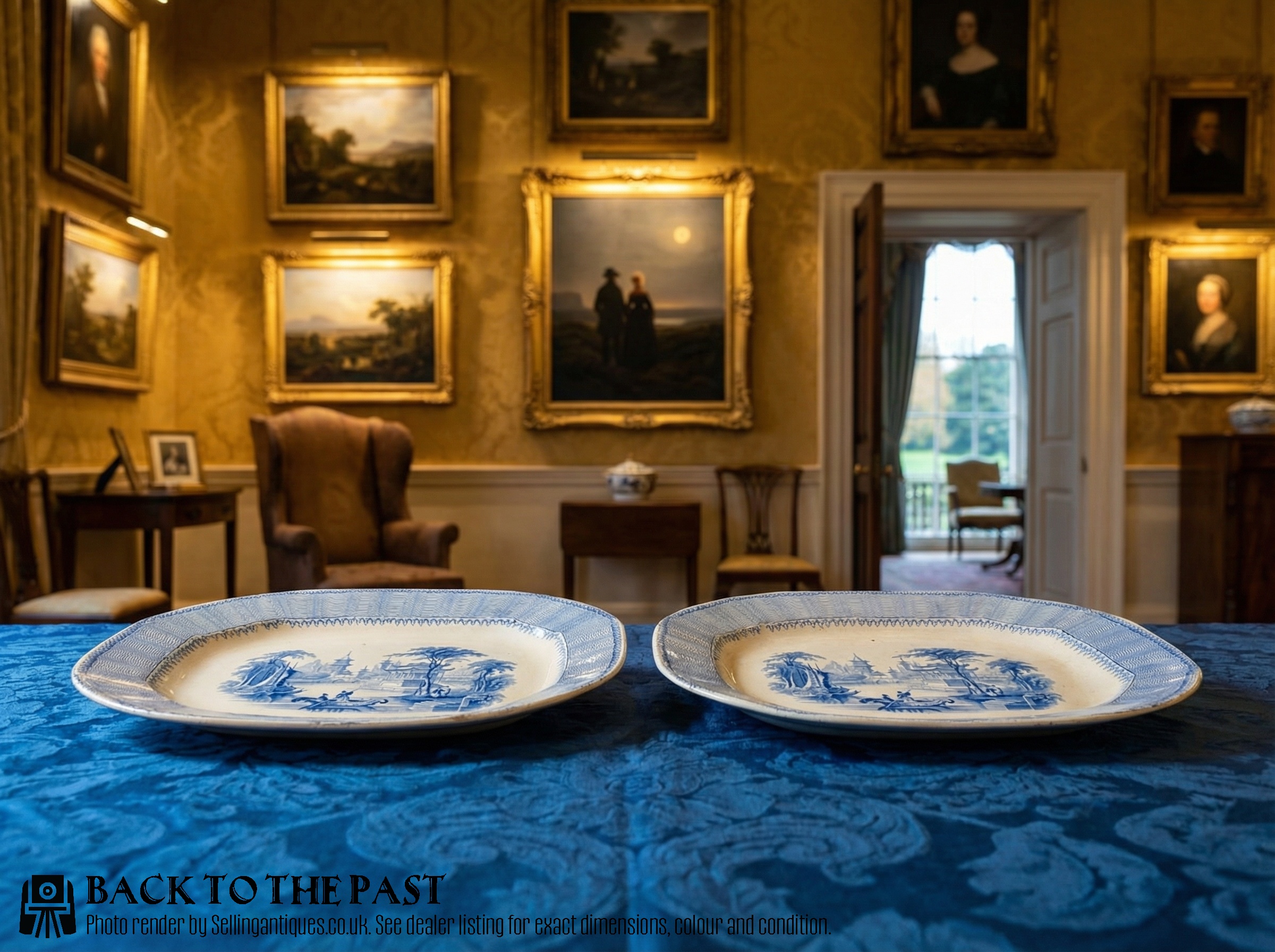
Spode·Davenport·John Rogers and Son·Minton·Royal Worcester·Royal Bonn
The Blue White Ceramic Platter Glossary
- Delft
- Tin-glazed earthenware originating in the Netherlands and England during the seventeenth and eighteenth centuries, known for its soft body and cobalt blue decoration.
- Transferware
- Pottery decorated by pressing a printed paper design from a copper plate onto the ceramic surface before glazing and firing.
- Imari
- Japanese porcelain decorated in underglaze blue, iron red, and gilt, produced primarily in Arita for both domestic use and export.
- Charger
- A large decorative plate or serving dish intended for display on a sideboard or table during formal meals.
- Pearlware
- A refined earthenware developed in the late eighteenth century featuring a subtle bluish glaze that made the underlying ceramic body appear whiter.
Blue White Ceramic Platter: Frequently Asked Questions
How were these platters used historically?
Large platters and meat dishes served joints of meat, fowl, and game during large formal dinners in Georgian and Victorian households. Deep wells and drainer inserts helped collect juices during carving at the table.
Decorative chargers served a different purpose entirely, remaining on sideboards or hung upon walls to display wealth and artistic taste. Smaller dessert dishes and trays held sweet courses at the conclusion of a meal.
How do I care for antique ceramic platters?
Wash antique ceramics gently by hand using warm water and mild soap, avoiding modern dishwashers that can craze the glaze or fade cobalt pigments. Dry them thoroughly with a soft cloth to protect the underlying earthenware or porcelain body.
Display pieces safely by using stable plate stands designed for heavy chargers. Keep them away from direct sunlight and sudden temperature shifts to preserve the integrity of the glaze.
How do I tell Chinese export porcelain from English earthenware?
Examine the weight, translucency, and foot rim of the piece to determine its material origin. Chinese export porcelain feels dense, rings slightly when tapped, and often shows a smooth, unglazed foot rim characteristic of Kangxi or Qing dynasty production.
English earthenware and pearlware feel heavier and more opaque, often displaying crazing in the glaze acquired over centuries. Transfer-printed patterns also point directly to nineteenth-century English factories rather than Asian export kilns.
What is the difference between Delft and European porcelain?
Delft utilises a porous earthenware body covered in an opaque white tin glaze, which accepts cobalt pigment with a soft, slightly blurred edge. It represents an earthenware tradition developed in Holland and England.
European and Asian porcelain use a refined stone paste that vitrifies completely during high-temperature firing, resulting in a hard, non-porous white material. Painted or transferred designs on porcelain remain crisp and sharp beneath a clear glass-like glaze.