




Blue White Serving Platter
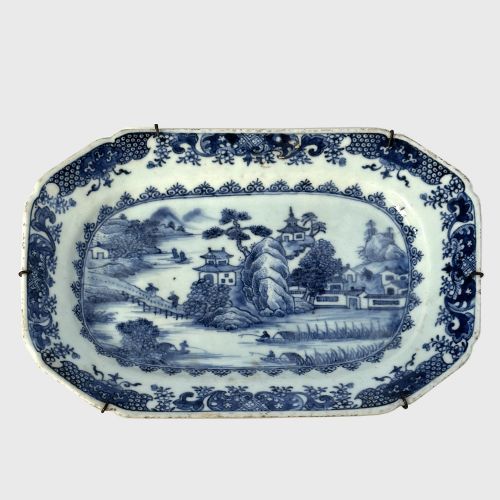
A blue white serving platter anchors a dining table with centuries of landscape scenes and deep cobalt pigment on earthenware, porcelain, or ironstone.
Blue White Serving Platter
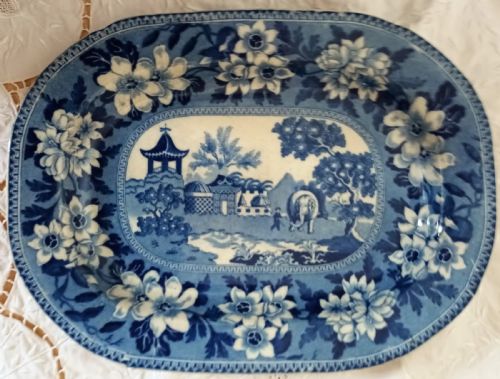
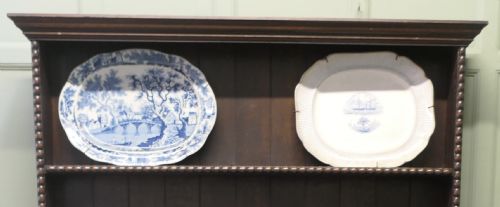
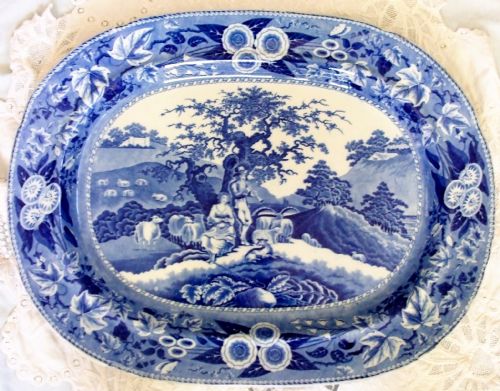
When you search for a blue white serving platter, you encounter large ceramic and earthenware dishes designed for presenting meat, poultry, and fish at the table. These pieces span the 18th century through the Victorian era, offering wide wells and deep rims shaped to catch juices during grand meals.
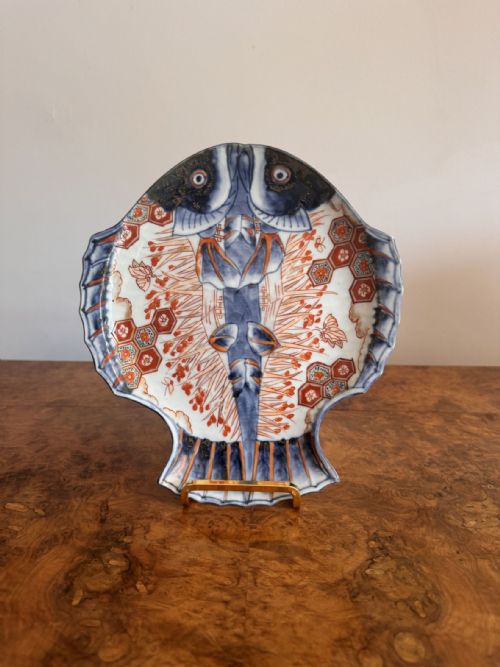
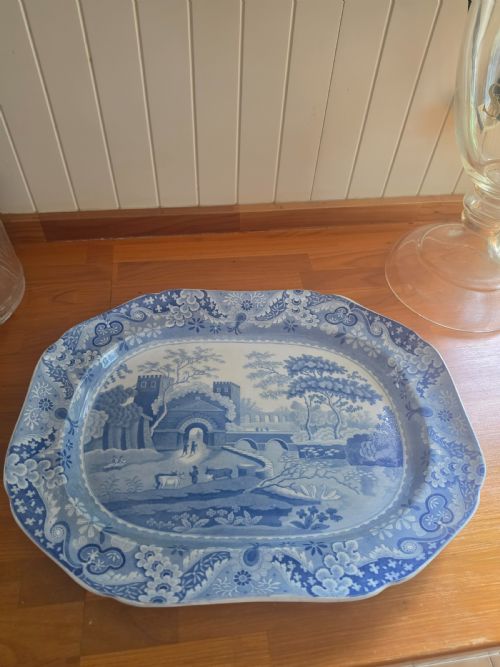
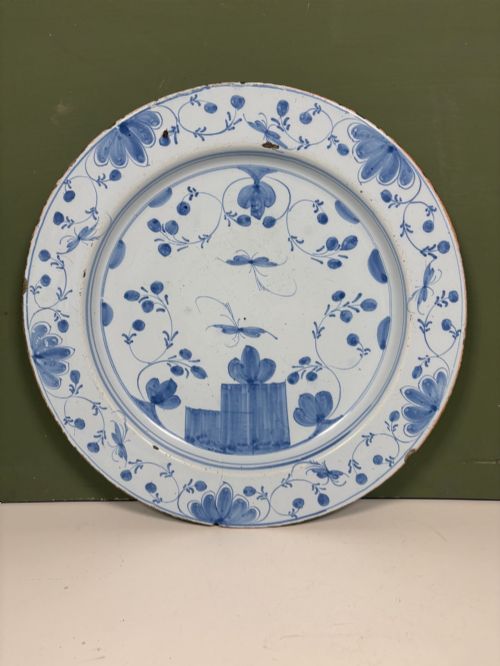
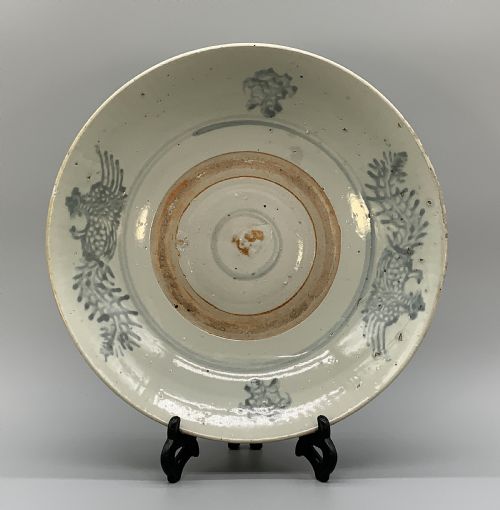
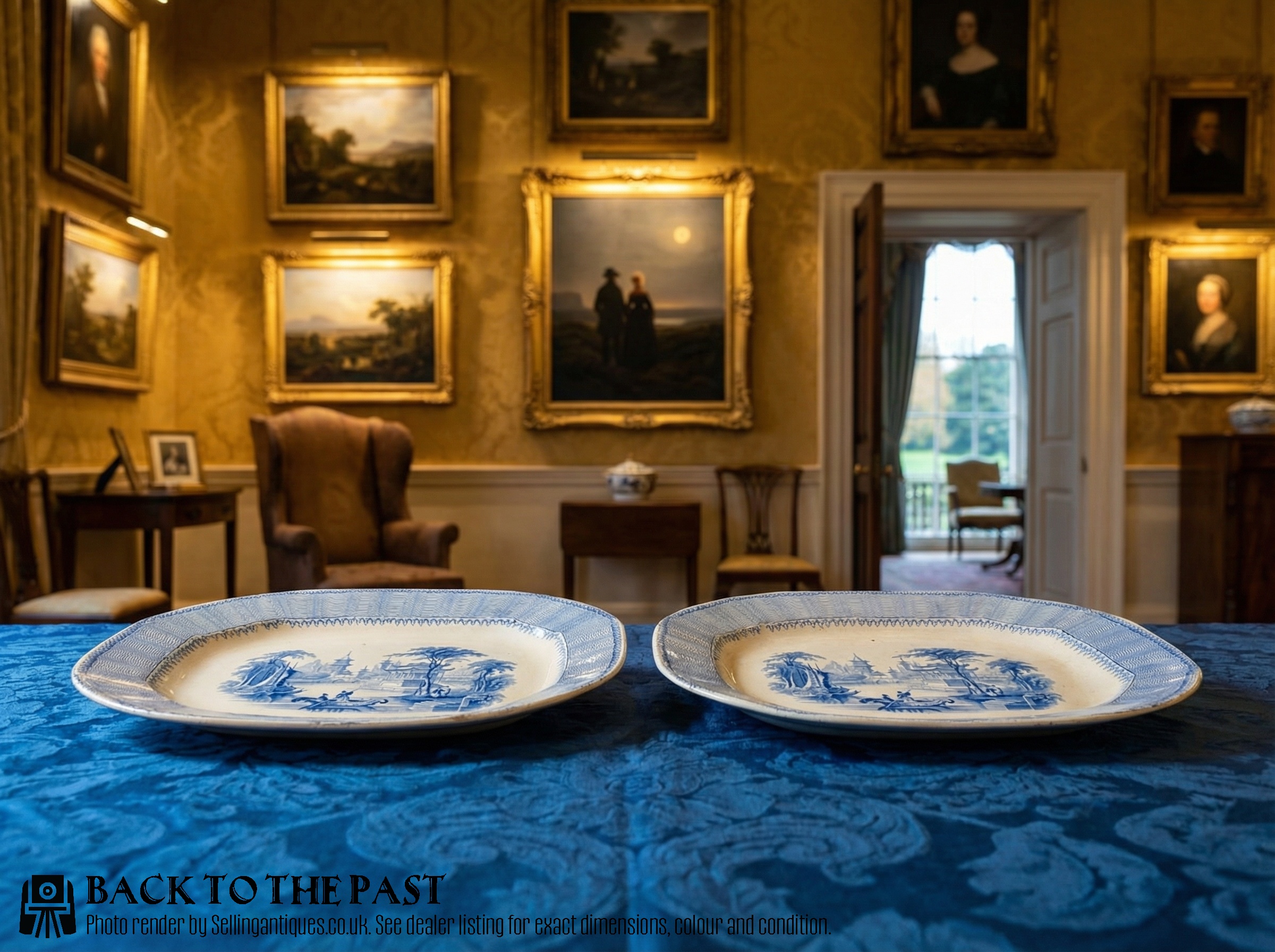
The versions most commonly met on this page are generous English transferware platters from the Georgian and Victorian periods, often decorated with pastoral scenes, bridges, or exotic animal patterns. Alongside these, you find Chinese export porcelain chargers and Delft earthenware originating from earlier centuries.
Makers ranged from Staffordshire potteries to major factories like Spode and Davenport, producing substantial platters meant for heavy household service. Surviving examples demonstrate how functional diningware evolved into highly decorative centerpieces over successive eras.
How they were made
Potters shaped earthenware, ironstone, and porcelain bodies by hand or mould before applying cobalt pigment under a glossy transparent glaze. This mineral oxide withstood high kiln temperatures, producing the characteristic deep blue coloration that defined the style.
Transfer printing revolutionized production during the late 18th and 19th centuries, allowing intricate copperplate engravings of landscapes and architectural views to be transferred onto the ceramic surface. Hand painting and polychrome enamel touches sometimes augmented these printed designs before a final firing.
Blue White Serving Platter Retail Price Guide 2026
Typical asking prices for blue white serving platter among the pieces listed under this phrase on Sellingantiques today, from the lower quarter to the upper quarter. They describe what is for sale here now, not the wider market.
Certain early meat platters feature hidden wells shaped like fish heads to channel gravy toward waiting spoons.
What varies in quality
Clarity and registration of the printed transfer define the visual success of a piece, distinguishing sharp architectural details from blurred or smudged impressions. The depth and richness of the cobalt pigment also set exceptional examples apart from duller productions.
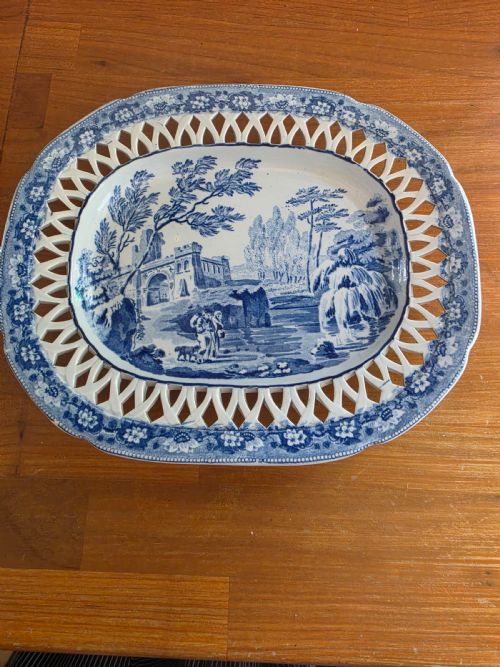
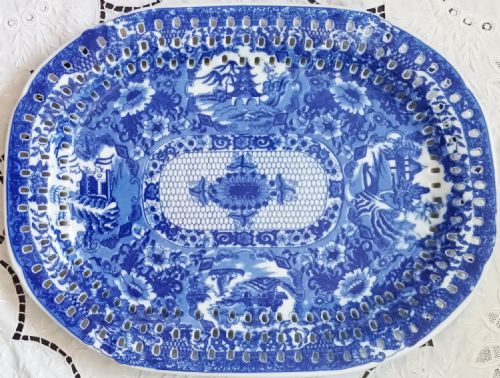
Body thickness and weight indicate the intended utility and ceramic recipe, with dense ironstone and refined porcelain representing sturdier or more costly alternatives to standard earthenware. Additionally, piercing or moulding along the rim demands greater skill from the potter.
Spode·Davenport·John Rogers and Son·Minton·Copeland and Garrett·Thos Fell·Robert Hamilton of Stoke
The Blue White Serving Platter Glossary
- Transferware
- Earthenware or porcelain decorated by transferring a printed design from a copper plate onto the ceramic body using a paper tissue. This technique allowed intricate pictorial scenes to be replicated consistently.
- Charger
- A large decorative plate or platter used primarily for presentation or serving rather than individual dining. These substantial dishes often display the most ambitious transfer patterns.
- Ironstone
- A heavy, durable type of earthenware patented in the early 19th century to resist chipping and cracking. It provided a robust surface for large meat platters.
- Delft
- Tin-glazed earthenware produced in imitation of Chinese blue and white porcelain. The porous clay body receives an opaque white glaze that absorbs the cobalt pigment.
- Drainer
- A perforated ceramic insert placed inside a meat platter to elevate joints of meat above accumulated juices. These scarce components are occasionally found surviving within larger dishes.
Blue White Serving Platter: Frequently Asked Questions
How were these platters used?
Large platters served joints of meat, poultry, and fish at the centre of dining tables during formal meals. Deep wells and channels collected juices, sometimes assisted by removable ceramic drainers.
Beyond dining rooms, large chargers doubled as decorative wall displays or sideboard centrepieces when not in active use during feasts.
How do I date a platter?
Stylistic clues, factory marks stamped into the base, and pattern names help determine age. Georgian pieces often feature hand-painted or early transfer-printed chinoiserie and topographical views.
Victorian examples frequently display registration diamonds or factory stamps that record the exact month and year of pattern introduction.
Can I use them for serving food?
Most antique earthenware and ironstone platters remain structurally sound for presenting dry foods or cold meats at modern gatherings. Older soft-paste porcelain or delicate Delft pieces benefit from careful handling rather than heavy daily use.
Avoid dishwashers and sudden thermal shocks, as centuries-old glazes can craze or absorb moisture over time.
What is transfer printing?
Transfer printing is a technique where an engraved copper plate is inked with cobalt pigment and pressed onto tissue paper. The paper transfers the inked design onto the unglazed or biscuit-fired ceramic surface.
This method enabled potteries to mass-produce complex landscape and botanical scenes with uniform precision.