


Victorian Transferware Platter
These Victorian transferware platters are substantial earthenware serving pieces decorated with cobalt pigment, offering a practical centrepiece for any table.
What the pieces are
A victorian transferware platter is a large ceramic serving dish intended for joints of meat or communal dining. The pieces seen on this page date through the nineteenth century, including early Victorian and later decades.
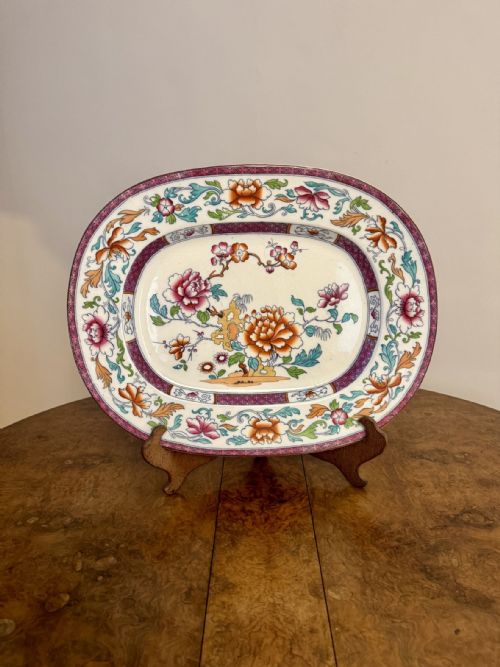
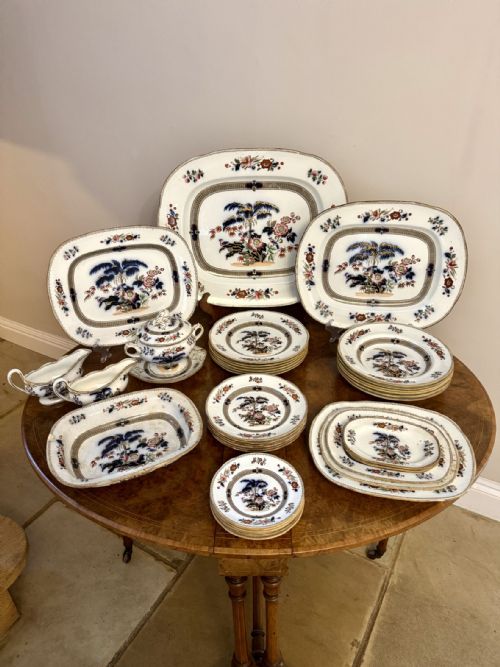
Most examples take the form of meat platters, serving plates, or chargers. Decoration leans heavily towards blue and white transfer printing, featuring scenes such as Chinese gardens and cathedral churches.
How they were made
Potters shaped these objects from earthenware and stone china, applying a lead glaze to seal the ceramic body. Cobalt pigment provided the blue colour for the printed designs.
Transfer printing relied on engraved copper plates to pull an impression on tissue paper, which was then transferred onto the damp or biscuit-fired ceramic before glazing and firing.
Retail Price Guide 2026
Typical UK retail prices for victorian transferware platter, calculated from the Sellingantiques database of over a million retail prices indexed since 2003. This retail price guide relies exclusively on Sellingantiques data; no external sources or auction records are used, so the figures do not describe the wider market.
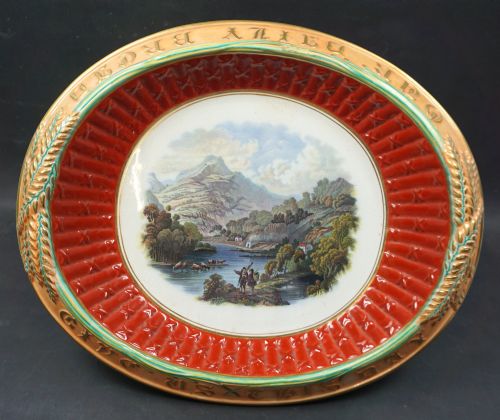
One grand platter depicts a Glasgow cathedral church, bringing Scottish architecture straight to the Sunday roast.
What varies in quality
Quality rests in the crispness of the transfer print and the balance of the composition across the surface of the platter. Earlier examples demonstrate sharper registration of the cobalt pigment.
The choice of body, ranging from standard earthenware to improved stone china, alters the weight and durability of the finished serving dish.
Copeland and Garrett·Elkin Knight and Bridgwood
The Victorian Transferware Platter Glossary
- Transferware
- Ceramic ware decorated by transferring a printed design from an engraved copper plate onto the surface using a paper tissue. This technique allowed intricate patterns to be produced consistently.
- Stone China
- A durable, dense ceramic body developed in the nineteenth century to bridge the gap between earthenware and porcelain. It resists chipping better than standard soft earthenware.
- Cobalt Pigment
- A metallic oxide used under the glaze to produce a deep blue colour that withstands high firing temperatures. It remains stable and bright after glazing.
- Charger
- A large decorative or serving plate that sits beneath other courses or serves as a central platter. These items are notably larger than standard dining plates.
Frequently Asked Questions
How are these platters best used today?
These large ceramic dishes function well as serving platters for formal dinners or family gatherings. They also make striking decorative wall plates or sideboard displays.
Care should be taken with antique earthenware to avoid harsh detergents or thermal shock from sudden temperature changes.
What periods do these platters cover?
The pieces span the nineteenth century, encompassing early Victorian manufacturing alongside items dated towards the eighteen eighties and nineties.
Stylistic shifts appear between the earlier blue and white chinoiserie pieces and later Victorian production methods.
Are all the patterns blue and white?
The selection on this page relies primarily on cobalt blue pigments applied via transfer printing. These designs encompass architectural views and garden landscapes.
Other colours remain absent from the current listings.