
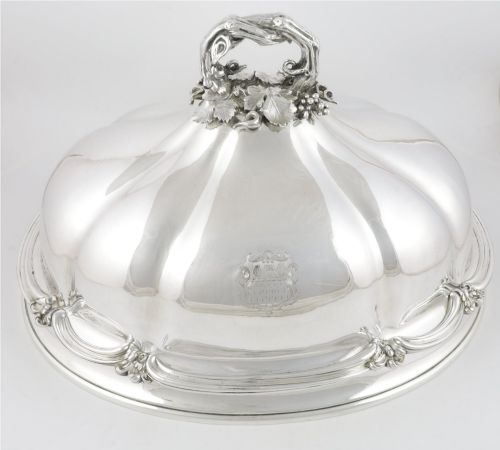
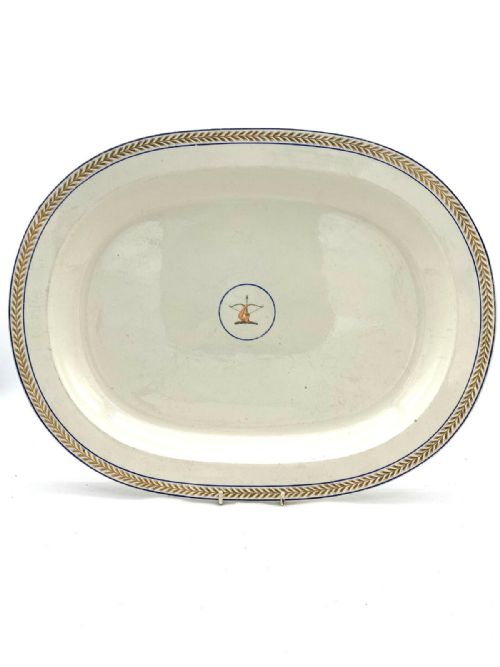


Antique Meat Platter
An antique meat platter is a substantial serving dish designed for carving at the table, offering both historical charm and practical utility.
What an antique meat platter is
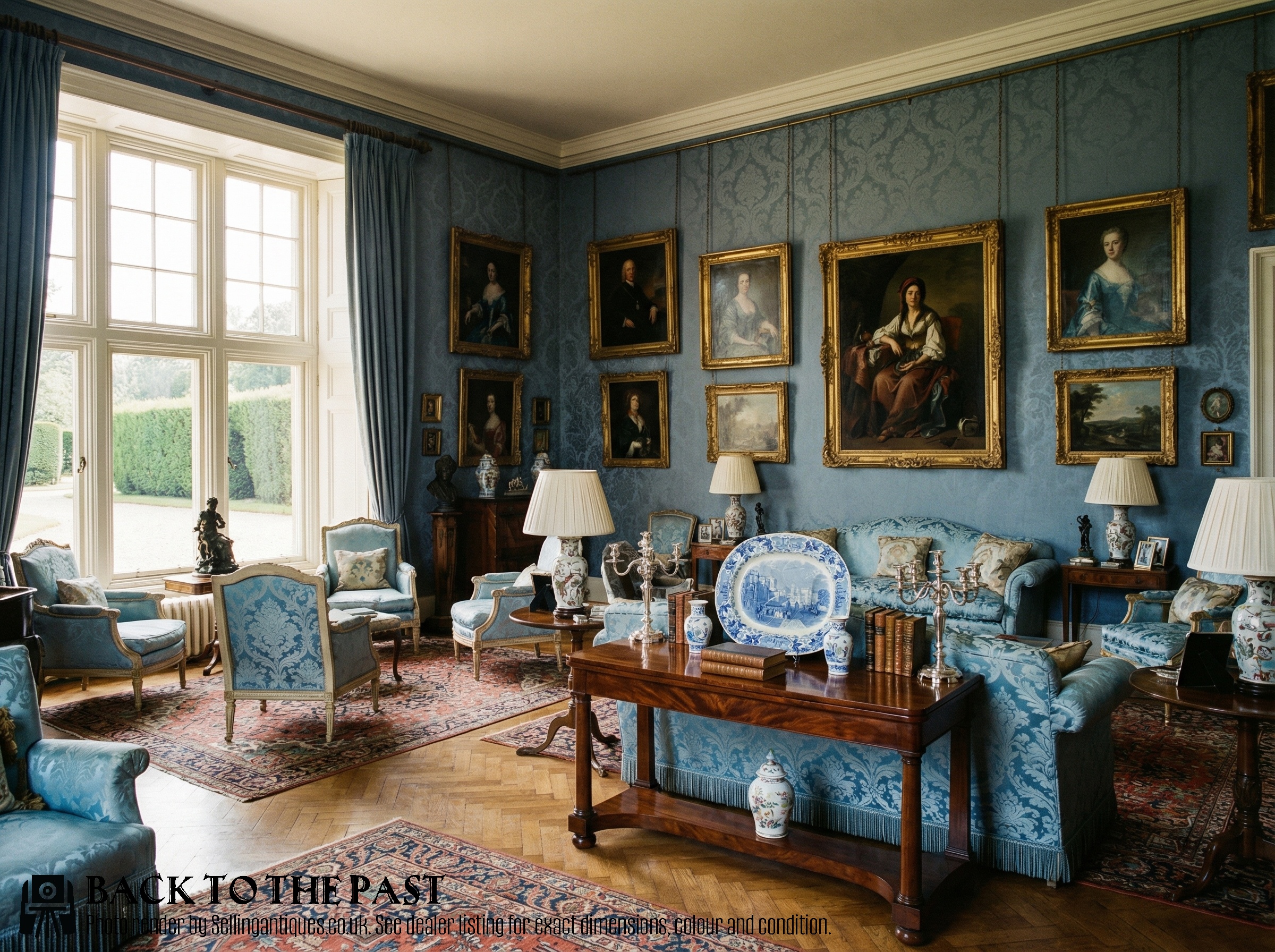
An antique meat platter is a broad, heavy serving vessel created to hold large joints or fowl during family dinners and feasts. The forms appearing here span from the Georgian period through the Victorian era, showing how dining habits evolved over a century.
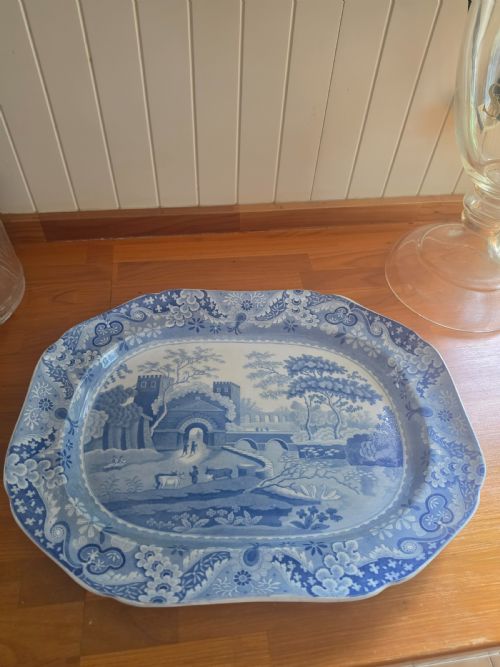
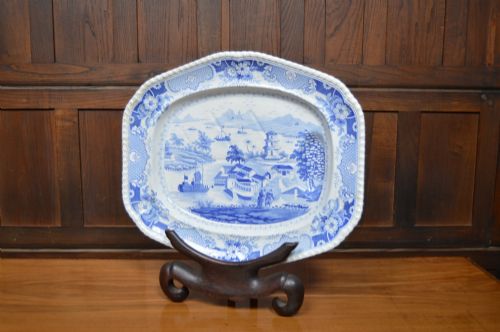
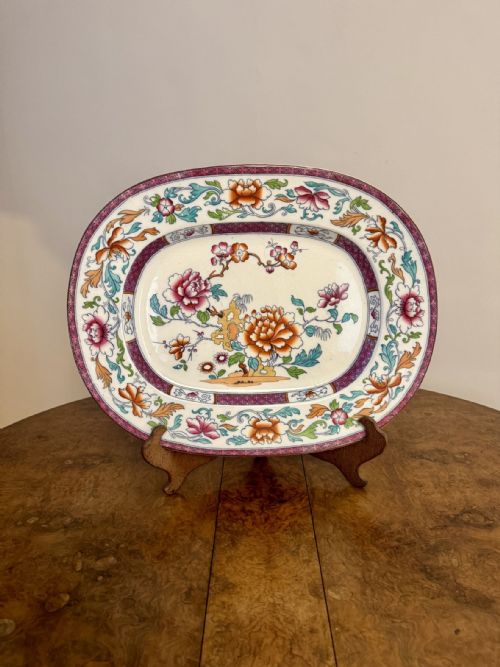
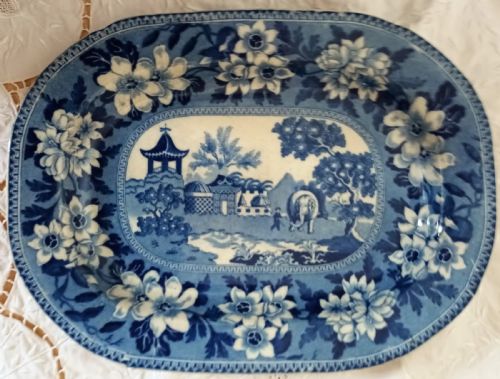
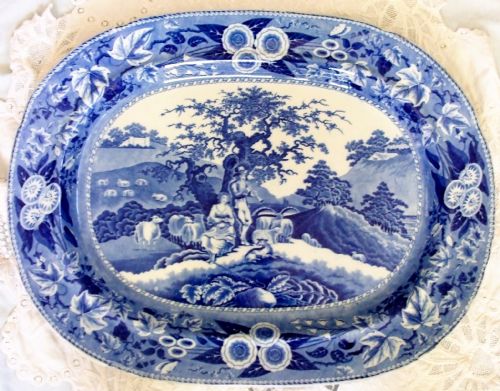
Most examples you encounter on this page date from the nineteenth century, including blue and white transfer-printed designs and architectural scenes such as Windsor Castle and Chinese Villa. These pieces reflect the nineteenth-century taste for scenic tablewares that brought narrative and landscape into the dining room.
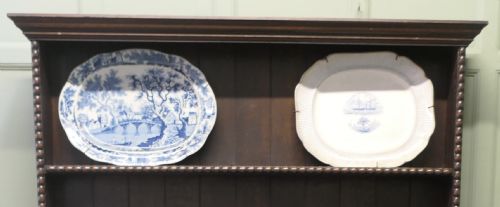
Makers produced these serving platters in generous dimensions to accommodate large roasts, often featuring recessed wells or drainage grooves to collect juices. Their substantial scale makes them focal points on a sideboard or table, whether used for serving food or displayed upright.
How they were made
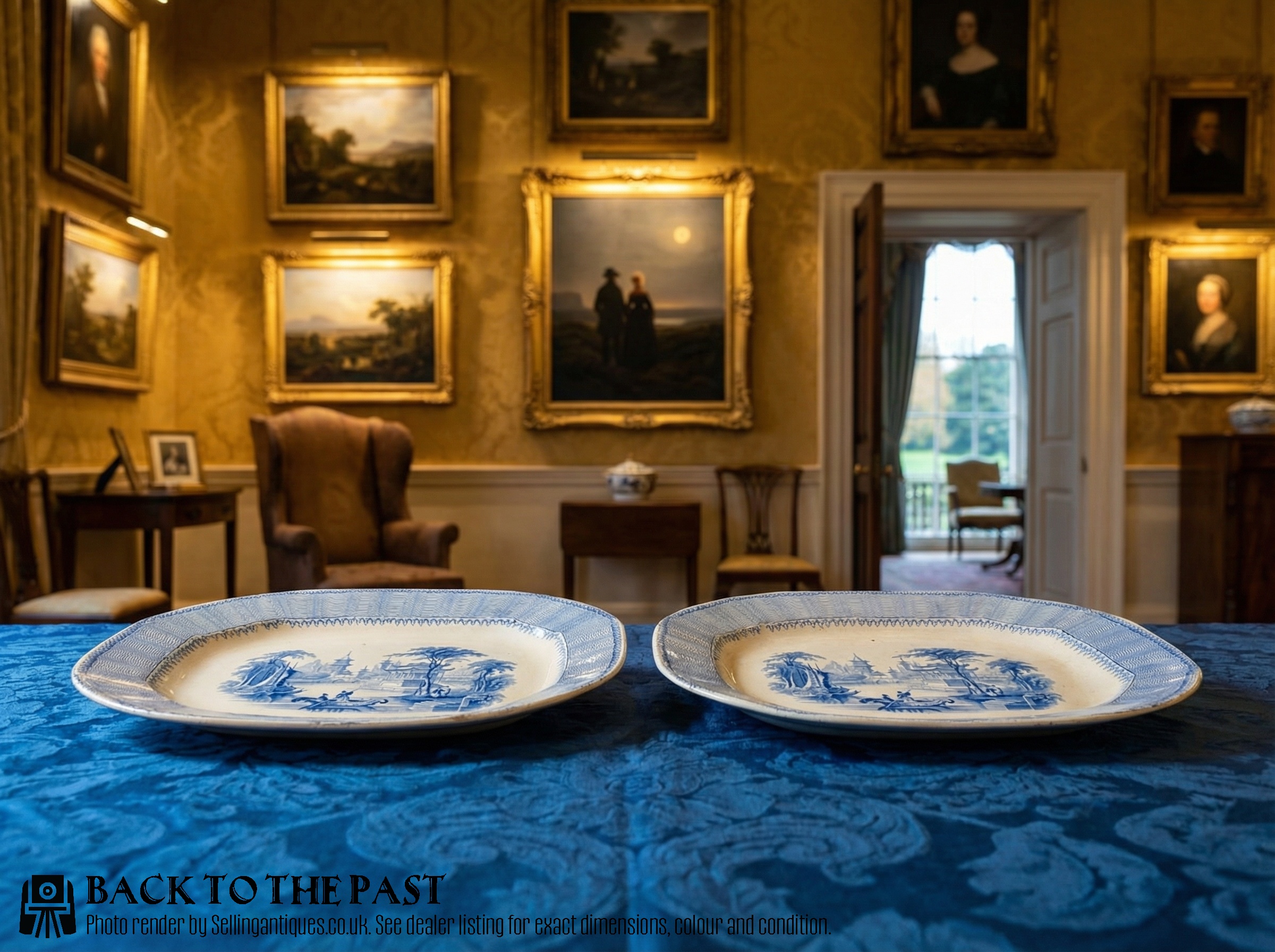
Potters shaped these items from earthenware and ironstone using traditional moulding and pressing techniques before applying lead or ceramic glazes. The surfaces were finished with hand-painted details or copper-plate transfer printing.
Transfer printing allowed potters to apply intricate patterns, such as the Shipping Series or oriental-inspired motifs, onto the ceramic body before firing. Firing in kilns set the glaze hard, protecting the underlying blue and white imagery from wear during daily use.
Retail Price Guide 2026
Typical UK retail prices for meat platter, calculated from the Sellingantiques database of over a million retail prices indexed since 2003. This retail price guide relies exclusively on Sellingantiques data; no external sources or auction records are used, so the figures do not describe the wider market.
Listings on this page include earthenware and ironstone from the Georgian and Victorian periods, featuring transfer-printed scenes.
What varies in quality
Quality in an antique meat platter rests on the crispness of the transfer print and the balance of the ceramic body. Early nineteenth-century examples often display deeper colour saturation and more refined clay bodies than later mass-produced wares.
The sophistication of the pattern and the condition of the glaze dictate desirability among collectors. Well-preserved surfaces without heavy crazing retain their original decorative impact and historical integrity.
The Antique Meat Platter Glossary
- Earthenware
- A porous pottery body fired at lower temperatures, commonly used for nineteenth-century domestic ceramics. It requires a glaze to become impermeable to liquids.
- Transfer printing
- A method of decorating ceramics by pressing paper stamped with metallic oxides onto a fired clay body. This technique enabled factories to produce intricate pictorial scenes efficiently.
- Ironstone
- A durable, heavy ceramic patented in the nineteenth century that bridged the gap between earthenware and porcelain. It resists chipping and staining much better than standard pottery.
- Crazing
- A fine network of cracks in the glazed surface caused by tension between the body and the glaze over time. While common in older ceramics, its extent influences the visual cleanliness of the piece.
Frequently Asked Questions
What were antique meat platters used for?
These large vessels served as the primary presentation dish for roasted meats, game, and poultry at formal and domestic dining tables. Their generous surface area allowed carvers to slice portions easily before serving guests.
Many incorporated subtle channels or wells designed to catch meat juices, keeping the dining table clean and preventing the roast from sitting in liquid during the meal.
How do I date an antique meat platter?
Dating relies on examining the ceramic body, the style of the printed border, and any factory marks stamped or impressed on the underside. Georgian and early nineteenth-century pieces often feature heavier earthenware bodies and hand-applied details.
Stylistic cues, such as chinoiserie motifs or topographical views like Windsor Castle, help narrow the period of manufacture when maker marks are absent or faded.
Can I use an antique meat platter for serving food?
Most of these platters remain structurally sound for serving dry foods or roasted meats at the modern dining table. However, historic glazes on nineteenth-century earthenware can sometimes contain trace elements that make daily use inadvisable for acidic foods.
Many owners prefer to use them as decorative centrepieces on sideboards, or mount them safely on walls to display the transfer-printed scenes without risk of damage.