


Blue White Earthenware Platter
A blue white earthenware platter brings striking cobalt patterns and generous proportions to the table, offering both historical charm and practical utility.
What a blue white earthenware platter is
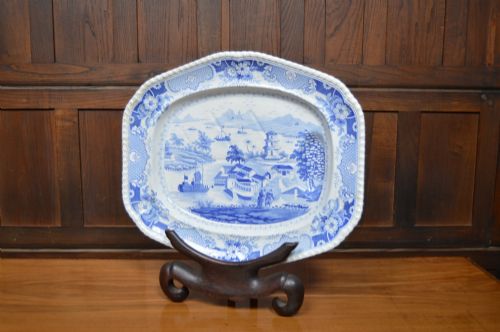
When you search for a blue white earthenware platter, you are looking at substantial ceramic serving pieces designed for meat and large courses. The examples found here span the Georgian and Victorian eras, showcasing durable earthenware bodies coated in glossy glaze. These serving platters originate primarily from the nineteenth century, reflecting the peak of British transfer printing.
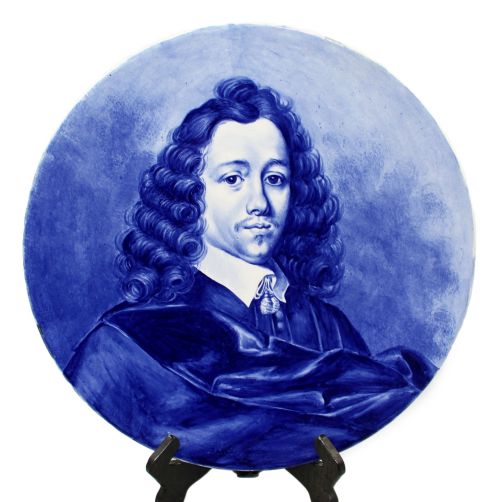
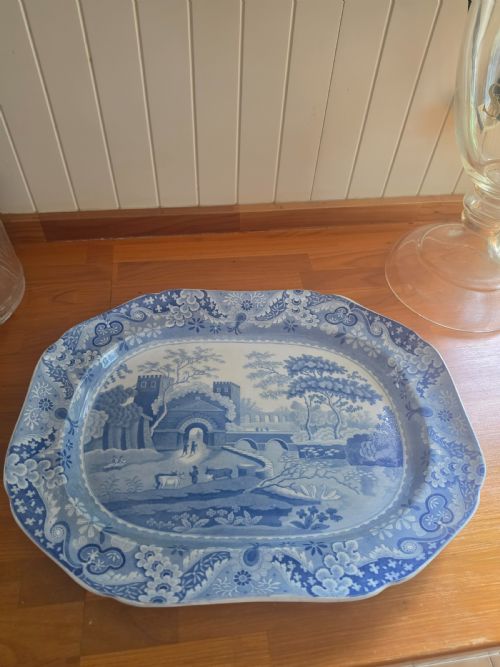
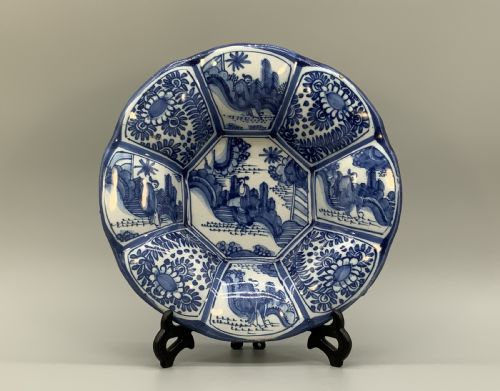
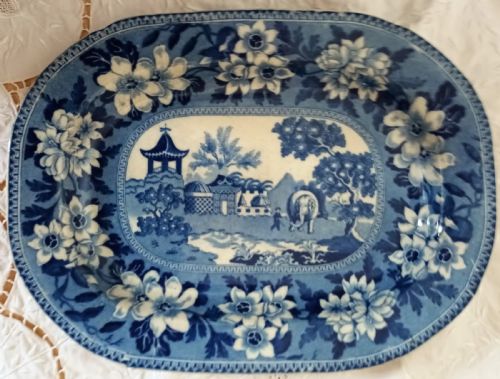
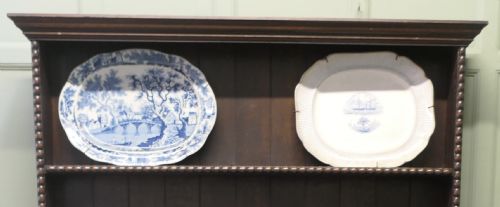
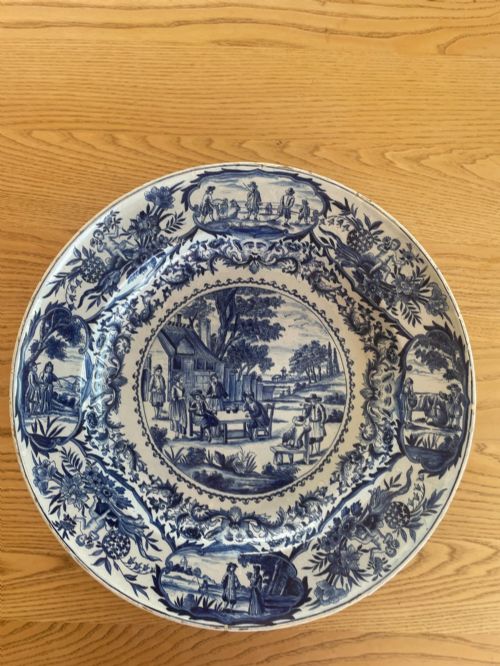
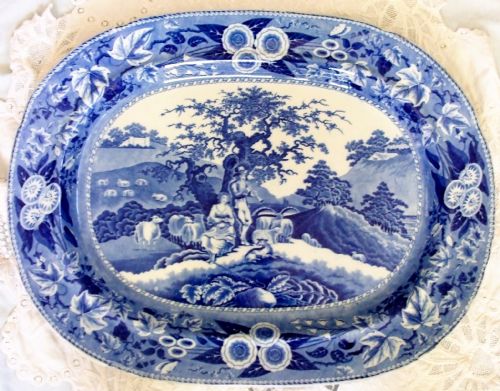
You are most likely to meet large meat platters and serving plates featuring intricate cobalt blue transfer-printed scenes. These include architectural designs like the Tower pattern, topographical views such as Windsor Castle, and classical motifs like Canovian Statues. Many exhibit octagonal or oval forms intended to hold substantial roasts for formal dining tables.
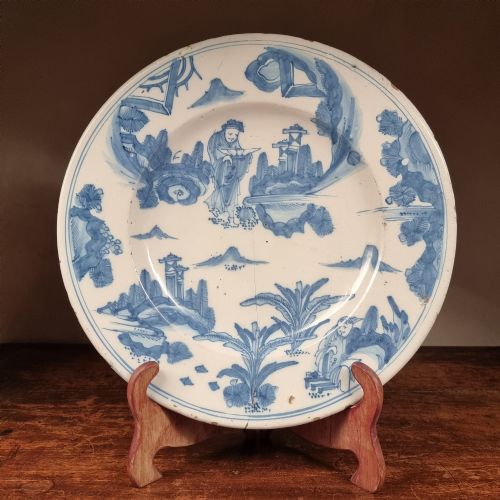
The aesthetic of these items ranges from early nineteenth-century Regency elegance to later Victorian Chinoiserie interpretations. Makers utilised contrasting borders and deep wells to collect juices during carving, combining artistic depth with functional kitchen engineering. Each piece demonstrates the heavy utilitarian role these ceramics played in historic households.
How they were made
Potters formed these pieces using earthenware clay bodies, which were shaped into large meat platters and serving trays before undergoing initial firing. Artisans then applied cobalt blue designs using transfer-printing techniques from engraved copper plates onto the biscuit ceramic. Some exceptional examples incorporate delicate details such as enamel highlights or gold leaf accents applied over the glaze.
A protective ceramic glaze was subsequently applied across the surface to seal the porous earthenware body and enrich the underlying blue pigment. The pieces underwent a second high-temperature kiln firing to fuse the glaze and fix the cobalt decoration permanently. This process produced the glossy, durable finish characteristic of nineteenth-century utilitarian ceramics.
Retail Price Guide 2026
Typical UK retail prices for blue white earthenware platter, calculated from the Sellingantiques database of over a million retail prices indexed since 2003. This retail price guide relies exclusively on Sellingantiques data; no external sources or auction records are used, so the figures do not describe the wider market.
Early diners relied on these platters to keep the roast dry, occasionally employing hidden drainage systems shaped like tiny trees.
What varies in quality
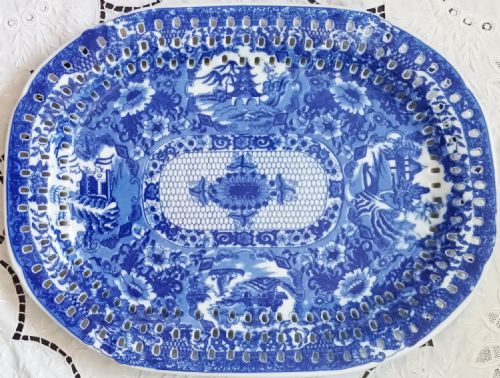
The distinction between standard utility wares and exceptional collectors' pieces lies in the crispness of the transfer print and the complexity of the form. Superior platters feature deeply struck cobalt patterns with minimal blurring, alongside specialised functional elements like integrated well and tree draining systems or matching drainer inserts. Master potteries invested in meticulous copperplate engraving, resulting in rich tonal depth within the blue decoration.
Scale and provenance further separate items at the top of the range, particularly those bearing named factory marks or bespoke heraldic crests such as the London Goldsmiths coat of arms. The weight of the earthenware blank and the absence of heavy warping from the kiln firing indicate superior manufacturing skill. Well-preserved glaze surfaces with minimal crazing and intact enamel or gold leaf embellishments elevate a serving dish from a simple kitchen relic to an accomplished work of art.
Minton·Spode·Elkin Knight and Bridgwood·Lovick
The Blue White Earthenware Platter Glossary
- Earthenware
- A porous pottery body fired at lower temperatures than stoneware or porcelain, requiring a glass-like glaze to hold liquids. It forms the heavy, durable base for these large serving dishes.
- Transfer printing
- A decoration technique where an engraved copper plate transfers a design onto tissue paper, which is then pressed onto the ceramic surface. This allowed potteries to produce intricate pictorial scenes rapidly.
- Well and tree
- A clever platter design featuring a recessed channel around the perimeter and radiating grooves that direct meat juices into a central well. It kept carved roasts elevated and dry during grand dinners.
- Drainer
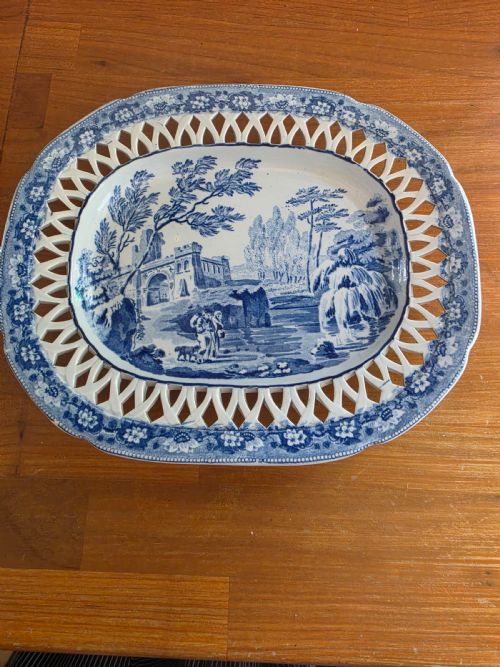
- A separate ceramic insert pierced with holes that sits inside the platter beneath the meat. It allowed fats to drain away before carving reached the table.
- Crazing
- A network of fine cracks in the glossy glaze caused by tension differences between the clay body and the glass coating over time. It is a common characteristic of aged nineteenth-century earthenware.
Frequently Asked Questions
Can I still use them for serving food?
While these antique earthenware dishes remain structurally robust, their porous clay bodies and historic glaze composition require careful handling. Modern dishwashers and microwaves should be strictly avoided to protect the historic glaze and cobalt decoration.
Hand washing in lukewarm water preserves the fragile ceramic surface and any delicate enamel or gold leaf highlights present on the piece.
How do I identify the period of a platter?
Dating relies heavily on stylistic clues such as the boldness of the floral or architectural borders and the specific shade of cobalt blue used in the transfer print. Early nineteenth-century examples often feature crisp, fine copperplate engravings compared to later Victorian production.
Maker marks stamped or impressed into the earthenware base provide definitive evidence of the pottery and operational era.
What is the difference between standard and well platters?
Standard platters offer a flat or slightly dished surface intended for general serving duties, cold meats, or side dishes. They present an uninterrupted expanse of pictorial transfer-printed decoration.
Well platters incorporate functional channels and grading designed specifically for hot carved meats, prioritising utilitarian performance alongside decorative appeal.