
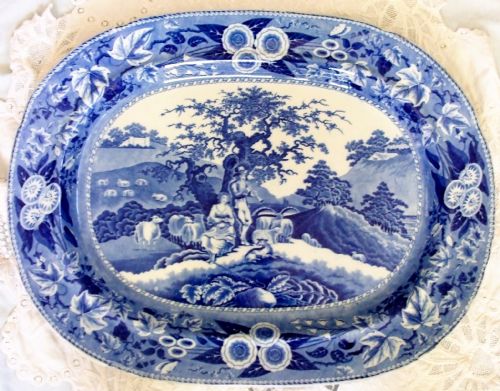


Blue White Meat Platter
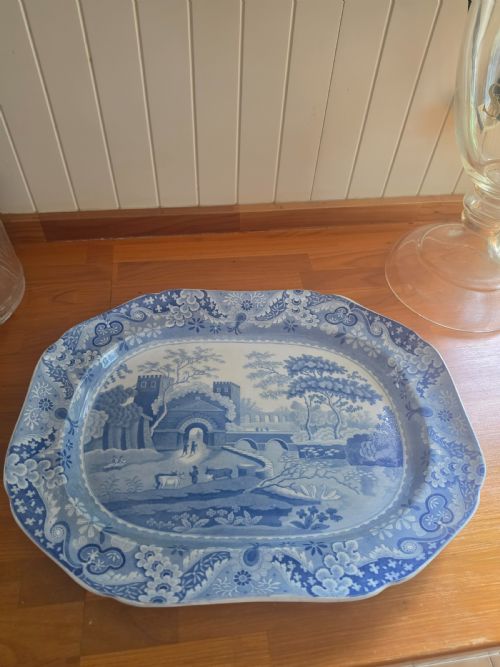
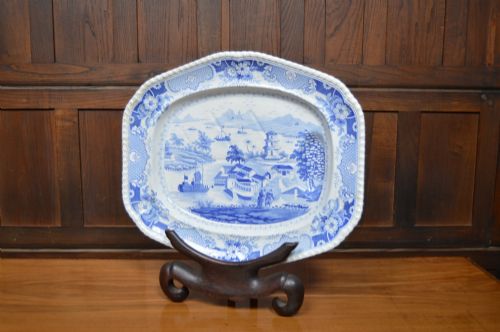
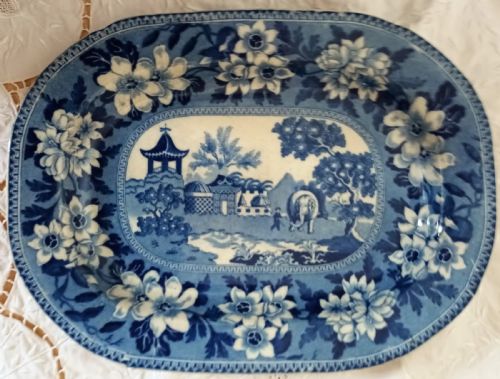
A blue white meat platter serves as the historic centrepiece of a grand dining table, bringing robust scale and striking cobalt decoration to your home.
What they are
When you search for a blue white meat platter, you encounter large serving vessels designed to hold joints of meat at the table. These pieces emerge from the nineteenth century, spanning Georgian, Victorian, and early Victorian periods.
You are most likely to meet earthenware, pearlware, and glazed pottery examples on this page. Makers and creators utilise transfer printing techniques to apply deep blue patterns onto white ceramic surfaces.
The evidence shows forms ranging from standard serving platters to specialised platters with reservoirs and drainers. These larger formats accommodate substantial feasts and substantial gatherings.
How they were made
Potters shape ceramic, earthenware, and pearlware bodies before applying a smooth ceramic glaze. Artisans then fire the pieces to fix the material and protect the surface.
Makers transfer intricate blue designs onto the pottery using printed paper applied to the biscuit ware. This transfer print method allows for consistent repetition of complex pictorial scenes across large serving dishes.
Retail Price Guide 2026
Typical UK retail prices for blue white meat platter, calculated from the Sellingantiques database of over a million retail prices indexed since 2003. This retail price guide relies exclusively on Sellingantiques data; no external sources or auction records are used, so the figures do not describe the wider market.
London Goldsmiths even added their coat of arms to one massive platter, ensuring everyone knew whose roast was best.
What varies in quality
Quality reveals itself in the clarity of the blue transfer print and the uniformity of the glazed pottery surface. Finer examples display sharp lines within the pattern and an even, glossy finish across the ceramic body.
The presence of functional enhancements such as integrated reservoirs and matching drainers elevates a piece. Structural complexity, such as specialised carving wells, separates standard serving dishes from the finest presentation platters.
John Rogers & Son·Minton·Ashworths
The Blue White Meat Platter Glossary
- Pearlware
- A refined type of earthenware developed in the late eighteenth century featuring a subtle bluish glaze that pools in crevices. This material creates a whiter appearance than standard creamware.
- Transfer print
- A method of decorating ceramics by engraving a design on a copper plate, printing it on tissue paper, and pressing it onto the clay. This technique revolutionised pottery decoration in the nineteenth century.
- Reservoir
- A recessed channel or well at one end of a platter designed to collect meat juices during carving. It prevents liquids from spilling onto the table.
- Drainer
- A perforated ceramic insert that fits inside a platter to keep the joint elevated above accumulated juices. These inserts are frequently found in larger nineteenth-century examples.
- Earthenware
- Porous pottery fired at a relatively low temperature and glazed to ensure it holds food and liquid. It forms the base material for the majority of these serving dishes.
Frequently Asked Questions
What is a blue white meat platter?
A blue white meat platter is a large ceramic serving dish decorated with blue transfer-printed patterns. These pieces date primarily from the nineteenth century and were used for presenting roasted joints at the dining table.
The deep cobalt decoration against a white glazed surface makes these items visually striking. They combine utility with decorative appeal for period dining settings.
How were meat platters used?
These platters held large cuts of meat during formal dinners and family meals. The generous surface area accommodated substantial joints before carving took place at the table.
Some examples feature built-in reservoirs or separate drainers to catch juices. This practical design kept the meat elevated and prevented liquid from spilling onto the tablecloth.
How do I date a platter?
Dating relies on stylistic markers, ceramic bodies, and recorded maker information. Pearlware bodies and Georgian styles generally indicate earlier nineteenth-century production, while later examples align with Victorian manufacturing.
Examining the depth of the glaze and the style of the transfer print helps narrow the era. Archive records and makers' marks provide further confirmation of the period.
How do I display a platter?
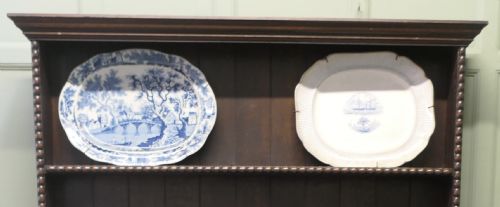
These large serving pieces look striking mounted on walls using sturdy plate hangers or displayed upright on dresser shelves. Their substantial scale allows them to anchor a room's decor.
You can also use them on sideboards or large dining tables as intended. Their decorative blue patterns complement both traditional and contemporary interiors.