


Tree and Well Platter
A tree and well platter is a grand dining table centrepiece designed to catch juices, and these examples bring history straight to the dining room.
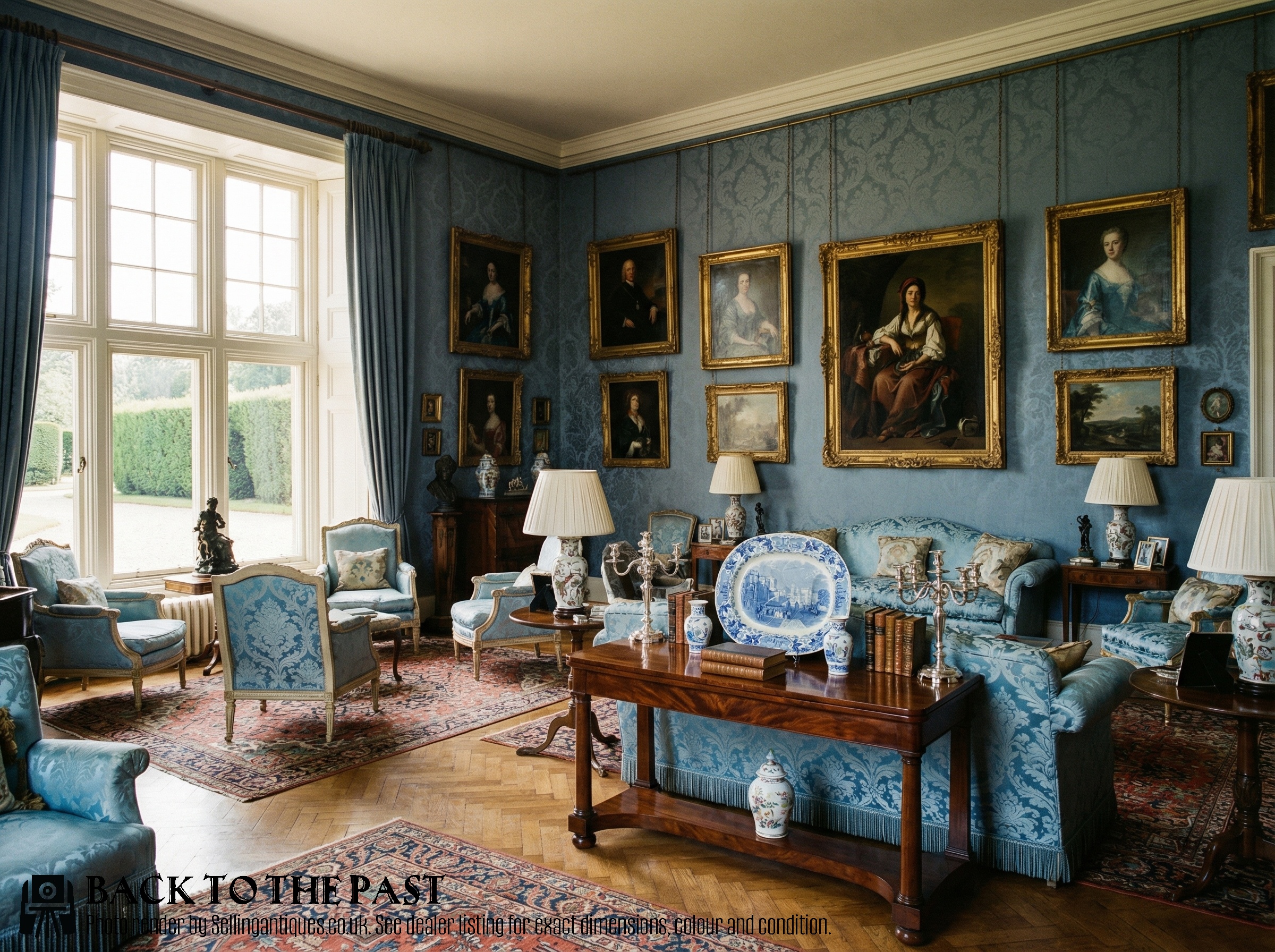
Identifying a tree and well platter
A tree and well platter is a large serving dish featuring an incised channel system that drains meat juices into a sunken reservoir at one end. When collectors search for a tree and well platter, they encounter large serving dishes spanning the Georgian, Regency and Victorian eras. These substantial platters were essential for serving roast joints at nineteenth-century dinner tables.
The pieces on this page appear in earthenware and pearlware, decorated with blue and white transfer print designs. Examples date from the early nineteenth century around eighteen hundred through to eighteen sixty, encompassing the early Victorian period. Forms include large carving dishes and meat platters bearing topographical views, castles and animal patterns.
Materials and construction
Potters shaped these large serving dishes from earthenware and pearlware, applying ceramic glaze before firing. The distinguishing feature is the system of channels, carved or pressed into the clay body during manufacture to direct liquids toward the well. This clever engineering kept the joint elevated above its own juices during carving.
Decoration relied on blue and white transfer printing, a technique where engraved copper plates transferred intricate designs onto tissue paper and then onto the ceramic surface. Scenes such as Windsor Castle, Glasgow cathedral and water dog patterns were applied in rich cobalt blue beneath the glaze. The resulting finish offered both durability and detailed pictorial narration.
Retail Price Guide 2026
Typical UK retail prices for tree and well platter, calculated from the Sellingantiques database of over a million retail prices indexed since 2003. This retail price guide relies exclusively on Sellingantiques data; no external sources or auction records are used, so the figures do not describe the wider market.
Listings feature earthenware and pearlware serving dishes spanning the Georgian, Regency and Victorian periods, decorated with blue and white transfer printing.
Judging the quality
Quality in a tree and well platter rests upon the crispness of the transfer print and the depth of the drainage channels. Finer platters display sharp, clear cobalt details without smudging, whereas lesser examples show blurred lines from worn copper plates. The pitch of the channels also matters, as better pots direct liquids swiftly to the reservoir without pooling.
The weight and potting of the ceramic body separate standard wares from superior pieces. Thicker pearlware bodies with unblemished glaze and well-defined reservoirs indicate careful Staffordshire manufacture. The artistic ambition of the transfer scene, whether a grand cathedral or a pastoral view, elevates the visual presence on the table.
The Tree and Well Platter Glossary
- Pearlware
- A refined earthenware body developed in Staffordshire, featuring a bluish-white glaze that pooled in crevices. It bridged the gap between creamware and later white ironstone.
- Transfer print
- A decoration technique using an engraved copper plate to transfer an ink design onto paper and then onto the ceramic body. This allowed intricate pictorial scenes to be replicated consistently.
- Gravy well
- The sunken reservoir at the lower end of the platter designed to collect meat juices. It ensures the carved meat remains free from standing liquid.
- Earthenware
- A porous ceramic fired at lower temperatures, requiring a vitreous glaze to render it waterproof. Most nineteenth-century kitchen and dining ceramics utilised this versatile material.
Frequently Asked Questions
What is a tree and well platter?
A tree and well platter is a large nineteenth-century serving dish featuring an engraved channel network and a central reservoir. These ceramic pieces were designed to hold large joints of meat during carving.
The channels collected escaping juices and drained them away from the meat into the well at the base. This kept the roast elevated and made gravy collection straightforward at the dining table.
How were these platters used?
These platters served as the focal point for carving roast beef, lamb or game at grand nineteenth-century dinners. The host carved the joint directly on the ceramic surface.
As the meat was sliced, the natural juices ran down the branching channels into the well. A spoon could then easily dip into the reservoir to serve the au jus alongside the meat.
How do I date a transfer print platter?
Dating relies on stylistic markers such as the ceramic body type, border patterns and the specific shade of blue used in the transfer print. Pearlware bodies and specific cobalt tones often point to the early nineteenth century.
Subject matter also aids dating, as topographical views of landmarks like Windsor Castle or Glasgow cathedral correspond with specific decades of Staffordshire production.
How do I display a large meat platter?
Large platters look striking displayed upright on sturdy plate stands or hung securely on walls using specialist brass hangers. Their generous dimensions make them natural visual anchors in a dining room.
Alternatively, they can lie flat on a sideboard or dresser top. This keeps the intricate blue and white transfer scenes and the clever channel work fully visible.