


Blue Transferware Platter
A blue transferware platter brings deep cobalt pattern and nineteenth-century ceramic weight directly to the table.
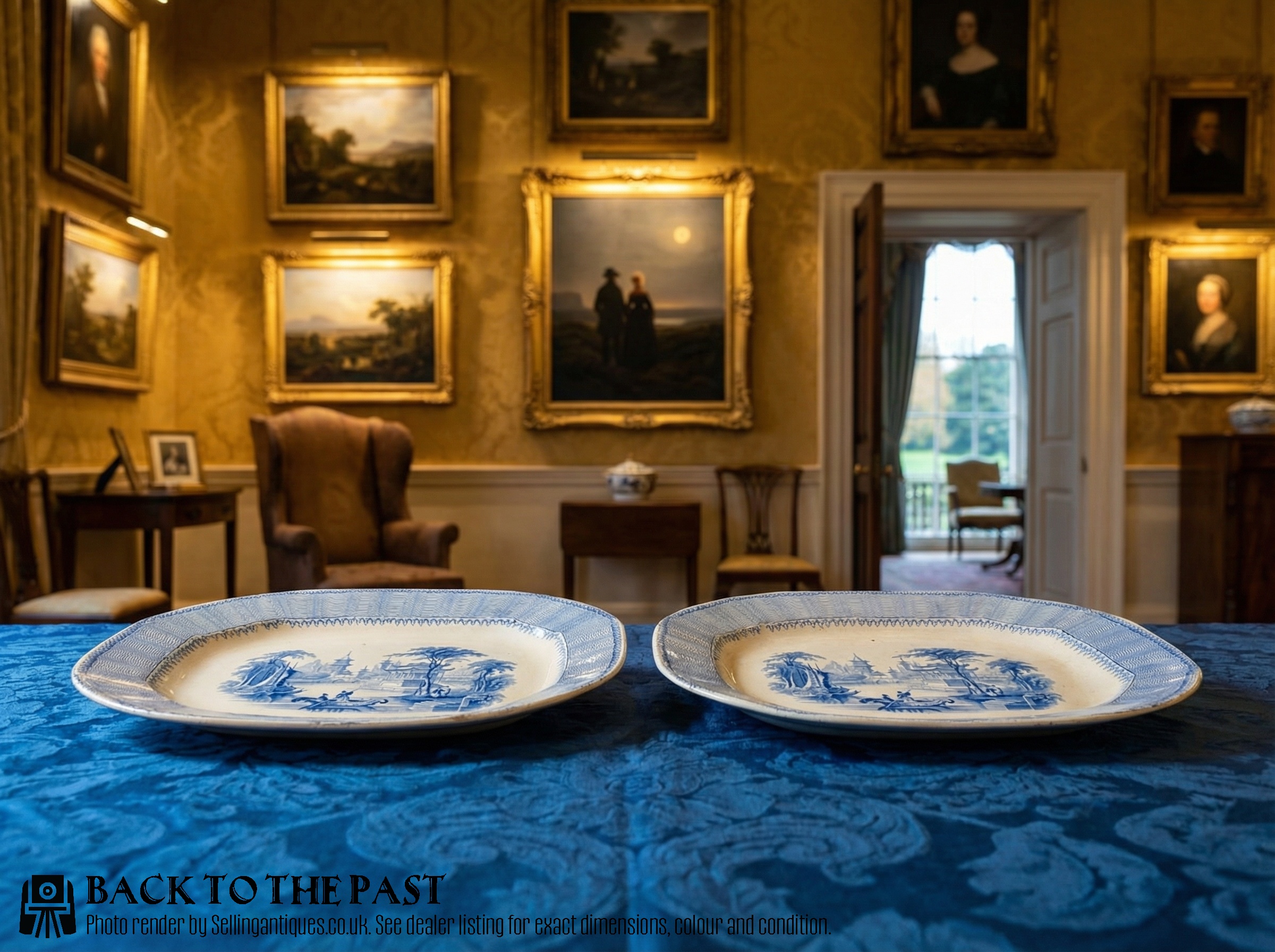
Blue Transferware Platter
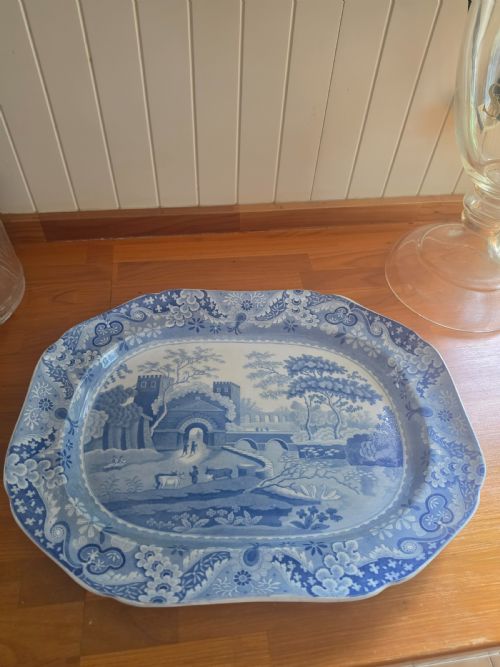
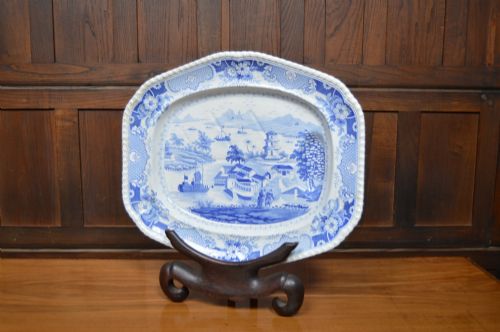
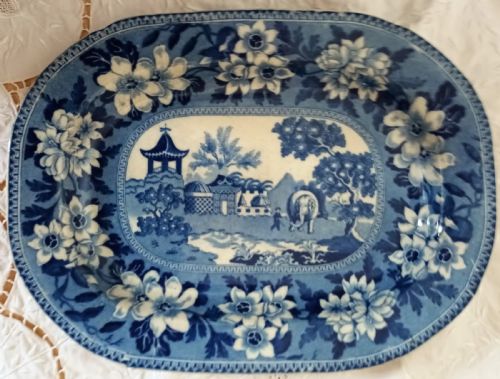
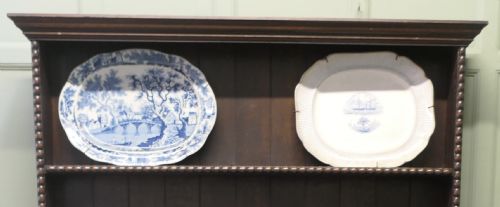
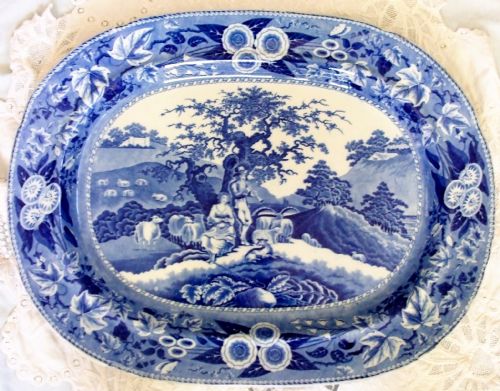
A blue transferware platter serves large joints of meat or displays decorative scenes across earthenware and pearlware bodies. You will frequently encounter nineteenth-century English examples spanning the Georgian and Victorian eras, often bearing topographical views or chinoiserie motifs.
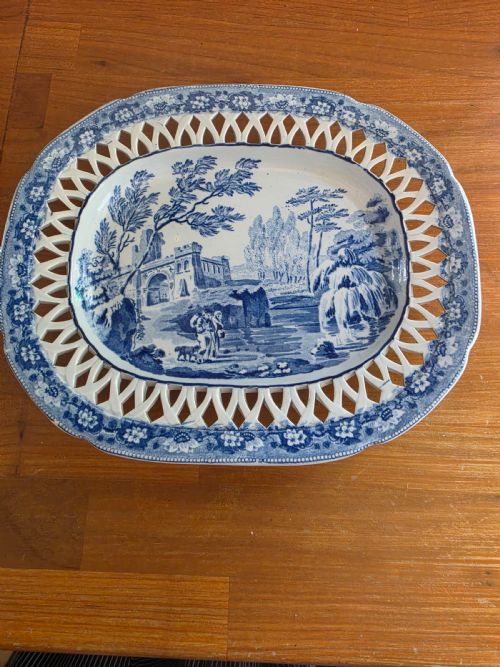
The form ranges from standard serving platters to large chargers and pieces fitted with matching ceramic drainers. Makers produced these items across Staffordshire and beyond to supply dining rooms with durable tableware adorned with printed designs.

Materials and transfer printing
Potters built these dishes using earthenware, pearlware, or stone china, then applied cobalt pigment to paper from a copperplate engraving. This inked design transferred onto the ceramic body before glazing and firing fixed the deep blue colour permanently beneath the surface.
Makers refined the clay bodies through the nineteenth century, moving from early pearlware towards heavier ironstone and glazed ceramic. The combination of engraved copper plates and fluid glaze created the characteristic depth found in these printed patterns.
Blue Transferware Platter Retail Price Guide 2026
Typical asking prices for blue transferware platter among the pieces listed under this phrase on Sellingantiques today, from the lower quarter to the upper quarter. They describe what is for sale here now, not the wider market.
Listings feature earthenware, pearlware, and stone china bodies decorated with cobalt pigment under clear glaze.
Judging depth of tone and execution
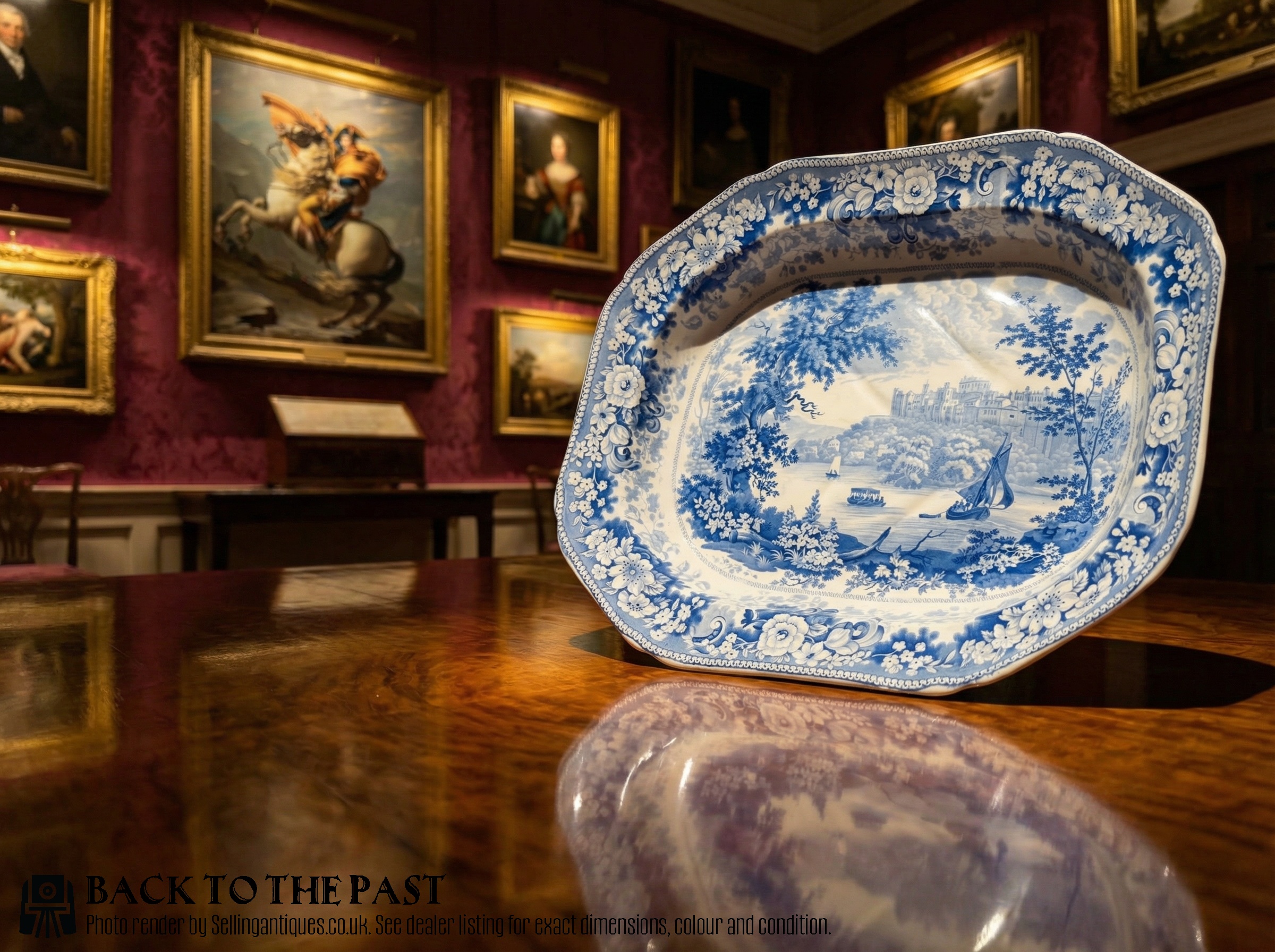
Quality rests upon the crispness of the transfer print and the richness of the cobalt pigment. Strong examples display sharp lines without blurring where the paper met the curved ceramic surface.
The artistic ambition of the pattern and the balance of the glaze determine the standing of individual pieces. Master potters achieved even tones and clear pictorial details that elevate utilitarian meat plates into works of graphic art.
Spode·Davenport·John Rogers and Son·Wedgwood·Minton·John Ridgway·Copeland and Garrett·Stubbs
The Blue Transferware Platter Glossary
- Transferware
- Pottery decorated by printing a design from an engraved copper plate onto tissue paper, which was then transferred onto the unglazed ceramic body. This method allowed intricate pictorial scenes to be produced rapidly.
- Pearlware
- A refined earthenware developed in the late eighteenth century featuring a subtle bluish glaze that pooled in recesses. It bridged the gap between creamware and later white ironstone.
- Cobalt pigment
- The metallic oxide mineral used to achieve the deep blue colour in underglaze ceramic decoration. It withstands high firing temperatures without losing intensity.
- Meat drainer
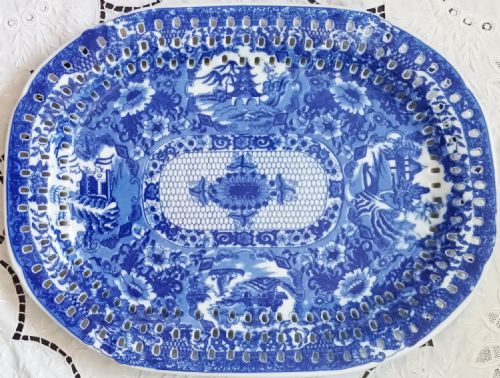
- A pierced ceramic insert designed to sit inside a matching platter to keep joints of meat elevated above accumulated juices. These slotted plates are frequently found paired with large serving dishes.
- Chinoiserie
- A European artistic style reflecting Chinese motifs and imaginary oriental landscapes. It appeared frequently on nineteenth-century tableware and serving dishes.
Blue Transferware Platter: Frequently Asked Questions
How do I date a blue transferware platter?
Dating relies on ceramic body composition, backstamps, and the style of the printed border. Early pieces from the Georgian period often use pearlware bodies, while later Victorian examples utilise heavier ironstone.
Potters frequently incorporated registry marks or named patterns that help narrow down the year of production. Examining the glaze and footrim provides further clues regarding age.
Can I use an antique platter for serving food?
These ceramic pieces were originally made for dining tables and heavy serving use. Many modern owners continue to use them for special occasions.
Careful hand washing is essential to preserve the historic glaze and prevent damage to the earthenware body. Avoid harsh detergents and sudden thermal shocks.
What is a meat drainer?
A meat drainer is a pierced ceramic plate that fits neatly inside a large serving platter. It allowed juices to drain away from roast joints during carving.
Finding a platter with its original matching drainer is particularly satisfying for collectors. These inserts feature matching transfer-printed patterns.
Why are some blue patterns blurry?
Blurring occurs when the tissue paper carrying the cobalt pigment slips during the transfer process onto the curved ceramic surface. Early printing techniques made absolute precision difficult to control consistently.
Some collectors appreciate these minor printing slips as evidence of hand craftsmanship. Extreme blurring, however, diminishes the visual impact of the pictorial scene.