


Antique Meat Dish
An antique meat dish brings generous proportions and hand-applied transfer printing or silver craft to the dining table, offering both decorative presence and practical service.
What these pieces are
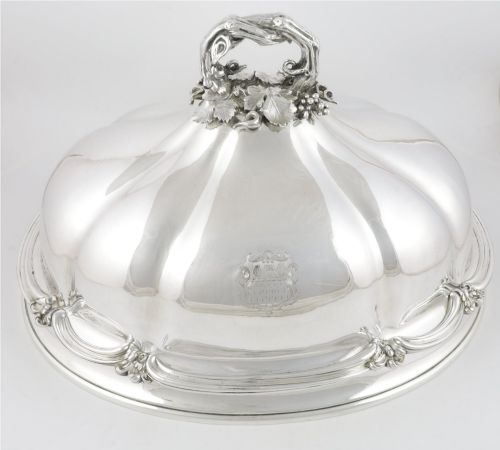
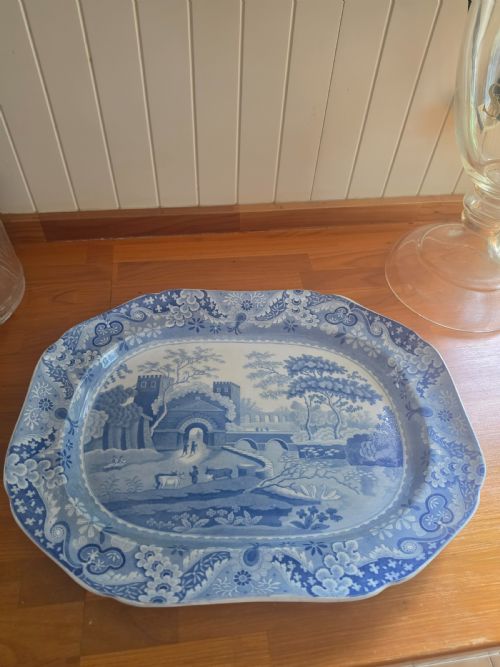
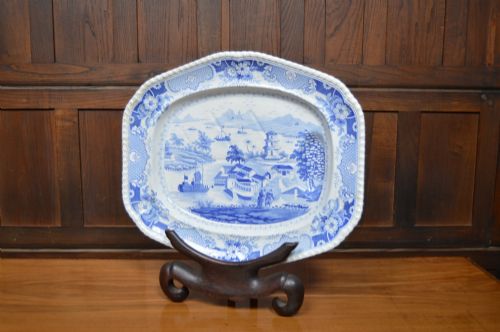
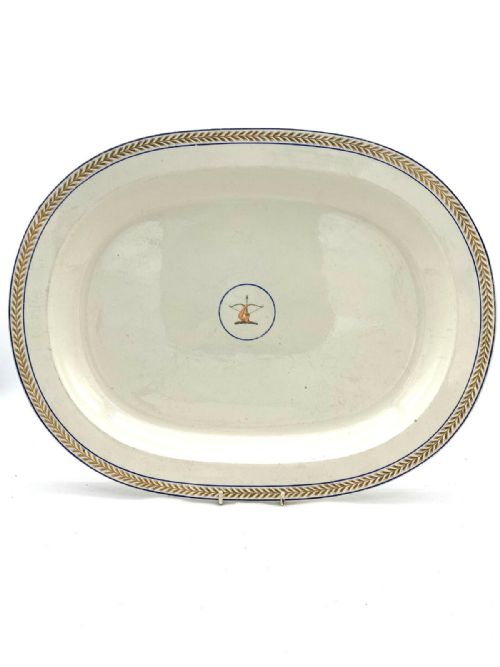
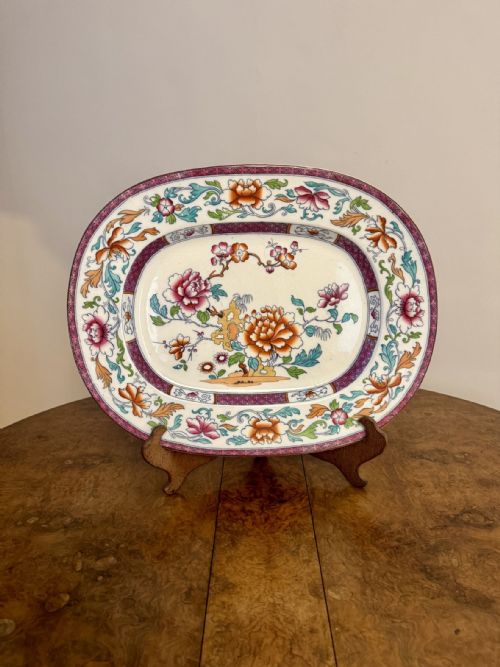
An antique meat dish is a substantial serving vessel designed for presenting jointed meat or large poultry at the dining table. The pieces found here span the Georgian, Regency, and Victorian eras, taking the form of large serving platters in ceramic, porcelain, and sterling silver.
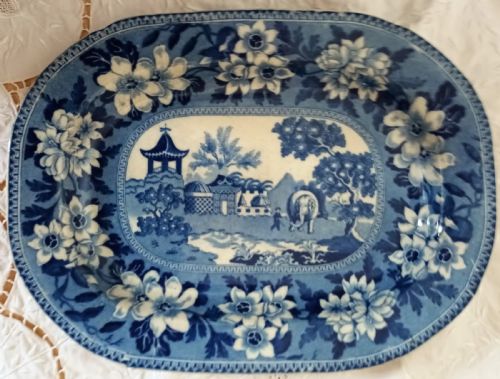
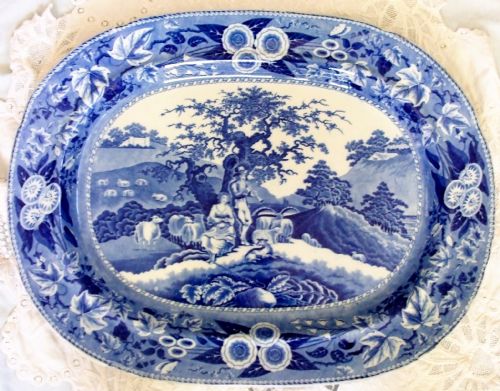
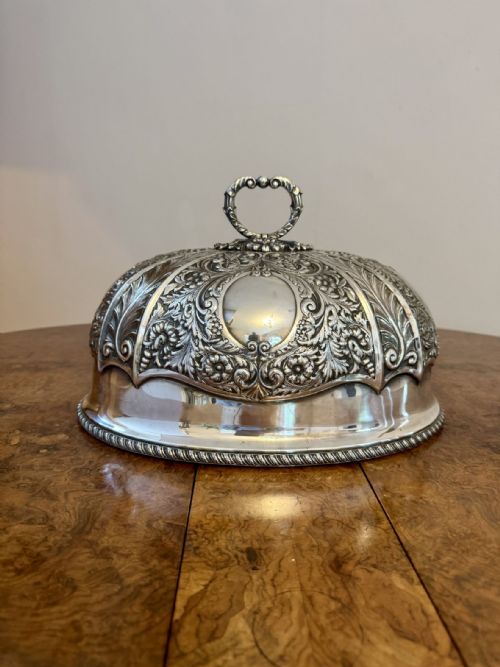
Ceramic examples frequently display elaborate blue and white transfer-printed topographical or botanical scenes. Silver iterations range from heavy sterling platters to entrée dishes and specialised tongue platters produced by notable makers.
The domestic forms focus heavily on generous lengths to accommodate carved joints, while silver variants often incorporate shaped edges and classical borders fitting for formal nineteenth-century dining.
How they were made
Pottery examples are formed from earthenware or porcelain, shaped and fired before receiving hand-applied transfer printed patterns beneath a clear glaze. Makers such as Copeland and Garrett and Spode utilised copper-plate printing to transfer intricate blue designs onto the ceramic body.
Silver and silver-plated platters are hammered, cast, and hand-finished from metal stock, utilising traditional silversmithing techniques to raise deep wells and shape decorative rims. Cut glass dishes rely on wheel-cutting and polishing to create geometric surface patterns upon heavy blanks.
Retail Price Guide 2026
Typical UK retail prices for meat dish, calculated from the Sellingantiques database of over a million retail prices indexed since 2003. This retail price guide relies exclusively on Sellingantiques data; no external sources or auction records are used, so the figures do not describe the wider market.
Listings span earthenware, porcelain, and sterling silver, moving across Georgian, Regency, and Victorian stylistic periods.
What varies in quality
The standard of an antique meat dish rests upon the crispness of the transfer print or the weight and balance of the metalwork. Finer ceramic pieces display clear, sharp pigment transfer without smudging, whereas silver quality is judged by the integrity of the gauge and the precision of the chased border details.
Makers' marks provide a clear distinction, with named factories like Spode or Copeland and Garrett commanding attention for their refined ceramic bodies and rich glaze depth. In silver, master marks from makers such as Paul Storr indicate superior metallurgical work and structural robustness.
Copeland and Garrett·Spode·Paul Storr·Royal Worcester·Hukin and Heath
The Antique Meat Dish Glossary
- Transfer printing
- A decoration technique where an engraved copper plate transfers a design onto tissue paper, which is then pressed onto the unfired ceramic body. This method allowed factories to produce complex pictorial scenes consistently across large serving platters.
- Sterling silver
- An alloy consisting of pure silver and other metals, typically copper, standardised for durability and strength in tableware. Items made from this material often bear hallmarks indicating the year and maker.
- Entrée dish
- A covered serving vessel intended for bringing portions of meat or side dishes to the table. These pieces frequently feature removable handles for versatile table arrangements.
- Glaze
- A glassy coating fused to the surface of ceramics during firing to seal the porous clay body. It provides a smooth, impervious finish that protects the underlying transfer print.
Frequently Asked Questions
How were antique meat dishes used?
These large vessels sat at the centre of the dining table to hold roasted joints, poultry, or sliced meat carved by the host.
Their generous surface area and slight wells caught juices, making them central to formal household dining rituals.
How do I identify a Georgian meat dish?
Georgian pieces often display hand-painted or early transfer-printed blue and white Chinese export motifs, or heavy sterling silver construction.
Examine the base for impressed factory marks or the absence of Victorian registration stamps to confirm the earlier date.
Can I use these platters for food today?
Most ceramic and silver dishes are robust enough for serving dry foods or cold meats during special occasions.
Check the glaze for stability and avoid serving highly acidic foods directly on antique silver or cracked earthenware surfaces.