

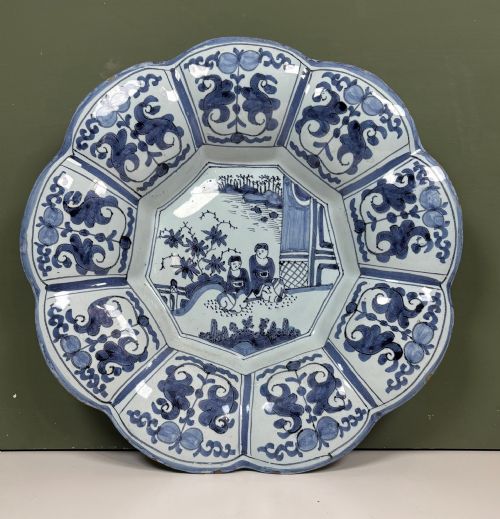
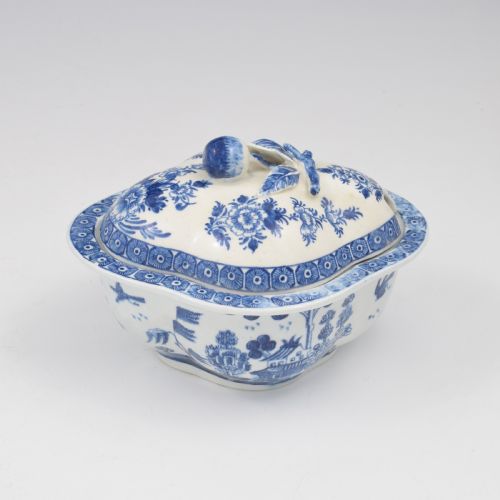
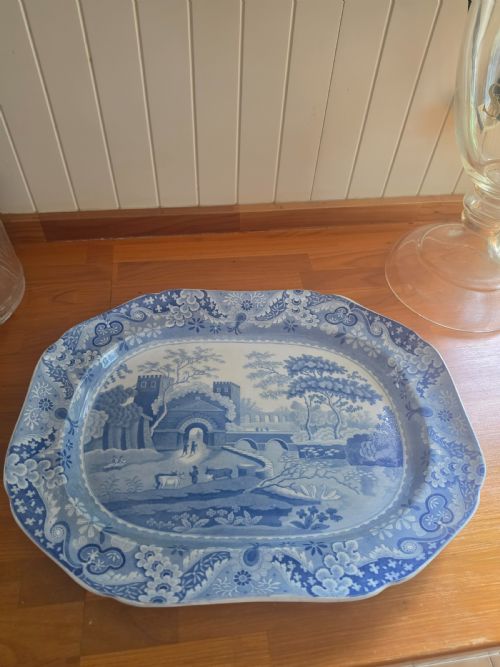
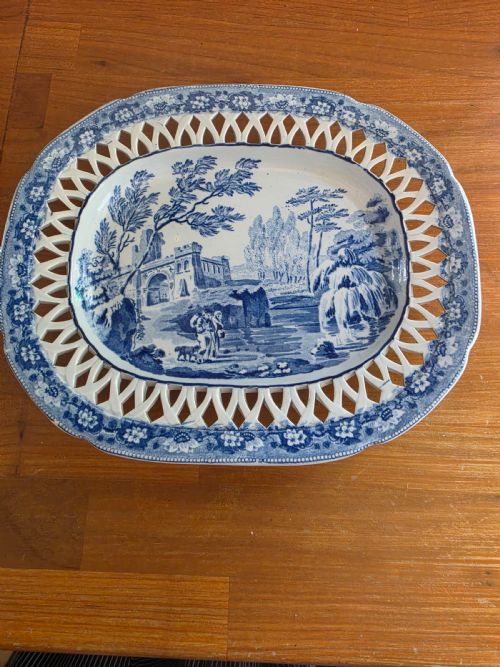

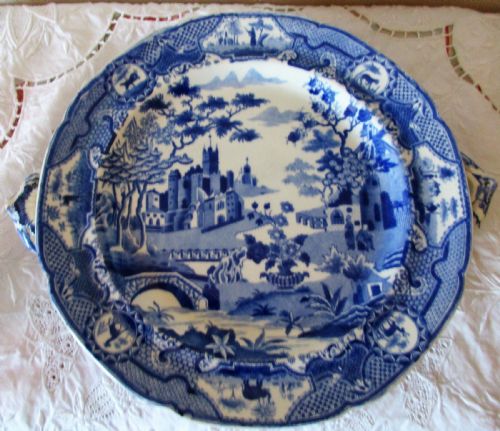
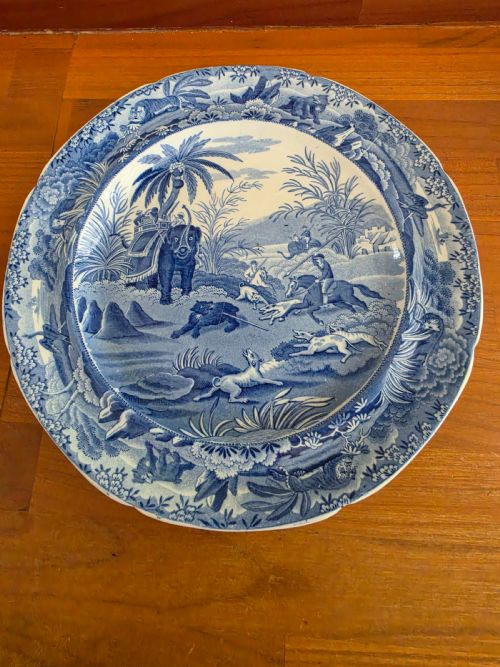
Georgian Blue White Dish
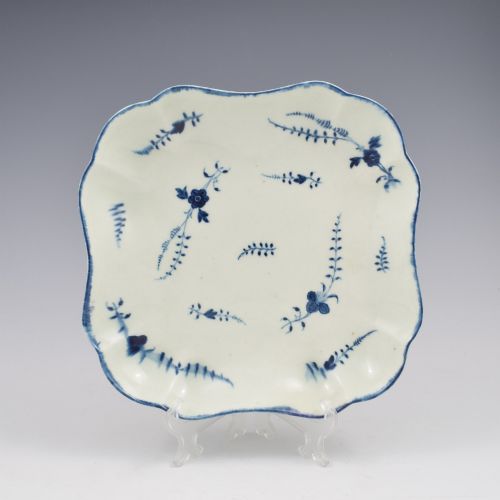
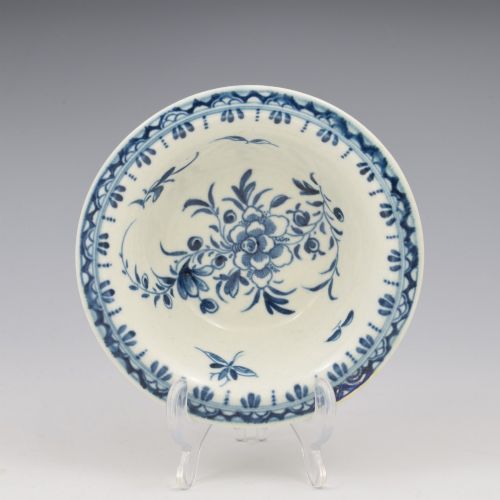
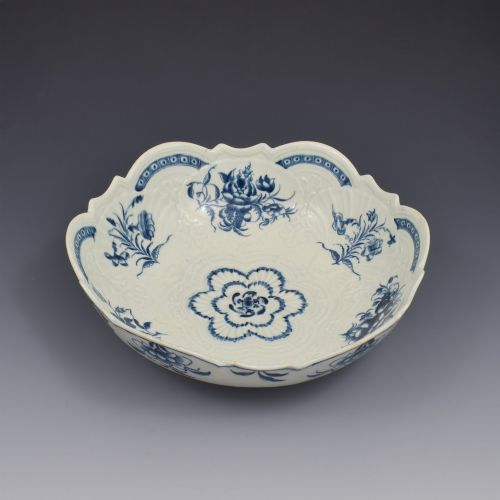
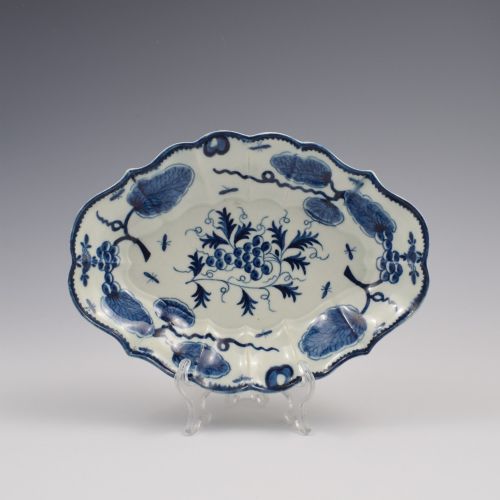
A georgian blue white dish brings eighteenth and nineteenth-century ceramic history straight to your table in deep cobalt tones.
Identifying these pieces
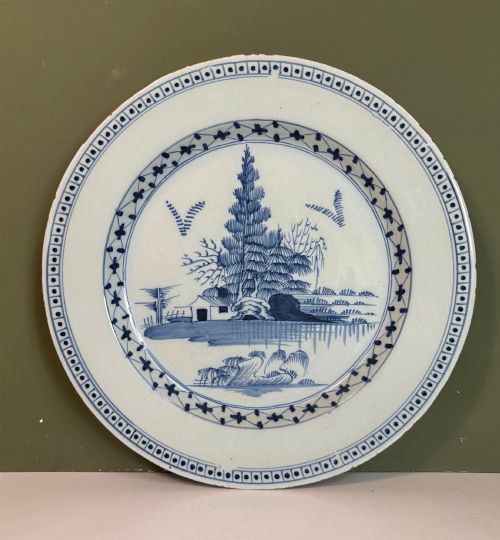
A georgian blue white dish covers utilitarian plates, shallow vessels and large serving platters made across the eighteenth and nineteenth centuries. Buyers searching this phrase encounter earthenware, soft-paste porcelain and pearlware bodies carrying distinct transfer-printed or hand-painted cobalt scenes.
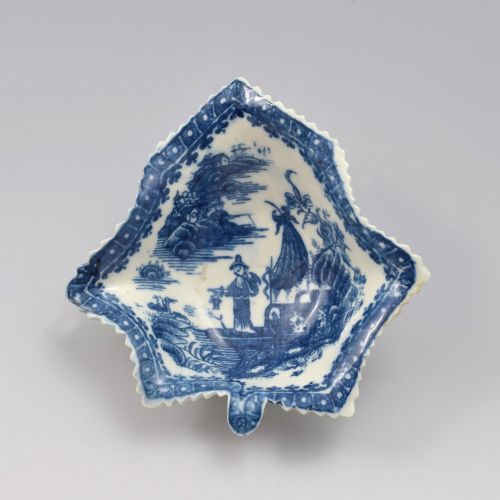
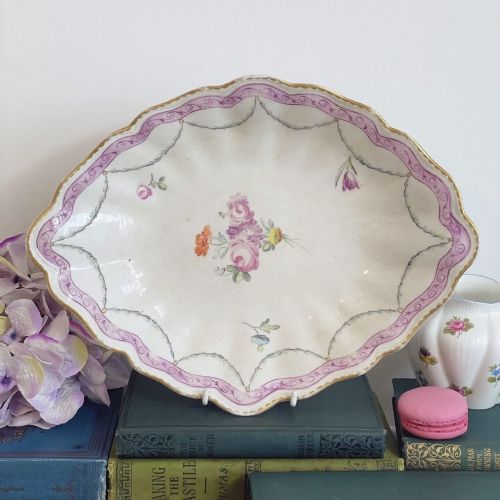
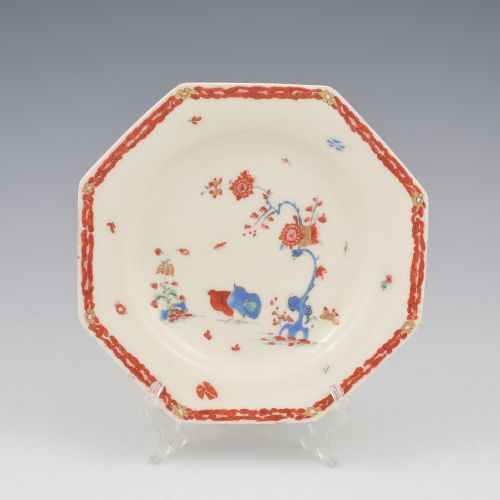
The assortment on this page ranges from early porcelain dessert pieces to heavy pottery platters decorated with British history, topographical views and orientalist patterns. Forms span simple plates up to specialised asparagus dishes and generous serving dishes designed for formal dining.
Materials and construction
Potters built these vessels using earthen clays, pearlware bodies and soft-paste porcelain, finishing each piece with a smooth ceramic glaze. The deep blue coloration comes from cobalt oxides applied directly to the ceramic body or under the protective glaze layer.
Decoration relied heavily on transfer printing, a technique where engraved copper plates transferred intricate blue designs onto paper and then onto the moist pottery surface before firing. This allowed factories to produce complex pictorial patterns like ruins, figures and landscapes with remarkable consistency.
Early potters decorated plates with distant visions of Delhi and ancient British kings while working beside smoky Staffordshire kilns.
Assessing quality
Quality rests upon the clarity of the transfer-printed design and the smoothness of the underlying glaze. Finer pieces maintain crisp lines in complex pictorial patterns without blurring or smudging where the paper met the curved ceramic surface.
The weight and refinement of the body itself distinguish standard utility earthenware from delicate soft-paste porcelain or high-grade pearlware. Superior potting shows in balanced proportions, even wall thickness and careful finishing around the foot rims.
John Rogers and Son·Mason·Spode·Mayer and Newbold·Robert Hamilton of Stoke·Thomas and Benjamin Godwin
The Georgian Blue White Dish Glossary
- Pearlware
- A refined earthenware developed in the late eighteenth century featuring a subtle bluish glaze that pooled in crevices to mimic Chinese export porcelain.
- Soft-paste porcelain
- A ceramic composition fired at lower temperatures than hard-paste porcelain, creating a creamy body and a brilliant glass-like glaze.
- Transfer printing
- A decoration method using an engraved copper plate to print intricate designs onto paper, which was then pressed onto unglazed or biscuit pottery.
- Underglaze
- Pigment applied to the ceramic body before the transparent glaze layer is added and fired, sealing the colour permanently beneath the surface.
- Cobalt
- A metallic oxide used by potters to achieve deep, stable blue hues that could withstand high kiln temperatures without burning away.
Frequently Asked Questions
How do I date a blue and white dish?
Dating relies on identifying the ceramic body, such as pearlware versus soft-paste porcelain, and examining the transfer-printed pattern for historical context. Potters' marks on the underside also help narrow down the manufacturing decade.
Style clues like border designs and topographical subjects further anchor pieces to the eighteenth or nineteenth century.
Are these dishes safe for daily use?
While these antique ceramics served practical dining purposes originally, modern use risks thermal shock and surface wear. Historic glazes can also contain trace elements.
Collectors generally prefer to display or use them gently for dry foods rather than everyday dining.
Why is the blue colour blurry on some pieces?
Blurring happens when the cobalt ink bleeds slightly into the glaze during the high-temperature firing process. Early transfer-printing techniques sometimes struggled to keep lines pin-sharp.
This minor diffusion is characteristic of period manufacturing rather than a modern flaw.