
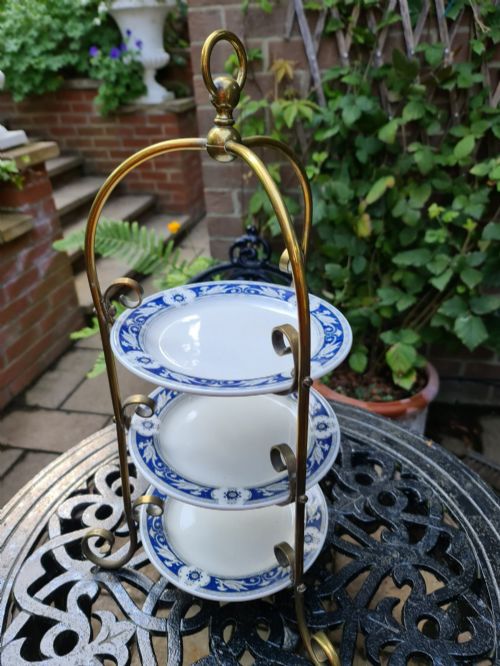
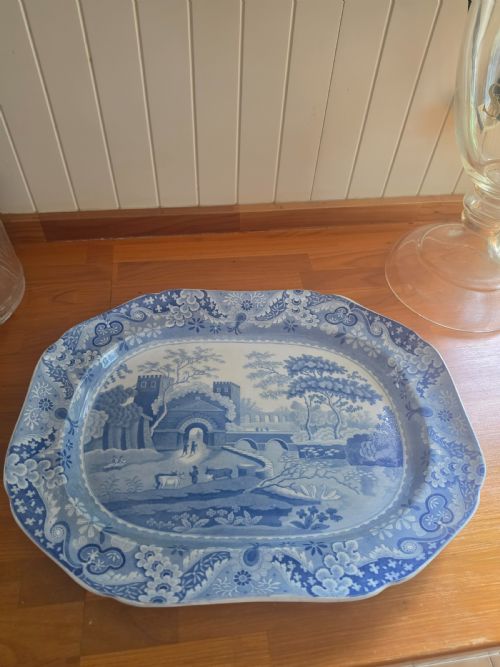
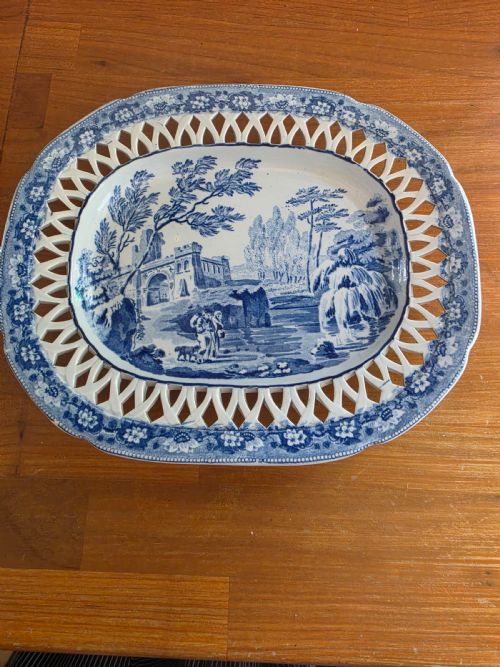
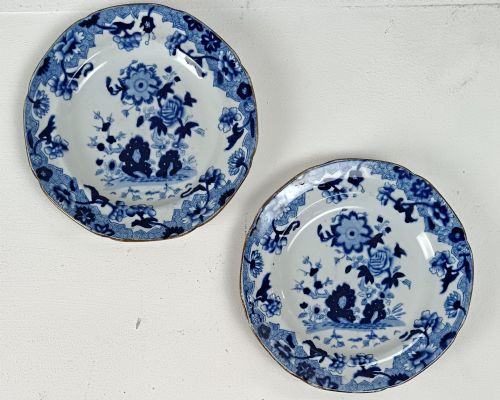

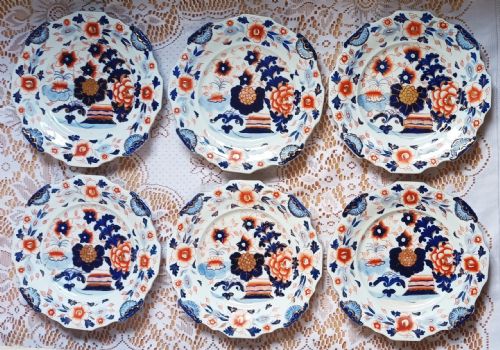


Blue Transferware Plate
A blue transferware plate brings rich monochrome charm to your table, offering an enduring slice of history in every printed scene.
What blue transferware plate means in practice
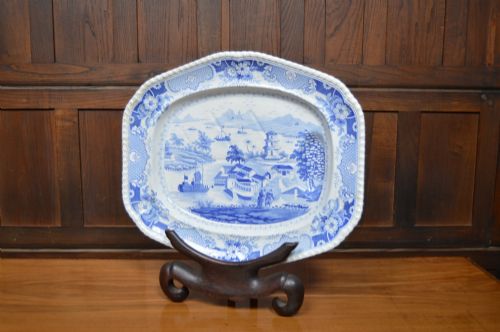
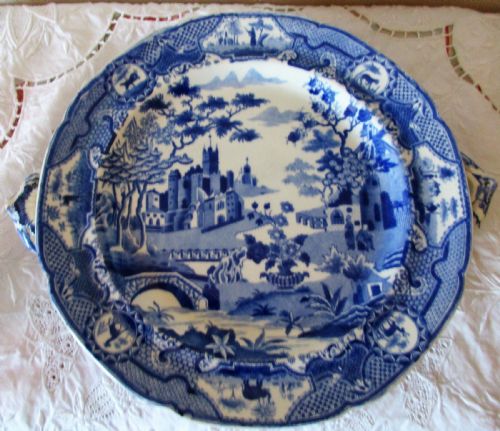
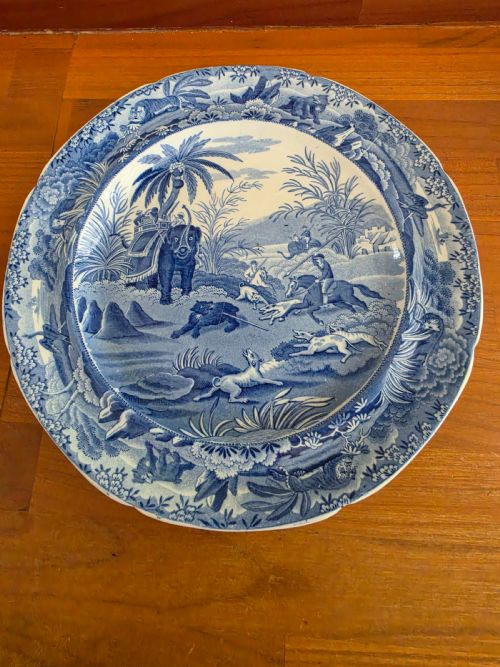
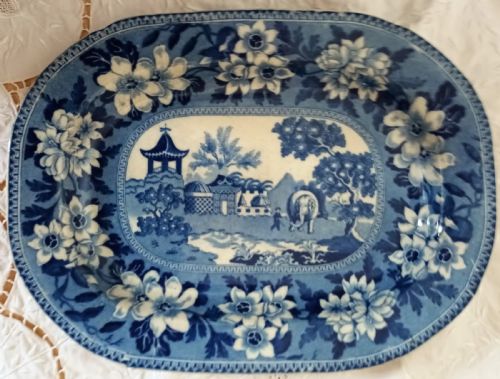
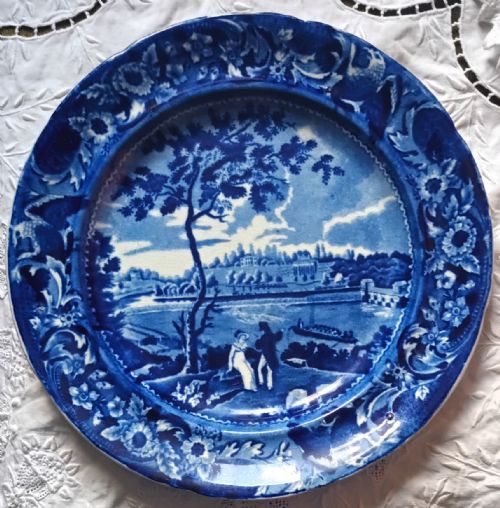
When you search for a blue transferware plate, you are looking at earthenware and pearlware vessels decorated with printed cobalt designs. These items span the nineteenth century and the late eighteenth century, featuring diverse topographical views and pictorial patterns.
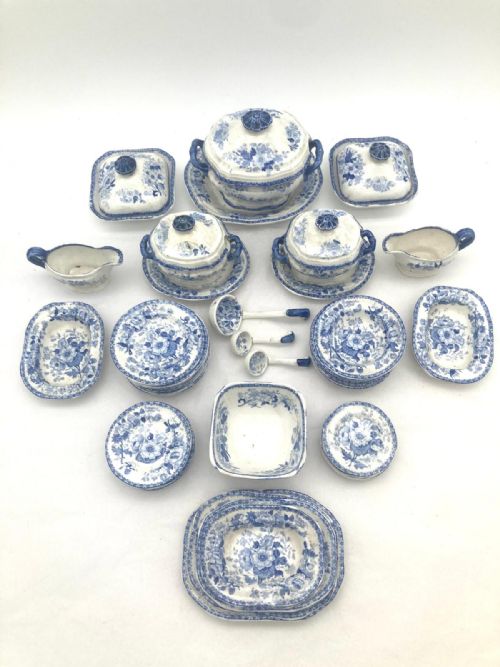
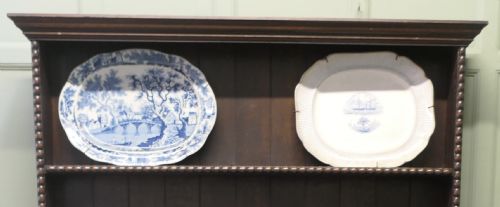
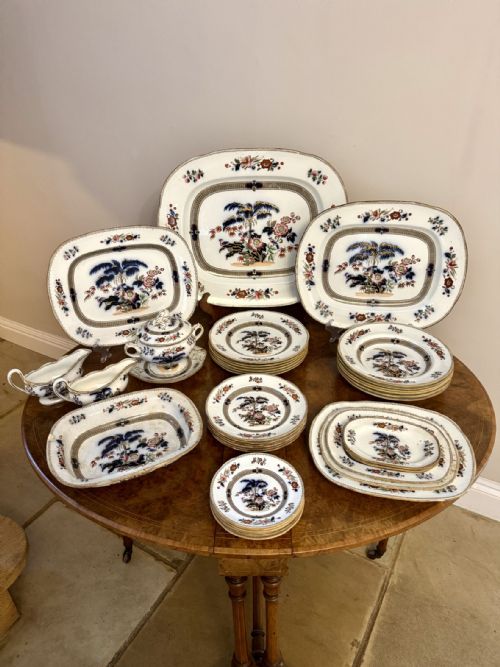
The pieces on this page include meat plates, chargers, and decorative plates that showcase styles from the Georgian and Victorian eras, alongside Georgian Chinoiserie. You will encounter large serving platters and standard dinner plates alike, each bearing deep blue motifs beneath a clear glaze.
Makers such as Stubbs, Pettys and Co. Leeds, John Davenport, and Caughley produced these remarkable ceramics in England. Their work captures everything from traditional willow patterns to specific architectural sights like Wiseton Hall and Fair Mount near Philadelphia.
Materials and methods behind the blue transferware plate
Potters shaped these objects from ceramic bodies, predominantly earthenware and pearlware, before applying a fluid cobalt glaze to the surface. The intricate patterns were transferred from engraved copper plates onto tissue paper and then pressed onto the unfired or biscuit ceramic.
A protective glaze sealed the cobalt design during firing, locking the rich blue pigment into the ceramic body. This transfer printing technique allowed Staffordshire and other English potteries to produce detailed pictorial scenes with remarkable consistency.
Retail Price Guide 2026
Typical UK retail prices for blue transferware plate, calculated from the Sellingantiques database of over a million retail prices indexed since 2003. This retail price guide relies exclusively on Sellingantiques data; no external sources or auction records are used, so the figures do not describe the wider market.
Early potters occasionally forgot to remove the tissue paper cleanly, leaving tiny blue paper ghosts baked permanently beneath the glaze.
Judging the quality of a blue transferware plate
Quality rests in the crispness of the transfer print and the depth of the cobalt glaze, where finer examples display sharp lines without blurred edges or pooling pigment. The clarity of the engraved narrative, whether a sprawling landscape or an architectural view, dictates the visual success of the piece.
The sophistication of the ceramic body also matters, as lighter pearlware variants with subtle blue-tinted glazes often demand more attention than heavier nineteenth-century earthenware. Maker attribution elevates a piece significantly, particularly when clear factory marks or distinct topographical signatures remain visible on the reverse.
Caughley·Stubbs·Pettys and Co Leeds·John Davenport
The Blue Transferware Plate Glossary
- Transferware
- Earthenware or pottery decorated by pulling an engraved design from a copper plate onto paper and stamping it onto the ceramic body. This process revolutionised Staffordshire pottery production in the Georgian era.
- Pearlware
- A refined type of earthenware developed in the late eighteenth century featuring a subtle bluish glaze that pooled in crevices to mimic Chinese porcelain. It forms the base of many early chargers.
- Cobalt Glaze
- The deep blue metallic oxide used to colour the printed design beneath the clear outer glaze. It creates the characteristic rich tone seen on nineteenth-century plates.
- Charger
- A large decorative plate or platter traditionally used for serving meat or as a base setting at formal dining tables. These items frequently feature expansive topographical or scenic transfers.
Frequently Asked Questions
What is a blue transferware plate?
It is an English ceramic dish decorated with a printed cobalt design transferred from an engraved copper plate. These items date primarily from the Georgian and Victorian periods.
Potters used earthenware and pearlware bodies, covering the intricate blue scenes with a protective glaze that preserves the detail over centuries.
How do I date an old plate?
Dating relies on examining the ceramic body, the tint of the glaze, and any maker marks stamped or printed on the reverse. Earlier pearlware versions feature a characteristic bluish tinge to the glaze.
Later nineteenth-century pieces often utilise heavier earthenware bodies and distinct topographical titles that connect them to known Staffordshire potteries.
Can I use these plates daily?
While these ceramics were originally utilitarian tableware, surviving examples from the eighteenth and nineteenth centuries are generally treated as decorative or display pieces today. Hand washing helps preserve the delicate glaze and historic ceramic body.
Displaying them on plate racks or walls allows you to appreciate the detailed pictorial scenes safely away from daily wear.
What patterns are most common?
Traditional landscape scenes, architectural views like Wiseton Hall, and classical Chinoiserie motifs such as the willow pattern appear frequently across these listings. Topographical scenes depicting American and English locations were especially popular among Georgian makers.
Each pattern tells a visual story, reflecting the tastes and global interests of the period in which it was printed.