


Chinoiserie Wall Plate
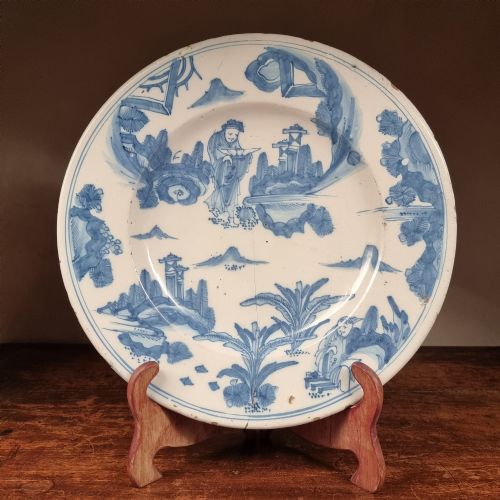
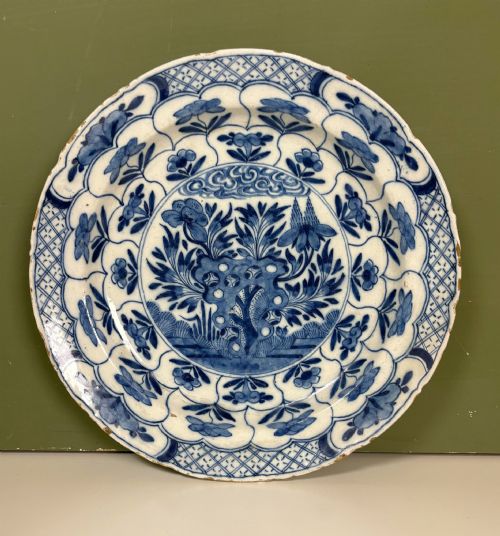
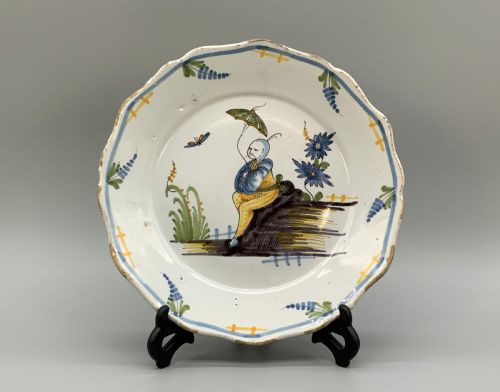
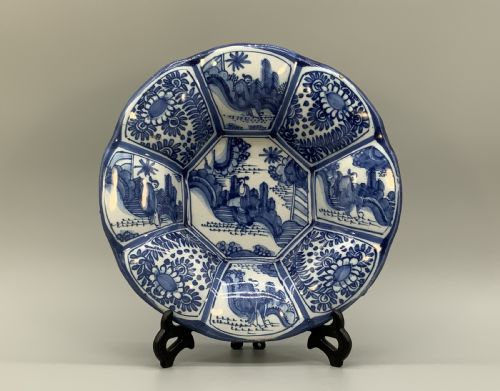
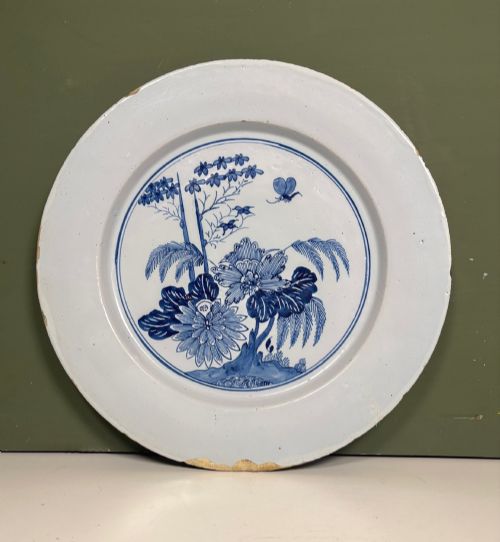
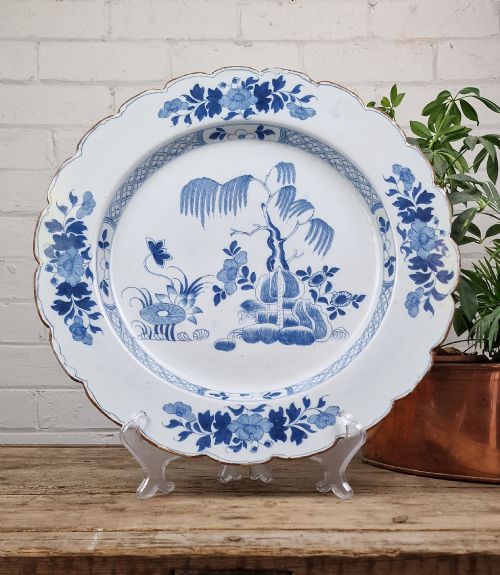
These chinoiserie wall plate examples bring hand-painted blue and white scenes from distant landscapes straight into British rooms.
Understanding Chinoiserie Wall Plate Pieces
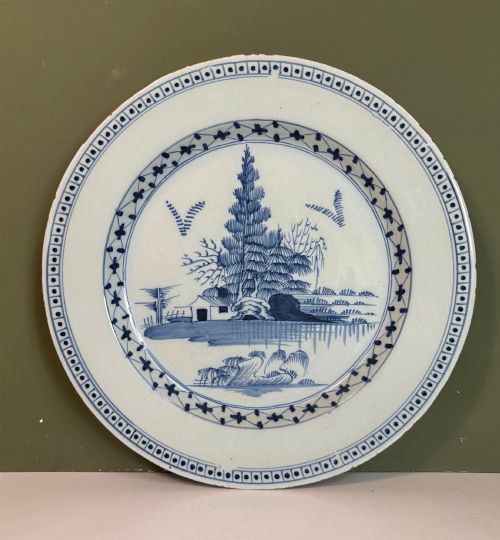
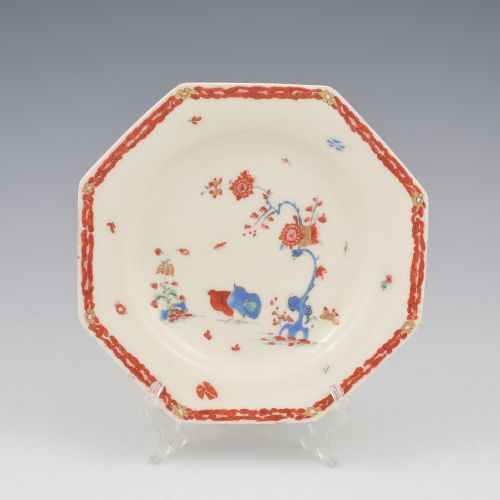
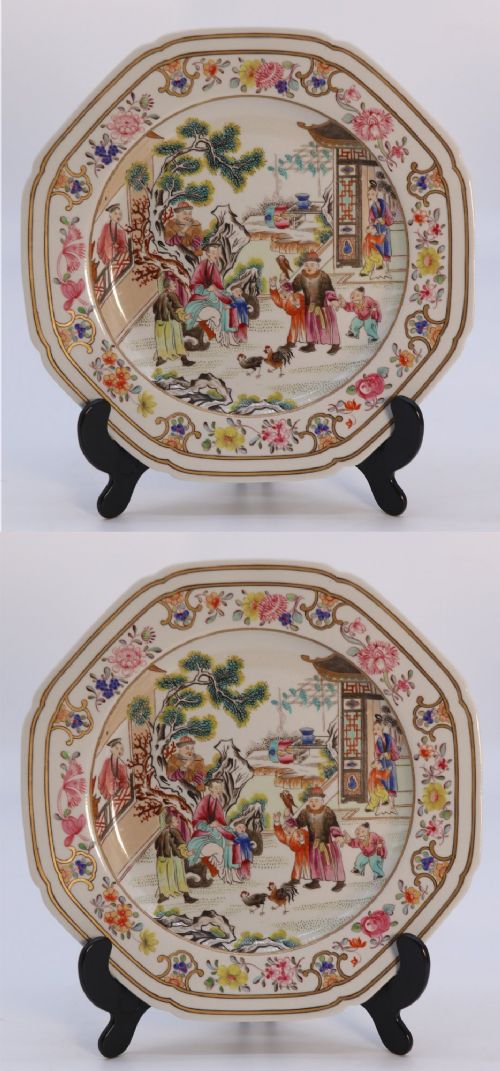
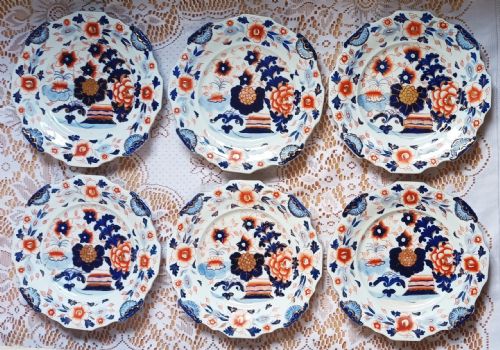
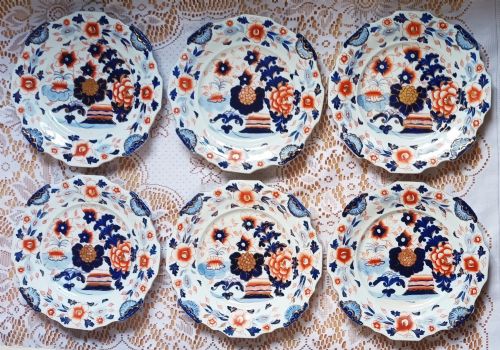
A chinoiserie wall plate presents European interpretations of East Asian motifs, rendered primarily in blue and white pigments across earthenware and porcelain surfaces. The items on this page span the eighteenth and nineteenth centuries, including pieces from the Victorian era as well as earlier Georgian and Regency periods.
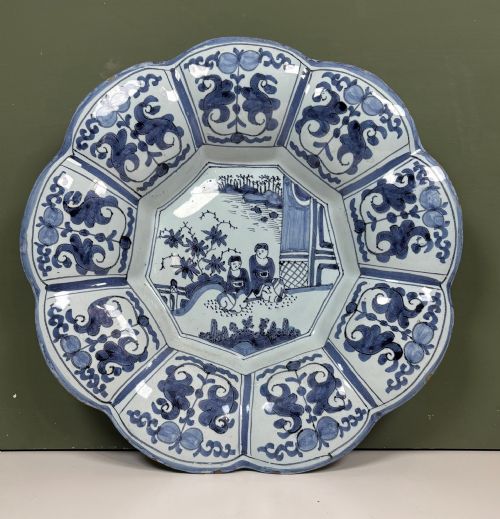
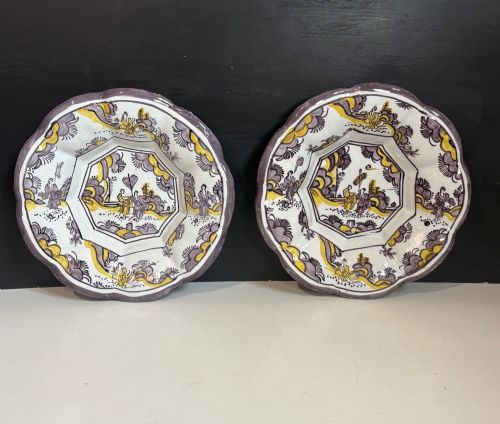
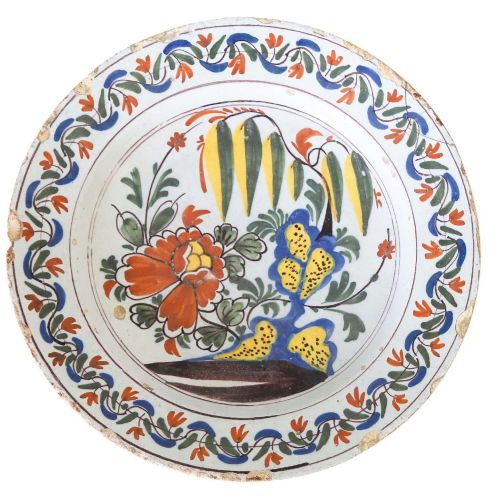
Forms range from standard plates to large chargers and lobed dishes designed specifically for display. These objects reflect a long-standing European fascination with foreign trade goods, adapting oriental landscapes and botanical designs to fit domestic interiors.
Materials and Methods
Potters shaped these vessels from ceramic bodies such as earthenware, pearlware, and porcelain before applying tin glazes or transparent coatings. Cobalt pigment and cobalt oxide provided the deep blue coloration that defines the traditional palette of these wares.
Makers drew upon established traditions including Dutch Baroque, Delftware, and Qing Dynasty aesthetics to guide their brushwork. Kiln firing fixed the cobalt designs beneath or within the glaze, resulting in durable decorative surfaces.
Retail Price Guide 2026
Typical UK retail prices for chinoiserie wall plate, calculated from the Sellingantiques database of over a million retail prices indexed since 2003. This retail price guide relies exclusively on Sellingantiques data; no external sources or auction records are used, so the figures do not describe the wider market.
Early potters occasionally included imaginary European willow trees in Chinese landscapes, inventing botanical species for the sake of a balanced composition.
Judging Quality and Execution
Quality rests upon the confidence of the brushwork and the clarity of the cobalt pigment against the white background. Finer examples display meticulous hand-painted details that capture the spirit of their stylistic origins without stiffness.
The weight and finish of the ceramic body also distinguish superior items, alongside the evenness of the glaze application. Pieces showing thoughtful composition and careful kiln control stand apart from more mechanical productions.
Caughley·Minton
The Chinoiserie Wall Plate Glossary
- Charger
- A large decorative plate traditionally used for display rather than dining. These substantial pieces provide a wider canvas for complex chinoiserie scenes.
- Tin-Glazed Earthenware
- Pottery covered with a white tin-oxide glaze that creates an opaque surface for painted decoration. This technique underpins traditional Delftware production.
- Cobalt Pigment
- A metallic oxide used to achieve deep blue decoration on ceramics. It withstands high kiln temperatures without losing its distinct hue.
- Pearlware
- A refined earthenware developed in the late eighteenth century featuring a subtle bluish glaze that pooled in recesses. It bridged the gap between creamware and true porcelain.
- Kraak Style
- A Dutch imitation of sixteenth-century Chinese export porcelain featuring compartmentalised borders and central landscape panels. It heavily influenced European pottery.
Frequently Asked Questions
How do I hang a wall plate safely?
Utilise a spring-loaded plate hanger with rubber-coated prongs to distribute weight evenly across the rim. Ensure the wall fixing secures firmly into masonry or studwork rather than plaster alone.
Check the hanger periodically to confirm the tension remains secure and the ceramic edges are protected from abrasion.
Are these plates meant for food?
Antique decorative plates often feature crazed glazes or historical repairs that make them unsuitable for culinary use. Displaying them on walls or plate racks protects the fragile ceramic body from further wear.
Enjoying these items as visual art preserves their historical surfaces and prevents accidental damage during washing.
How do I clean antique ceramics?
Dust surfaces gently with a dry, soft microfibre cloth to remove everyday particles. Avoid soaking antique earthenware in water, as moisture can penetrate old glaze fractures.
Keep pieces away from direct sunlight and areas prone to heavy temperature fluctuations to protect the glaze stability.
What defines the blue and white style?
The aesthetic relies on cobalt blue painting applied over a white tin glaze or porcelain body. This restricted palette draws heavily on imported East Asian porcelain that captivated European collectors.
Makers varied the intensity of the blue pigment to create depth within landscapes, floral arrangements, and architectural scenes.