


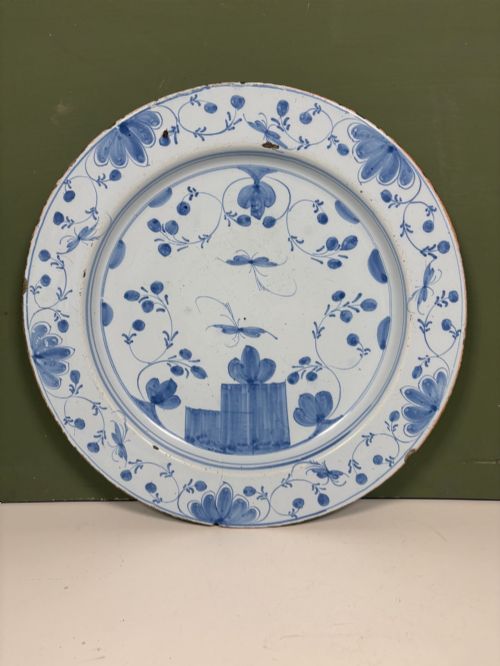
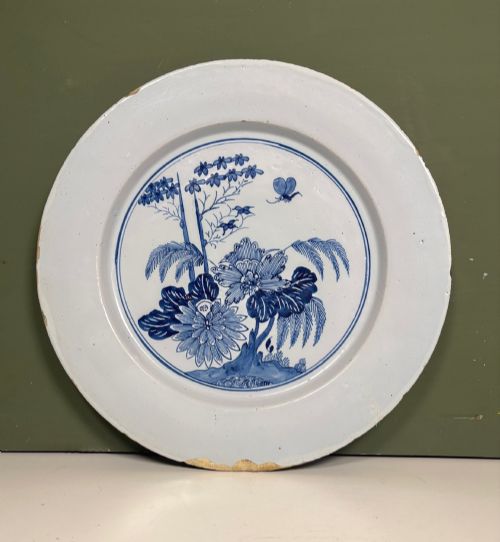
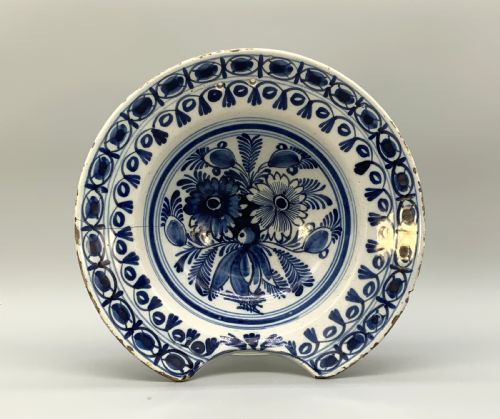


Dutch Delft Charger
A dutch delft charger brings the rich hand-painted domestic artistry of the eighteenth century straight onto your wall or table.
What They Are
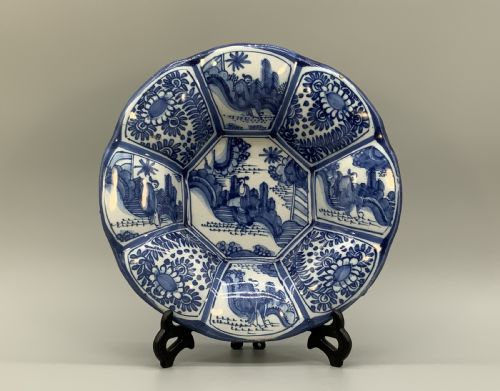
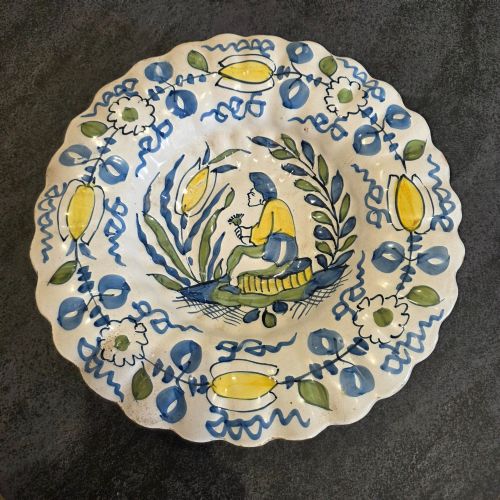
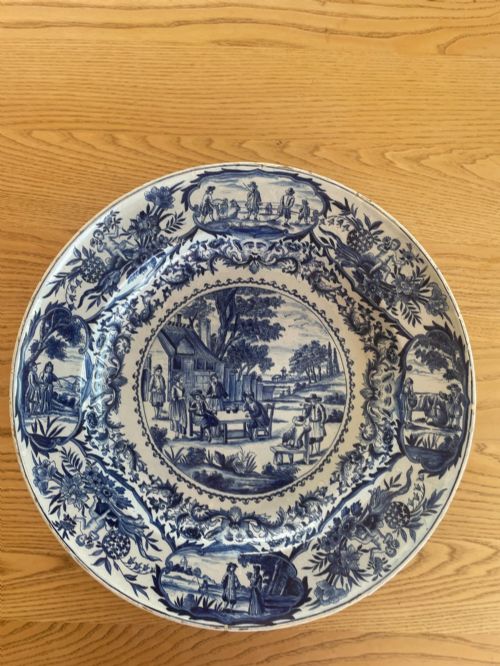
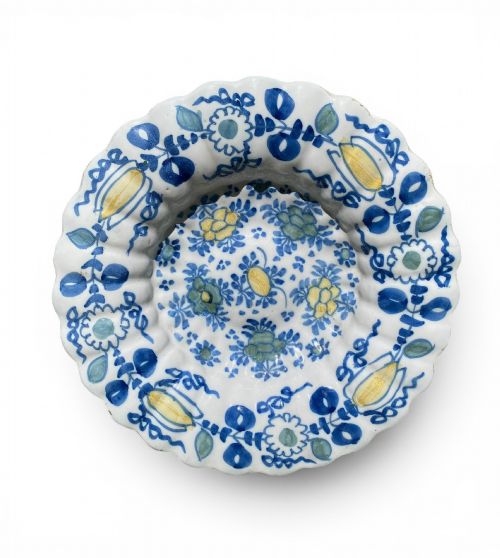
A dutch delft charger is a broad earthenware dish created for display rather than dining. The examples you encounter on this page span the eighteenth century alongside nineteenth-century interpretations.
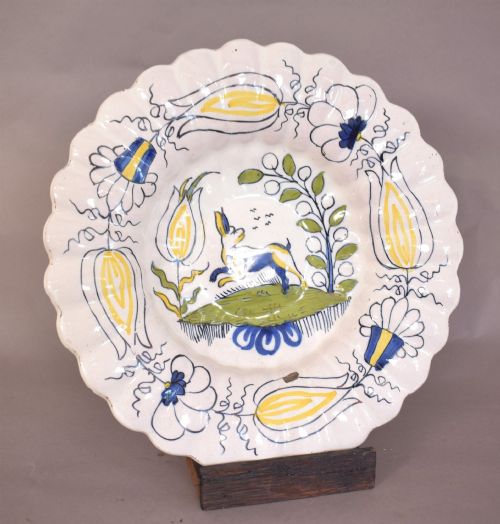
Makers shaped these large circular plates to hang on walls or sit upon sideboards. The surface provides a broad canvas for hand-painted motifs ranging from floral sprays to portraits of figures like Prince William of Orange.
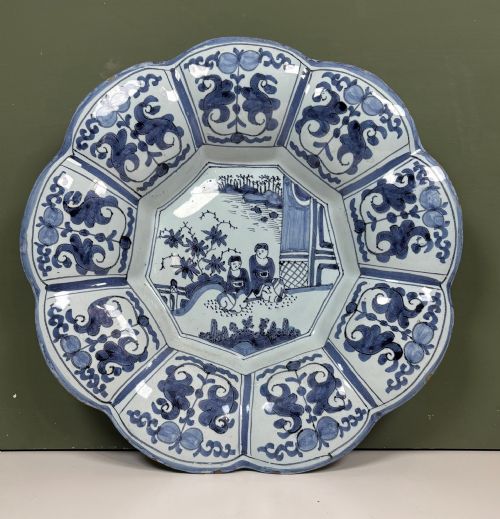
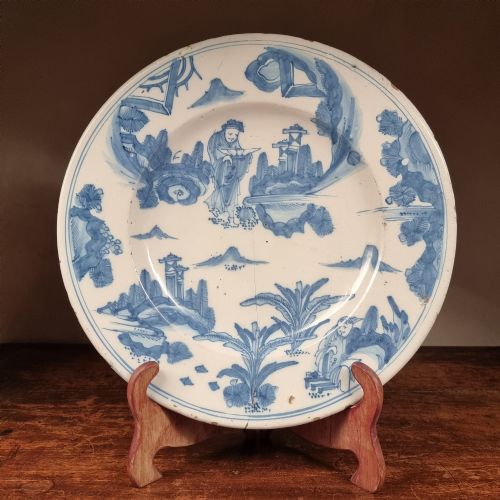
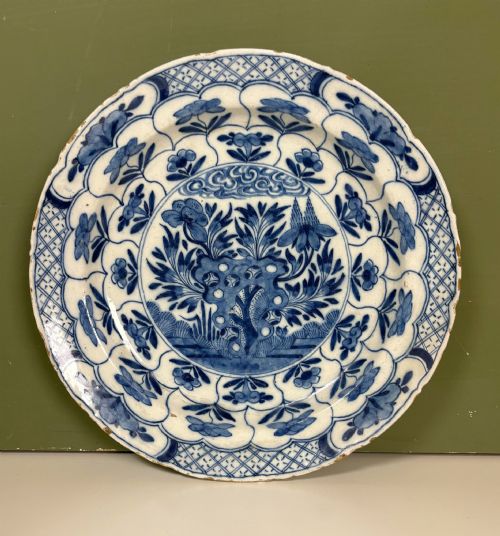
You will find these chargers rendered in classic blue and white as well as vibrant polychrome and manganese palettes. The forms include lobed dishes and traditional circular chargers influenced by imported Kraak styles.
How They Were Made
Potters formed these items from earthenware clay, shaping them into wide plates suitable for display. The bodies received an opaque white tin glaze to prepare the surface for painting.
Artisans applied cobalt pigment, manganese, and polychrome colours directly onto the unfired tin glaze. This absorbent technique required swift brushwork because any hesitation left permanent marks in the ceramic body.
Retail Price Guide 2026
Typical UK retail prices for dutch delft charger, calculated from the Sellingantiques database of over a million retail prices indexed since 2003. This retail price guide relies exclusively on Sellingantiques data; no external sources or auction records are used, so the figures do not describe the wider market.
Eighteenth-century Dutch artisans immortalised domestic ducks and flora alongside royalty on these broad ceramic kitchen canvases.
What Varies in Quality
The sophistication of the painted design distinguishes finer chargers from simpler production. Master painters achieved fluid lines and expressive brushwork in floral patterns and figural scenes.
The purity and coverage of the tin glaze also alter the visual weight of the piece. Superior examples display rich pigment saturation and harmonious colour palettes across the broad expanse of the dish.
De Witte Ster
The Dutch Delft Charger Glossary
- Tin-Glazed Earthenware
- A porous clay body coated with a white glaze containing tin oxide to create an opaque surface for painting. This mixture provides the characteristic smooth finish found on delftware.
- Charger
- A large decorative dish designed primarily for display on walls or furniture rather than heavy dining use. These wide plates measure significantly larger than standard tableware.
- Polychrome
- A multi-coloured painting style utilising several pigments beyond standard blue and white. Artisans often combined yellow, green, orange, and blue on a single surface.
- Manganese
- A purplish-brown metallic pigment used by potters to paint distinct monochrome scenes or accent polychrome designs. It yields a warm reddish-brown tone on tin glaze.
- Kraak Style
- A decorative aesthetic borrowed from imported Chinese porcelain featuring segmented panel borders and central motifs. Dutch potters frequently adapted this layout on their earthenware dishes.
Frequently Asked Questions
What is a dutch delft charger?
A dutch delft charger is a large tin-glazed earthenware dish made primarily in the Netherlands during the eighteenth century. Potters painted these broad plates with cobalt blue, manganese, or polychrome pigments for decorative display.
These pieces served as prominent household ornaments rather than everyday tableware. Their wide rims and centres accommodated detailed floral, landscape, and figural compositions.
How were dutch delft chargers used?
Historical households displayed these large dishes on walls, dresser plates racks, or tables to showcase wealth and taste. Their generous proportions made them ideal centerpieces for interior decoration.
Owners typically mounted them securely or stood them upright against wooden panelling. They remained decorative showpieces rather than functional serving vessels.
How do I care for a delft charger?
Protect these historic earthenware items by keeping them away from moisture and sudden temperature shifts. Dust the painted surface gently with a soft, dry cloth rather than using liquid cleaners.
Ensure any wall mounting hardware supports the weight securely without stressing the ceramic body. Display the dish out of direct sunlight to preserve the pigments.
How do I tell periods apart?
Seventeenth-century and early eighteenth-century pieces often lean towards dense floral and Kraak-inspired motifs in cobalt blue. Later eighteenth-century examples frequently introduce vibrant polychrome colours or manganese.
Nineteenth-century items often replicate these earlier styles with distinct variations in weight and glaze texture. Examining the painting technique and palette helps narrow down the era of production.