




Blue White Earthenware Charger
A blue white earthenware charger brings broad, painted surfaces into a room, offering centuries of historic pattern and ceramic craft.

Blue White Earthenware Charger
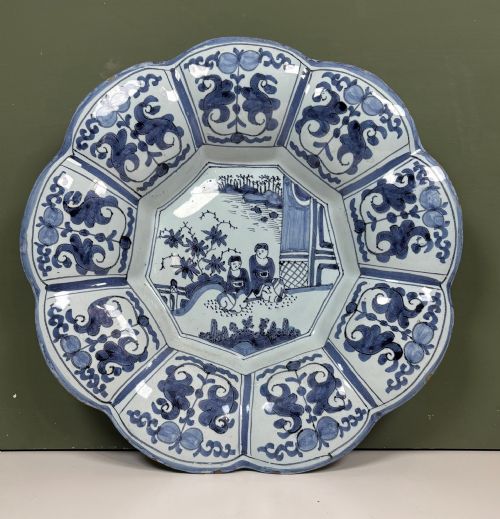
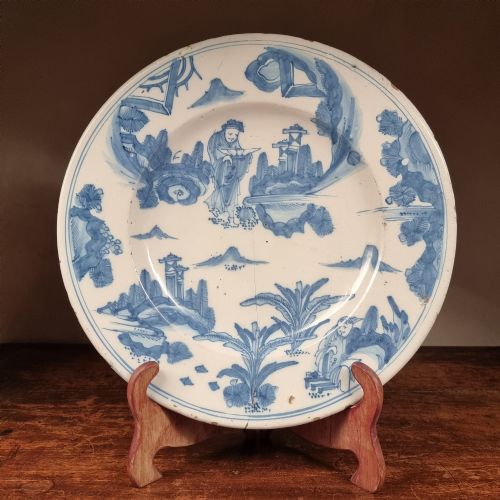
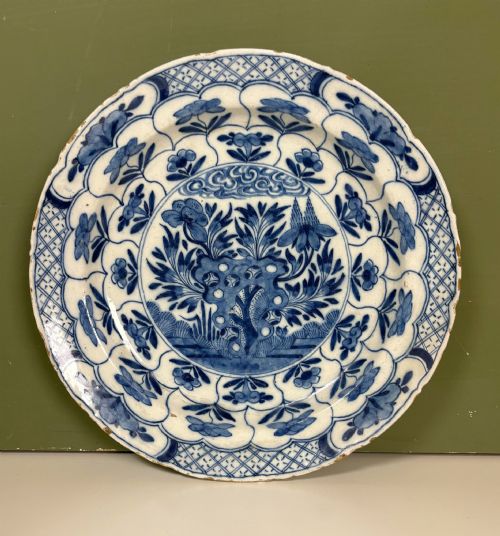
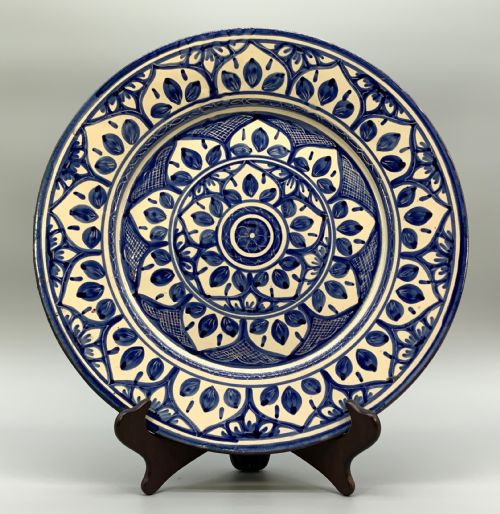
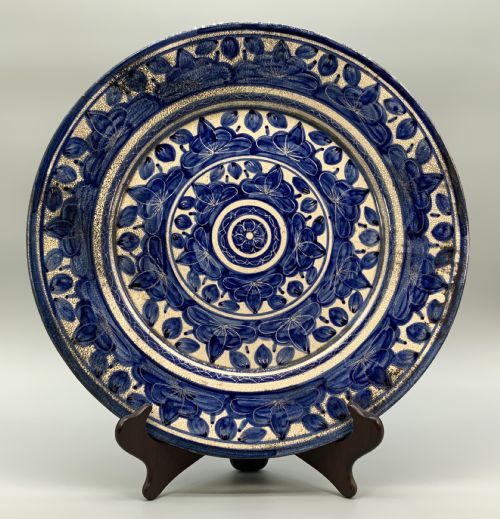
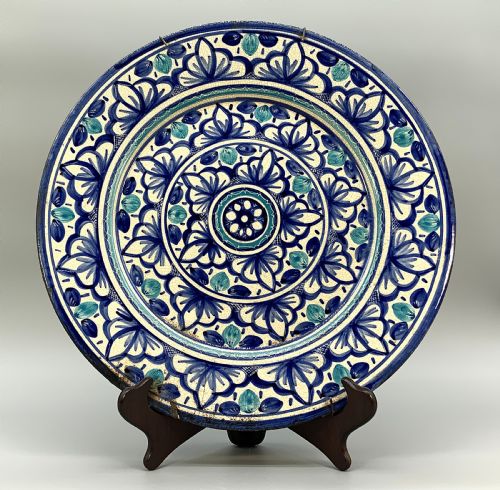
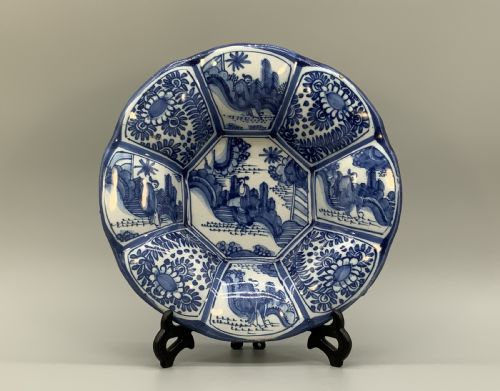
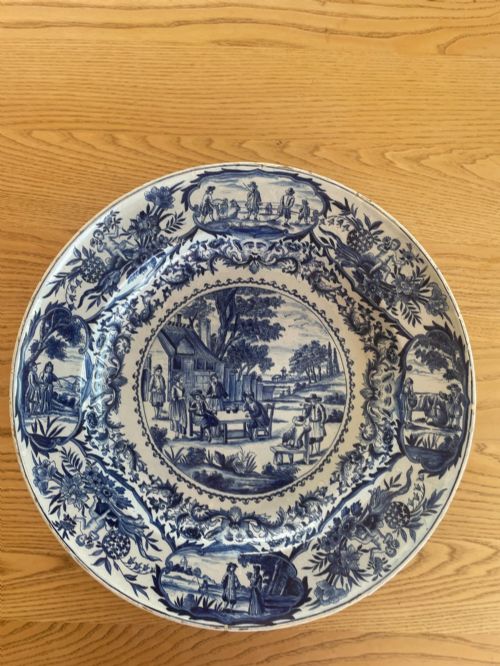
A blue white earthenware charger serves as a wide decorative plate or substantial serving platter, spanning centuries from the seventeenth through to the Victorian era and beyond. These large circular vessels appear frequently in tin-glazed earthenware and delftware forms, often bearing deep basins designed for display on walls or sideboards.
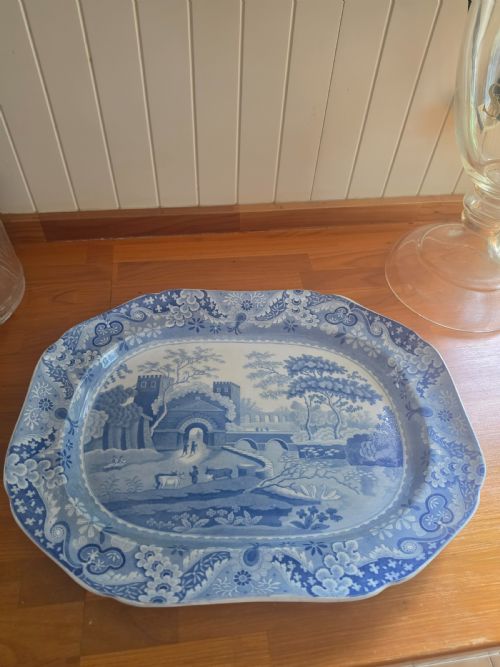
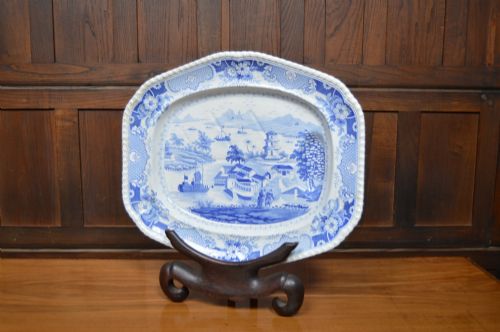
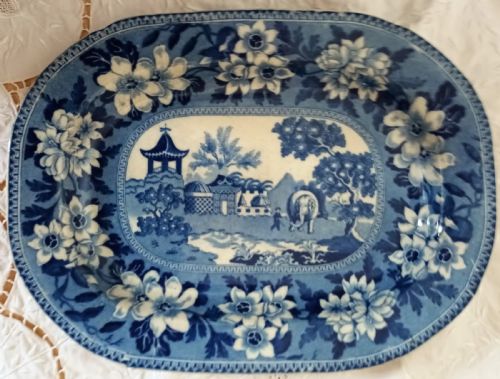
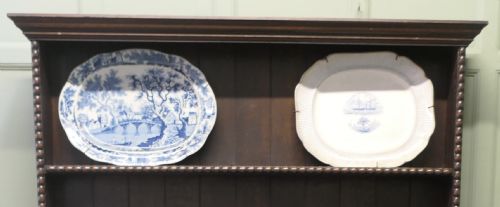
The selection here includes Dutch, English, and continental examples, featuring styles ranging from seventeenth-century Kraak and Dutch Baroque to Georgian Chinoiserie and Moorish influences. Pieces extend from early eighteenth-century delft dishes to nineteenth-century transferware platters by makers such as Spode and John Rogers & Son.
How they were made
Potters shaped these vessels from earthenware clay before coating them in a tin glaze or ceramic slip to provide an opaque white ground. Artisans then painted directly onto this absorbent surface using cobalt pigment or cobalt oxide, which turned a rich blue during high-temperature firing.
Later nineteenth-century pieces shifted towards transfer printing techniques, allowing intricate scenes like the India Temple or Elephant patterns to be mechanically applied to pearlware and pottery bodies before glazing.
Blue White Earthenware Charger Retail Price Guide 2026
Typical asking prices for blue white earthenware charger among the pieces listed under this phrase on Sellingantiques today, from the lower quarter to the upper quarter. They describe what is for sale here now, not the wider market.
Listings span multiple eras, including seventeenth-century pieces, eighteenth-century delftware, and nineteenth-century transferware platters in earthenware and pearlware.
What varies in quality
The distinction between standard domestic wares and superior chargers lies in the precision and depth of the cobalt painting, where freehand brushwork on early delft displays greater artistic fluidity than mechanical transfer prints. Tin-glaze thickness and surface gloss also dictate visual richness, with smoother, more even glazes commanding attention.
Scale and ambition separate standard platters from grand exhibition chargers, particularly where large diameters present technical challenges during the kiln firing process.
Van Genden·Spode·John Rogers & Son·William Adam
The Blue White Earthenware Charger Glossary
- Charger
- A large decorative plate or serving dish, typically exceeding thirty centimetres in diameter, intended for display or ceremonial use.
- Tin-Glazed Earthenware
- Pottery covered with a lead glaze made opaque by the addition of tin oxide, providing a white surface for painted decoration.
- Cobalt Pigment
- A metallic oxide used to achieve deep blue tones on ceramics, capable of withstanding intense kiln temperatures without losing colour.
- Transferware
- Pottery decorated by pressing a printed paper design from an engraved copper plate onto the ceramic surface.
- Kraak Style
- Chinese export porcelain patterning featuring compartmentalised borders and central motifs, heavily imitated by European delftware potters.
Blue White Earthenware Charger: Frequently Asked Questions
How were chargers used in historic homes?
Historic households utilised these large vessels primarily for ceremonial dining displays or as substantial platters at feast tables, mounting them on walls or dressers when not in service.
Over time, their decorative capacity overtook practical dining use, leading to the creation of wider rims specifically suited for visual impact in principal rooms.
How do I hang a heavy antique charger safely?
Displaying large earthenware pieces requires specialised spring-loaded brass wall hangers that distribute the weight evenly across the entire rim without applying undue pressure to a single point.
Ensure the mounting fixings are secured directly into wall studs or utilise appropriate masonry plugs depending on the room construction.
How can I tell eighteenth-century delft from nineteenth-century transferware?
Eighteenth-century delft pieces feature hand-painted cobalt designs applied over an opaque tin glaze, often revealing slight brushstrokes and minor glaze pooling under close inspection.
Nineteenth-century transferware displays precise, repetitive dotted outlines characteristic of copperplate printing beneath a clear or pearlware glaze.
How do I care for antique earthenware daily?
Maintain these ceramic pieces by dusting them gently with a dry, soft cloth and keeping them away from direct, prolonged sunlight to protect the glaze stability.
Avoid washing historic tin-glazed earthenware in water where possible, as moisture can infiltrate old crazing lines and weaken the porous clay body underneath.