


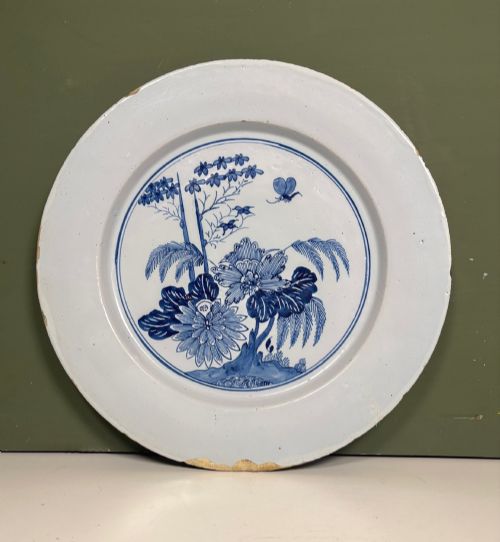
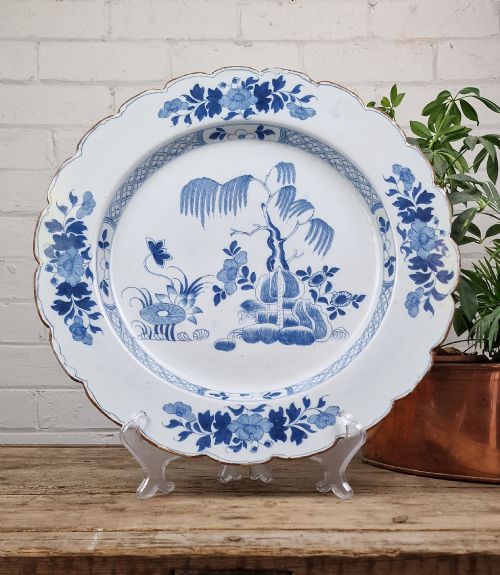
Hand Painted Delft Plate
A hand painted delft plate brings centuries of tin-glazed earthenware into a room, offering bold cobalt pigment and warm ceramic forms.

Hand Painted Delft Plate
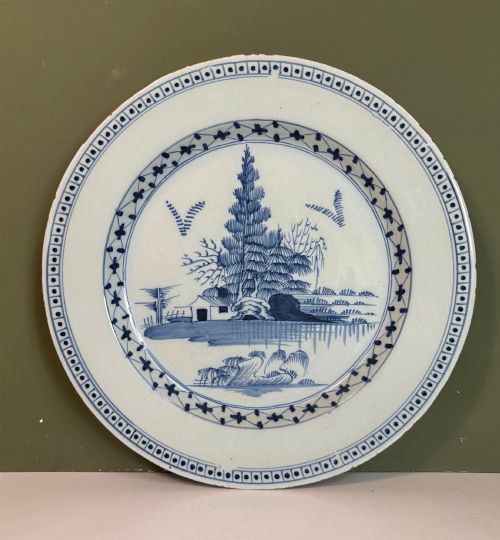
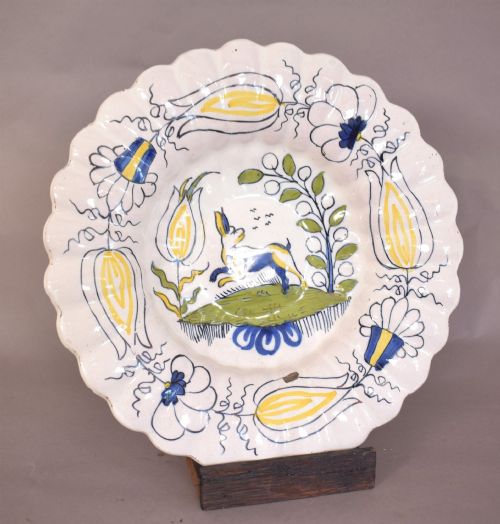
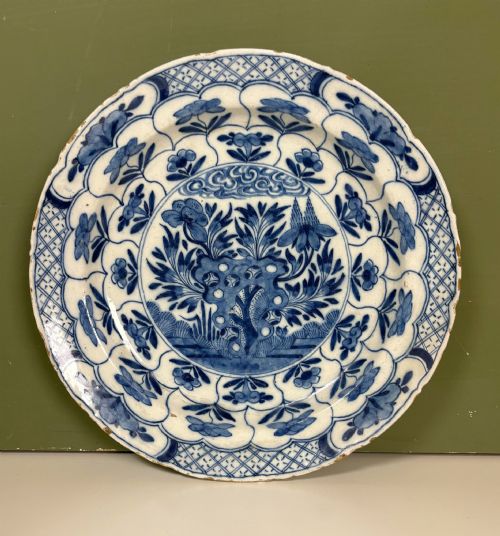
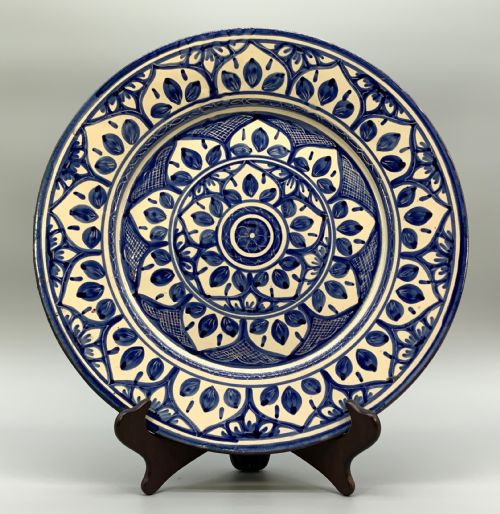
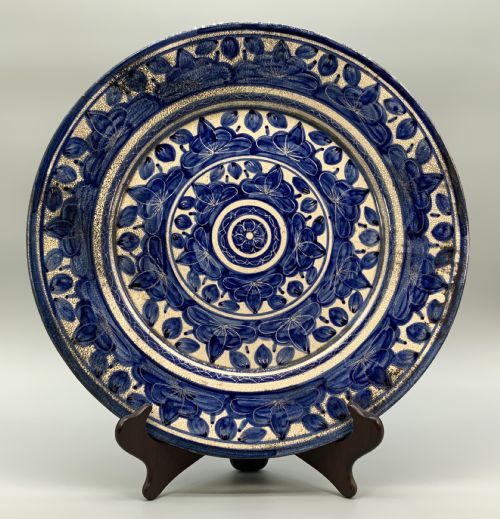
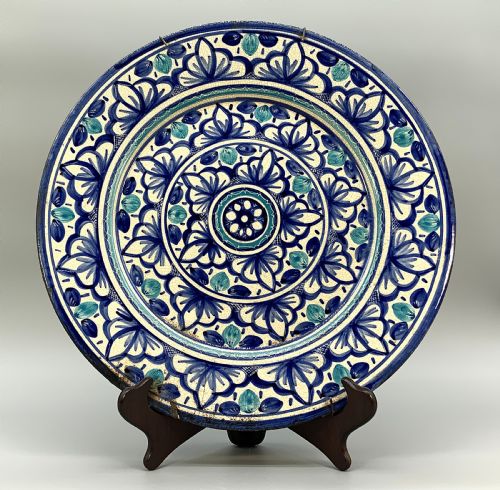
When you search for a hand painted delft plate, you encounter decorative plates, chargers, and dishes shaped from earthenware and finished with tin glaze. These items span from the seventeenth century through to the twentieth century, with eighteenth-century examples appearing frequently on this page.
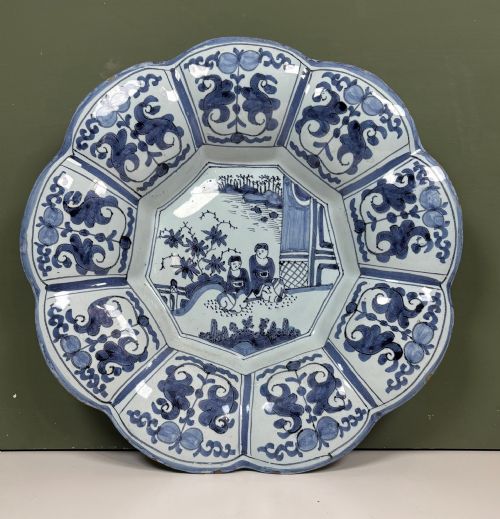
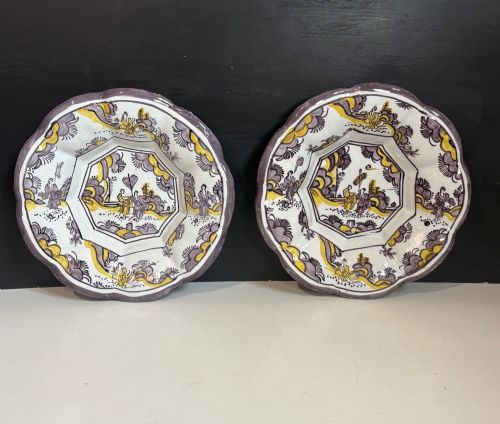
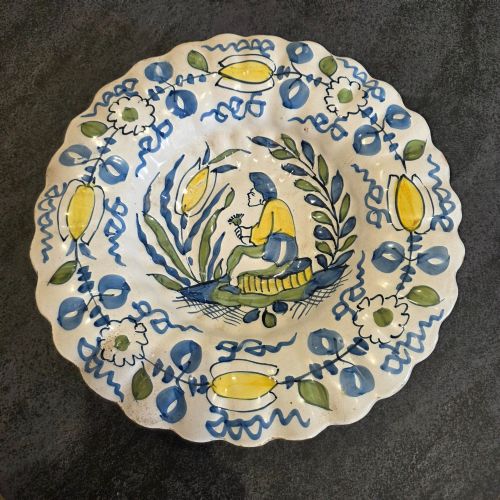
Makers and workshops produced these pieces in forms ranging from shallow bowls and lobed dishes to large chargers. Styles vary from Dutch Delftware and Georgian Chinoiserie to Moorish Revival, reflecting diverse European and continental origins.
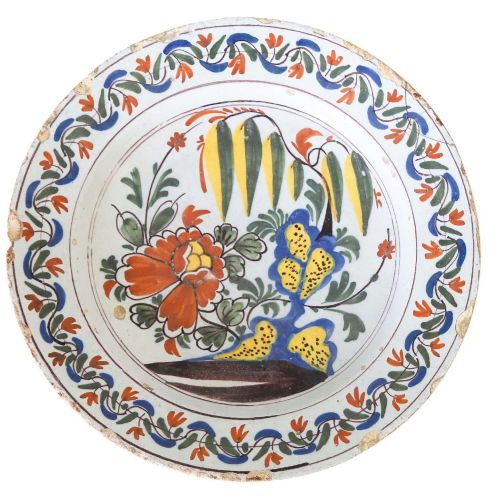
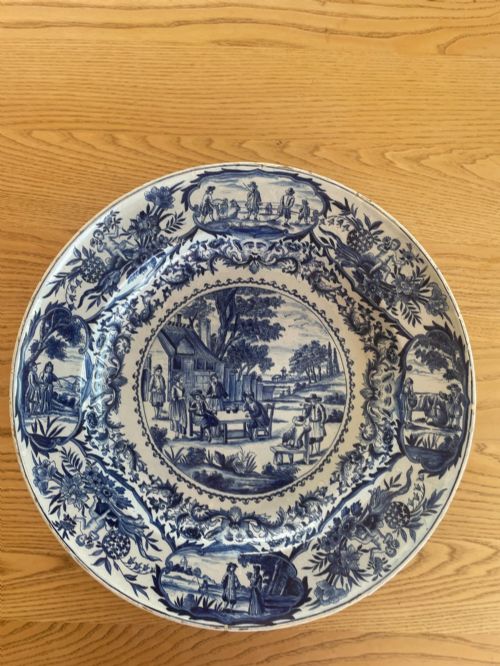
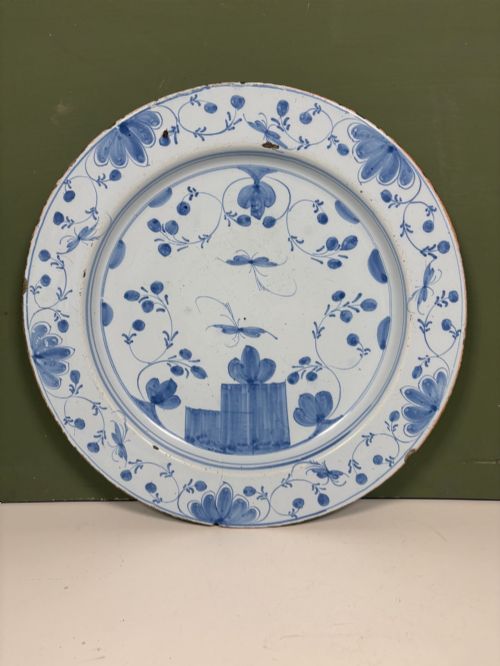
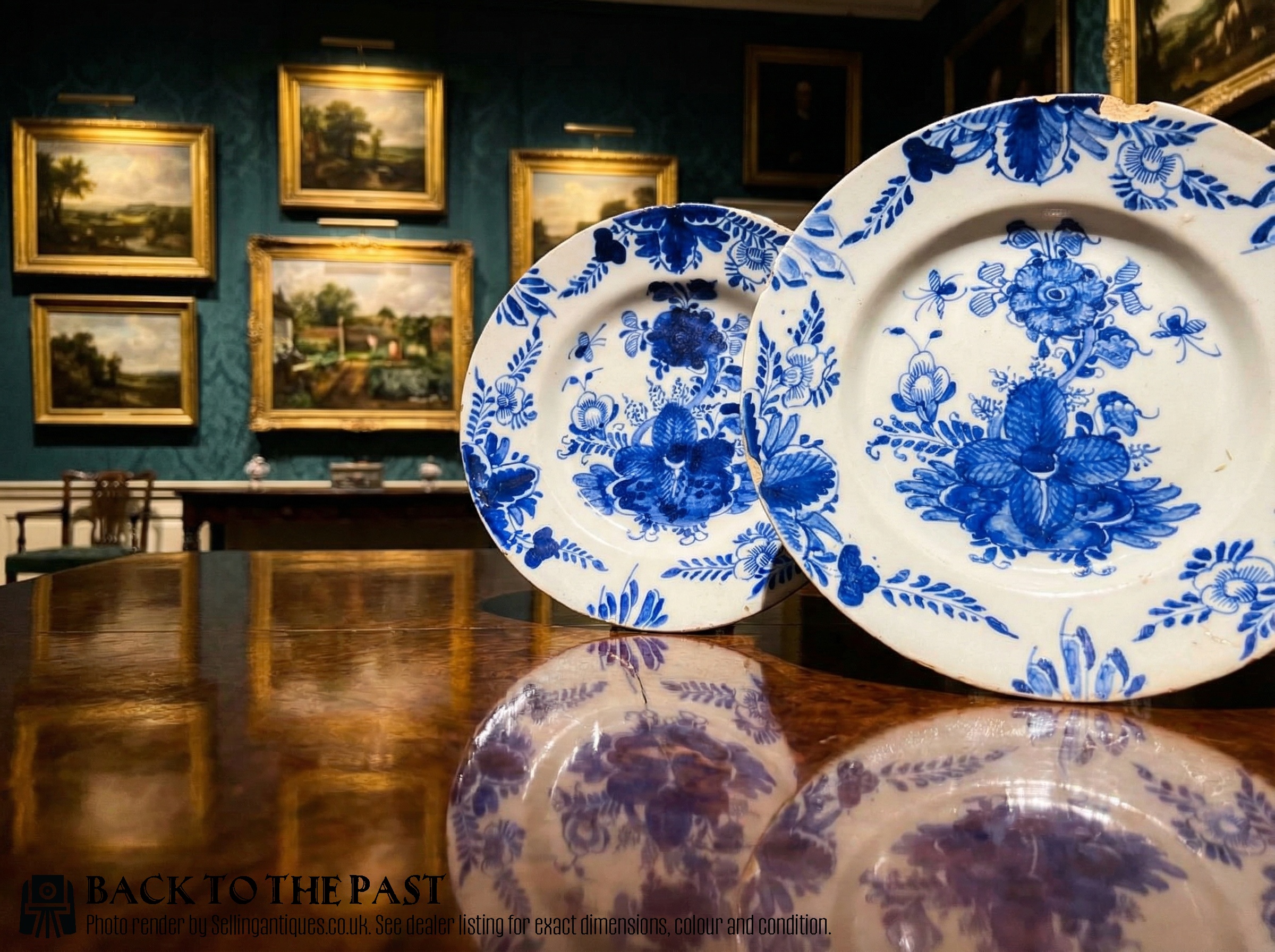
The visual character relies heavily on cobalt pigment and cobalt oxide applied directly to the porous body before firing. Many display geometric floral patterns, portraits, or orchard designs in blue and white or polychrome palettes.
How they were made
Potters shaped earthenware bodies on the wheel or pressed them into moulds to create plates, dishes, and large chargers. These raw clay forms underwent a preliminary firing to create a stable biscuity substrate ready for decoration.
Artisans applied a liquid tin-glaze over the surface, creating an opaque white or cream ground that absorbed painted pigments efficiently. Cobalt pigment and other mineral oxides were then brushed directly onto the unfired glaze by hand.
The pieces received a final high-temperature kiln firing that melted the tin glaze, fusing the cobalt pigment into the glossy surface. This technique allowed painters to achieve fine lines and soft washes simultaneously.
Hand Painted Delft Plate Retail Price Guide 2026
Typical asking prices for hand painted delft plate among the pieces listed under this phrase on Sellingantiques today, from the lower quarter to the upper quarter. They describe what is for sale here now, not the wider market.
Listings feature tin-glazed earthenware and ceramic objects spanning from the seventeenth century to the twentieth century.
What varies in quality
The precision and fluidity of the hand-painted brushwork separate ordinary vessels from superior examples. Master painters achieved depth and movement in floral motifs and figures, whereas lesser pieces show rushed or repetitive strokes.
The stability and opacity of the tin glaze also determine quality, as thinner glazes permit the underlying earthenware to telegraph through the white surface. Smooth, even glazing without excessive pooling or dry patches indicates better kiln management.
Scale and ambition elevate certain chargers, particularly large eighteenth-century Dutch and English pieces with complex polychrome or grand feu manganese palettes. The ambition of the design dictates the overall success of the finished ceramic.

Van Genden
The Hand Painted Delft Plate Glossary
- Tin-Glazed Earthenware
- Pottery covered with a lead glaze made opaque by the addition of tin oxide. This white surface served as a canvas for painted decoration.
- Charger
- A large decorative plate or dish, typically measuring over thirty centimetres across. These substantial pieces were often displayed on walls or sideboards.
- Polychrome
- Decoration employing multiple colours rather than a single pigment. On these plates, this typically includes iron red, yellow, and green alongside cobalt blue.
- Grand Feu
- Firing ceramics at very high temperatures. This technique allowed cobalt and manganese pigments to melt directly into the raw glaze.
- Manganese
- A dark purple or brown metallic oxide used for painting ceramic details. It often appears alongside cobalt pigment on eighteenth-century Dutch plates.
Hand Painted Delft Plate: Frequently Asked Questions
What is a delft charger?
A delft charger is a large decorative earthenware plate finished with an opaque tin glaze. These sizeable dishes were primarily intended for display on walls or sideboards rather than everyday dining.
Craftsmen painted them by hand using cobalt pigment and mineral oxides. They remain central to collections of early European ceramics.
How do I date a delft plate?
Dating relies on examining the tin glaze, the weight of the earthenware body, and the painting style. Seventeenth and eighteenth-century examples often display subtle glaze irregularities and characteristic cobalt tones.
Later nineteenth and twentieth-century pieces, such as Moorish Revival or portrait chargers, exhibit distinct decorative techniques and heavier bodies.
Were these plates used for dining?
Most large chargers and decorated dishes served decorative functions within wealthy households. Their tin-glazed surfaces were relatively soft and prone to scratching from metal cutlery.
Smaller plates saw occasional table use, but surviving examples generally owe their preservation to display and careful handling over centuries.