


Polychrome Delftware Charger
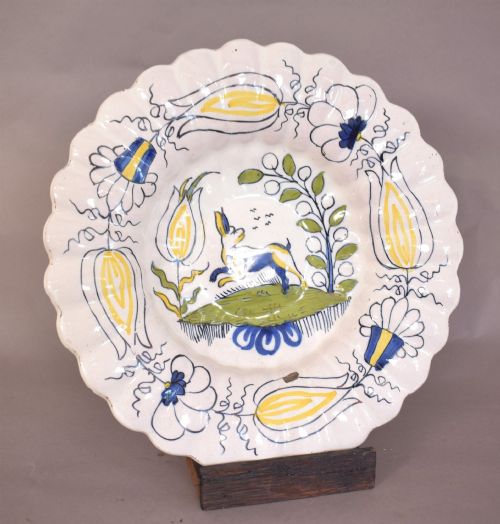
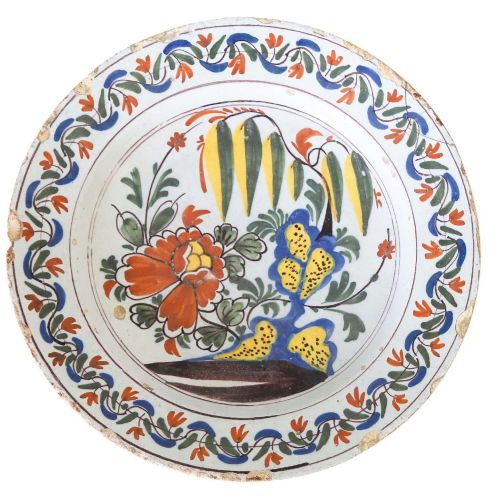
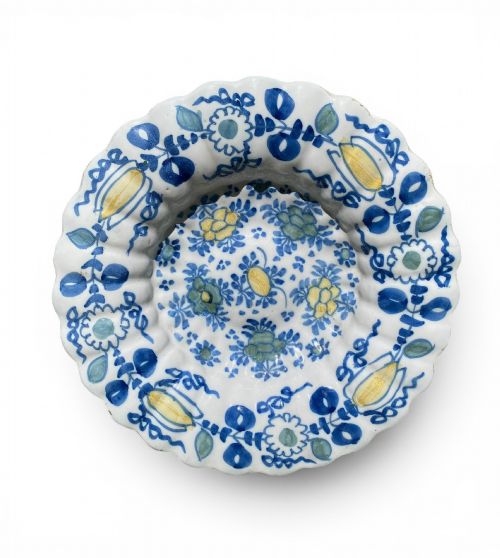
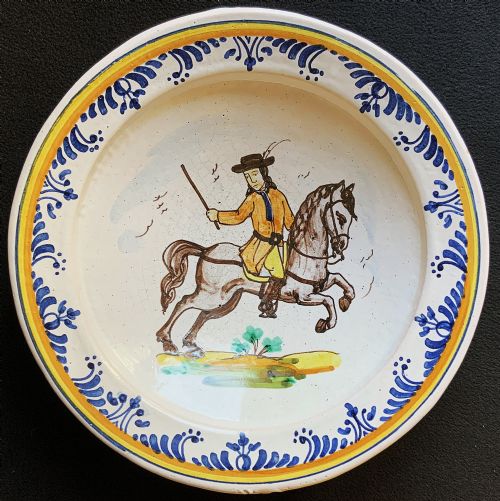
A polychrome delftware charger is a tin-glazed earthenware wall or display dish bearing vibrant hand-painted colours.

Polychrome Delftware Charger
When you search for a polychrome delftware charger, you enter a sphere of tin-glazed earthenware wall and display dishes produced across Europe. These large plates range from seventeenth-century Dutch and English examples to eighteenth-century Spanish and continental variants.
The objects seen here span decorative plates, lobbed dishes and wide chargers featuring hand-painted floral, geometric and Chinoiserie motifs. English workshops in Bristol and Lambeth sit alongside Dutch Golden Age and Spanish Catalan potteries in the historical record.
Buyers most frequently encounter eighteenth-century English and Dutch pieces decorated with multi-coloured pigments on a white tin-glazed surface. These larger dishes were intended primarily for display on dressers rather than everyday dining table use.
Materials and production
Potters formed these chargers from common clay and earthenware, shaping them into broad plates and deep dishes. The fired biscuit body received an opaque white tin glaze that provided a smooth canvas for subsequent brushwork.
Painters applied metallic oxide pigments directly onto the porous unfired glaze in grand feu or multi-stage firings. Cobalt blue, manganese purple, copper green and iron red combined to create the bright polychrome palette characteristic of these wares.
One recorded eighteenth-century English charger bears the specific name Ann Gomm painted across its tin-glazed surface.
Judging quality in early tin-glaze
Quality rests upon the confidence of the brushwork and the clarity of the polychrome pigments against the white tin ground. Energetic floral and Chinoiserie designs executed with fluid control distinguish superior items from rigid or muddy painting.
The stability of the earthenware body and the uniformity of the tin glaze across the broad surface of a charger dictate the overall survival state. Examples showing minimal kiln distortion and well-preserved surface colours command greater interest among collectors.
The Polychrome Delftware Charger Glossary
- Tin-glazed earthenware
- Pottery covered with a lead glaze made opaque by the addition of tin oxide. This white surface served as the ground for painting.
- Charger
- A large decorative plate or dish, typically exceeding thirty centimetres in diameter, designed for wall display or sideboard presentation.
- Grand feu
- A ceramic firing technique where pigments are applied directly to the raw glaze and fired once at a high temperature. This process fuses colours into the glaze surface.
- Chinoiserie
- European artistic styles reflecting Chinese motifs and landscapes. Artisans painted these imaginary oriental scenes onto English and continental earthenwares.
- Lobbed dish
- A vessel featuring scalloped or indented edges and moulded rims. This decorative shaping appears frequently on seventeenth-century Dutch pieces.
Polychrome Delftware Charger: Frequently Asked Questions
How were polychrome delftware chargers displayed?
These large dishes were traditionally hung on walls or stood on dresser shelves in domestic interiors. Their colourful painted surfaces made them prime decorative objects rather than functional tableware.
Today, collectors continue to display them in similar settings to highlight their historical patterns and vibrant tin glazes.
What is the difference between English and Dutch chargers?
English centres such as Bristol and Lambeth often produced wares with distinct floral and named inscriptions, while Dutch workshops focused heavily on geometric, botanical and Chinoiserie subjects during the seventeenth and eighteenth centuries.
Both traditions relied on tin-glazed earthenware, but subtle variations in the clay body and pigment palettes help separate their origins.
Why are these dishes called polychrome?
The term denotes pottery decorated with multiple colours rather than the single blue pigment seen in traditional delftware. Artisans utilised manganese, copper and iron oxides alongside cobalt to achieve varied hues.
This multi-coloured palette allowed painters to render complex floral sprays, figures and geometric borders.
Can I use an antique charger for food?
Tin-glazed earthenware is porous and the soft lead- and tin-based glazes are susceptible to staining and wear from modern acidic foods. Historic chargers are preserved as decorative objects rather than utility items.
Displaying them safely protects the fragile eighteenth-century earthenware body from further damage.